














13 Video Game Email Examples To Level Up Your Strategy [2026]
Published By Marilia Dimitriou
October 14, 2026

14/10/26
If you’ve ever gone back to a game because of an email, you know how powerful that moment is. You see a new season, a limited-time event, or rewards waiting, and suddenly you’re installing the update or logging in again.
Game studios are especially good at this. Their emails tie into the experience, build anticipation, highlight what’s new, and give players a clear reason to return.
In this guide, you’ll find video game email examples and best practices that show how the industry keeps players engaged. You can use these ideas to create emails that feel timely, relevant, and worth opening, even outside gaming.
Press start on better emails
Create immersive campaigns with Moosend and keep players engaged.
Start for freeShould Video Game Developers Consider Email Marketing?
Email marketing gives brands a way to reach people outside the product itself. Instead of relying only on notifications or social posts, you can show up when something new is happening and guide them to the next step.
Game studios can use email in the same way. Well-thought-out campaigns can keep interest alive between sessions. While players might not open the game every day, they do check their inbox. A short update about a new season, event, or reward can be enough to bring them back.
Lastly, email also fits naturally across the whole player journey. You can use it to build hype before a release, tease upcoming content, guide new players, announce updates, and reconnect with inactive ones, all without breaking the experience.
Video Game Email Design Elements
Video game campaigns tend to share a few recognizable traits. Here’s how they try to recreate the feeling of the game inside the inbox:
- Story-first email copy: Many gaming emails feel like part of the game’s story. Instead of “New update available,” you’ll see narrative hooks, world-building language, or mission-style copy that pulls players back in.
- Dark visuals: Gaming email design often leans into darker backgrounds, high contrast, and dramatic lighting. This style mirrors game environments, making screenshots, characters, and effects stand out.
- Familiar characters: Beloved characters are the main focus. Nintendo, for instance, always has Mario. Whether it’s a hero, villain, or avatar, placing them at the top instantly connects the email to the game experience.
- Dramatic headlines: Subject lines and headings tend to feel bold and urgent. For instance, “The hunt begins,” “Your squad is waiting,” or “A new chapter starts now.” Also, the tone always matches the game’s stakes.
- Clear rewards and incentives: They highlight new game skins, bonuses, XP boosts, unlocks, or limited-time content to give players a reason to return.
- Event-driven structure: Most campaigns revolve around current events, such as new seasons, live sessions, updates, and timed challenges. This creates urgency and keeps the content fresh.
Now let’s see these elements in practice.
Best Video Game Email Examples
Below, you’ll find video game email examples covering everything from launch promos and seasonal events to rewards, updates, and even transactional messages like refunds.
1. Larian Studios’ subscription confirmation
Before players get updates or launch announcements, studios first need a confirmed audience. This subscription confirmation email from Larian Studios keeps things simple while still reflecting the studio’s identity.
Subject line: Confirm your subscription

Why it works:
- Muted colors and dramatic backgrounds make the campaign resemble the game’s environment. Plus, the dark fantasy artwork adds a unique touch.
- The confirmation button sits in the center, making the next step clear.
- The copy is short and focused, which keeps attention on the action.
- Additional copy underneath clarifies that no subscription happens unless the button is clicked, which builds trust.
Tip: Double opt-in, which asks users to confirm their subscription by clicking a link, helps studios verify email addresses before sending major release emails. This reduces bounces and protects sender reputation, helping more emails reach players’ inboxes.
2. Rockstar Games’ welcome email
After subscription, gaming studios often use welcome emails to guide players into their ecosystem. This welcome email from Rockstar Games introduces key actions, highlights benefits, and immediately connects players with the brand.
Subject line: Welcome to Rockstar Games

Why it works:
- The bold yellow accents, dark background, and collage-style artwork match Rockstar’s branding.
- Instead of a single CTA, the email introduces a launcher download, account security, and news updates. This helps players engage beyond just reading announcements.
- The 2-step verification section also ties account protection with in-game bonuses.
- Screenshots, UI previews, and in-game visuals make the email feel more like a launcher interface than a traditional newsletter.
- It sets up ongoing interaction through Newswire updates, launcher usage, and account activity.
3. Ubisoft’s Christmas email
Holiday campaigns often combine promotions with storytelling. This Christmas email from Ubisoft promotes multiple Assassin’s Creed titles while maintaining a playful tone that reflects the franchise’s identity.
Subject line: Merry Creedmas, Assassins!

Why it works:
- The subject line fuses the holiday theme with the Assassin’s Creed universe. It is on-brand and immediately recognizable to fans.
- The holiday promotion sits front and center with “Up to 50% Off” in large, bold typography. This mirrors game store banners and makes the value clear.
- Separate buttons for PC, PS5, and Xbox remove friction and mirror how players think about buying games.
- Snow, seasonal messaging, and “Frosty Deals” fit the timing, while the characters and visuals stay true to the Assassin’s Creed aesthetic.
- The “Which Assassin are you?” quiz adds a fun touch to a rather promotional email.
4. IO Interactive’s limited-time event
Limited-time events and offers are very common in gaming, and email is often the final push before they expire. This last-chance campaign from IO Interactive promotes the Eminem vs. Slim Shady event in Hitman World of Assassination through urgency and dynamic content.
Why it works:
- The email copy sets a clear deadline and pushes players to act quickly.
- The “31% of players…” social proof makes the event feel active and competitive, leveraging player curiosity.
- The “Get the free starter pack” CTA lowers friction by offering immediate access to the event.
- The store icons with different discount levels make availability across Steam, consoles, and mobile instantly clear.
- The cosmetics and items are presented like unlockable loot to intrigue players and prompt action before time runs out.
Campaigns like this show how layered, game-style layouts can come together without heavy production work. In this case, IO Interactive used Moosend’s editor to assemble the sections and create a cohesive gaming experience.
5. Electronic Arts’ (EA) refund email
Transactional emails are important in gaming, especially for purchases, refunds, and pre-orders. This refund confirmation from Electronic Arts provides all the details players need to understand what was refunded, when to expect it, and which purchase it applies to.
Subject line: Your refund has been processed

Why it works:
- The subject line answers the pressing question right away, letting players know their refund has been processed.
- The purchase date, product, payment method, and refund amount are grouped together for easy scanning.
- Including the game cover and title helps players quickly connect the refund to their purchase, especially when they buy multiple titles.
- The note about 7 business days answers the most common follow-up question before players contact support.
- The footer offers links to additional help resources for players who need further assistance.
Tip: Keep transactional emails like refunds, receipts, and confirmations as straightforward as possible. Players open them to confirm a purchase, check payment details, or see whether a refund went through, so make those details easy to find.
6. Steam account transfer
Platforms like Steam also send game-specific emails, especially when an update affects player accounts or progress. This message alerts Black Desert Online players that they must transfer their accounts before a deadline to avoid losing access and game data.
Subject line: Black Desert Online, New Update

Why it works:
- It uses urgency to explain that players may lose their accounts and game data if they don’t act fast.
- The hero image features in-game items and rewards to soften the urgency and keep the focus on gameplay value.
- Including a transfer guide video helps players complete the process without searching for instructions.
- The blue email CTA can’t be missed, which is necessary for time-sensitive updates.
- The microcopy “You are receiving this email because you have played: Black Desert Online” at the end increases relevance and prevents the message from feeling like a mass notification.
7. Sandfall Interactive’s update and merch announcement
Studios often combine product updates with merchandise announcements to keep players engaged beyond gameplay. This email from Sandfall Interactive promotes vinyl and CD pre-orders and announces a new game patch, turning a single campaign into both a store and a game update.
Subject line: Vinyl and CD sets available for pre-order, plus Patch 1.4.0 is now live!

Why it works:
- The email serves different audience segments. Collectors get the merch announcement, while active players get the update.
- The merch and patch updates are also split into clear sections, which keeps the layout easy to scan.
- Dark textures, gold typography, and dramatic imagery mirror the game’s atmosphere, making the campaign feel like official in-world content.
- The “Read more…” CTAs keep the message immersive instead of overly promotional, which suits narrative-driven games.
8. Niantic’s Black Friday sale
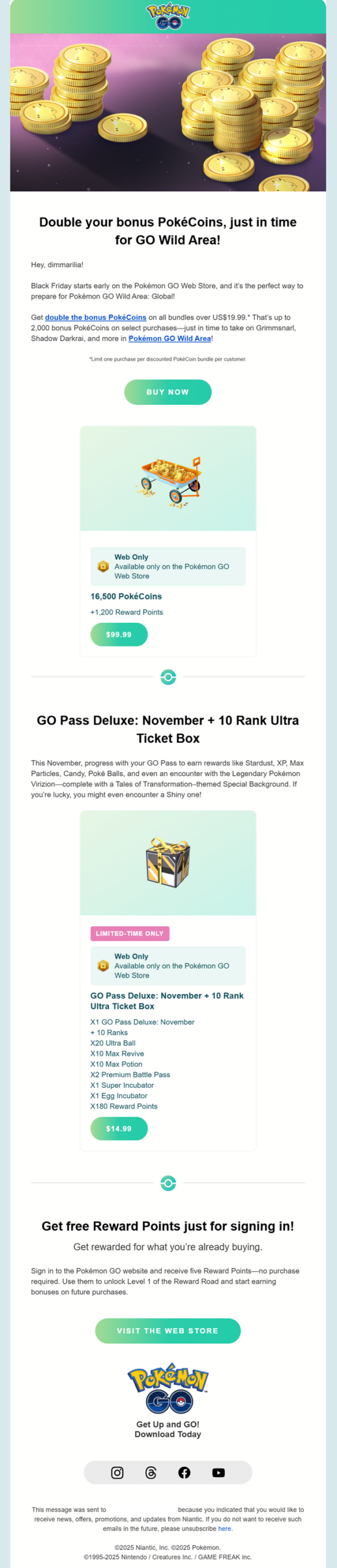
Seasonal promotions in mobile games often focus on in-game currency and limited-time bonuses. This Black Friday email from Niantic promotes double bonus PokéCoins while also highlighting store-exclusive bundles and login rewards.
Subject line: 🤪 GO Wild this Black Friday—get 2× the bonus PokéCoins!

Why it works:
- The subject line uses an emoji and Pokémon GO-inspired wordplay to add a touch of fun to the promotional message.
- Soft greens, light backgrounds, and colorful illustrations reflect the mobile game’s casual feel. This contrasts with darker, cinematic layouts often used by AAA titles.
- It highlights double-bonus PokéCoins and clearly shows bundle sizes, so players can instantly understand the benefit.
- Adding free reward points for signing in also adds value and increases engagement with the campaign.
Tip: Black Friday email marketing works best when the value is evident at first glance. Highlight bonus currency, limited-time bundles, or exclusive rewards above the fold, so players see what they gain by acting now.
9. Pokémon’s game anniversary email
Gaming anniversary campaigns rely on evoking nostalgia, and this Pokémon email is a perfect example. Instead of focusing on one product, it revisits classic items and familiar characters to reconnect fans with the franchise’s early days. The result is a celebration that invites you to “catch ’em all.”
Subject line: Party Like It’s 1996 🎉

Why it works:
- The retro Game Boy visuals instantly bring players back to early Pokémon memories.
- It highlights items inspired by iconic moments, from original music to Kanto-era references.
- Borders, colors, and layout echo classic Pokémon UI, making the email feel authentic.
- The addition of user-generated content (UGC), featuring trainers and fan photos, shifts the focus from products to shared memories.
- The structure nudges fans toward collecting rather than pushing a hard sale, leaning into the “gotta catch ’em all” mindset.
10. Nintendo’s birthday email
Personalized birthday emails are the perfect addition to any email marketing strategy, especially for brands with loyalty programs. This birthday campaign from Nintendo combines rewards, downloadable content, and beloved characters to celebrate the player’s special day.
Subject line: Happy birthday, Marilia!

Why it works:
- The personalized subject line makes the email feel tailored and timely.
- The colorful background, confetti elements, and iconic characters reflect Nintendo’s cheerful visual identity.
- Mario, Luigi, and Peach add a touch of familiarity and build an emotional connection with the recipient.
- The 300 Platinum Points are placed right after the HBD wishes, creating a rewarding experience for the player.
- Wallpapers from different Nintendo universes let players choose content they like.
11. BioWare’s new game release
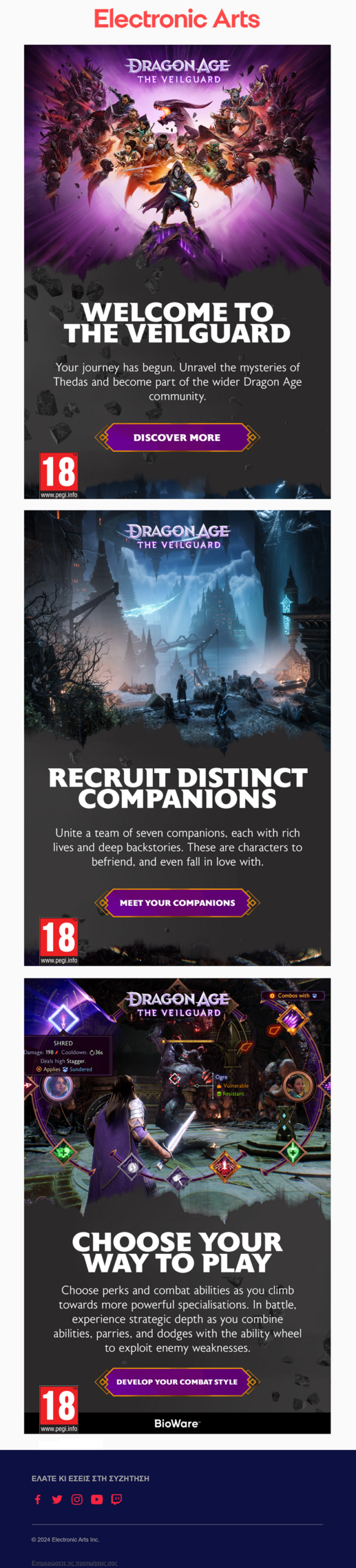
New game release emails act as a guided introduction to the world, mechanics, and characters. This launch email from Electronic Arts and BioWare introduces Dragon Age: The Veilguard through cinematic visuals and feature-focused sections, helping players understand what makes the game unique.
Subject line: Welcome to Dragon Age™: The Veilguard

Why it works:
- The opening visual features official game art with the main character. This sets the tone before any copy appears.
- The “Welcome to the Veilguard” line also introduces the world and invites players in, rather than pushing a hard sell.
- The layout is divided into sections like companions and combat style, with each block explaining a core gameplay element.
- CTAs like “Discover more,” “Meet your companions,” and “Develop your combat style” align with how players explore role-playing games (RPGs).
Tip: Limit stock photos and avoid generic AI visuals in game emails. Use real key art, in-game screenshots, or character imagery instead. Authentic assets make the email feel like an extension of the game and help players get hyped.
12. Portkey Games’ NPC introduction
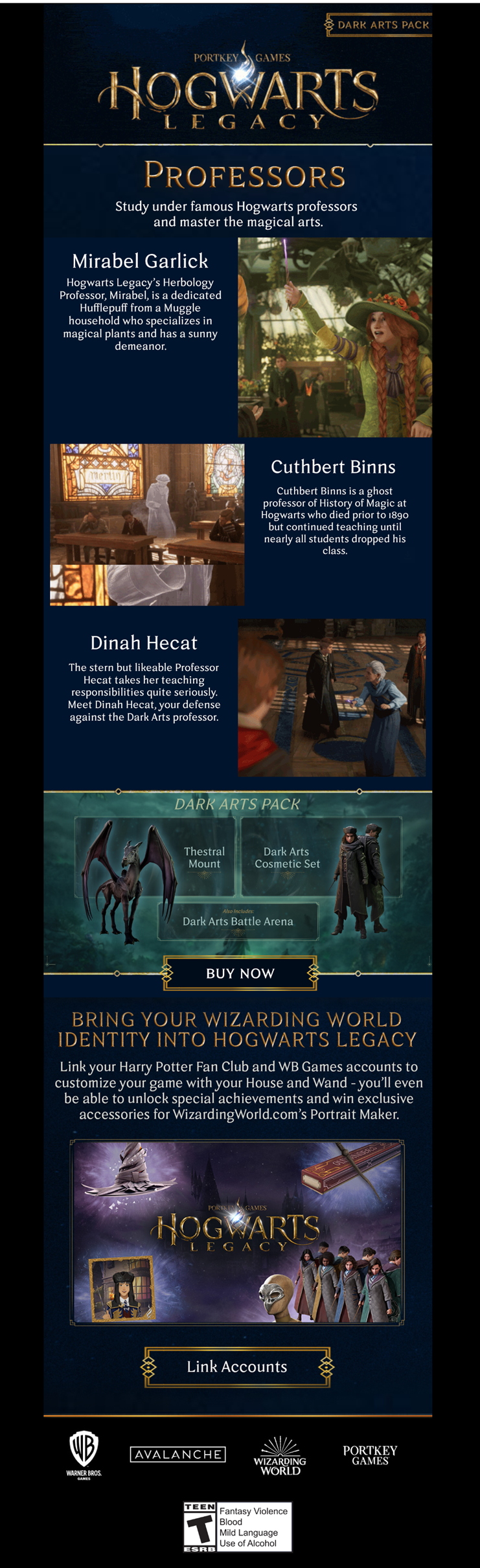
Character-focused emails are pretty common in story-driven RPGs. This campaign from Portkey Games highlights Hogwarts professors and uses animated visuals to bring them to life before players even start the game.
Subject line: 📚 Meet your Professors

Why it works:
- The subject line sets expectations and frames the email as an introduction rather than another promotion.
- GIFs of the professors performing spells make the email feel dynamic and closer to gameplay. Each one also has a short description to help players connect with their personalities before playing.
- Gold typography, deep blue backgrounds, and magical effects mirror the Hogwarts Legacy interface.
- The email starts with characters, then introduces the Dark Arts Pack. This keeps engagement high before selling.
- The final section encourages players to link their accounts to customize their experience and unlock rewards.
Tip: Use animated gameplay snippets or GIFs instead of static images. Showing characters in action makes the email feel more immersive and closer to the actual game experience.
13. Blizzard’s new season update
Seasonal updates in RPGs favor storytelling, and this campaign from Blizzard Entertainment does exactly that. The email introduces the Sins of the Horadrim season using narrative-driven copy, dark visuals, and in-world terminology to immerse players before they even click.
Subject line: Sins of the Horadrim is Now Live in Diablo IV, Marilou!

Why it works:
- The personalized subject line feels like part of the narrative, inviting the player to dive in.
- Instead of listing features, the email reads like game lore, introducing relics, monsters, and seasonal quests.
- Terms like Horadric Spellcraft, Strongrooms, and Nightmare Dungeons keep the copy relevant and unique to the Diablo universe.
- The artwork mirrors the season’s tone and complements the lore-heavy introduction.
- The email starts with atmosphere, then it smoothly introduces gameplay mechanics and battle pass content.
- The unique “Awaken your reliquary” CTA copy fits the world-building instead of using generic language.
How to Make Your Video Game Email Stand Out
The above examples show that great video game emails don’t rely on one tactic. Instead, they combine timing, relevance, and immersion to engage players. Here are a few best practices you can borrow to level up yours.
Use timing to your advantage
Gaming emails work best when they align with real in-game moments, like season launches, patch releases, limited-time events, or expiring rewards.
Send emails right before an event starts, halfway through to re-engage players, and again before it ends to create urgency. This makes the message feel helpful and timely instead of purely promotional.
Segment based on player behavior
Players are rarely at the same stage. Some just started, others haven’t logged in for weeks, and some are active every day.
Segment your audience by actions such as last login, purchases, or event participation so each group receives relevant updates. This approach keeps emails useful and prevents over-sending.
You can easily automate this process with an email marketing tool like Moosend or Constant Contact and send the right message when player behavior changes.
Combine gameplay updates with ecosystem content
Don’t limit your emails to patch notes or new features. Like Sandfall Interactive, pair gameplay updates with related content like merch drops, loyalty rewards, account linking, or community highlights.
For example, announce a new season alongside collectible items, or include wallpapers and rewards with a patch update. This gives players more ways to engage and keeps the experience active even when they’re not playing.
Keep CTAs aligned with the game world
Generic buttons like “Click here” or “Learn more” work. However, to take it a step further, use CTA copy and design that reflect the game itself.
Diablo IV, for example, used “Awaken your reliquary,” which matches the season’s lore, while BioWare styled its buttons to match the Dragon Age UI. The closer your CTAs feel to the actual experience, the more immersive and cohesive the email becomes.
Highlight value as early as possible
Place the reward or benefit early, as bonus currency, free starter packs, or limited-time unlocks, so players immediately see what they gain.
Then use story-driven copy and visuals to build atmosphere around it. This balance keeps the email engaging without sacrificing clarity, letting players feel the world while still understanding what to do next.
Extend the experience beyond the game
Keep players engaged even when they’re not playing. Include community features, UGC, wallpapers, merch, and live updates, but also highlight contests, cosplay showcases, events, and panels.
These touchpoints turn the email into a hub for the broader community and strengthen the connection beyond gameplay.
Ready to Level Up Your Game with Email?
Video game emails often feel like part of the game itself. A new season becomes a reason to return, while a reward email feels like loot waiting to be claimed.
You already have the story, the characters, and the moments players care about. Email is simply a way to bring players back when it’s time to continue.
So instead of sending another campaign, think of it as opening a quest. Build anticipation, reward curiosity, and guide players to what comes next. And remember, it’s all about the experience, so don’t be afraid to get creative.
FAQs
Here are a few common questions regarding video game email marketing.
1. What makes video game emails different from regular marketing emails?
Video game emails feel like part of the experience. They focus on updates, rewards, events, and storytelling instead of generic promotions. This helps studios build anticipation and give players a clear reason to return.
2. What types of video game emails perform best?
Launch announcements, seasonal updates, limited-time events, rewards, and personalized emails usually perform well. Transactional emails, such as confirmations and refunds, also matter because they maintain trust and clarity.
3. Should gaming studios use storytelling in email marketing?
Yes, especially for story-driven titles. Narrative copy, in-world terminology, and character-focused messaging can make emails feel immersive and aligned with the game universe.
4. What should a video game email include?
Most effective gaming emails include a clear reward or update, recognizable visuals, and a strong CTA tied to the game experience. Keeping the message focused on one main action also helps increase engagement.
5. Can non-gaming brands use video game email strategies?
The short answer is yes. The same principles apply to any industry. Building anticipation, highlighting value early, and creating immersive experiences can make any brand’s emails more engaging.
Similar Posts
 Published by

 Published by

Create, send and optimize your email marketing campaigns