








Email Marketing ROI: Benchmarks & How To Calculate It [2026]
Published By Alexandra Marinaki
July 30, 2021

30/07/21
You’ve recently started sending email marketing campaigns to your customers and wonder how profitable this tactic is for your business. So what is your email marketing ROI to date, and how can you increase it going forward?
E-commerce and email marketers know the benefits email marketing can bring to their businesses. From brand awareness to lead generation, nurturing a stable, trusting relationship with your customers and prospects can gradually lead your business to prosperity.
In this guide, we’ll share the latest updates on email ROI, with tips on measuring and maximizing it. And if you’re a beginner, let’s start at the top!
What Is ROI in Email Marketing?
Email marketing ROI (Return on Investment) is the net profit a business generates from email campaigns. It indicates how successful your email outreach is, including promotional, transactional, direct mail, and direct email marketing.
Overall, discovering this metric can help you build a sustainable growth plan over time by combining this method with additional marketing channels.
Is Email Marketing Still Effective?
The straightforward answer is yes. Actually, according to Statista, the projected number of emails sent and received globally will surpass 400 billion in 2027. But let’s look at some email marketing statistics that shed more light on email efficiency in 2026:
- The average ROI for email marketing is between $10 and $36 per dollar spent. – Litmus
- 30% of SMBs find email marketing cost-effective, while 36% claim it’s “easiest to implement” – Constant Contact
- 59% of consumers say email marketing influences their purchasing decisions. – Forbes
- 44% of small businesses say email is their most effective channel. – Constant Contact
- 36% of B2B marketers are using or plan to invest in AI-powered email marketing tools for campaign optimization and personalized email content. – CMI
- 53% of SMB owners in the US, UK, Canada, and Australia used email marketing more than any other strategy to generate leads and retain repeat customers. – Constant Contact
- Email marketing is the second-best channel for B2B marketers by ROI (23.6%), with the first being the website (30.2%) and paid social media content coming in third (23.3%) – HubSpot
- A staggering 76% of automation-generated orders for eCommerce came from abandoned cart and welcome emails – Omnisend
- Triggered emails have higher open rates (45.38%) and click-through rates (5.02%) than regular newsletters (40.08% and 3.84%, respectively). – GetResponse
As you can understand, email marketing has gained solid ground over the years and has established itself as a successful marketing tool. Plus, methods such as customer segmentation and welcome emails can be highly profitable when implemented effectively.
You’ve seen the numbers.
Now it’s your turn to boost your email marketing ROI, hassle-free.
Try MoosendHow To Calculate Your Email Marketing ROI
Now that you’ve learned all these notable trends, it’s time to measure your business email ROI and see how much profit you gain. Here is the equation you can use:

First, to measure your email marketing net gain, estimate the profit from direct sales or leads your campaigns generate. Then, calculate all your costs, for example, your marketing automation platform and team bandwidth, and follow the formula to get an overview of the actual performance of your campaigns.
Ready to measure your revenue? Use this ROI calculator to save time.
Top Email Marketing ROI Metrics To Monitor
Every email campaign has a purpose. For example, an abandoned cart email aims to boost sales, while a content newsletter in a B2B customer journey aims to move leads down the marketing funnel. Here are some top KPIs to consider for your email marketing strategy:
Engagement
One crucial marketing aspect to consider is how engaged recipients are with your emails. If they find your messages interesting and relevant, they may engage more with your brand and eventually become loyal customers.
To measure engagement, marketers use email open rates, which indicate how many people opened your campaigns, and click-through rates (CTR), which show how many clicked on those messages.
But email engagement goes beyond that. Tracking replies, forwards, and how subscribers interact with your content can show you who’s truly engaged.
Follow the practices below on specific stages of the sales funnel to craft engaging emails and limit unsubscribes:

Website traffic
Most of your emails will redirect subscribers to your website, where they can learn more about your products and services. Through those interactions, your website traffic will increase, leading to increased purchases in the future.
Plus, adding assets like social media profiles can create new opportunities to connect with customers or prospects and build long-lasting relationships. You can analyze your website traffic using a platform like Google Analytics.
Email-generated sales
Next, you can estimate the purchases that resulted from your email campaigns. See how many people became customers after clicking your calls-to-action (CTAs) to understand your campaigns’ impact. Analyze what made each campaign successful to replicate those positive results in the future. You can tailor the email ROI formula shared above for the specific email you want to analyze.
Conversion rates
Beyond direct sales, emails can serve other purposes, such as lead generation.
For instance, if you include a CTA in your email that leads to a landing page with a sign-up form to collect new email addresses, estimate the number of conversions you gained and keep nurturing qualified leads.
Impact on revenue
Finally, you can measure the impact of your email marketing efforts relative to other digital marketing and sales methods you use, such as content marketing, SEO, or social media. Once you have a clearer view of what works and what needs improvement, you can adjust your strategy accordingly.
The information above shows that the path to email marketing ROI isn’t always easy to track. It takes sustained effort to uncover the net gain from your promotional and transactional emails. That’s why email automation software like Moosend, with its reporting and analytics features, can be game-changing.
How to Boost Your Email Marketing ROI
If you’re looking for new ways to maximize your average email ROI, here are some email marketing tips to follow.
Set clear and flexible goals
As you saw earlier, tracking the right metrics is key to understanding your email ROI. But to turn insights into results, you need clear goals that guide your strategy without boxing you in.
Instead of relying solely on rigid frameworks like SMART, you can set objectives that adapt and evolve as you learn what resonates with your audience.
For example, a birthday email campaign might aim to spark conversations or generate shares, not just clicks or sales. You can do this by offering personalized gifts your customers truly value, plus an extra incentive or discount if they share your email with their peers.
Use measurable, relevant goals to keep campaigns focused. At the same time, stay flexible enough to adjust as subscribers engage in unexpected ways. This blend of SMART and dynamic goals helps you understand how your audience responds to your campaigns and adjust your strategy, building lasting relationships and achieving real-world results.
Find a top email automation platform
According to the email marketing stats above, some email types drive higher engagement and ensure a bigger return on investment. For example, triggered and welcome emails fall into that category and drive higher open rates. To schedule them, find an automation platform with powerful capabilities to automate repetitive operational tasks.
A tool like Moosend or Mailchimp will let you manage all your tasks in one place. For example, with Moosend’s ready-made automated recipes, you can create triggered emails in a flash by placing criteria such as order history or demographics.
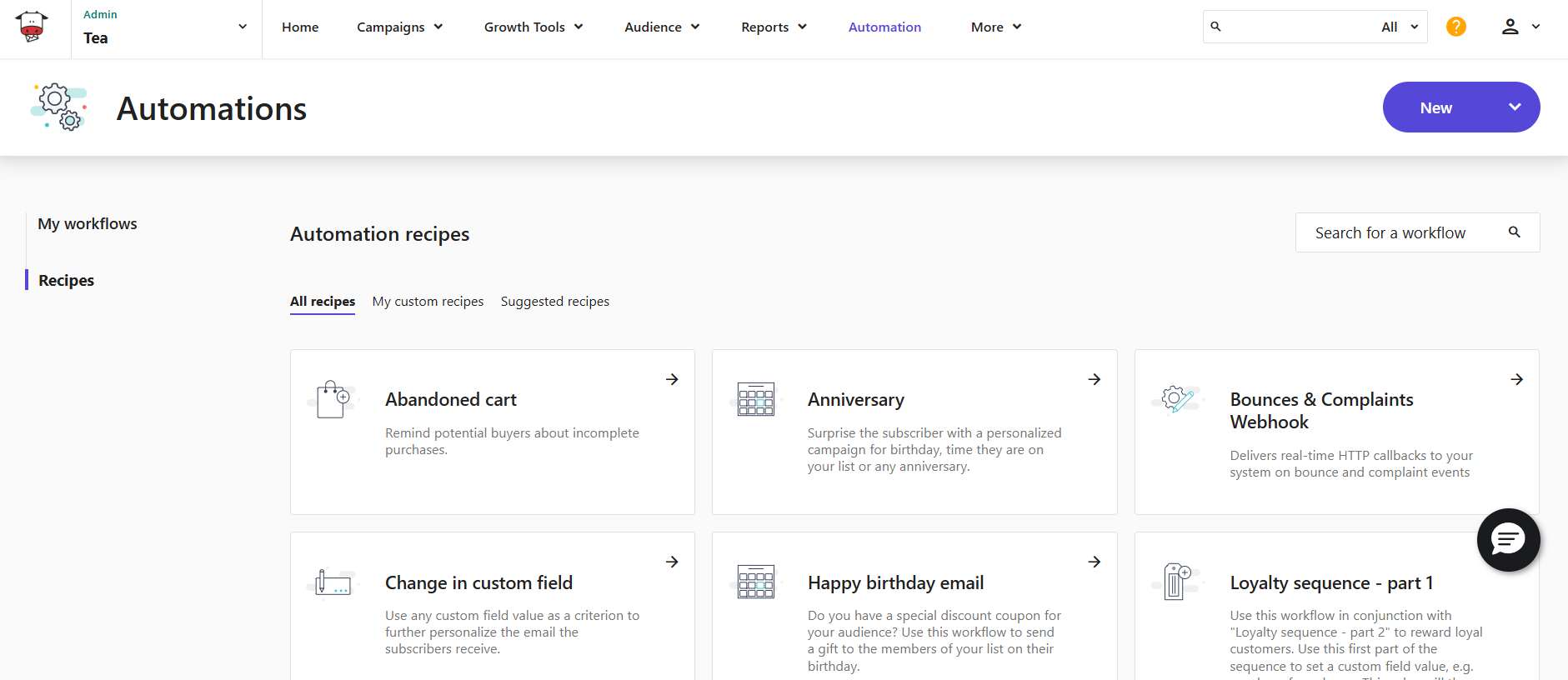
Plus, you can have access to sophisticated analytics and reports that show your recipients’ behavior. You can also connect it with other marketing services, such as your CRM system, to extract rich data from customer interactions.
Design attractive emails that convert
If you want emails that convert, consider email design and copywriting. Here are some key factors to take into consideration:
- Write a relevant subject line that is hard to ignore.
- Create compelling copy that reflects your brand voice.
- Design a CTA that is easy to spot and drives clicks.
Here is a great welcome email example by Huppy:
Subject line: Welcome to the fam 🙂

Remember, your email messaging should reflect the goal and set the right expectations for readers. This makes it easier for customers and prospects to understand the required action and take it.
Focus on segmentation and personalization
Segmented and personalized emails are linked to higher open rates. By dividing your customer base into targeted email lists, you can create personalized marketing messages that boost your click rates based on demographics or other criteria.
Again, a marketing automation tool will be an asset for this process. Once your new email users receive a highly targeted, relevant message from your brand, they are more likely to engage and ultimately convert.
Plus, personalized email subject lines can yield better engagement. You can also A/B test to see which subject line performs better for your audience and make it the winner.
Secure email deliverability
One of the biggest allies of email ROI is email deliverability. To avoid high bounce rates that can harm your sender’s reputation, update your email lists regularly.
On the other hand, one of the biggest foes of your ROI is your recipients’ spam folder. To reach your subscribers’ inboxes, use an email spam checker to see whether your emails can pass ISP and email-client filters.
Build a mobile-friendly user experience
Did you know that 41.9% of emails are opened on mobile devices? This means that lots of your subscribers will interact with your messages on their smartphones. That’s why you should ensure a spotless mobile user experience to help readers convert without switching devices.
Prioritize meaningful engagement with your audience
Without meaningful engagement, the most common metrics (for example, your CTR or email opens) can be categorized as surface-level indicators, or “vanity metrics.”
To measure genuine interest and deeper connections, start combining your open or click-through rates with metrics that show:
- Direct interaction, like replies
- Content value, like forwards and shares
- Intent to revisit the email, like email saves
- Quality engagement, like conversions per engaged user
These metrics offer a clear picture not only of the attention a recipient pays to your email but also of the depth of the connection your brand or business has established with them.
Boost Your Business ROI Through Email Marketing
Whether you operate a small business or a corporation, email marketing can drive growth and deliver a stable ROI.
Look at our email marketing stats and monitor your industry’s email benchmark data, such as average return on investment, to understand what works in your field. Then follow the practices we shared, and you’ll start reaping the benefits sooner than you’d expect!
Are you looking for a new email automation platform to increase your ROI? Sign up for a free Moosend account and build emails that convert in a flash.
Similar Posts
 Published by



Create, send and optimize your email marketing campaigns