







How to Get Email Addresses for Email Marketing: 12 Simple Ways [2026]
Published By Marilia Dimitriou
November 18, 2026

18/11/26
You want to grow your email list, but you’re not sure how to collect email addresses for email marketing.
Maybe you’ve added a signup form or a pop-up and expected results. Maybe you’re still figuring out where to start.
Then you notice other brands growing faster. That raises a simple question: what are they doing differently? At that point, quick fixes like buying an email list or using “instant growth” tactics start to look tempting. But these shortcuts can do more than hurt your deliverability. They can violate email marketing laws like CAN-SPAM and GDPR, expose your business to fines, and damage the trust you’ve worked hard to build.
This guide shows you practical ways to grow your email list across multiple channels. You’ll also learn best practices and why organic growth is the only approach that works long-term.
Grow your email list the right way
Collect subscribers with Moosend’s easy-to-use signup tools.
Try for freeWhat Makes a “Good” Email Address?
It’s easy to think every new contact is a win, especially if you don’t have an email list yet. More emails should mean better results, right?
But once you start sending campaigns, that assumption doesn’t really hold.
Some contacts will never open your emails, others may have signed up by accident, and some might not be interested in your products or services because they don’t match their needs or budget. Over time, these contacts pile up, lowering engagement rates and making it harder to understand what’s actually working.
So what makes a quality contact? Here are a few things to identify them:
- They signed up on purpose, not added from a list or collected elsewhere.
- You know where they came from, whether it was a form, a download, or a webinar.
- They open or click at least once after joining.
- You can group them based on what they signed up for or how they interacted.
- They stay active over time without bouncing, triggering complaints, or unsubscribing right away.
A list of quality contacts gives you more than just people to email. It helps you understand your audience, what they’re interested in, and how they engage with your content. With that information, you can send more relevant messages, choose the right time to reach them, and build stronger relationships that lead to better results.
Core Principles of Ethical Email Address Collection
Before you start collecting email addresses, understand how to do it the right way. This will help you stay compliant and build a list of engaged subscribers.
Here’s how to collect email addresses for email marketing the ethical way.
Offer something worth signing up for
People don’t give their email addresses for no reason, so you need a clear, relevant benefit.
For example, an eCommerce store can offer a first-order discount or early access to new products to encourage shoppers to join the list. Similarly, a SaaS company can offer a free trial, demo, or whitepaper to turn interested visitors into subscribers.
Be clear about what happens next
When someone shares their email, they’re trusting you with access to their inbox. That means they should know exactly what they’re signing up for.
Be clear about what kind of messages you’ll send and how often they’ll hear from you, e.g., weekly or monthly. This can be as simple as a short line next to your form.
Transparency does two things here. It helps people make an informed decision before signing up, and it prevents confusion or frustration later.
Always collect emails with consent
Only add people to your list when they actively choose to subscribe. That means clear opt-in forms, no pre-checked boxes, and no vague language about what they’re agreeing to.
This isn’t just a best practice. In many regions, consent and email privacy are strictly regulated, so you must comply. To name a few:
- GDPR: You need explicit, informed consent before sending marketing emails. Users must know what they’re signing up for, and you should be able to prove that consent if needed.
- CAN-SPAM: You can send emails without prior consent in some cases, but you must clearly identify your messages, include your business details, and always provide an easy way to unsubscribe.
- ePrivacy Directive (cookie law): Works alongside GDPR and requires prior consent for most marketing emails, especially in B2C communication.
Further reading: For more on email laws and regulations, take a look at our email privacy guide.
Make it easy to leave or adjust preferences
When someone joins your list, they should also feel like they’re in control.
That starts with a clear unsubscribe option in every email, usually located in the footer at the bottom of the message. It should take one or two clicks to leave your list. Anything longer than that can frustrate subscribers and increase the chances of spam complaints.
At the same time, not everyone wants to leave completely. Some people just want fewer emails or different content.
That’s why it helps to offer simple preference options. Let people choose how often they hear from you or which topics interest them. This gives them a reason to stay instead of leaving.
Respect and protect user data
A good rule of thumb is to collect only what you actually need. In most cases, an email address and a name are enough. Asking for more without a clear reason can lower conversions and raise concerns.
If you need additional details like location or age, be clear about why. Your privacy policy should explain what you collect and how it’s used. If you’ll use emails for specific campaigns or share them with tools, state that upfront.
It’s also important to keep data secure and use it as expected. So, avoid reselling lists, sharing contacts without consent, or sending emails outside of what people signed up for.
Best Ways to Collect Email Addresses for Email Marketing
Below, we’ll look at how to get email addresses through your website, content, social media, outreach, and even offline interactions, so you can use each channel effectively.
1. Add a signup form on your website
Your homepage is often the first place people land, making it one of the easiest ways to start collecting email addresses.
A common approach is to add a simple signup form that users naturally scroll to, usually toward the middle or bottom of the page.
For example, Anua has a “Stay in touch” form on its homepage that offers exclusive discounts and product updates in exchange for an email address. See how clear, visible, and easy it is to act on it?

The goal here isn’t to interrupt visitors but to give them an easy way to subscribe while they’re already browsing your website.
A good newsletter signup form should have:
- A short message that explains the value (discounts, updates, early access)
- One or two input fields (if necessary to collect additional information)
- A clear call-to-action
This approach works because visitors are already exploring your brand and may want to hear more from you. A well-placed form makes it easy for them to take that next step.
2. Use a hello bar for constant visibility
A hello bar is the thin strip you usually see at the top of a website. It stays visible as visitors scroll, which makes it a simple way to keep your email signup form in front of them without interrupting their experience.
So, instead of waiting for someone to reach your footer or scroll to the bottom of the page, a hello bar keeps the option to subscribe always accessible.
You can use it to:
- Highlight a discount or limited-time offer
- Promote the benefits of joining your newsletter
- Drive traffic to a dedicated signup landing page
The key is to keep it short and clear. One line of value and a strong call-to-action are enough.
While most brands use it for promotions, it can also help grow your email list.
Take MontBlanc, for example:

The top bar clearly promotes a newsletter signup offer (“€20 off on orders above €350”), giving users a good reason to join the list.
Instead of just showing a generic promotion, it connects the benefit directly to email signup. The copy is also simple, visible as soon as you land on the site, and tied to something users care about.
3. Capture subscribers with pop-ups
Pop-ups are one of the most direct ways to collect email addresses, as long as they appear at the right moment.
You can find different formats:
- Modal pop-ups: Appear in the center of the screen
- Exit-intent pop-ups: Show when users are just about to leave
- Timed or scroll-based pop-ups: Trigger after a few seconds or once users engage with the page
The key to this email collection method is timing. You don’t want to interrupt too early, but you do want to show the offer when there’s already some interest.
For example, The Oodie offers a 15% discount on the first purchase in exchange for an email address and name.
Here, the user has already browsed enough to be interested, so the discount feels relevant.

Like website signup forms, keep them simple and focused. Offer a clear benefit (discount, exclusive access), use a short form, and show them at the right moment based on user behavior.
You can also make them more engaging with visuals like images, GIFs, or color, as long as they support the message and don’t distract from it.
At the same time, avoid common form mistakes that hurt performance. Overloading your pop-up with design clutter, ignoring mobile optimization, or getting the timing wrong can quickly reduce conversions.
Once you have the basics in place, you can start experimenting. Small changes in timing, copy, or the offer itself can noticeably improve your conversion rates.
4. Create a dedicated newsletter signup page
Beyond homepage forms and pop-ups, many brands also create a newsletter signup page, often found under “Resources,” “Newsletter,” or “Subscribe.”
This works well for visitors who are already interested and want to learn more before signing up.
Similarly, you can create a dedicated newsletter signup landing page focused on driving signups, with fewer distractions and a clearer value proposition.
Constant Contact, for example, has a newsletter signup page found under “Resources.”

Instead of just asking for an email, the page clearly explains what subscribers will get, from tips and templates to webinars and industry insights. It also sets expectations by mentioning how often emails are sent.
That extra context can really make a difference. So, use a dedicated signup page if you want to:
- Explain the value in more detail
- Show what kind of content people will receive
- Build trust before asking for the email
Both SaaS and eCommerce businesses can use this tactic to collect email addresses. For SaaS, highlight useful tips and resources; for eCommerce, focus on exclusive offers, early access, or loyalty perks.
You can also include short testimonials from existing subscribers about what they enjoy most about your emails. This adds social proof and gives new visitors another reason to sign up.
While this won’t replace quick signup forms, it supports them by giving interested users a place to convert when they need more information.
Additional resources:
5. Offer a lead magnet
Sometimes a form isn’t enough on its own. People need a reason to stop, consider, and actually share their email.
That’s where lead magnets come in. HubSpot, for instance, gives a marketing dashboard template that helps users track campaign performance.
In this case, you’re not really asking people to join your list. You’re helping them solve a problem, and the signup simply becomes part of getting that resource.

Lead magnets can work across different use cases:
- SaaS companies can provide tools, templates, or frameworks
- eCommerce brands can share discounts, bundles, or early access
- Content-driven brands can create guides, reports, or exclusive insights
The closer the offer is to what someone is already doing, the more natural the signup feels.
6. Add forms to existing blog posts
If you’re already creating content, you’re bringing people to your website who may be interested in what you offer. The next step is to turn the right visitors into subscribers by giving them a relevant reason to sign up.
Instead of relying on a single generic form at the end of every post, you can tailor your signup forms to match the content your visitors are reading.
Instead, you can place:
- Short inline CTAs within the content
- Content-specific offers tied to the topic
- A more detailed signup form toward the end of the post
Here’s how Drip uses this tactic to get email addresses for marketing purposes:

Found inside their blog post, the brand uses a full form that explains the value, sets expectations, and shows what users will get over time.
The form is also placed before the conclusion, where readers already understand the content and are more likely to convert.
To make this method work, ensure you:
- Match the offer to the content (don’t use the same form everywhere)
- Keep early CTAs light and low-commitment
- Use a stronger, more detailed form near the conclusion
This way, your content turns readers into subscribers at the right moment.
7. Use webinars and events for high-intent subscribers
Webinars work similarly to lead magnets, but with a key difference. Instead of offering instant access to a resource, you invite people to an interactive experience with a direct learning benefit.
Slack’s webinar landing page clearly explains what the session covers, who it’s for, and what attendees will learn.

The form sits alongside that value, so signing up feels like the next step rather than a separate ask. And because people register for a specific reason, those contacts are usually higher quality.
When you use webinars to collect email addresses, you’re bringing in people with a clear interest in a topic; you understand what they care about, and you already have a reason to follow up after the event.
This is what makes webinars powerful for list growth. To make this tactic work:
- Focus on a specific topic your audience cares about
- Be clear about what they’ll learn or gain
- Use the registration form to collect only what you need
You can apply the same approach to on-demand webinars, workshops, or gated sessions. When the value is clear, signup becomes part of the experience.
Further reading: For your follow-up emails, you can check out these event newsletter templates to get started faster.
8. Run giveaways
Giveaways are another simple way to get email addresses without asking for much upfront. They’re a natural fit for eCommerce, much like webinars are for SaaS, because they build hype and encourage signups.
Meowingtons, for instance, uses a pop-up to offer a chance to win a $50 gift card and asks only for an email to enter. It’s quick, easy, and removes friction.

Unlike webinars, not every contact will be equally valuable. Some people sign up for the prize, not the brand.
To make giveaways useful for email list building:
- Pick a prize that attracts the right audience.
- Make it clear they’re joining your email list
- Follow up and segment based on engagement
Used this way, giveaways help you collect a high volume of emails while still keeping your list relevant.
9. Turn social media into a traffic source
Social media is where attention starts, but email is where you capture it. The goal isn’t to collect emails on the platform itself, but to move people to a place where they can sign up.
Here’s how to do it in practice:
- LinkedIn (for B2B): Share a quick insight or result, then add a simple CTA like “Download the template” and link to your signup page.
- Instagram & TikTok: Post a short tip or demo and direct people to your link in bio, which should lead to a dedicated signup page.
- Twitter/X: Share short threads and end with a clear CTA like “Get the full checklist,” linking to your landing page.
- YouTube: Place the link to your form or landing page in the description and pinned comment.
- Facebook: Add a “Sign Up” button to your page that links directly to your signup or landing page. You can add it by changing your page’s action button through the settings.
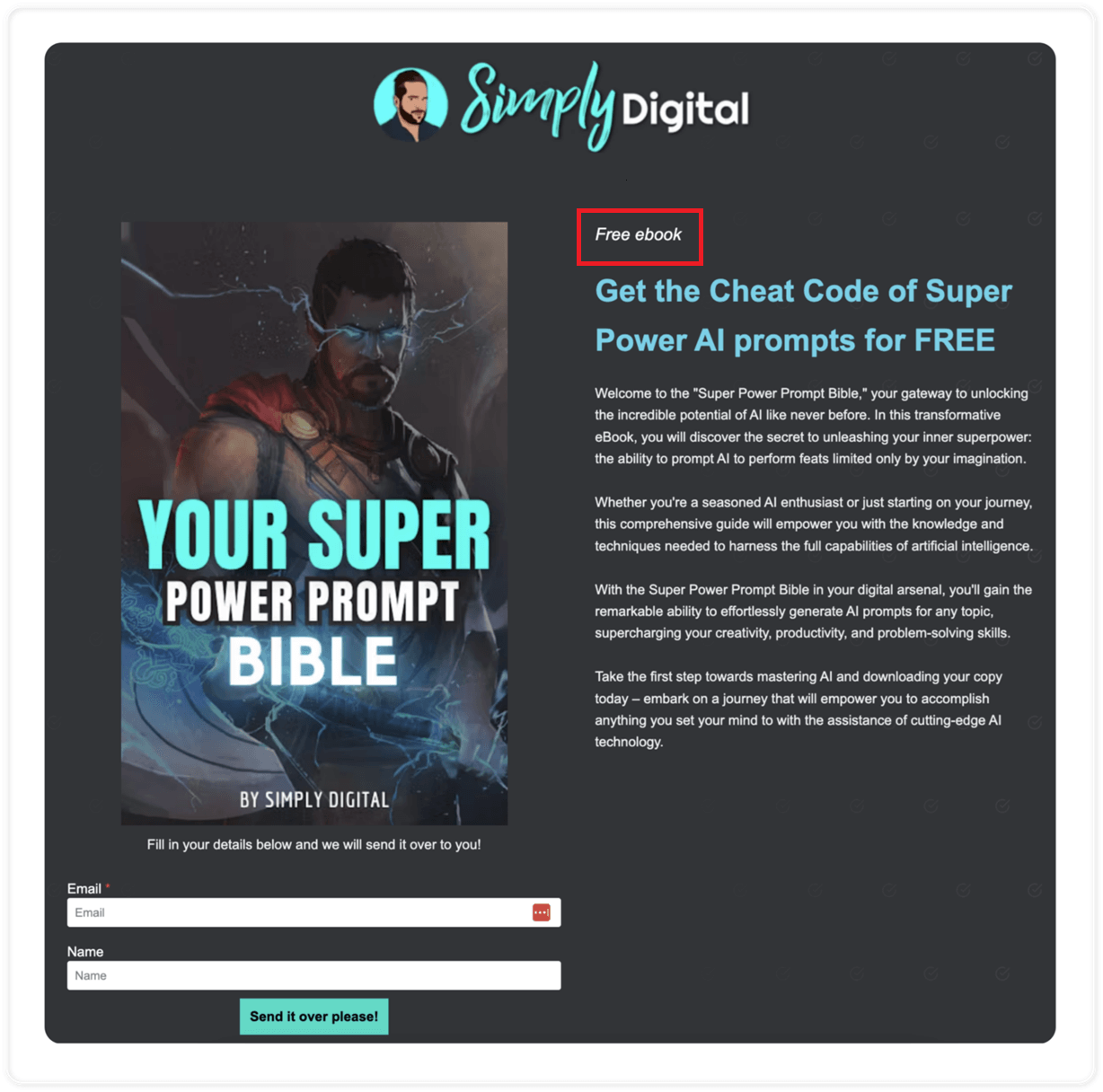
A good example of using social media to collect email addresses comes from SimplyDigital:
They created a set of AI prompts that solve common problems and promoted them across social media. Instead of asking people to “join a list,” they sent users to a landing page built in Moosend’s editor to download the resource.
10. Consider using paid ads
Organic posts help, but ads like Google Ads and Facebook Lead Ads give you extra reach and control.
Instead of promoting your product, run ads around something people already want, like a guide, a discount, or early access. The goal is to attract the right audience and send them to a landing page to sign up.
This works because everything is aligned, from the audience and message to the offer.
Also consider your budget. Running ads requires investment, and results don’t always come instantly. You’ll need to test different creatives, audiences, and offers to find what works.
Once you do, though, ads can become a reliable way to bring in new email subscribers when you need a boost.
11. Collect emails at offline events
Offline moments are often overlooked, but they can bring in some of your most engaged contacts.
When someone attends your event, listens to your talk, or interacts with your brand in person, they’re already interested. The goal is to make the next step easy.
One simple way to do this is with QR codes.
For example, Moosend used a live survey during an event where attendees scanned a QR code to participate.

While collecting responses, they also gave users the option to share their email, turning a quick interaction into a future marketing touchpoint.
That’s what makes this tactic effective. It feels natural and tied to the experience.
To use it for your business:
- Link the QR code to a simple form or landing page
- Offer something relevant (survey results, slides, a resource)
- Keep the form short and easy to complete
Also, be clear about what happens next. If you plan to use those emails for marketing, include a short note or checkbox so users know what they’re signing up for.
When done right, collecting emails at events gives interested people an easy way to stay in touch with your brand.
12. Capture email addresses in-store
If you run a retail store, your physical location is the perfect place to integrate your online and offline marketing efforts.
Think about what happens at checkout. Customers are already engaged and making a purchase, which makes it a good moment to ask for their email.
A common approach is what you’ll see in stores like GAP. While signing up for a loyalty program or collecting points, you’re asked to fill in your email as part of the process. In return, you get rewards, discounts, or member benefits. At the same time, there’s usually a short privacy note explaining how your email will be used.
You can also collect emails through:
- Tablets or POS systems at checkout
- Loyalty or rewards program signups
- Digital receipts instead of printed ones
When customers understand what they’re getting and how their data will be used, signing up will feel like part of the experience.
Further reading: For more strategies and examples, check our retail email marketing guide.
How to Optimize Your Email Collection Strategy
Once you’ve started collecting email addresses through different channels, the next step is to make those efforts more effective.
Small changes in how you present your forms, offers, and flow can make a big difference in how many people actually sign up and how valuable those contacts are.
Track your performance
It’s easy to focus on how many emails you’ve collected, but list size alone doesn’t tell you much about quality or performance.
What matters is how those contacts behave after they sign up.
Focus on a few key metrics:
- Conversion rate: The number of visitors who actually subscribe. This shows how effective your forms and offers are.
- Bounce rate: How many emails are invalid or undeliverable. A high number usually means a poor-quality collection.
- Early engagement: Whether new subscribers open or click your first emails. This is one of the clearest signals that you’re attracting the right audience.
You can also look at where signups come from. A form on your blog might perform very differently from a pop-up or a social campaign.
These metrics give you valuable insights. For instance, if conversion is low, you can improve the form or offer. If engagement is low, adjust targeting or messaging.
Once you understand what’s working and what isn’t, you can test and improve with more confidence.
Test what actually drives signups
Instead of assuming what may work, use A/B testing. This means showing two versions of the same element to different users and measuring which one leads to more signups.
Start small and test one variable at a time so you can clearly see what made the difference. You don’t need advanced setups to begin. Most landing page or form builder tools let you duplicate a form or page and tweak one element.
Then, you can focus on areas that directly impact decisions:
- The headline or value message
- The CTA wording
- The offer itself (discount vs. resource)
- The timing or placement (e.g., when a pop-up appears)
For example, you can test “Get 10% off your first order” against “Join for exclusive offers,” or compare a pop-up that appears immediately with one that shows after 10–15 seconds.
Let the test run long enough to gather meaningful data, then choose the better-performing version and move on to the next improvement.
These small, consistent tests will help you understand what your audience responds to and steadily increase your signup rate.
Reduce friction in the signup flow
As we mentioned above, the easier it is to sign up, the more people will do it.
Avoid things that slow users down, like long forms, too many options, or unclear next steps. If someone has to think about what to do, they’re more likely to leave.
A good rule is to match effort with value. If you’re offering something simple, like a discount, keep the form minimal. If the offer is more detailed, like a webinar, you can ask for a bit more information.
Match the experience to the channel
People don’t arrive with the same intent everywhere, so your signup shouldn’t look the same everywhere either.
Someone reading a blog post is in learning mode. Someone coming from a social ad is curious but not fully invested. A visitor on your homepage might be exploring your brand or ready to buy.
That context should shape what you show them.
For example:
- A blog reader is more likely to respond to a checklist, guide, or content upgrade tied to what they’re reading
- A social media visitor needs a clear, quick value hook that matches the ad or post they clicked
- A homepage visitor might respond better to a discount, early access, or brand updates
Remember, when the experience feels connected from start to finish, signing up becomes a reasonable next step instead of a disconnect.
Why Buying Email Lists Is a Bad Idea
Buying email lists might seem like a quick way to grow, but it creates more problems than it solves.
These contacts didn’t choose to hear from you, so engagement is low from the start. Many emails will bounce, others may mark your messages as spam, and over time, this damages your sender reputation and deliverability.
There are also legal risks. Regulations like GDPR require clear consent, and failing to obtain it can lead to penalties. Most importantly, it doesn’t support real growth. A large list means nothing if the people on it don’t care about your emails.
So, in a nutshell, buying lists slows you down instead of helping you move forward.
Grow Your List the Organic Way
Growing an email list takes time, but attracting the right subscribers is worth the effort.
When people willingly sign up because they’re interested in what you offer, you build an audience more likely to engage with your emails.
Shortcuts like buying email lists might promise faster growth, but they often lead to low engagement, deliverability issues, and even legal risks.
Instead, focus on giving people a good reason to subscribe, whether that’s useful content, exclusive offers, or resources that solve their problems. This way, you’ll build a list of contacts who are genuinely interested in hearing from your brand.
And you don’t have to do it all yourself. Sign up for a free Moosend account to create signup forms and landing pages, collect new subscribers, and keep them engaged with targeted email campaigns.
FAQs
Here are some common questions about how to get email addresses for email marketing.
1. What is the best way to collect email addresses for marketing?
Use opt-in forms combined with a clear value, such as a discount, a lead magnet, or useful content. People sign up when there’s a reason, not just because a form exists.
2. How can I grow my email list from scratch?
Start on your website with a simple signup form and a clear offer. Then expand to content, social media, and campaigns that drive traffic to a landing page.
3. What is a lead magnet, and why does it work?
A lead magnet is something valuable you offer in exchange for an email address, such as a free ebook, checklist, template, or discount code. It works because it gives visitors an immediate benefit or helps them solve a specific problem, making them more likely to subscribe.
4. Can I collect email addresses from social media?
You can use platforms like Instagram, Facebook, LinkedIn, and TikTok to promote your newsletter and encourage subscriptions. Share valuable content, exclusive offers, or free resources, and direct interested users to a signup form or landing page through your posts, bio links, or ads.
5. How many fields should a signup form have?
As few as possible. In most cases, just an email address is enough to maximize conversions.
6. How do I know if my email list is high quality?
Look at key metrics like open rates, click-through rates, and bounce rates. High engagement shows that subscribers are interested in your content, while a low bounce rate suggests your email addresses are valid and deliverable. You should also monitor unsubscribe rates and spam complaints to identify potential issues with your list quality.
Similar Posts

 Published by

 Published by
Create, send and optimize your email marketing campaigns