














Emojis in Subject Lines: What 69,000 Emails Reveal [Survey]
Published By Marilia Dimitriou
December 9, 2025

09/12/25
Some people can hold a full conversation in emoji, but when it comes to inboxes, does 🔥 mean “open me” or “send me to spam?”
To find out, we analyzed more than 69,000 subject lines from our email database. What we discovered might surprise you. Emojis can lift open rates, but careless use can hurt deliverability or make your brand look spammy.
The good news is that, when used intentionally, the right emoji can help a subject line stand out.
In this post, we’ll show you when emojis in subject lines work best, reveal the most frequently used ones, and share tips to make your emails eye-catching without the risk of the spam folder.
Key Findings
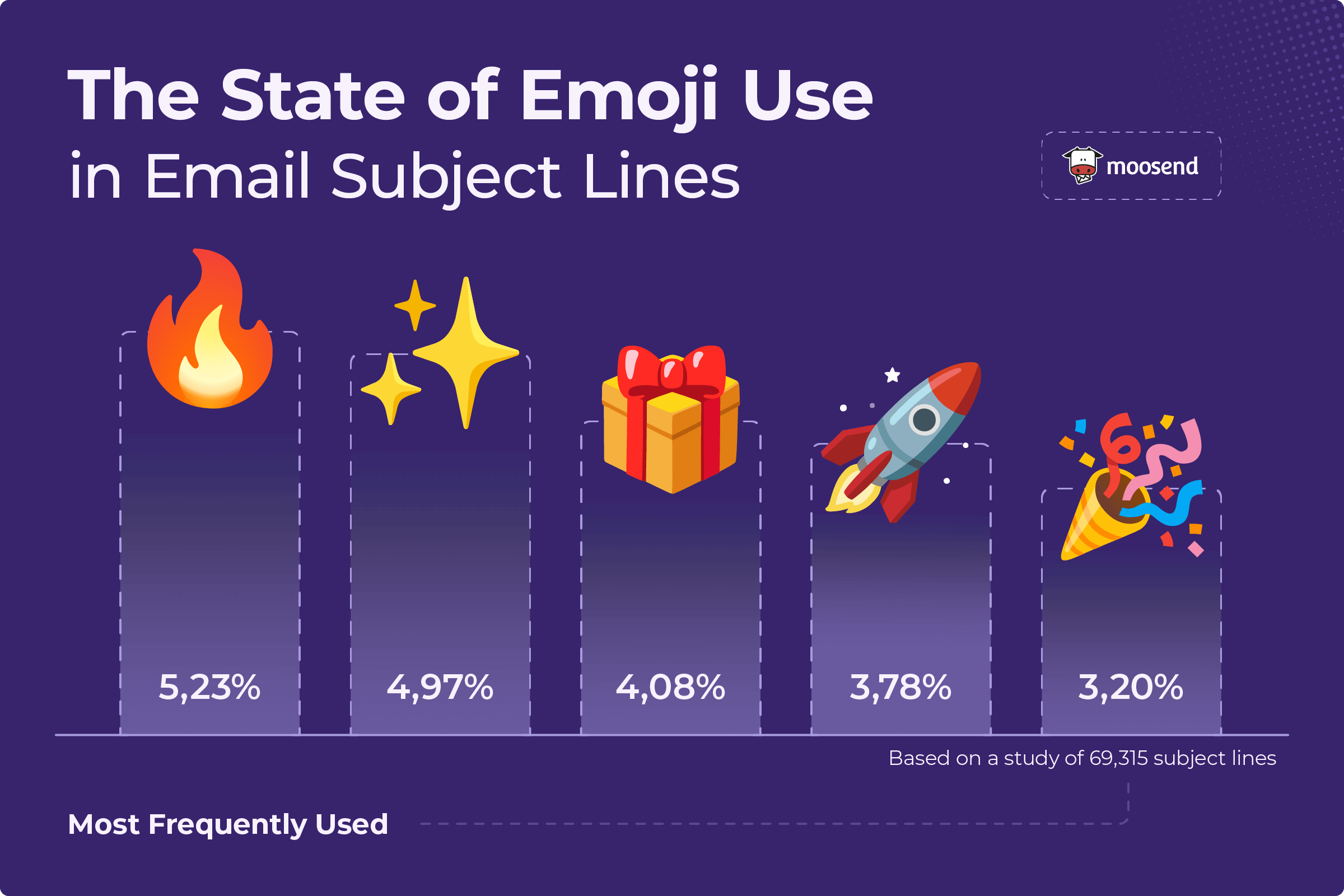
Out of 69,315 subject lines, 19,211 included emojis. That’s roughly 28% of all subject lines analyzed.
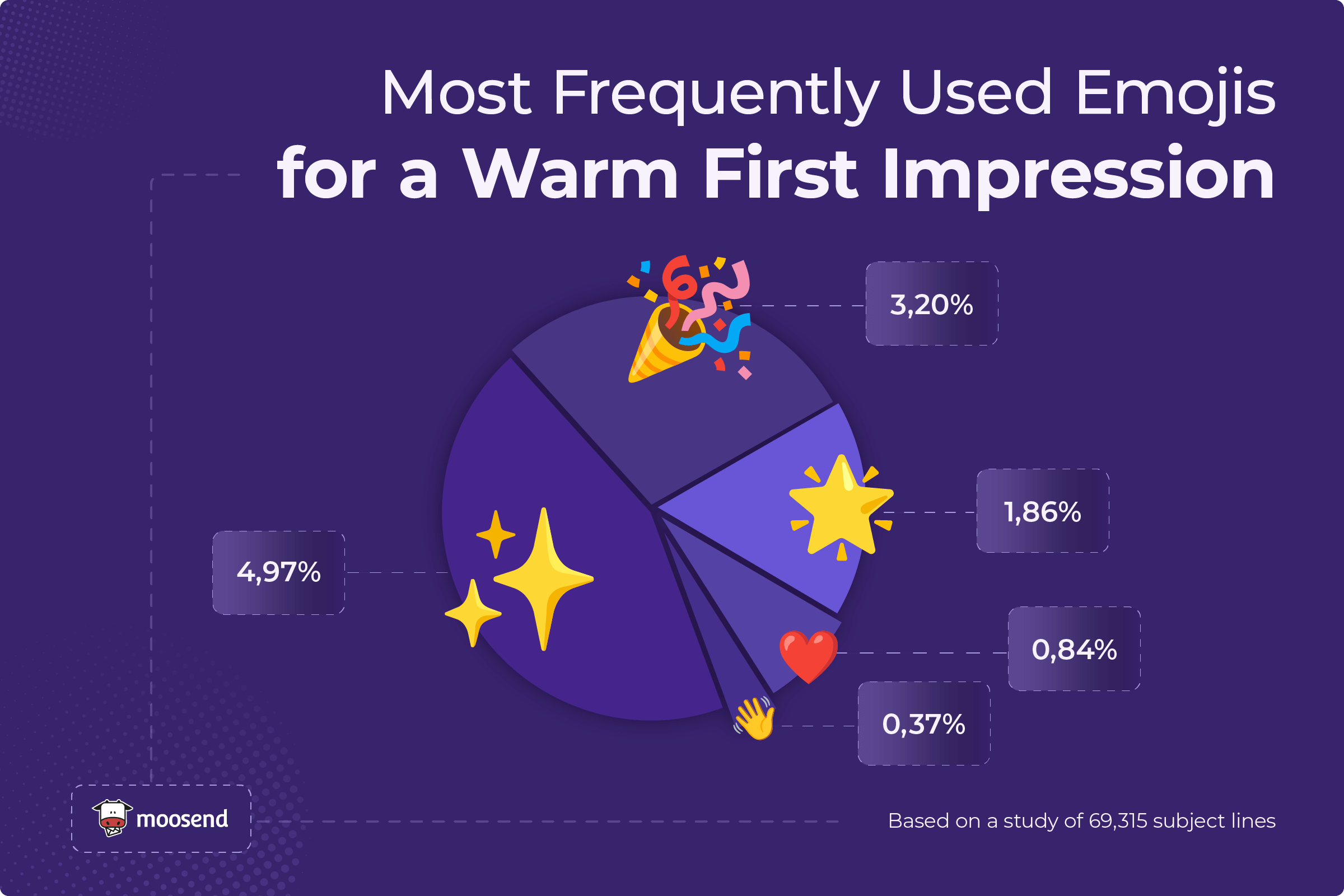
Here are the most frequently used ones found in our dataset:
Other notable findings:
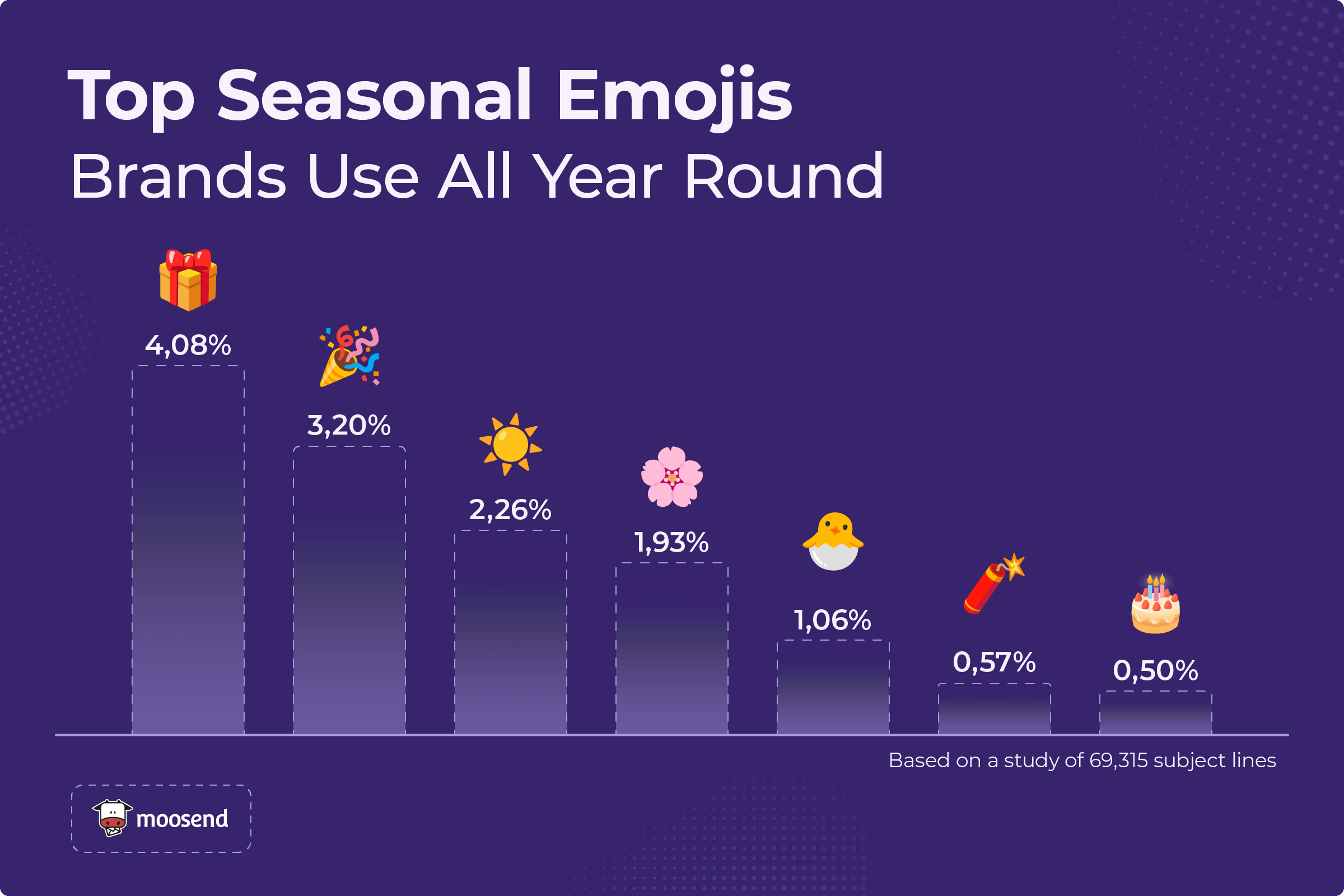
- Seasonal and event campaigns rely heavily on emojis. Common picks include: ✨ (4.97%), 🎁 (4.08%), ☀️ (2.26%), 🌸 (1.93%), and 🌴 (0.64%)
- Emojis that signal trust or confirmation appear frequently: ✔ (2.89%) and ✅ (1.13%) are commonly used in promotions, receipts, and updates to indicate that something is approved or completed.
- Dog emojis dominate the inbox. Together, 🐕, 🦮, 🐶, and 🐾 appear around 817 times (4.25%), while cat emojis 🐈, 🐱, and 😻 show up only about 148 times (0.70%).
- Money emojis are also common despite the risk of appearing spammy: 🤑 (1.05%), 💰 (1.01%), and 💸 (0.72%).
Do You Really Need Emojis in Your Subject Lines?
Marketers often assume that adding an emoji will automatically increase open rates. The truth is a little more complicated. Emojis don’t guarantee better performance, but they can boost visibility in a crowded inbox.
Take a look at the image of the inbox below.
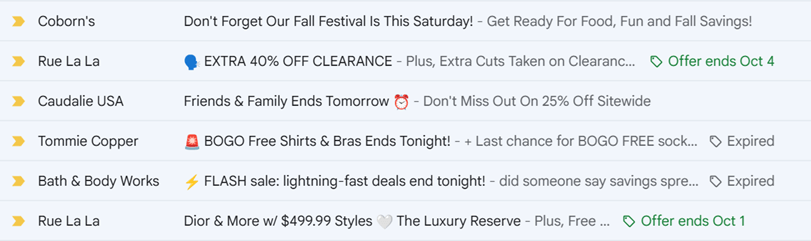
The siren (🚨) and lightning bolt (⚡) emojis immediately catch the eye. They break the monotony of text-only subject lines, giving certain emails a visual edge.
To see how marketers actually use them, we looked at more than 69,000 subject lines. Certain emojis appeared repeatedly, such as 🔥 for urgency and 🎉 for celebrations. Unsurprisingly, others, such as 🥫 (soup can) or 🏐 (volleyball), showed up only once.
The takeaway is that marketers stick with recognizable emojis to attract attention. So, do you need them in your subject lines, too? Not always, but they do come with some clear benefits:
- Help break through inbox clutter.
- Give readers a quick visual cue about the email’s theme.
- Add a touch of personality or tone that plain text can’t.
- Signal urgency, promotions, or seasonal events at a glance.
That said, not every emoji adds value. Some fit the message naturally, like a lightning bolt for a flash sale, while others feel like clutter and can even harm your email deliverability.
The Good: When Emojis Can Boost Engagement
When used strategically, emojis can make your subject lines pop and add just the right touch of personality.
Here are some use cases where they work exceptionally well.
Welcoming new subscribers
Welcome emails are one of the first touchpoints a subscriber has with your brand, and the right emoji can instantly make the interaction feel warmer and more personal.
Partake Foods, for instance, used the following subject line for their welcome message: “Welcome to Partake 🍪.”
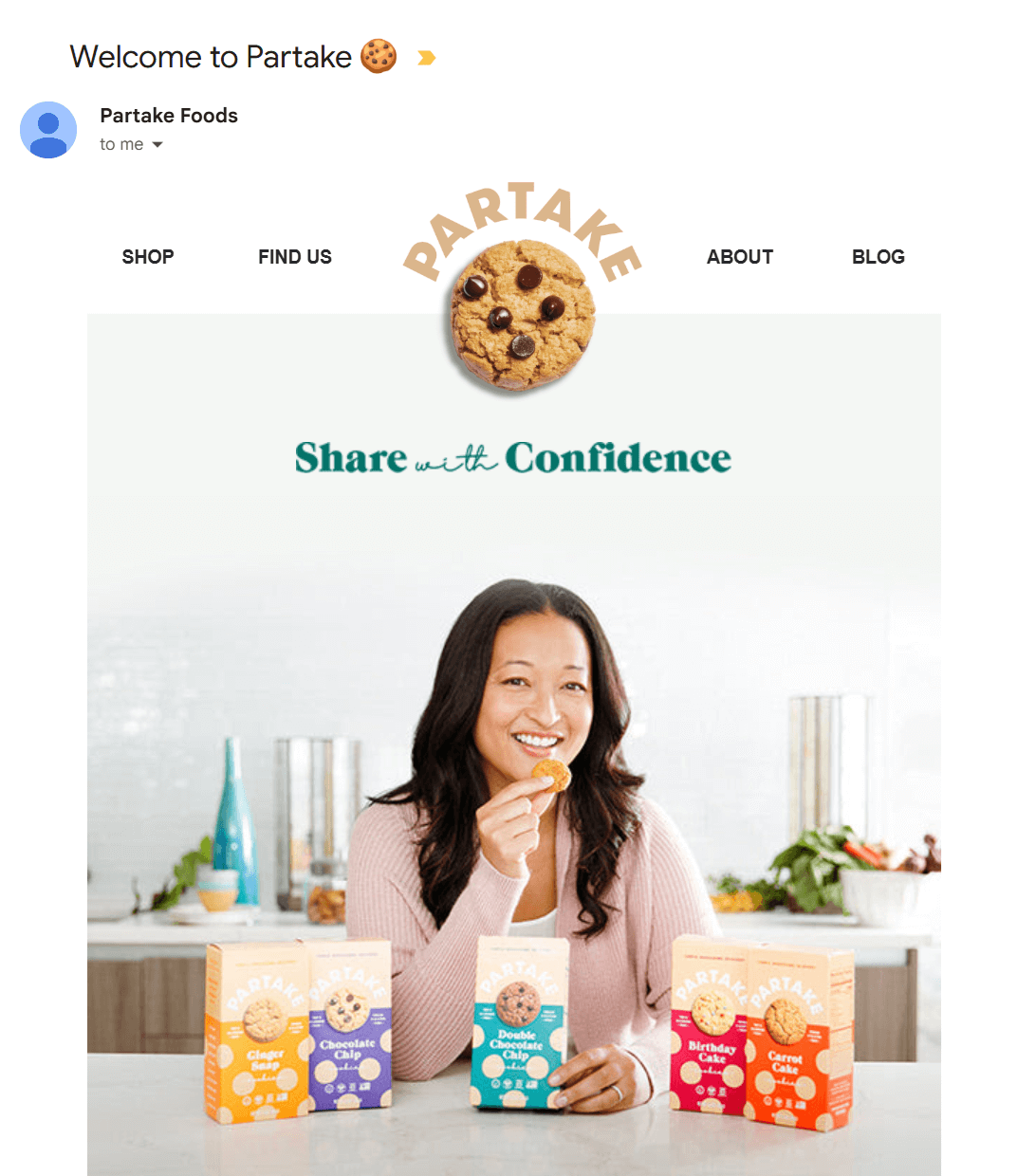
Their subject line fits their product, with the cookie emoji highlighting what the brand sells.
Visual cues like this give subscribers a hint of what to expect, which works well for brands that want their welcome to feel a little more playful and on-brand.
Here are some examples of other companies using the same tactic:
- Welcome to Maev 🥩
- 👛 Welcome to FASHIONPHILE
- Welcome to the Pack 🐾 (Finn)
- Welcome to Kylie Cosmetics rewards 💋
- Welcome to America’s Coffee 🦅
- Welcome to the GIR Family 🧑🍳
While these emojis aren’t pulled directly from welcome emails, they can make excellent choices for a warm first impression:
Adding a seasonal touch
Emojis tied to holidays or seasons feel natural and expected. A pumpkin in October, for instance, or a tree in December instantly signals relevance.
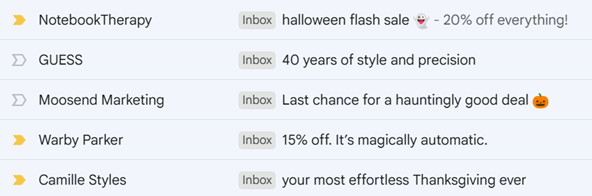
Ecommerce brands like NotebookTherapy used the ghost emoji to highlight Halloween promotions. It feels timely and adds a festive touch without distracting from the offer.
However, it’s not only retail or lifestyle brands that see results from emojis. B2B companies and agencies can use them effectively as well.
If you take a second look at the above example, you’ll see how, at Moosend, we used a jack-o-lantern emoji in our own Halloween email subject line to grab attention.
Emojis work across industries because they aren’t tied to any one market. The key is alignment. When your choice aligns with the season, the offer, or your brand’s voice, emojis can enhance engagement and make your emails feel more approachable, especially with younger audiences.
According to our findings, here are some of the most popular seasonal emojis:
And while our dataset didn’t include every seasonal event, some emojis are consistently present around major holidays. For example:
- Christmas: 🎄, 🎅, ❄️
- Halloween: 🎃, 👻, 🕸️
- Thanksgiving: 🦃, 🥧, 🍂
- Valentine’s Day: ❤️, 💘, 💌
Promoting urgency
Emojis are especially effective for highlighting urgency or time-sensitive offers, creating a sense of FOMO.
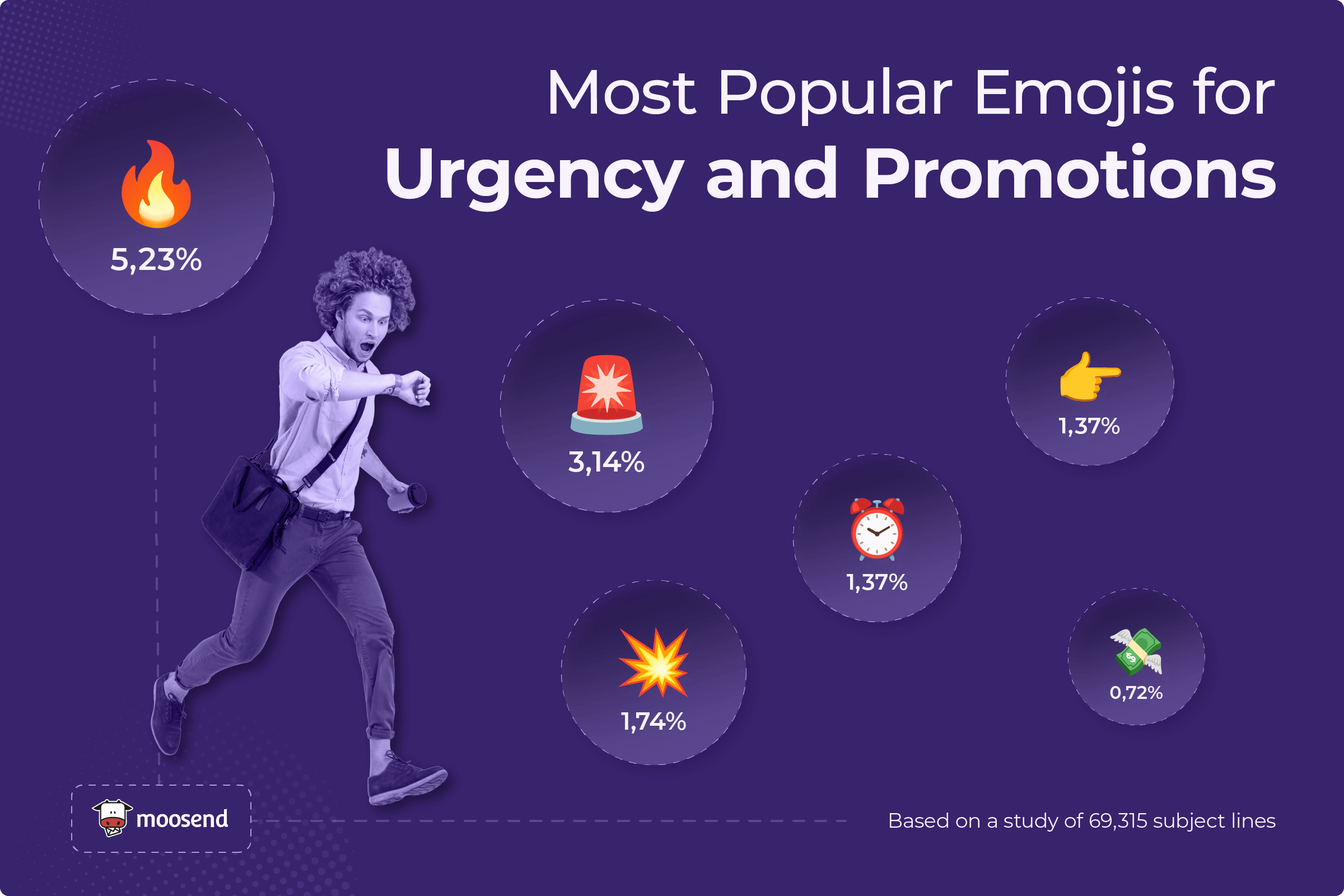
The fire emoji is one of the most common for this purpose, signaling hot deals or limited stock. Timers (⏰🕒) and sirens (🚨) also work well to stress deadlines and last-chance reminders.

Seattle Coffee Gear and Timberland used emojis such as 😱, 🥊, and 🔥 to make their promotions feel more urgent. These choices stand out against plain-text subject lines, immediately signaling to readers that these are deals worth acting on fast.
Brands seem to favor emojis for limited-time promotions. According to our findings, here are the most popular urgency-driven emojis:
Highlighting product categories or themes
Sometimes the best emoji choice is the most obvious one, and in our case, it’s the one that reflects what you sell. Using emojis tied to a product or theme gives subscribers instant recognition and helps your subject line stand out for the right reasons.
For example, a travel company can use a plane for flights or a palm tree for vacation getaways. The emoji sets the context before the subscriber even finishes reading. Similarly, a beauty brand might use 💄 or 💋 to highlight a new lipstick launch, or 👀 to tease an eyeshadow collection.
Here’s how Bésame Cosmetics used it:
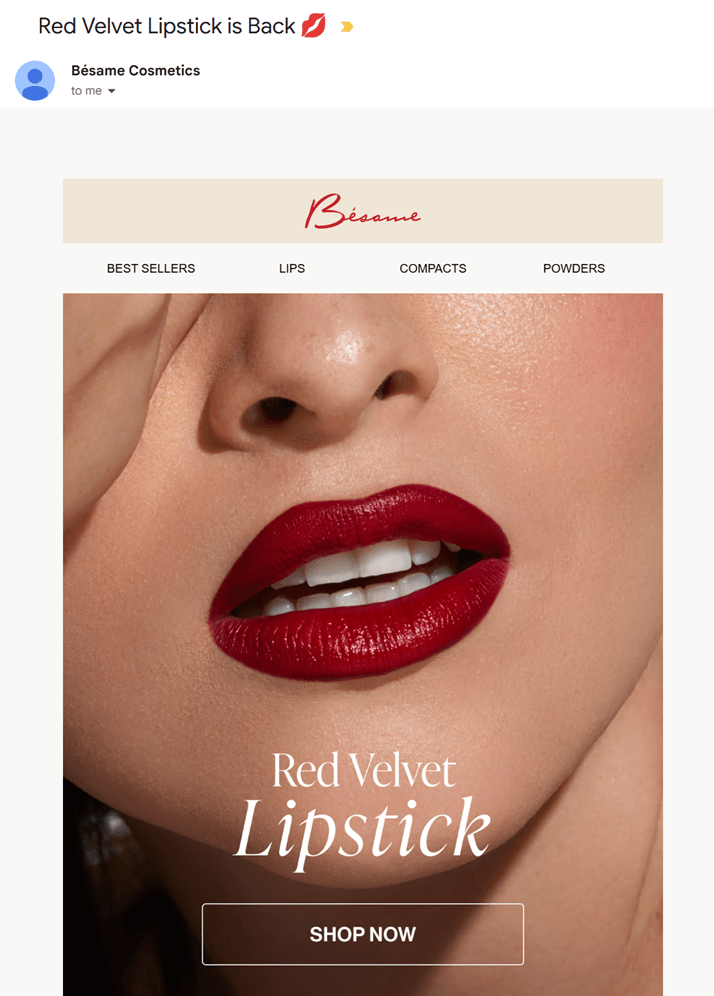
This small addition connects the subject line with the offer, making the message easier to process at a glance.
Our findings show that product- and theme-based emojis are also widely used:

The Bad: When Emojis Backfire
Emojis are indeed great. However, if you use them the wrong way, they can make your subject line look spammy, confusing, or even untrustworthy.
Here’s how a badly-placed emoji can turn into the villain of your email campaign.
Cluttering your subject lines
Stuffing a subject line with emojis doesn’t make it more eye-catching. On the contrary, it’s harder to read and often triggers the same reaction as spam. Instead of focusing attention, multiple emojis compete with one another, burying the actual message.
Here’s an example from our findings: “🎁📘 Blogs 📽️ Videos 👕 Merch 💻 Sites 📚 Courses Done-For-YOU!🔥”
At first glance, it’s loud, and not in a good way. With every word accompanied by a different emoji, the offer itself gets lost. Readers often struggle to find what they’re looking for, and spam filters are more likely to flag this type of formatting.
A simpler version, such as “🔥 New Courses and Merch Inside,” would be easier to process, while still using a single emoji to catch the eye.
Inboxes are already noisy, so when you overuse emojis, readers don’t know what to focus on. As a result, they will delete your email, unsubscribe from your email list (if you keep spamming them), or even report you.
Harming your deliverability
Speaking of reporting, did you know that certain emojis can impact your email deliverability?
Overused or aggressive icons, such as the bomb (💣) or the exclamation mark emoji (❗), can raise red flags with spam filters.
ISPs scan for these patterns, and if they see your subject line containing high-risk symbols, your email could land in the spam folder. Even if it does reach the inbox, readers may associate those emojis with low-quality or scammy messages and ignore your offer.
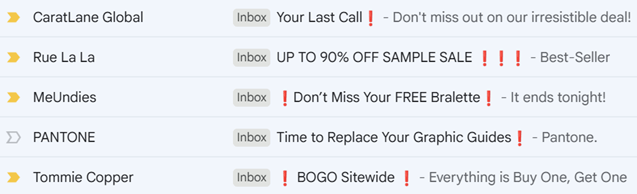
Here’s a common example: “UP TO 90% OFF SAMPLE SALE ❗❗❗” from Rue La La. Instead of making the offer sound exciting, the repeated exclamation marks feel pushy and spam-like. Readers are more likely to ignore it, and filters may block it before they even get the chance.
And it’s not just one brand. In the same image, four more brands, including CaratLane, MeUndies, PANTONE, and Tommie Copper, all used the red exclamation mark emoji.
Apart from looking spammy, when everyone uses the same trick, the effect wears off fast, making inboxes look noisy and repetitive rather than compelling.
Being misleading
Emojis can help your subject line stand out, but they should never be used to exaggerate or mislead. If your subject line promises something the email doesn’t deliver, readers will lose trust in your brand.
Take a subject line like “🎁 Get Your Free Gift!” when the email actually contains no gift, not even a discount code.
The gift emoji suggests something tangible, and when that expectation isn’t met, subscribers feel tricked. Over time, this damages credibility and reduces engagement, as readers will be more cautious about opening your future campaigns.
Using irrelevant emojis
Dropping in random emojis that don’t match the content can confuse readers and discourage them from opening your email.
For instance, adding a monkey (🐒) to promote a fashion collection makes no sense unless the products actually tie back to that theme. Irrelevant emojis feel like filler, and over time, they can make your subject lines look unprofessional or, as mentioned above, misleading.
Common vs. Unexpected Emojis
Some emojis are everywhere in subject lines, and they work because they’re instantly recognizable and easy to interpret. But that popularity also makes them less likely to stand out.
From our data, the most used emojis were 🔥 (5.23%), ✨ (4.97%), 🎁 (4.08%), 🚀 (3.78%), and 🎉 (3.20%). These are “safe bets,” but they can quickly start to blend in. Even worse, subscribers may think they’ve already opened your email if the subject line resembles others using the same emojis.
That’s where unexpected emojis come in. Surprising choices can catch the eye and differentiate your email, but they need to be used carefully to avoid confusion.
Take e.l.f.’s subject line, for instance: “Today only: FREE Pout Clout Lip Plumping Pen! 💋🖊️”
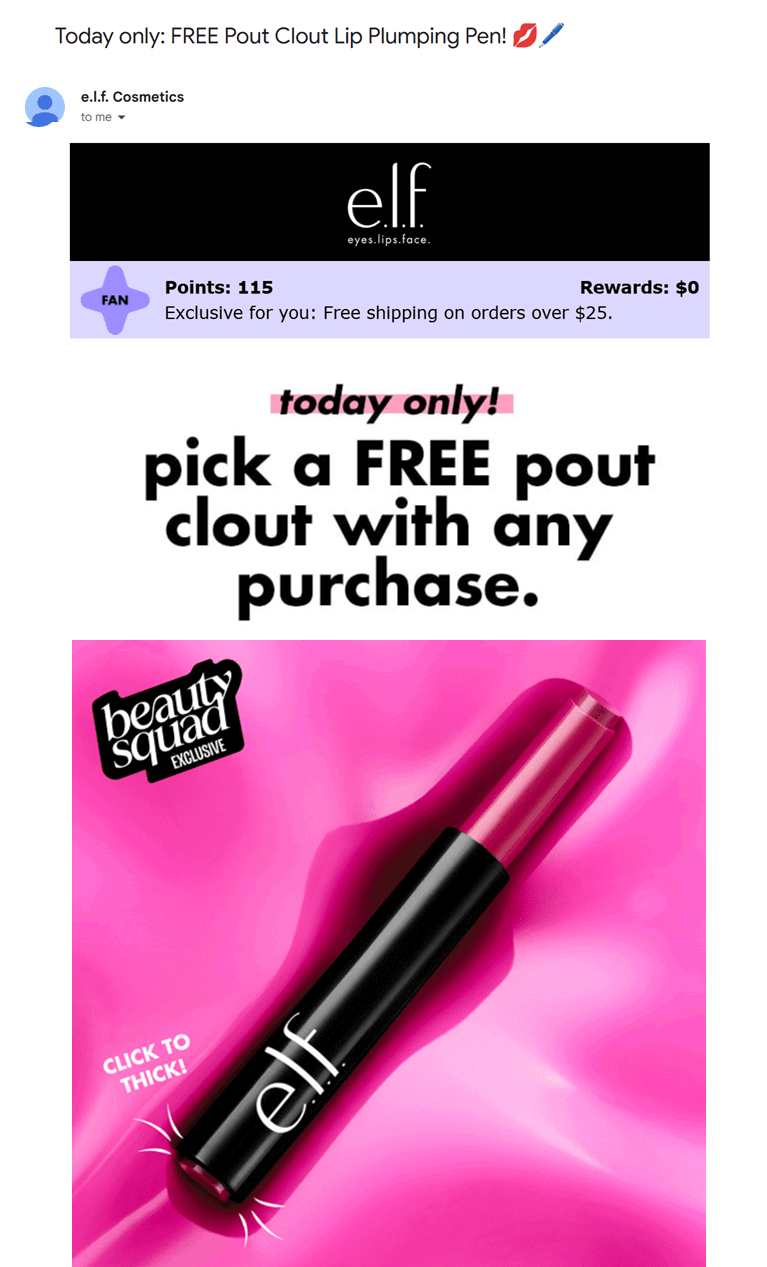
On the surface, the pen emoji may seem irrelevant to makeup, but when paired with the lip emoji, it seamlessly connects to the product’s concept.
This combination makes the line playful and memorable rather than confusing.
Made In took it a step further, using pointing up and down emojis (👆👇) to frame their offer.

This subject line is definitely different, and that’s why it stands out. The arrows guide the reader’s eye, create a break in the text, and make the subject line feel more playful than a standard sale announcement.
This subtle twist is enough to capture attention and pique the subscriber’s interest. Of course, for it to work, Made In’s deal must actually deliver. In this case, it beats John’s Crazy Socks’ offer (20% off) and matches Bruno Magli’s discount.
Emojis in Subject Lines: Best Practices
Now, let’s see some simple tips you can use to make emojis work for your subject lines without hurting deliverability or subscriber trust.
1. Use sparingly
Emojis should support your words. Limit yourself to one or two per subject line, because adding more risks making your message look spammy or hard to scan. Readers typically skim their inbox, so cluttered subject lines get skipped or deleted.
For example, instead of “🎁📚🔥 Huge Sale 🎉💻👕”, try “🔥 Huge Sale on New Arrivals.” A single emoji makes the subject line stand out, keeps the focus on the offer, and helps avoid triggering spam filters that flag excessive symbols.
Tip: Check your own inbox to see what other brands are doing. If you notice the same emoji (like 🔥) popping up everywhere, try choosing one that’s more unique or tied to your brand to stand out.
2. Choose the right placement
Did you know that the placement of your emoji has different effects?
At the start, it can set the tone right away, while at the end, it serves as a “visual full stop” that leaves the reader with a clear takeaway.
What you should avoid is dropping emojis in the middle of sentences, where they interrupt the flow and make the subject line harder to read.
Here’s why placement matters:
- Shop Our Biggest 🎉Sale Today: the emoji splits the phrase and distracts from the offer.
- 🎉 Shop Our Biggest Sale Today: at the start, it sets the celebratory tone right away.
- Shop Our Biggest Sale Today 🎉: at the end, it leaves subscribers feeling excited.
Also, keep in mind how subject lines appear on mobile devices. Emojis at the very start may sometimes get cut off (mobile truncation), so always preview across devices to ensure the whole subject line still makes sense.
3. Align with brand and context
The best emojis are those that feel like a natural extension of your brand’s voice and campaign.
Each industry tends to have its “go-to” emojis that customers instantly recognize (the coffee emoji for coffee brands, the lipstick emoji for beauty, etc.). However, don’t be afraid to experiment and establish your own.
For instance, we sometimes use the cow (🐮) emoji in our messaging.

Although we’re an email marketing platform, the cow fits our brand mascot, Moo, and holds meaning for our audience. Used sparingly, it adds personality and reminds our subscribers of our brand identity.
So, lean on emojis that fit your industry, but also look for unique options that tie back to your brand story.
Tip: Don’t forget your email preview text. You can also add emojis there, just like in the examples above with 🐮 or 👻.
4. Avoid clickbait emojis
Don’t promise what you can’t deliver. As mentioned above, if you use 🎁, make sure there’s an actual gift or coupon. Misleading emojis can quickly break trust, and once subscribers stop believing your subject lines, they will stop opening them.
Also, keep in mind that spammy emojis are a thing, just like spam words. Icons like 💰, 💸, or 🤑 may feel tempting for savings and sales emails, but they’re often flagged by spam filters or ignored by readers who associate them with scams.
5. Create urgency without clutter
Emojis like 🔥, ⏰, or 🚨 are perfect for time-sensitive deals (and the data supports this), but overusing them can make your subject line feel pushy.
One red exclamation mark (while a little risky) can emphasize urgency, but three in a row (❗❗❗) looks spammy and may even trigger filters. Use urgency emojis to highlight deadlines, not to shout at your readers.
If you want to stand out, try less obvious options that still signal urgency or movement. For example:
- 💨 or 🌬️to suggest “going, going, gone”
- ⏳ for a “time is running out” vibe
- 🏃 for a “last chance to grab it” feel
Again, always choose urgency emojis that align with your brand’s voice. A sporty brand could get away with 🏃, while a lifestyle brand might use ⏳ to keep things sleek. Testing alternatives helps you avoid the inbox clutter of the same emojis everyone else is using.
6. Test your emojis
So, how do you find the emojis that work best? By testing them with your own audience.
Run A/B tests by sending the same campaign with three variations: one with no emoji, one with a familiar emoji, and one with an unexpected option. Compare open rates, clicks, and conversions to see which resonate with your target audience.
Tools like Moosend make this easy by allowing you to set up subject line A/B tests and track performance side by side.
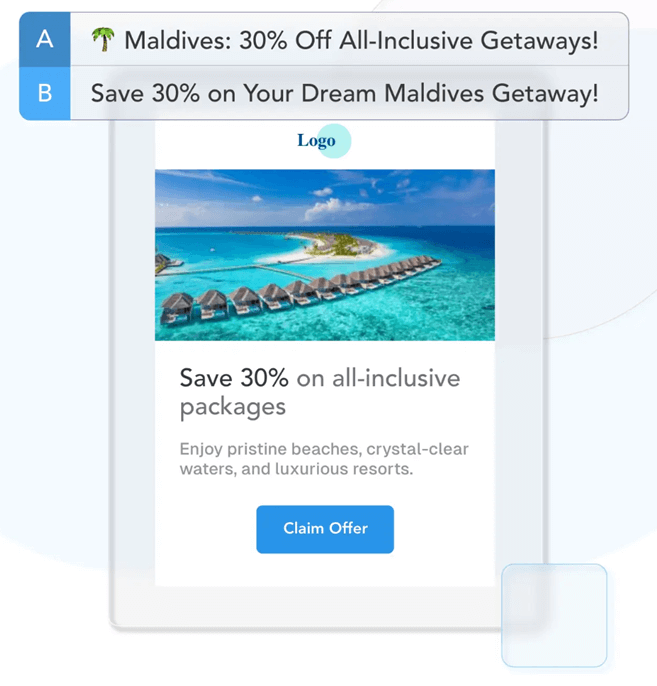
Lastly, consider who you’re sending to. Gen Z audiences are fluent in emoji culture and may respond better to playful or unconventional choices, whereas older segments may prefer more minimal or classic symbols.
Segmentation lets you match the right subject line to the right person, rather than taking a one-size-fits-all approach.
7. Optimize your subject lines
A/B testing will help you see how emojis perform, but optimization doesn’t stop there. Once you have data on what works, use it to refine your subject lines.
You can also use dedicated tools to accelerate the process. Here are some to streamline the process:
- AI assistant: Generates or refines subject line ideas, providing multiple variations for testing. This helps you find phrasing that resonates with your audience by providing the right context.
- Subject line tester: Checks your subject lines before sending and flags issues like clutter, spam triggers, or weak hooks. This lets you optimize for performance and deliverability. For instance, you can use Refine to check how they’ll perform and get valuable suggestions on how to improve your creations.
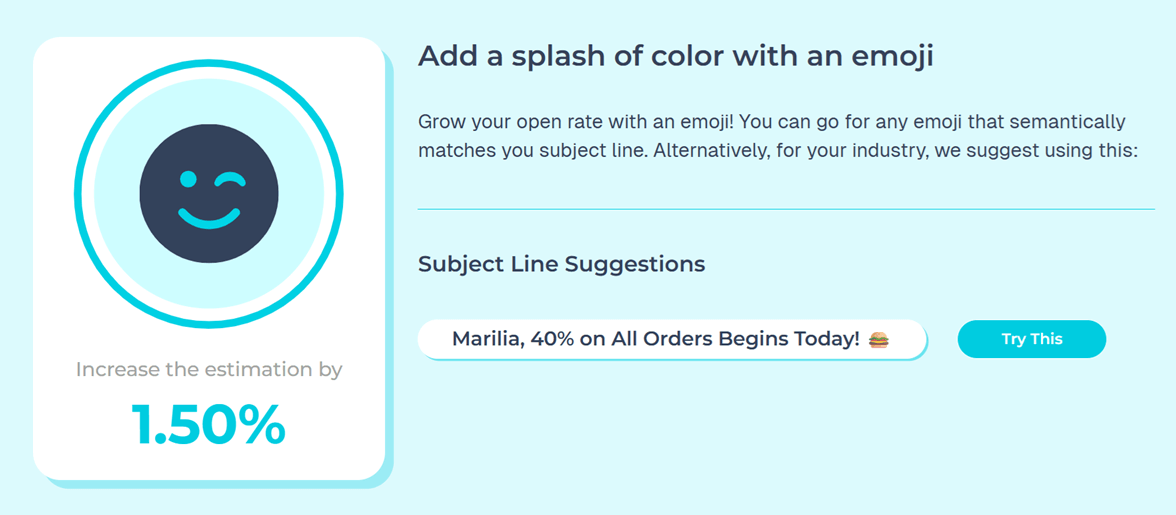
You can combine the above tools with your A/B testing strategy to get better results. For example, use the AI Writer to draft variations, then run them through your subject line tester, and let a tool like e-mojo add a fitting emoji.
8. Don’t stop at the subject line
Emojis can help open the conversation, but they can’t carry your campaign on their own. What happens after the click is what matters most. If your email content doesn’t deliver on the promise of your subject line, subscribers will click on the unsubscribe button, and no clever emoji will fix that.
Ensure that your subject line, preview text, and email body copy work together effectively. The emoji draws attention, the preview builds anticipation, and the content provides the value. That full experience is what turns opens into clicks and clicks into conversions.
Emojis in Subject Lines Are the Cherry on Top
Emojis can give your subject lines the extra spark they need to stand out in crowded inboxes. Used well, they highlight urgency, add personality, or tie your message to a season or product. Used poorly, they clutter, confuse, or even send your emails straight to spam.
The key is to choose emojis that align with your brand and audience. Trends come and go, but relevance never fails.
And remember, at the end of the day, a clever subject line with a fun emoji might earn the click, but it’s the content of your email that keeps subscribers interested.
FAQs
Here are some common questions regarding emojis in subject lines
1. Do emojis in subject lines increase open rates?
They can, but only when used thoughtfully. Emojis draw attention in a crowded inbox, but their impact depends on your audience, industry, and context. Our data shows popular picks like 🎉, ✨, and 🔥 are widely used, but testing is the only way to know what works best for your subscribers.
2. How many emojis should I use in a subject line?
Stick to one or two; using too many can make your subject line look cluttered or spammy, and may even hurt deliverability. Place them strategically, either at the start to set the tone or at the end to reinforce the message. Also, avoid dropping them in the middle of a sentence, as it breaks your message.
3. Which emojis should I avoid in subject lines?
Avoid misleading or “spammy” emojis, like 💰💸🤑 when you’re not literally offering cash. Aggressive icons such as ❗ or 💣 can also trigger spam filters. When in doubt, avoid emojis and focus on providing value in your subject line copy.
Similar Posts
 Published by

Create, send and optimize your email marketing campaigns