










Best B2C and B2B Email Marketing Examples For 2026
Published By Maria Fintanidou
October 2, 2020

02/10/20
Anyone who has received generic newsletters or rushed promotions in the last month, raise your hand. Unfortunately, that’s more hands than we’d like to admit (mine included).
But email marketing can offer much more than just the instant urge to hit ‘delete’. The best email marketing examples tell stories, evoke emotions, and get subscribers to pause and think.
How can B2B and B2C businesses pull that off? Get inspired by the following email examples from brands leading the way. We’ll also share why they work, along with best practices to transform every email into a memorable experience.
With great email ideas comes great engagement
Design for perfection with Moosend’s user-friendly email editor.
Try MoosendB2B and B2C Email Marketing Campaigns: How Are They Different?
Both B2B and B2C companies can benefit from email to connect with their audiences. However, they don’t have the same objectives, target audience, and sales lifecycle.
So, before exploring the top examples for both business types, here are some key differences to keep in mind:
Target audience
B2C email marketing examples are designed for individual consumers. On the flip side, B2B campaigns target business audiences, such as solopreneurs, executives, or entire departments.
Each group comes with different challenges. In B2C, you’re competing for attention in a sea of email promotions and updates, often with limited data to personalize beyond demographics or behavior. With the right triggers in place, though, you can create bonds and drive engagement faster.
When emailing professionals, you usually have access to information like the company size or the subscriber’s job role, which allows for more tailored messages. But expectations might be higher, since you’re reaching people with busy schedules in a work context.
On top of that, decisions rarely depend on a single person, so your campaigns should resonate with multiple stakeholders.
Sales cycle
Quick or impulse purchases are common for B2C customers. Sometimes all it takes is a limited-time offer, a gentle reminder, or a personalized recommendation to drive purchases.
Consequently, the path to conversion is usually short.
B2B sales cycles are more complex. They call for ongoing nurturing, trust-building, and several touchpoints. Even if an individual contributor sees value in your product or service, the decision often requires approval from leadership, finance, or procurement.
This is why it takes more time to convince decision-makers that your value proposition is the right fit for their business.
Content
In B2C email marketing, content tends to be more flexible in format and tone. Brands can experiment with storytelling and humor without risking too much, as long as it aligns with the campaign goal.
Some emails are visual-heavy, while in others the minimalist approach works wonders. Businesses often use a mix of educational content and promotions. They may also include elements like polls or “behind-the-scenes” to capture attention quickly and keep subscribers engaged.
B2B email marketing, on the other hand, focuses on clarity and value. The goal is to provide details, guidance and results, as well as showcase expertise. B2B customers expect helpful resources, such as templates, reports, case studies, and demos.
This doesn’t mean your emails should be “all work and no play.” Many brands use time-sensitive language or humor in B2B campaigns. But it’s important to use these elements wisely, matching the context and without distracting readers from the core message.
Best B2C and B2B Email Marketing Examples
Now let’s take a look at our favorite email marketing examples and analyze why they do the trick.
Welcome emails
You know that moment when people sign up for your email newsletter or create an account? Think of it like the beginning of a relationship you want to get right.
First, greet subscribers and introduce your brand. Secondly, use welcome emails to set the tone for future communications. For example, let them know how often you’ll send emails and what kind of content you’ll share.
To warm them up, you can highlight any perks that come along, such as first-access to new products, insider news, or exclusive resources.
B2B Welcome email example by Webflow
Subject line: Welcome to Webflow!
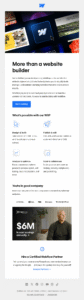
Webflow’s campaign cuts to the chase by highlighting the product and its benefits. It also focuses on the community, so subscribers feel like they belong as soon as they open the email.
Why it works:
- The headline positions the product, differentiating it from simpler solutions.
- The clean design, with ample white space and short copy, guides the reader’s eye toward the platform’s core capabilities.
- They rely heavily on social proof, using a mix of elements like company logos and a case study.
- The two CTAs appeal to different groups: those who want to “start building” for themselves and those who prefer to “browse partners” for help.
B2C Welcome campaign by Kayak
Subject line: Welcome aboard. 👋
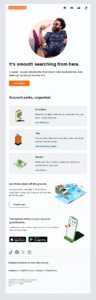
Kayak’s welcome email aims to simplify things for new subscribers. The vacation-inspired approach makes users feel like they’ve already reached their dream destination just by opening the campaign.
Why it works:
- The email has a casual look and feel, using a conversational tone, short sentences, and everyday expressions.
- They choose natural and playful CTA copy over the generic “Learn more.”
- The content is centered around the outcome rather than the next steps, to avoid cognitive load.
- The brand prompts subscribers to download the app, emphasizing the unique deals they can access there.
Lead nurturing email examples
B2B and B2C brands use lead nurturing campaigns to outline next steps and help subscribers understand how their products or services work.
Your main goal is to educate new leads, focusing on common pain points and suggesting ways to address them.
While you’ll want to position your value proposition as the solution, this doesn’t mean you should start bombarding them with promotions from day one. Instead, share resources like videos and guides so they can familiarize themselves with your offers until they’re ready to buy.
B2C Educational campaign by Methodical Coffee
Subject line: ☕ The Roast Guide You Didn’t Know You Needed

Methodical Coffee’s email marketing example strikes the perfect balance between educational and promotional content, as the product recommendations seem like the next logical step.
Why it works:
- The subject line is both straightforward and curiosity-driven, urging recipients to open the email to see what they’re missing.
- The earthy tones match Methodical Coffee’s branding, giving the email a classy style.
- They offer different resources formats (a quick guide and a video) to cater to diverse preferences.
- While the CTAs prompt subscribers to buy, they frame it as a way to discover the perfect blend, not as a transaction.
B2C first-order discount email by Sundays
Subject line: For a limited time, get 50% off your first order 🐾
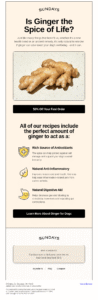
Helpful resources aren’t the only way to turn new leads into customers. Nurturing can also come in the form of a compelling discount, as shown in this effective B2C email example by Sundays for Dogs.
Why it works:
- The subject line includes a compelling discount and a touch of urgency to encourage quick action.
- They use high color contrast so the black CTA stands out against the background to grab attention instantly.
- The brief, punchy descriptions focus on the subscribers’ best friends, explaining why ginger benefits a dog’s health.
B2B Onboarding campaign by Asana
Subject line: Get more time for more important work
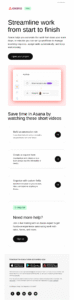
Asana’s minimalistic email provides users with onboarding material in a digestible format to encourage product adoption.
Why it works:
- The subject line promises more time to get important work done, tapping into a common pain point.
- They use a clean design to resemble the clutter-free workspace the platform offers.
- They break down complex features into short video lessons to avoid overwhelming trial users.
- The “Pro Tip” section encourages recipients to join a live training session with an expert for extra guidance and fast results.
Newsletters
Weekly or monthly newsletters are ideal for sharing industry news, teasing new products or services, and showcasing your expertise.
Invest in content marketing by repurposing your latest blog posts to keep subscribers engaged and up to date. You can inform them about key business updates and company milestones, such as badges or number of subscribers reached.
These insights help you position your company as a thought leader while showing that you stay active and keep up with latest developments.
B2B Email newsletter with tips by Constant Contact
Subject line: [Hints & Tips] 5 marketing metrics to track now

Constant Contact sends a monthly Hints & Tips newsletter to share latest industry trends and best practices, highlight new features, and announce events.
Why it works:
- The structured layout creates a smooth reading experience, naturally guiding subscribers from one section to the next.
- They include several resources to showcase their expertise, such as fresh blog content and quick tips for busy readers.
- Subscribers can easily access live sessions to get expert assistance for their marketing efforts.
B2C New product alert newsletter by Cravings
Subject line: The Sweet & Sticky Carrot Cake is here
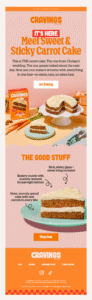
Cravings builds excitement around a new product from start to finish, turning it into the focus point of their email newsletter.
Why it works:
- The repeated mouthwatering images make the product impossible to miss.
- The brand uses storytelling to tie the product to a personal moment from the founder’s life, giving it a sense of exclusivity.
- The email design leans into a retro aesthetic, with vibrant colors and playful elements like handwritten-style arrows pointing out what makes the cake special.
- The email copy addresses the hassle of time-consuming baking, promising a no-fuss process.
Promotional email examples
Promotional emails are designed to bring your products or services into the spotlight. Segmentation and personalization is of utmost importance here, since sending irrelevant content could damage your audience’s email experience.
You should customize your suggestions based on past purchase and browsing behavior to ensure relevance. Dynamic content is a valuable tool in your arsenal, allowing you to display different recommendations to each subscriber, tailored to their characteristics and preferences.
These campaigns aren’t limited to new products, services, or features, though. You can also notify recipients about upcoming events, webinars, or courses you’re organizing or participating in.
B2C Product recommendation campaign by Made In Cookware
Subject line: FINAL HOURS: Time is running out.
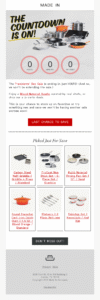
Made In Cookware sent this President’s Day flash sale campaign, using the recipient’s past behavior to recommend products.
Why it works:
- The countdown timer, bold headline, and last-chance copy emphasize the time running out.
- The “Picked just for Sara” section feels highly personalized, making the subscriber feel special.
- They center the email around the product recommendations, pairing them with an actionable CTA to ensure subscribers don’t miss out on the deal.
B2B Upsell email by Loom
Subject line: ⚠️ You’re approaching your content limit on Loom!
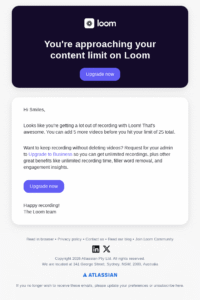
Loom’s B2B email marketing example suggests a service upgrade based on the user’s activity so they can get unlimited recordings.
Why it works:
- The subject line strikes the right balance between alerting and pushy.
- They provide all the details about the account’s content limit using simple language and a professional but conversational tone.
- They use loss aversion messaging (“without deleting videos”) to subtly remind subscribers that they risk losing their work if they don’t upgrade.
- The copy suggests additional benefits of the upgraded version without coming across as an aggressive sales pitch.
B2B Virtual event promotion by Zapier
Subject line: Join us at ZapConnect 2025!
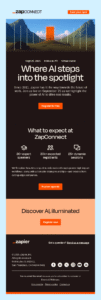
Zapier’s email example reinforces the brand’s authority, presenting the upcoming event as another “can’t-miss” engagement opportunity.
Why it works:
- The sleek email design relies on high contrast between the dark mode background and the white text to make the message pop.
- It uses straightforward copy with specific numbers to showcase the outcomes subscribers should expect by joining.
- They include multiple, brightly colored call-to-actions so scrollers can easily detect them.
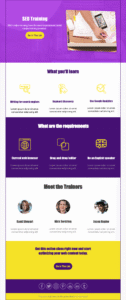
Do you have an important event coming up? With the right webinar newsletter templates, you can create the perfect promotional email.
This ready-made email template from Moosend’s library gives you a strong starting point. It’s easy to customize based on your unique needs, for example by adding the event details and speakers, and incorporating bold CTAs to boost registrations.
Transactional messages
These emails are triggered by specific user actions or events. These include signing up for a newsletter, placing an order, or changing their password.
Most subscribers expect transactional messages to confirm that a process was successful. You might also send such a campaign to inform them about upcoming changes, like an account expiring, so they can take action.
Your priority is to include important transaction details or next steps. If you want to incorporate promotions in these emails, make sure they don’t distract readers from the main action. Otherwise, you risk confusing or annoying them.
B2C Order confirmation campaign by Asos
Subject line: Order Confirmation
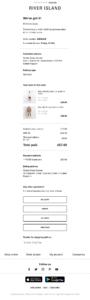
Asos’ order confirmation email sticks to its purpose from start to finish. They confirm that the order is successfully placed, including the company’s policies to avoid frustration.
Why it works:
- Simplicity is at the core of this email example, from the short and effective subject line to the clean design.
- The focus is on sharing the transaction details and offering easily accessible resources to answer potential questions.
- Product descriptions are paired with images to build anticipation for the delivery.
- They start with a thank you note and a promise to notify subscribers before delivery, which increases trust.
B2B Opt-in confirmation email by Dodge Construction Network
Subject line: You’re (almost) subscribed
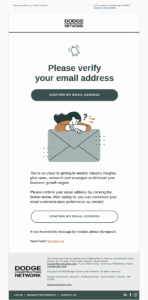
Dodge Construction Network uses a subscription confirmation email to verify the subscriber’s address, a recommended practice for brands that want to maintain a healthy email list and a strong sender reputation.
Why it works:
- The subject line says “confirm your email” with a twist but without confusing readers about the action required.
- While the email has no promotional elements, the brand reminds users of subscriber-exclusive perks, such as access to industry insights.
- Subscribers can customize their email preferences once opted in, which offers a sense of control from the start.
B2C Password change notification message by Chipotle
Subject line: Changes were made to your Chipotle account
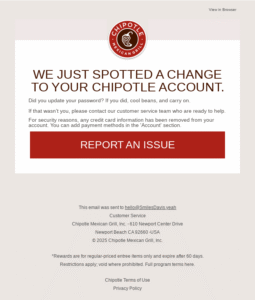
Chipotle keeps things simple in this transactional email, sticking to essential information to notify recipients without distractions.
Why it works:
- The subject line is clear and on point, communicating what the email is about.
- They address potential concerns upfront by reassuring subscribers that their payment information is secure.
- The “cool beans” reference adds personality, showing that even transactional messages can have a human touch.
Announcement emails
When you have important business announcements to make, a standard practice is to share them through your regular email newsletter. However, you can always create a dedicated campaign to let recipients know what you’ve been planning.
To spark curiosity, tease the announcement a few days before the actual date with a blurred visual or a short ‘guess what’s coming’ poll.
You should also make the takeaway obvious in your subject line or the first lines of copy. Mention what it is, who it’s for, and why it matters. If it involves a change, for example, in the case of a pricing update, be upfront about the impact on your customers.
B2B Hootsuite’s report release announcement
Subject line: Our Social Media Trends 2025 report is here! 🚀
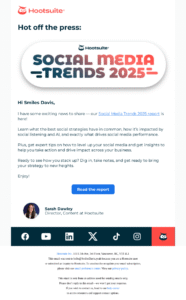
Hootsuite uses this B2B email marketing example to announce the release of its annual social media trends report. The email summarizes the key takeaways while giving subscribers exclusive access to the company’s findings.
Why it works:
- They feature a headshot and a personal sign-off from the Content Director to make it more personal.
- The lack of distractive visuals helps readers focus on the message and call-to-action.
- They invite recipients to “see how they stack up,” highlighting the benchmarking value of the report.
B2C Reward program update campaign by Starbucks
Subject line: Read me! (Starbucks® Rewards is changing.)

Starbucks goes in-depth in this announcement email example, analyzing added perks and status levels. At the same time, they make it clear that the change won’t affect members’ current benefits.
Why it works:
- They note that the change directly responds to member needs and input, demonstrating the brand’s “you ask, we deliver” mentality.
- Lifestyle images tie the reward system to real-world moments in Starbucks physical stores.
- The brand goes through every detail (e.g., existing and new perks, starting date, etc.) but does so in a casual, friendly tone to avoid tiring readers.
Seasonal campaign examples
It’s not uncommon to assume seasonal campaigns are only for eCommerce email marketing. The truth is, your offerings don’t need to have a direct connection to the holiday to make these messages work.
There’s always a way to create a campaign that matches the holiday or seasonal spirit. All you have to do is unleash your creativity and maybe do a little spying on your competitors.
For example, a project management platform can send a summer-themed campaign with tips on keeping projects on track while team members are on vacation.
An idea that works for most industries is to support nonprofit initiatives and involve your audience. Just make sure that the cause aligns with your customers’ values.
B2C Holiday email by Headspace
Subject line: Looking for a thoughtful gift?
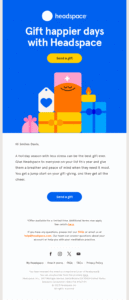
Even if you love the holidays, at some point stress will pile up due to the preparations and social gatherings. This is where Headspace uses the lipstick effect, reframing their seasonal offer as the gift of “happier days” during a challenging season.
Why it works:
- The subject line is in question format to intrigue subscribers.
- The calm, playful visuals and colors link back to Headspace’s branding, making the email instantly recognizable.
- They move away from promotional wording, presenting their service as the solution to holiday burnout rather than a subscription pitch.
- The simple, focused copy aligns with the email’s purpose: reducing stress for subscribers and their loved ones.
B2B Valentine Day’s email by Moosend
Subject line: Skip the line! Save up to 50% 💘
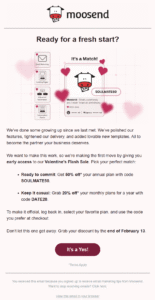
Who says SaaS businesses can’t send Valentine’s Day emails? Moosend leverages the occasion to share a curated collection of relevant resources to help subscribers create email campaigns that speak to consumers’ hearts.
Why it works:
- The subject line gets to the point, while the heart emoji adds a touch of personality.
- The email copy uses dating references to bridge the gap between the romantic feeling and marketing objectives.
- Rather than leading with the sale, the email opens with recent product updates to introduce the value before the offer.
- There’s a second option for “casual” users who aren’t ready for a heavier commitment.
- The clear, short instructions and conversational-style CTA increase the chances of conversions.
Re-engagement campaigns
Some subscribers lose touch with your business somewhere along the way. Don’t give up on them yet. A carefully crafted re-engagement campaign could be the nudge they need to come back.
To rekindle their interest, the most common approach is to remind them of the perks of being active subscribers, such as exclusive deals, first-time access to new products or features, and more.
You could also let subscribers know what you’ve been up to while they weren’t paying attention. Some brands go emotional or slightly pushy, but this works only if it’s in line with your tone and you don’t overdo it.
B2C Personalized recommendation campaign by Hulu
Subject line: Join the Revolution, Smiles Davis.
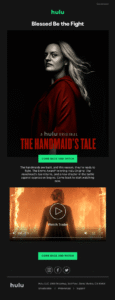
Hulu’s re-engagement email is an excellent example of “less is more.” They lure inactive subscribers back with a tailored recommendation based on their watching history.
Why it works:
- They embed a trailer for disengaged subscribers that they can watch without leaving the email or clicking the CTA.
- The powerful promo slogan of the new season placed at the top catches the eye immediately.
- The image of the main character is front and center, drawing the reader into the series atmosphere.
- The CTA is hard to miss, with a bright green color that pops.
B2B Re-engagement email example by monday.com
Subject line: One more week of monday.com, on us
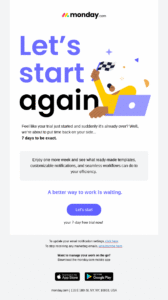
For SaaS businesses, trials are the most effective way to help customers learn their products. However, trials are usually limited, and monday.com knows it. So, they offer subscribers an extension in this win-back email so they can keep exploring the platform.
Why it works:
- Recipients can tell from the subject line that the brand is offering an extra week to use the product.
- The clean email design and structure naturally guide readers toward the call-to-action.
- They invite subscribers to a fresh start, which feels less intimidating than a transactional message.
- They use similar copy for the headline and the CTA, creating a cohesive experience from start to finish.
Reminder email examples
Reminder emails are designed to bring subscribers’ attention back to an action they need to take. There are several use cases depending on your niche and business objectives.
In healthcare email marketing, for example, you can send appointment and feedback request reminders. A hotel business, on the other hand, delivers reminder campaigns to promote limited-time offers or offer check-in instructions.
Regardless of the specific goal, you should simplify the process for subscribers. If the email refers to a past action, provide enough context to remind them what it’s about. If you’re asking them to take action now, focus on clear, step-by-step instructions so they know exactly what to do next.
B2C Appointment reminder by Function Health
Subject line: Approaching your lab visit — important steps to follow
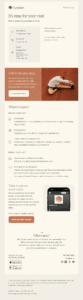
Function Health’s reminder email is highly informative, aiming to turn a potentially stressful visit into a straightforward, step-by-step process.
Why it works:
- The subject line reveals the email content, including instructions about the upcoming appointment.
- They offer a scannable checklist on what to expect before and during the visit.
- They include a Shopify playlist to help subscribers relax during blood draws.
- The “What’s next?” section sets expectations while preventing follow-up friction.
B2C Back-in-stock email by Brightland
Subject line: Hurry! The Mini Essentials are Back in Stock

Brightland sent this reminder email to inform recipients that a top-selling product is back in stock, encouraging them to purchase before it sells out again.
Why it works:
- The subject line is straightforward, informing subscribers about the product’s return.
- The “Sold out 3X” graphic serves as social proof, signaling high demand.
- High-quality product images and compelling descriptions encourage purchases.
- The brand uses subtle urgency and scarcity throughout the email without getting pushy.
B2B Event reminder campaign by Wistia
Subject line: Last chance: Wistia’s Town Hall is Feb 11
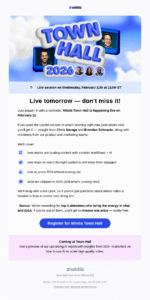
Wistia urges recipients to register for their event with a last-chance reminder email. The brand prioritizes value over heavy “act now” messaging.
Why it works:
- Subscribers can check the key event details, specifically the name and date, before opening the email.
- A scannable list of takeaways and key speakers highlights the value for attendees.
- The professional yet casual tone makes the message feel like a friendly nudge rather than a corporate reminder.
- The prize-based bonus drives engagement, turning the Q&A into a gamified experience.
Milestone emails
One of the reasons most people love celebrating their birthday is that it’s all about them. So why not leverage this occasion, and other customer milestones, to make subscribers the stars of your campaigns?
Start by wishing them a happy birthday or anniversary. Alternatively, track their history to congratulate them on an important achievement with your product or service. You can use a few festive GIFs, memes, or images for a playful touch.
Acknowledging these life events and small wins may also take the form of a reward. Use milestone emails to offer recipients a gift, such as a discount or free sample. It could also be something as simple as a personalized greeting from the founder or a team member the customer has interacted with in the past.
B2C Customer anniversary campaign by DAVIDsTEA
Subject line: You’re the best!
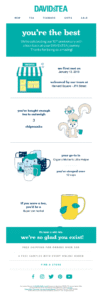
DAVIDsTEA takes customer appreciation to a new level, cleverly personalizing key moments with the brand to make a unique story out of the customer’s journey.
Why it works:
- The email is full of personalized elements, such as a reminder of the first touchpoint, transforming the transaction history into a shared experience.
- The quirky comparison aligns with the branding (“tea that outweighs 3 chipmunks”) while showcasing the customer’s buying circle in a fun way.
- Heartfelt copy and a warm tone express gratitude and celebrate the relationship.
- They emphasize the subscriber’s connection with the products by matching them to a tea type.
B2C Birthday email by Pizza Hut
Subject line: Good job being born. Time to celebrate.

What makes Pizza Hut’s birthday email stand out? First, it’s the festive vibe and interactive elements. And then there’s a compelling offer that calls for a celebration.
Why it works:
- The design invites the subscriber to scroll to the final reveal, building curiosity.
- Party elements like confetti and a birthday cupcake put customers into a celebrative mood.
- They offer a free product as a birthday gift, which is an effective way to show customers they’re special.
B2B Milestone email example by Rally Up
Subject line: Congrats on starting to draft your fundraiser
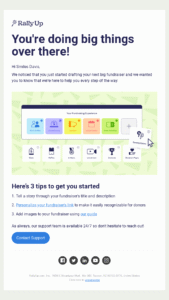
For B2B businesses like Rally Up, milestone emails focus on acknowledging customer progress with your product or service and encouraging continued adoption.
Why it works:
- The company celebrates the recipient’s achievement and provides guidance so the next steps feel less intimidating.
- A “pep talk” approach and enthusiastic tone encourage subscribers to get the most out of the platform.
- The numbered list breaks down the project into smaller and simple tasks.
Social proof email examples
Why do consumers trust customer testimonials, reviews, and success stories more than branded messages? The reason is they feel relatable, coming from people with similar challenges. They’re also real-life examples of how your products or services helped others change their lives and reach their goals.
You can gather these insights through various touchpoints, such as surveys and polls on your website or social media. Even something as small as a star rating in an email can be effective. Or have your customer support or success reps subtly ask for a review after a positive interaction.
Once collected, use these social proof elements to complement product descriptions and images in your emails. Another option is to create a dedicated campaign and showcase customer reviews, testimonials, or case studies.
B2B Case study email example by Stripo
Subject line: Stripo Case Studies: AI vs. Human Copy, Doubled OR, and Gamification
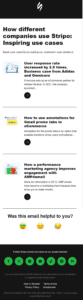
When comparing software products, 90% of respondents are influenced by some type of social proof. To tap into this impressive potential, Stripo sent a focused email campaign to share customer case studies.
Why it works:
- The email design is centered around customer success stories, avoiding confusion for busy marketers.
- Featured case studies highlight outcomes with specific numbers, boosting credibility.
- Subscribers can choose between three emojis, a clever and low-friction way to gather feedback on content relevance.
B2C Review email by Material
Subject line: 1,000+ 5 star reviews

Material leverages the power of numbers and reviews to encourage conversions. The brand contributes little to the email content, making the campaign more authentic and effective.
Why it works:
- While the subject line is mostly numbers, it clearly communicates what’s inside the email.
- They complement the reviews with product images so subscribers can see the items in action.
- The only copy from the brand is confident and brief, letting customers, free returns, and lifetime guarantees speak for themselves.
- A 15% discount on the first order serves as an extra incentive.
How to Create Effective Email Marketing Campaigns
Besides inspiration, you also need to know how to transform email marketing ideas into top-performing campaigns.
So, here are the best practices to create and send converting emails for B2B and B2C audiences:
- Choose the right email marketing platform: To make your life easier, pick an email service with time-saving features, such as user-friendly editors, pre-made email templates, segmentation and personalization, and automation options. Also, check for strong email deliverability and analytics to monitor performance and adjust your strategy when needed.
- Personalize your email content: Whether targeting consumers or professionals, each email you send should resonate with recipients and address their pain points. Create detailed segments based on demographics, browsing history, and psychographic data to deliver relevant content and promotions to every person on your list.
- Set up automated journeys: Automation allows you to send trigger emails, reaching subscribers with the content they need exactly when they need it, while reducing manual effort. You can build automated journeys for key customer interactions, such as lead nurturing, loyalty, re-engagement, and more.
- Leverage the power of AI: Artificial intelligence saves you time without sacrificing quality. Many platforms, like Moosend and Constant Contact, offer AI-powered tools to write and refine emails, segment audiences, deliver personalized recommendations, and predict customer behavior, among others.
- Don’t forget the human touch: Automation and AI go a long way, but you don’t want to lose the human factor. Your subscribers should tell that your emails were written by a real person, for a real person. Include personal stories, fun facts, cultural references, and any element that makes your content feel alive and authentic.
- Monitor data and make improvements: Your work isn’t done after hitting ‘send’. Track important email metrics like opens, clicks, conversions, bounces, and unsubscribes. This helps you understand what’s working and revisit things like the relevance and frequency of your messages, your list hygiene, or email authentication.
Keep Searching for Inspiration
Hopefully, these email marketing examples provide hints on what tactics to use, as well as how and when to do so. But creativity has no limits, so stay on the lookout for rising trends and new ideas to engage subscribers.
Keep tabs on what reputable brands in your industry are up to by subscribing to their newsletters or following them on social media. Also, look for inspiration on niche blogs, industry conferences, and webinars to stay up to date.
Deciding which campaign types and tactics work for your business is key to getting the most out of your email efforts. You’ll also need an effective platform to create, personalize, and automate your emails.
If you’re ready to get started, you can give Moosend a go by signing up for a free account. You can test all features for 30 days, no credit card or technical expertise required.
FAQs
Before you go, find answers to frequently asked questions about email marketing examples.
1. What are some common mistakes to avoid when creating marketing emails?
Common pitfalls include sending too many promotions in a short time frame, delivering irrelevant content, and neglecting deliverability monitoring. Follow best email practices and choose an email tool with personalization, reporting, and testing features, as well as excellent deliverability, to ensure your campaigns resonate with different audiences.
2. How often should you send email campaigns to your subscribers?
Email frequency can make or break campaign performance. There’s no one-size-fits-all answer, though. It depends on your industry, objectives, and campaign types. A weekly or monthly schedule usually works for newsletters, while time-sensitive promotions require a different approach. Make sure to test different frequencies and watch for spikes in unsubscribes or spam complaints to find your sweet spot.
3. How can you ensure your emails reach subscriber inboxes?
Email deliverability is a multi-factor process. When emails fail to reach inboxes, the usual suspects are poor list or content quality, inconsistent sending patterns, missing authentication, or a low sender reputation. Identifying the root cause helps marketers make the right tweaks and improve subscriber engagement.
Similar Posts
 Published by
 Published by
Create, send and optimize your email marketing campaigns