












19 Best Email Automation Software In 2026 [Features & Pricing]
Published By John Desyllas
June 25, 2024

25/06/24
Email automation can free your hands and help you send more targeted messages to customers and prospects.
But it does more than save time. It helps you build consistent customer journeys, react to user behavior in real time, and turn one-time buyers into repeat customers without manually pressing “send” every day.
In this guide, we’ll thoroughly explore some of the top email automation software so you can find the ultimate tool that offers high functionality and deliverability for your business.
What Is Email Automation Software?
Email automation is the process of setting up automated emails triggered when subscribers complete specific actions, such as opening an email, making a purchase, or submitting a form.
Email automation software delivers those triggered emails that help businesses communicate, engage, and convert customers. Examples of such emails include:
- Welcome emails
- Onboarding series
- Notification emails
- Order/Registration confirmations
- Abandoned cart emails
- Re-engagement campaigns
According to recent stats, triggered emails have a 70.5% higher open rate and 152% higher click-through than other newsletters. Customers seem to favor them, so you’d better hurry up and try them out.
Why Should You Use Email Automation Tools?
Email automation tools help businesses send the right message at the right time without relying on manual work or one-off campaigns. Instead of reacting to tasks, automation lets you set up flows that run in the background and scale with your audience.
Here are the key benefits businesses gain from using email automation tools:
- Save time and eliminate repetitive tasks: Automation replaces manual sends with workflows that handle common actions, such as welcome emails, follow-ups, cart reminders, and post-purchase messages.
- Increase ROI through personalization at scale: Using subscriber data like behavior, preferences, or purchase history, automation tools enable personalized messaging without manual segmentation. This leads to higher engagement and better conversion rates.
- Deliver a better customer experience: Automated emails are triggered by real user actions. Subscribers receive timely, context-relevant messages based on their actions, making emails feel useful rather than intrusive.
- Support lead nurturing and long-term growth: Automation helps guide subscribers through structured journeys, from first interaction to conversion and retention. Leads are nurtured gradually rather than pushed through disconnected campaigns.
Key functionality to look for
To get these benefits, an email automation tool should offer more than basic autoresponders:
- A visual automation or workflow builder to create journeys without coding
- Behavior- or event-based triggers such as sign-ups, clicks, purchases, or inactivity
- Audience segmentation based on real subscriber data
- Conditional logic (if/then rules) to personalize paths dynamically
- Pre-built automation templates for common use cases like welcome series or abandoned carts
- Analytics and reporting to measure performance and optimize flows over time
Overall, by following email automation best practices, you can turn email marketing into a scalable growth channel that improves your efficiency and profitability without adding complexity.
Top Email Automation Software: Overview
Before we see each email automation service in detail, here’s a quick overview of the best tools compared.
| Key Features | Pricing | Free Plan/Trial | |
| Moosend | Wide range of triggers, easy-to-implement automation | $9/month | 30-day trial |
| Constant Contact | Event management tools | $12/month | 14-day trial |
| Mailchimp | Multi-step workflows, Customer journey builder | $20/month | Yes (limited) |
| Maestra | Omnichannel automation and journey-wide personalization | $2,990/month | No |
| HubSpot | Free CRM, Beginner-friendly automation | $20/month | Yes (limited) |
| ActiveCampaign | Automations Map, split testing | $19/month | 14-day trial |
| Omnisend | eCommerce-focused automation | $16/month | Yes |
| GetResponse | Conversion funnels, webinars | $19/month | Yes (limited) |
| Drip | Workflow templates, great segmentation options | $39/month | 14-day trial |
| MailerLite | Multiple triggers in automations | $10/month | Yes |
| Kit | Ready-made automation templates for creators | $39/month | Yes |
| Mailjet | Multi-user account | $27/month | Yes (limited) |
| AWeber | Customizable campaigns | $15/month | Yes (limited) |
| Campaign Monitor | Real-time collaboration on emails | $12/month | 30-day trial |
| Benchmark Email | Polls and surveys | $37/month | Yes |
| SendGrid | Delivery optimization tools | $60/month | 60-day trial |
| SendPulse | Free CRM | $10/month | Yes |
| Emma | Team management | $99/month | No |
| Flodesk | Multi-trigger workflows, behavior-based eCommerce triggers | $25/month | Yes (free plan + 30-day trial) |
You’ll find a detailed analysis of these tools below, plus additional email automation tools to check out in case you want to widen your search for the right tool.
1. Moosend
Pricing: Paid plans start at $9/month, 30-day free trial (Sign up here)
Best for: eCommerce, SMBs, SaaS, Bloggers
Unique feature: Audience management features
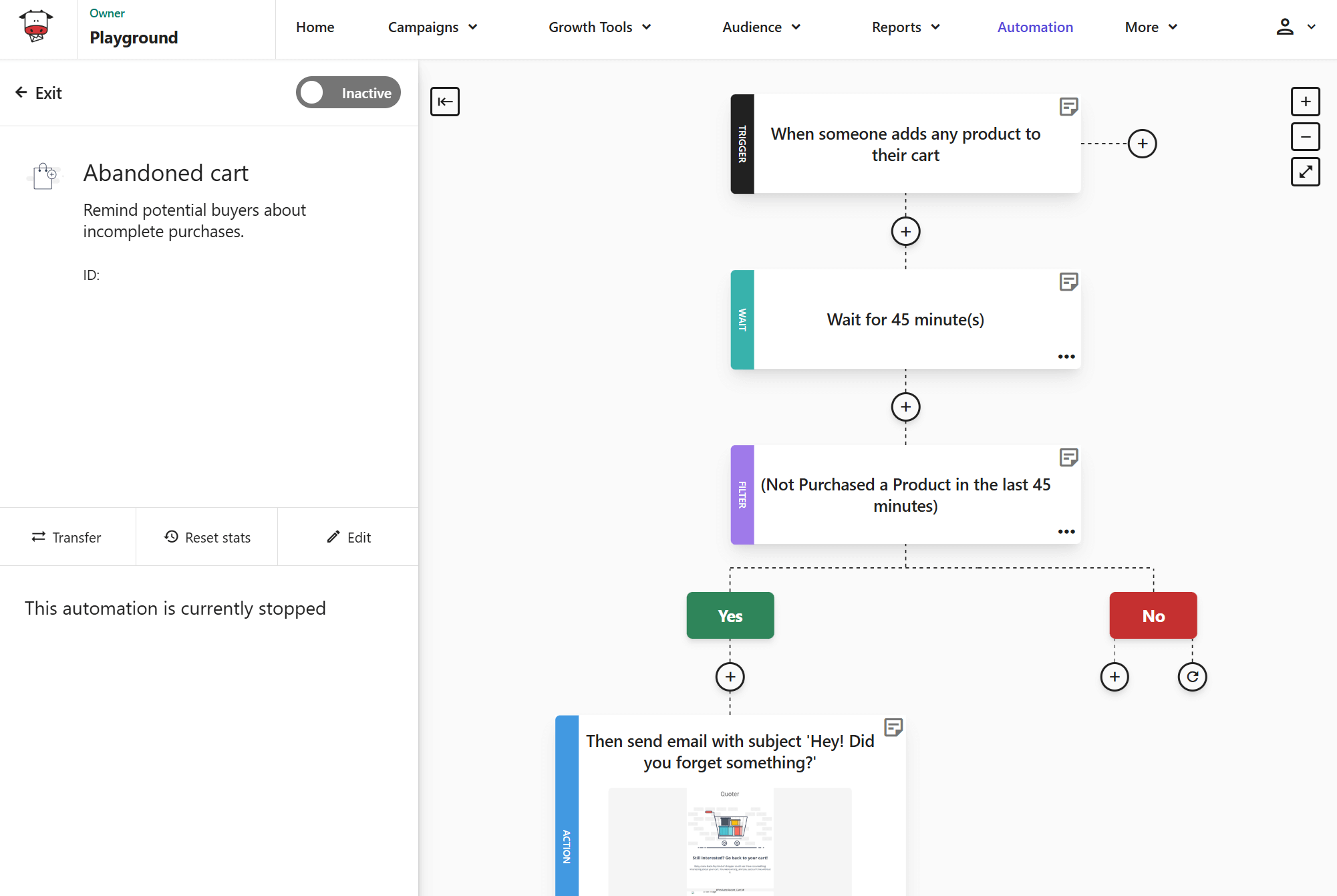
Moosend is an all-in-one email marketing solution with advanced automation features to nurture your customers at the right time. You can easily create automation workflows and transactional emails using the drag-and-drop builder or pre-made recipes.
Moosend offers integrations with platforms such as WooCommerce and Salesforce to help you track customer behavior and deliver highly targeted newsletters. This software is known for its ease of use and provides all the tools you need to optimize your automated emails.
The platform also includes powerful segmentation options to manage your contact lists with ease and personalize your campaigns so that they resonate with each subscriber. And, of course, the user-friendly email builder lets users design beautiful and responsive emails using pre-made templates or the intuitive campaign editor.
If you’re wondering how you’ll track the success of your campaigns, this email service offers thorough reporting and analytics. You’ll also find A/B testing that lets you experiment with different email variables and discover what is more effective for your subscribers.
Last but not least, Moosend has excellent email deliverability, with a 98% rate. This means your emails will reach your subscribers’ inboxes and rarely end up in spam!
Moosend Features
- Sophisticated automation features (but easy to implement)
- Custom reporting and real-time analytics
- Pre-made templates and a drag-and-drop editor
- Advanced audience management
- A/B testing (subject lines & email content)
- Landing pages and online forms
- Integrations with CRM, eCommerce platforms, social media, etc.
Pricing
This email automation software offers flexible pricing plans starting at $9/month for unlimited emails and automation workflows. The plans also include an SMTP server, landing pages, signup forms, and live chat support.
You can also sign up for a 30-day free trial to test its capabilities at your own pace.
2. Constant Contact
Pricing: Paid plans start at $12/month, 14-day trial
Best for: Small businesses, Educational institutions, NPOs
Unique feature: Event management
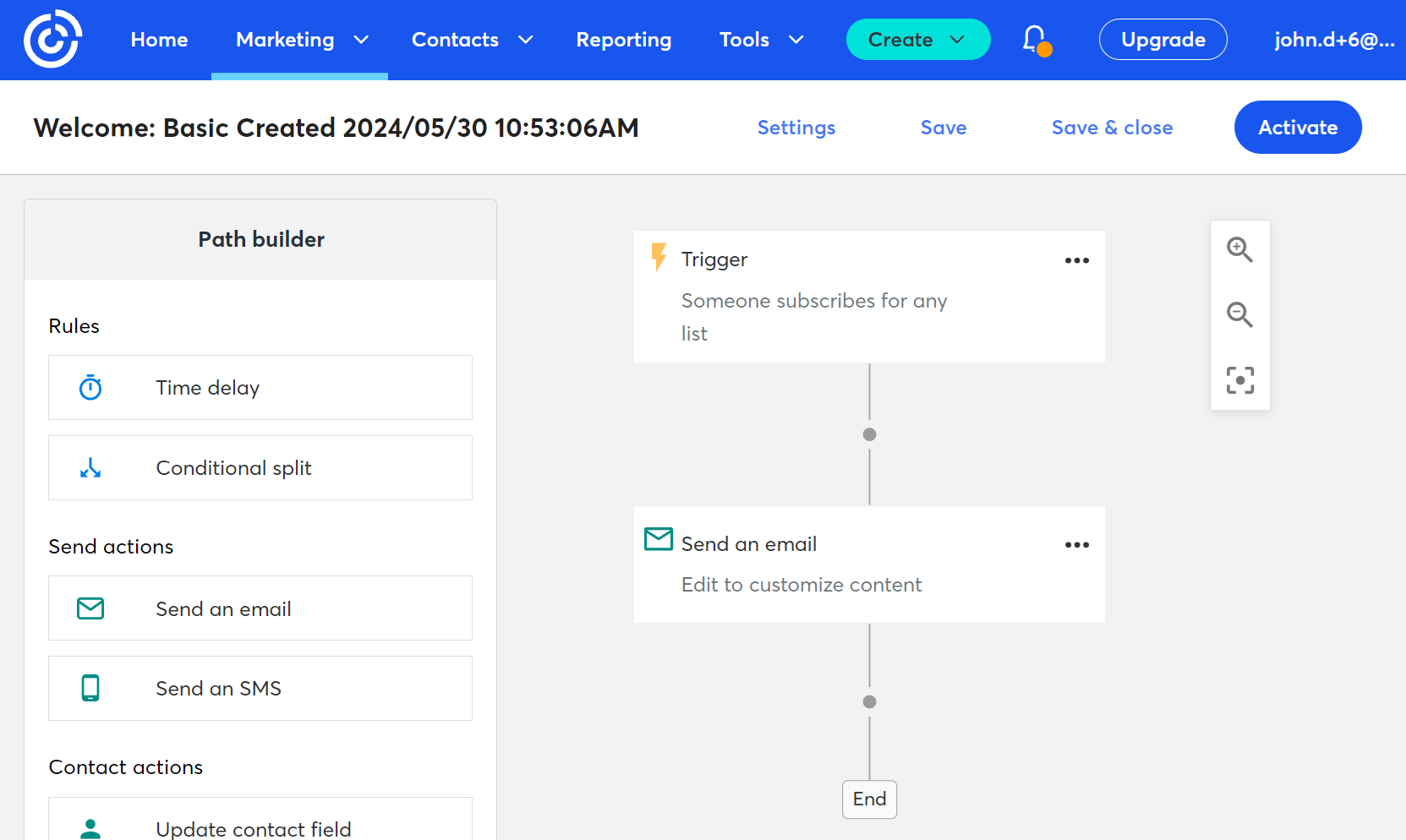
Constant Contact is a well-established email marketing service with practical digital marketing extensions, including a social media feature and an event management tool. Moreover, the platform offers a native CRM solution to bring together all your marketing and sales tasks.
Regarding email automation, the platform lets you set up triggered email series, such as welcome, anniversary, autoresponders, and resend emails. However, unlike some of its popular competitors, there are limitations for more complex automated sequences. For custom paths, you’ll need one of the top-tier plans.
Nevertheless, this email platform offers additional capabilities to help you thrive, including email templates, list-building tools, and integrations with other marketing stacks to streamline processes. Plus, they offer a mobile app to help you manage all email marketing tasks.
Constant Contact Features
- Customizable templates and a drag-and-drop editor
- Email automation and integrations with CRM, Gmail, etc.
- Email list building tools
- Event management, promotion, and reporting
- Social media management feature
- In-built CRM
Pricing
Pricing plans start at $12/month for 500 subscribers, but to access more advanced automated solutions, you need to purchase the Standard plan, starting at $35/month for the same number of subscribers.
3. Mailchimp
Pricing: Paid plans start at $20/month, limited free plan
Best for: eCommerce businesses, Agencies, Publishers
Unique feature: Multi-step automation workflows
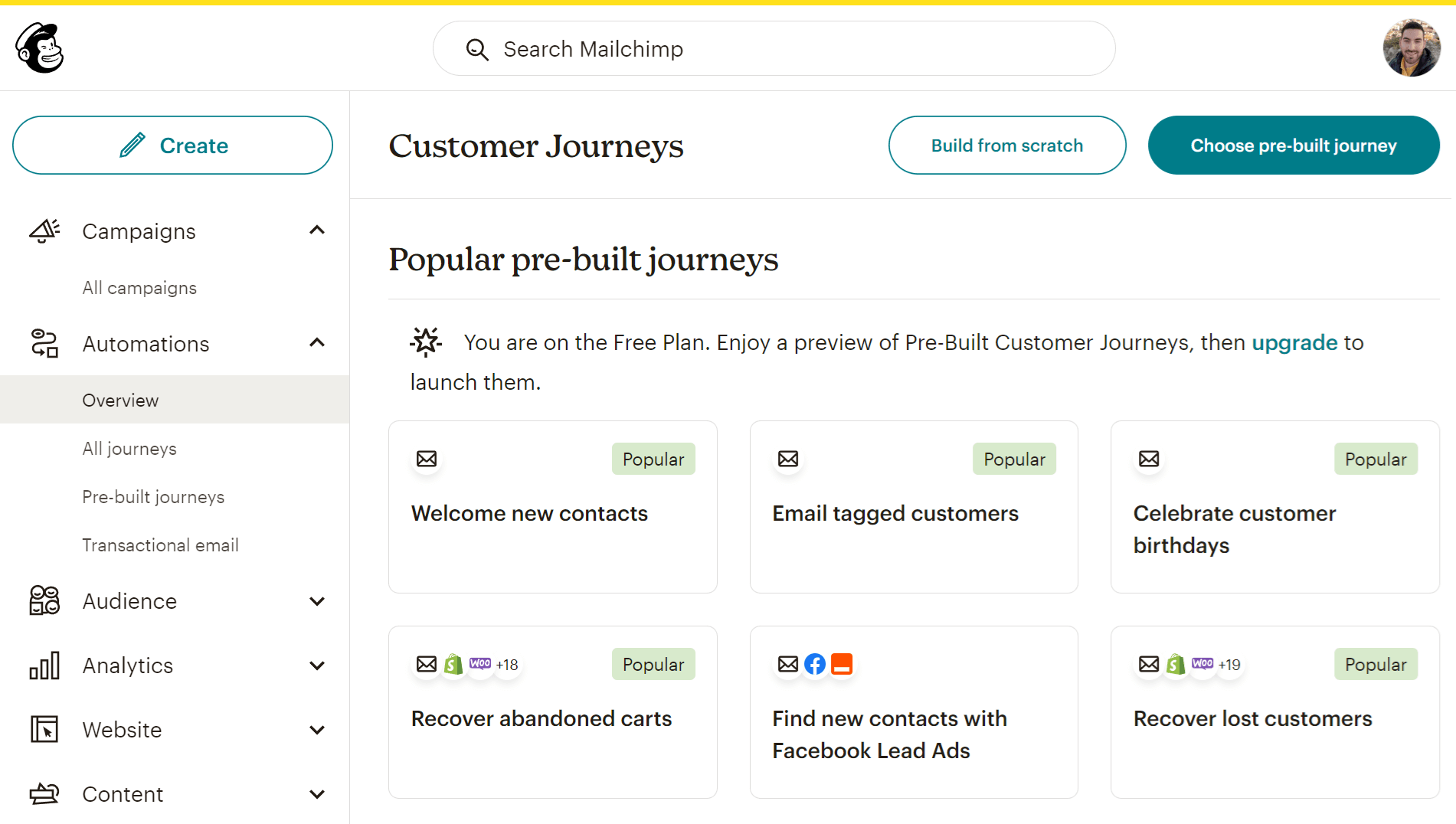
Mailchimp is one of the most popular email marketing platforms for eCommerce businesses, featuring advanced automation options. Users can build multi-step automation workflows to nurture and convert their audience. This enterprise-level software offers additional features for seasoned email marketers.
Specifically, you get a customer journey builder that lets you create personalized experiences for each customer, including behavior-based and RSS campaigns. The platform also provides scheduling features and pre-built journeys to help you save time.
This email automation software offers a range of tools to optimize your email marketing, including audience management, a marketing CRM, and enhanced insights and analytics, such as Smart Recommendations and Surveys.
Mailchimp Features
- Simple email editor and ready-made templates
- Advanced automated sequences
- Send time optimization tool
- Integrations with 300+ apps
- Segmentation and predicted demographics
Pricing
Mailchimp’s pricing starts with the Standard Plan, costing $20/month for 500 subscribers. There’s also a free plan for 250 contacts and 500 monthly emails, but it excludes automation.
If you want a more affordable solution, check out Mailchimp’s less expensive alternatives.
4. Maestra
Pricing: Starts at $2,990/month for 150K profiles, no free plan or trial
Best for: Mid-sized and enterprise DTC and ecommerce brands
Unique feature: Omnichannel flows backed by a real-time CDP and a forward-deployed marketer
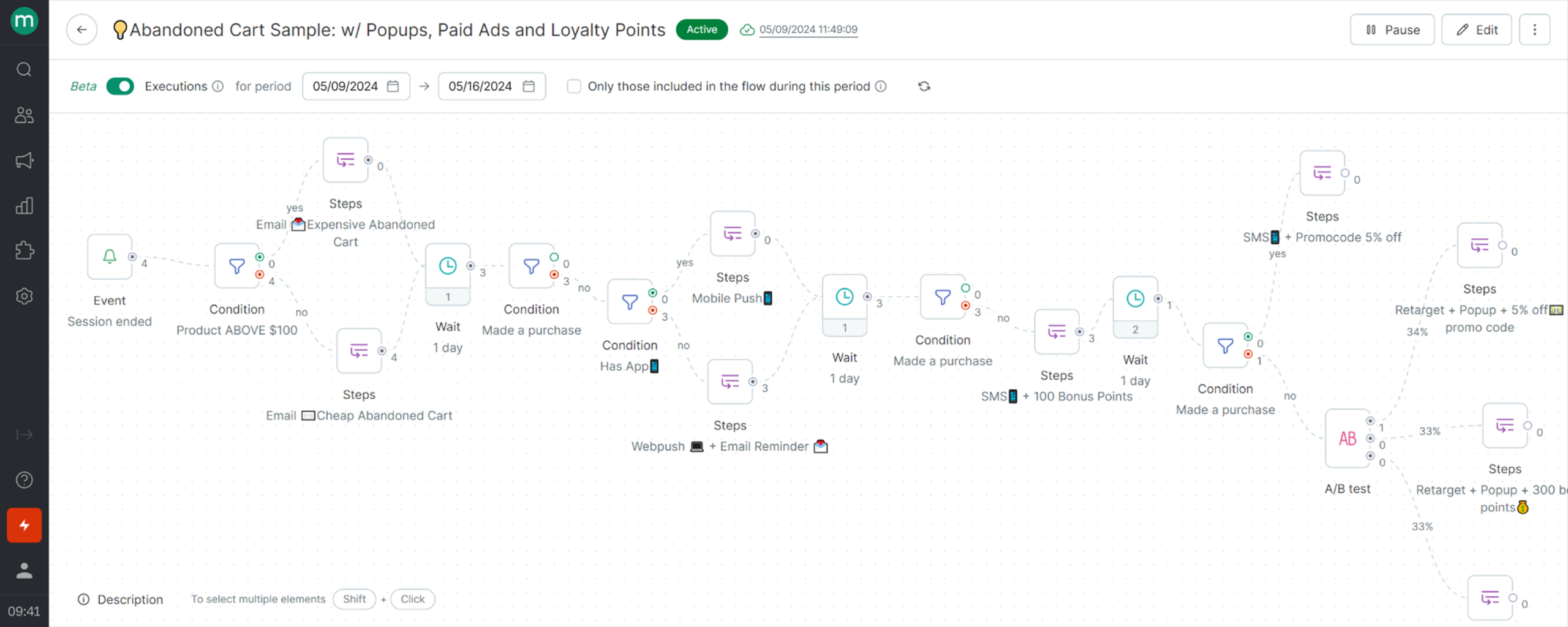
Maestra pairs email automation with a real-time customer data platform, so every email is shaped by what each customer actually does. Flows range from straightforward browse abandonment to complex journeys with behavior-based segmentation and product-specific triggers like price drop, back-in-stock, or personalized post-purchase.
The email editor supports dynamic content blocks with product recommendations, loyalty balances, and promo codes pulled from each recipient’s profile. On top of that, A/B tests and performance dashboards per channel, flow, and campaign help your team continuously refine what works.
Maestra handles deliverability from warm-up and authentication to sender reputation and inbox placement. An Email Health dashboard keeps it all visible.
Email is one part of a larger platform. The same flows can include SMS/MMS/RCS, push, WhatsApp, and on-site personalization. Maestra also offers 14 AI product recommendation algorithms and a loyalty engine, all plugged into the same flows and feeding off the same customer profile.
Every account includes a dedicated forward-deployed marketer who handles migration, builds segments and complex flows, and optimizes them through a shared Slack channel and weekly Zoom calls included in the subscription at no extra cost.
Maestra Features
- Standard and custom flows with behavior-based branching
- Drag-and-drop builder with dynamic content blocks
- Advanced segmentation (RFM, nested logic, computed and custom fields)
- A/B testing across any email element
- Detailed reporting per campaign, flow, and segment; Email Health dashboard
Pricing
Maestra starts at $2,990/month for up to 150K active customer profiles, with full feature access on every plan and a dedicated forward-deployed marketer included. It offers month-to-month billing, no annual contracts or cancellation penalties. Users can book a demo to see the platform in action.
5. HubSpot
Pricing: Paid plans start at $20/month, limited free plan
Best for: eCommerce businesses, SaaS
Unique feature: CRM and lead generation tools
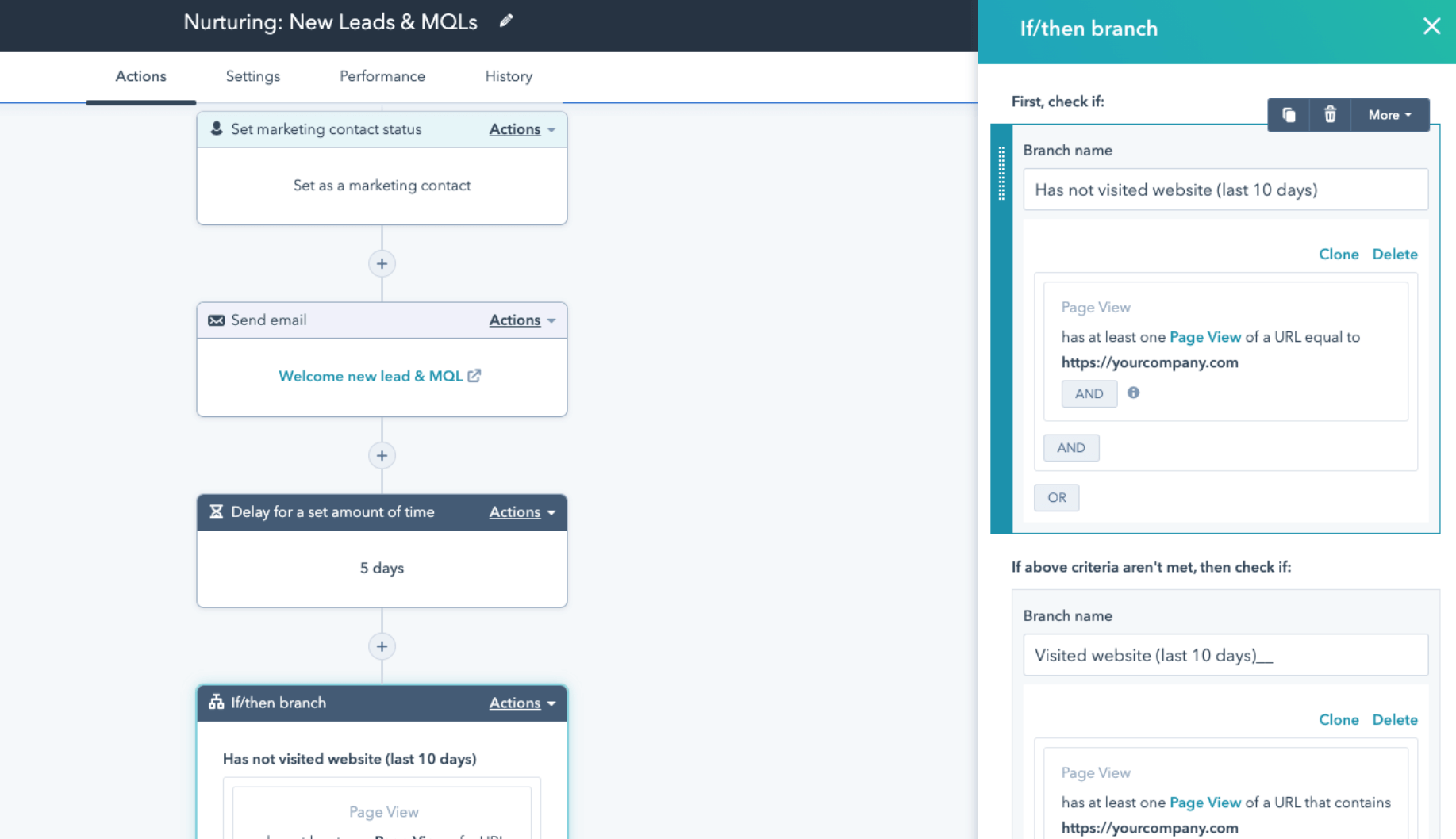
HubSpot is the ultimate marketing and CRM platform to boost your lead generation. The platform’s automation options can cater to the needs of both marketing and sales teams.
With HubSpot, you can build automated workflows and schedule follow-up tasks to save time. Plus, you get lead-generation tools to attract new subscribers, such as pop-up forms and landing pages. Combined with its robust CRM solution, it dives into each subscriber’s data to help you deliver more personalized experiences.
As an all-in-one marketing platform, it also offers social media management, ad tracking, and SEO solutions to support your marketing strategy and drive business success.
Hubspot Features
- CRM and behavior tracking
- Landing pages and web pages
- Automated workflows and performance analytics
- Social media integration and management
- Predictive lead scoring
Pricing
Regarding pricing, the Starter Plan is $20 for 1,000 contacts and includes email automation features. There is also a free plan, but it includes severely limited email automation. You can create one simple automation, usually tied to a form submit, that sends one automated email.
6. ActiveCampaign
Pricing: Paid plans start at $19/month, 14-day free trial
Best for: SMBs, SaaS, eCommerce
Unique feature: Automations Map, split testing
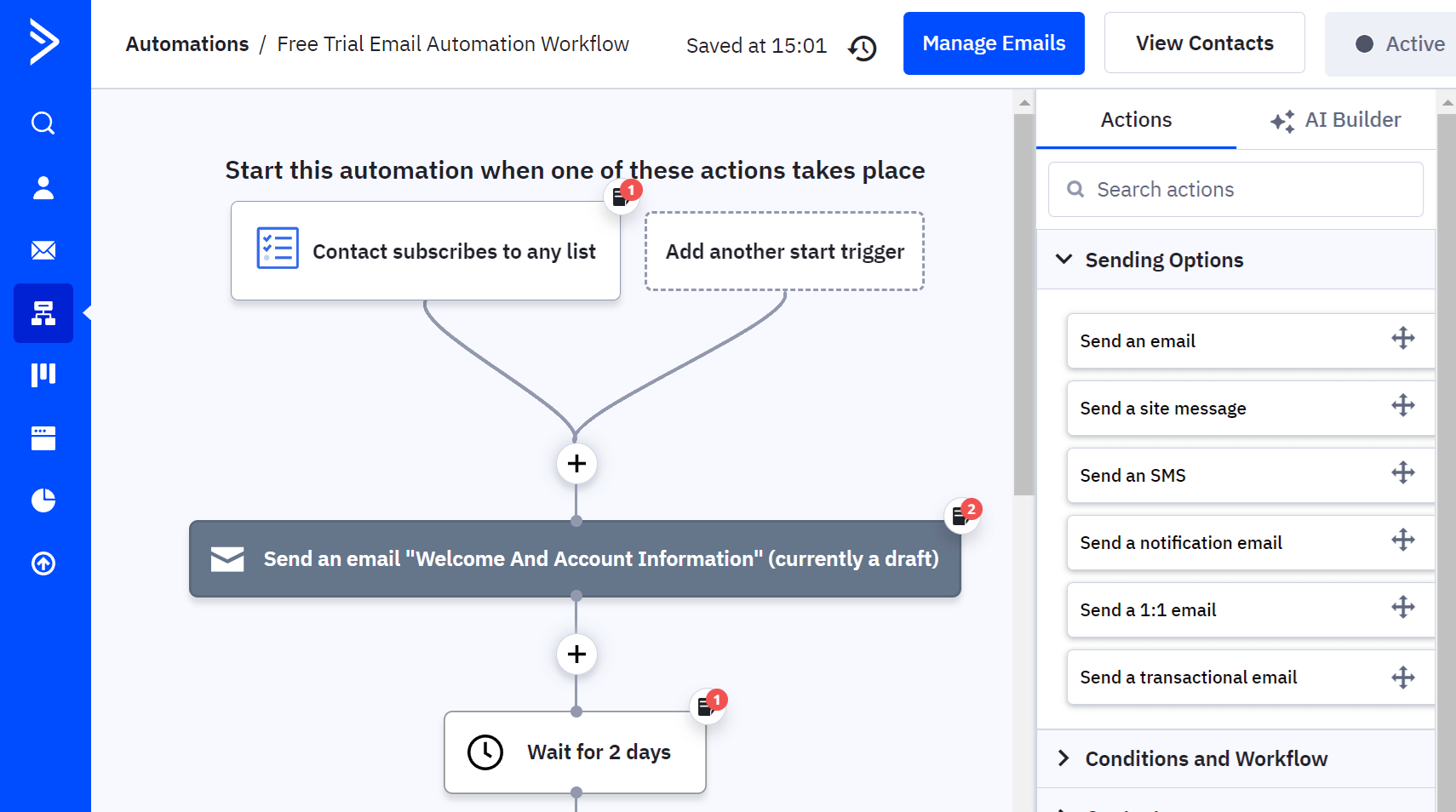
If you’re looking for a platform that excels in marketing automation, then ActiveCampaign should be on your radar. It equips marketers and eCommerce stores with advanced marketing solutions to boost conversion rates.
This marketing automation tool enables you to build strong customer relationships and nudge prospects at the right time, using everything from transactional emails to triggered campaigns and autoresponders.
Not to mention that their CRM and sales automation enable business owners and marketing leaders to build a powerful lead-generation engine. Moreover, it supports omnichannel marketing by combining email, SMS, social media, and chat to reach customers where they spend time.
ActiveCampaign Features
- Advanced features for marketing and sales automation
- Online form builder
- Email campaign management
- Cross-channel engagement feature
- Integrations with Salesforce, Shopify, WordPress, etc.
Pricing
This automation software offers four pricing packages, starting at $15/month for 1,000 contacts (paid annually) or $19/month for monthly billing.
Read our ActiveCampaign review
7. Omnisend
Pricing: Paid plans start at $16/month, free plan
Best for: eCommerce, Fashion
Unique feature: Email and SMS tools
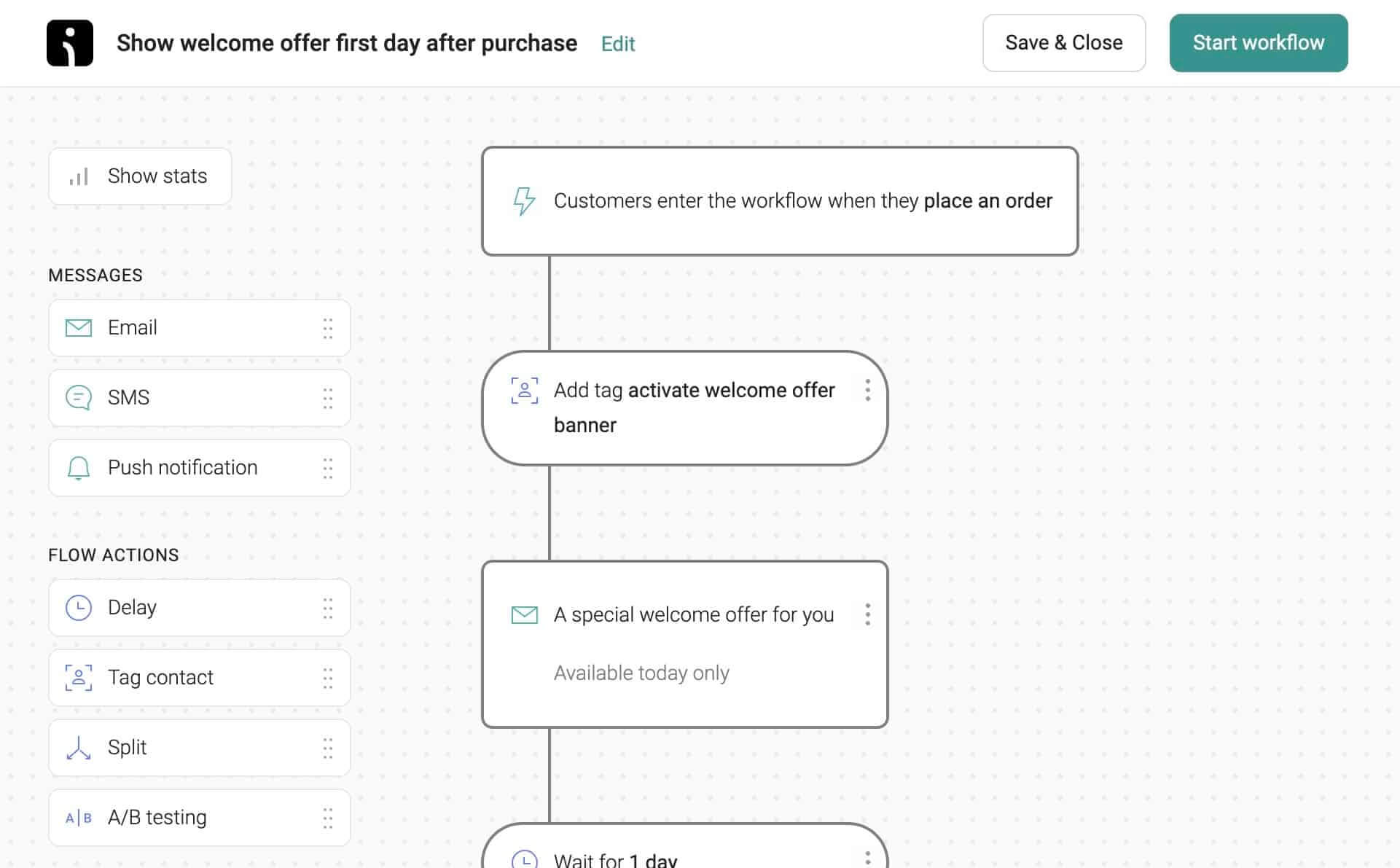
Next on the list is Omnisend. This platform enables you to build a multichannel experience that combines email, SMS, and web push notifications.
To automate your campaigns, there are prebuilt workflows for essential triggered email newsletters such as welcome series and cross-sell campaigns. In addition, they offer a tool called Automation Splits to tailor offers and incentives and create highly targeted experiences.
For lead generation, Omnisend offers an AI form builder that completes the full design, copy, and visuals based on your prompt. Lastly, Omnisend lets you optimize your campaigns through A/B testing by experimenting with different items in your email content.
Omnisend Features
- Advanced eCommerce marketing automation
- Automation splits
- SMS marketing
- Integrations with eCommerce solutions
- Cookieless and cross-channel tracking
Pricing
This platform offers a free plan for 250 contacts and 500 monthly emails. Paid plans start at $16 per month for 500 contacts and include all features. You can visit their website for more info about SMS pricing.
8. GetResponse
Pricing: Paid plans start at $19/month, free plan
Best for: Publishers, eCommerce
Best feature: Lead magnet funnels
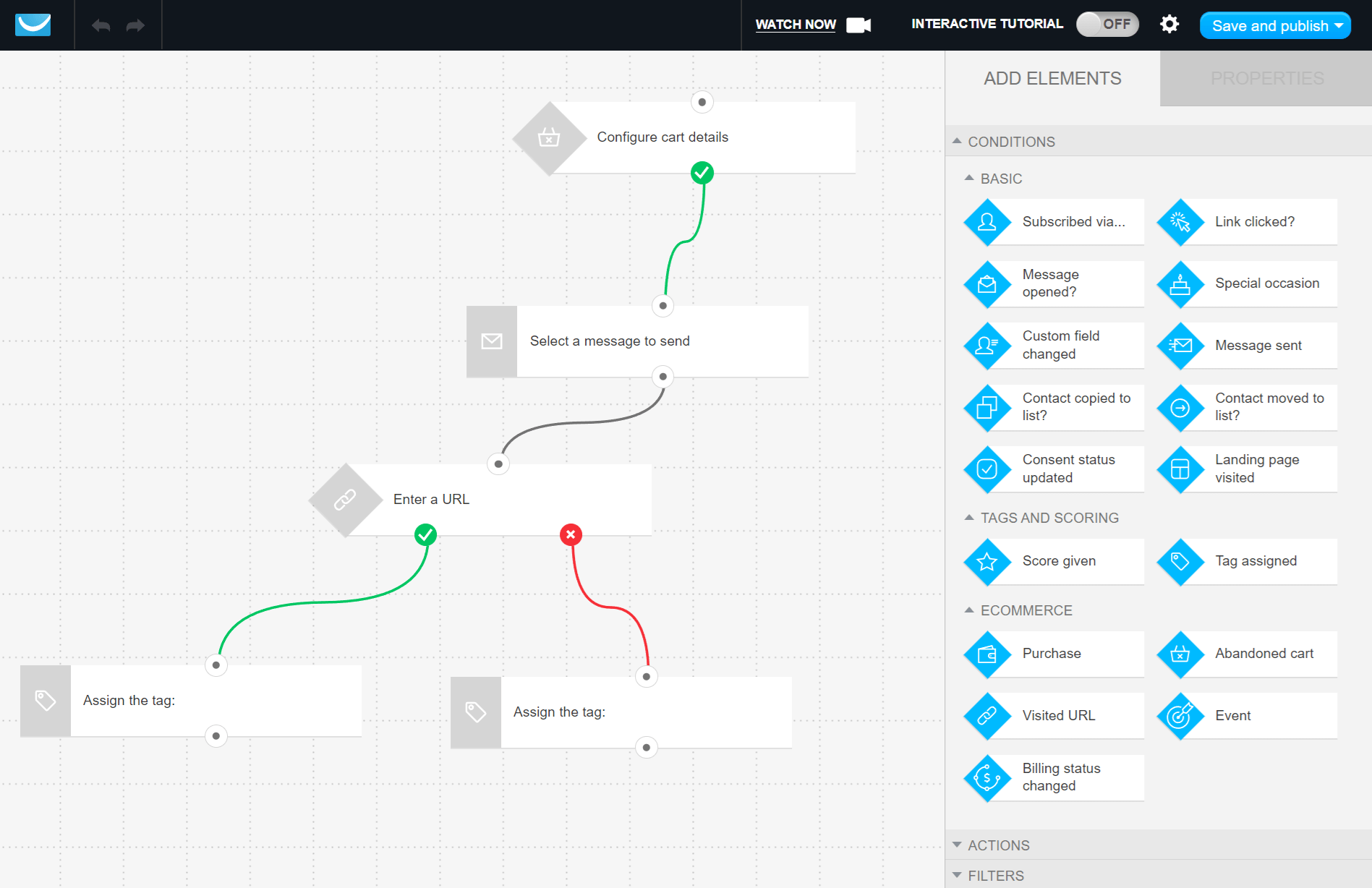
GetResponse is another all-in-one marketing solution with compelling automation capabilities. Apart from autoresponders and transactional emails, the platform sports tools like tagging, scoring, and website behavior tracking.
In addition to its email marketing capabilities, GetResponse offers a website builder and webinar features, including screen sharing, polls, and surveys.
This platform also provides users with a lead magnet creator, allowing you to promote your content in an automated, optimized way. Lastly, it can support your paid advertising efforts via its online ad creator.
GetResponse Features
- Advanced automation and segmentation
- Forms and pop-ups
- Omnichannel marketing support
- Live chat
- Website builder
Pricing
The tool’s free plan covers basic email marketing for up to 500 contacts and 2,500 newsletters per month, but it does not include automation. To access autoresponders and simple automation, paid plans start at$19/month. For advanced automation and optimization tools, you need another plan at $59/month.
9. Drip
Pricing: Paid plans start at $39, 14-day free trial
Best for: eCommerce
Best feature: One-click integrations
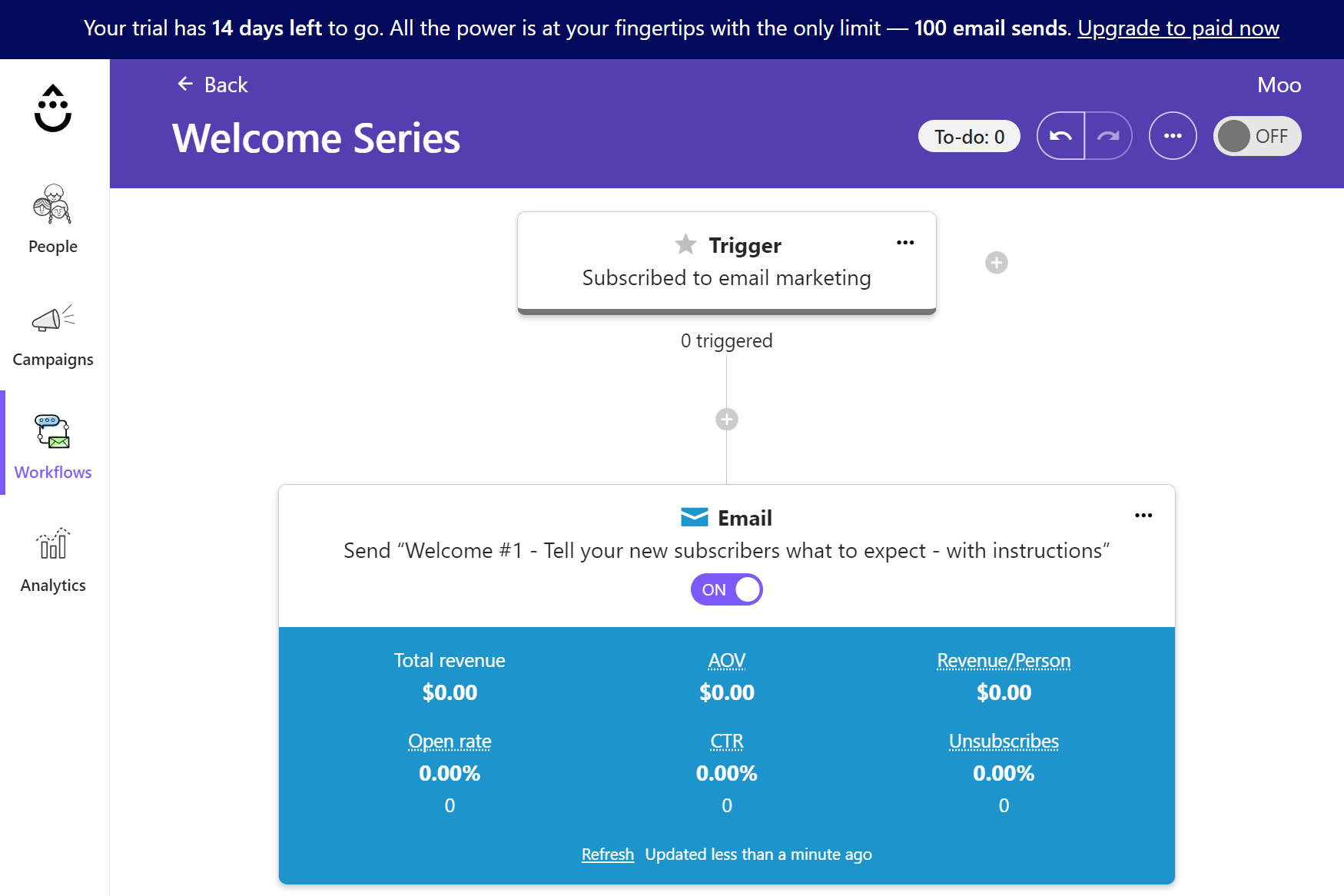
Another email automation tool worth your attention is Drip. Even though it’s not the most affordable for businesses with fewer than 2,500 contacts, the rest can benefit from it.
Drip is a great option for robust eCommerce automation. You can easily set up triggered emails using prebuilt workflows to save time. To increase the effectiveness of your campaigns, you can deliver tailored product recommendations through the platform’s personalization package.
Finally, you can easily collect customer data using forms and pop-ups, or by syncing Drip with social media and other integrated platforms.
Drip Features
- SMS workflows
- Dynamic segmentation
- Benchmarking reports
- Prebuilt automation workflows
- A/B Testing
Pricing
Premium pricing of this email automation software starts at $39/month for up to 2,500 subscribers. Drip has no free plan, but you can request a 14-day trial.
10. Mailerlite
Pricing: Paid plans start at $10/month, free plan
Best for: eCommerce, SMBs, SaaS,
Unique feature: A/B testing
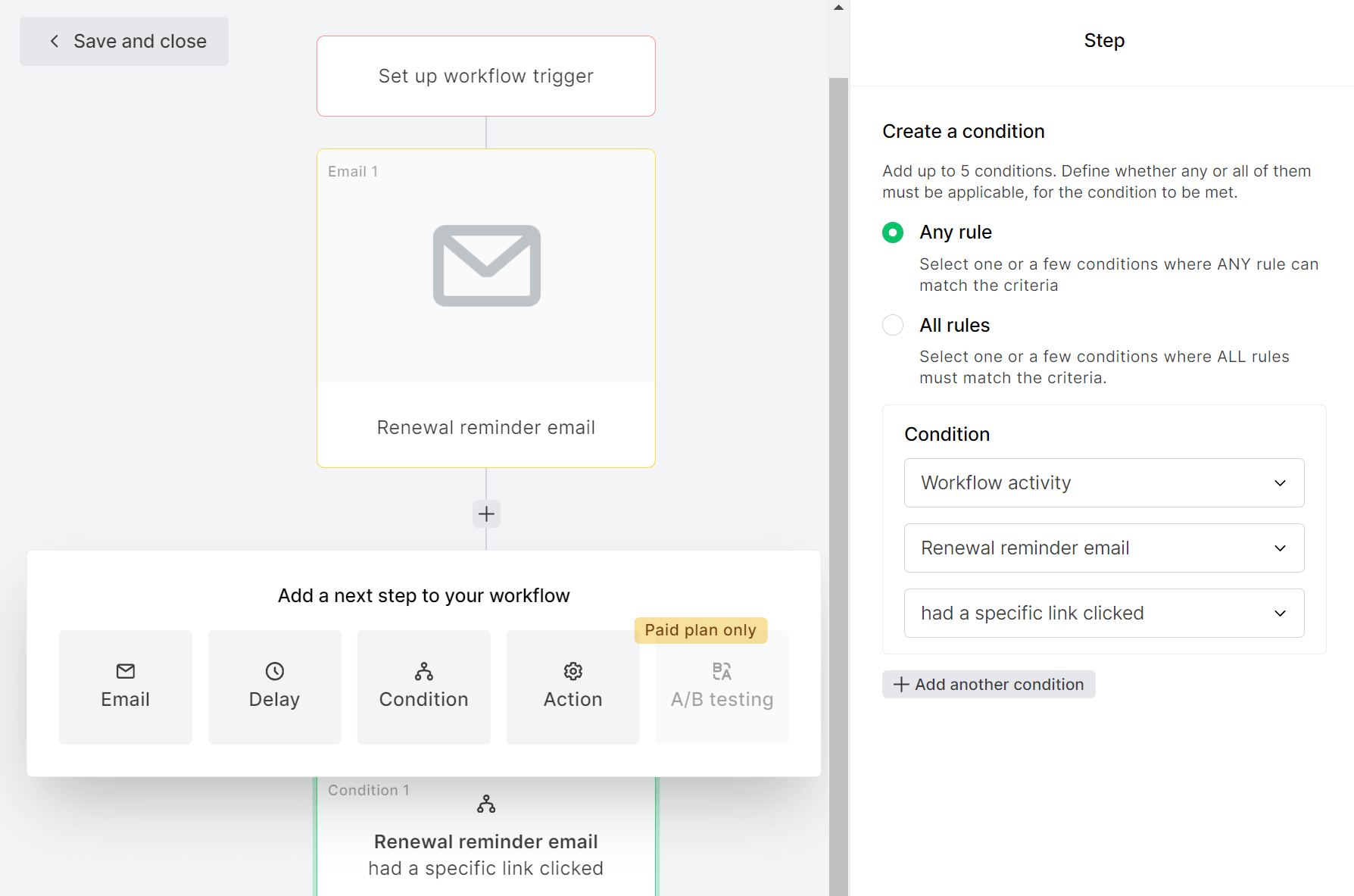
MailerLite is an easy-to-use, affordable solution for beginners and pros alike. You can send triggered campaigns based on customer actions, or use the multi-trigger option for more precise targeting.
The platform offers an intuitive HTML editor and drag-and-drop builder to create a branded design for your email campaigns. It also has reporting capabilities with click maps and deliverability reports to optimize your campaign performance.
Finally, MailerLite offers simple website and blog builders, as well as tools for effective list-building.
MailerLite Features
- Multi-trigger automation
- Landing pages and sign-up forms
- Email verifier for list cleaning
- Sell digital products and subscriptions
- RSS and auto-resend campaigns
Pricing
MailerLite has a free plan for up to 500 subscribers, including essential automation features to get started. For more assets, you can choose the Growing Business paid plan starting at $10 monthly for the same number of contacts.
11. Kit
Pricing: Paid plans start at $39/month, free plan
Best for: Bloggers, Creators
Best feature: Ready-made automation templates for creators
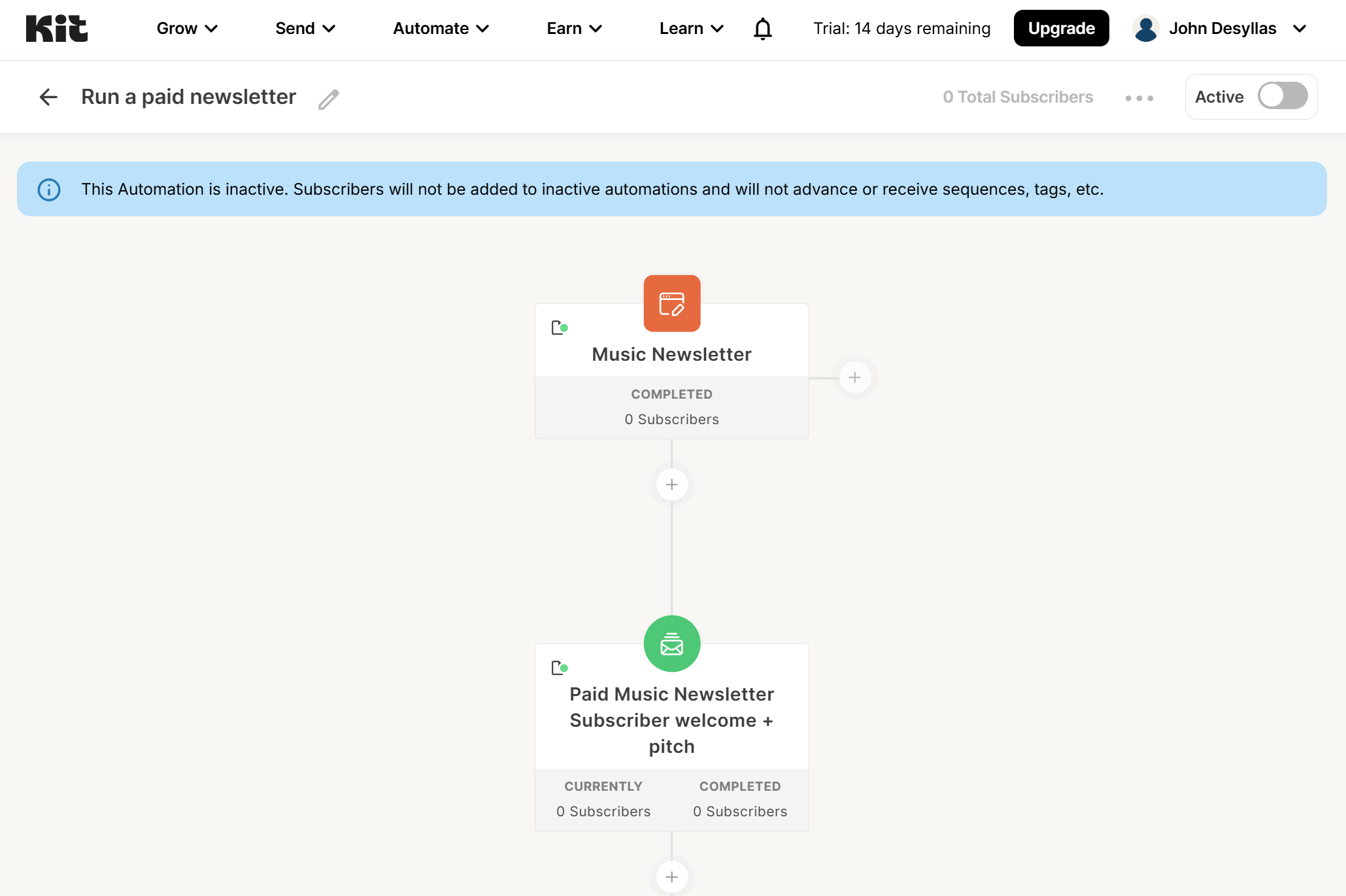
Kit also checks all mandatory boxes regarding email automation. You can set up drip campaigns and edit your content with just a few clicks. Moreover, the tagging system lets you add or remove subscribers from your workflows.
You can integrate Kit with platforms like Shopify and additional apps through Zapier to expand your reach. This marketing software offers everything you’ll need to design beautiful, responsive emails.
Finally, Kit has a high deliverability score, making it an excellent asset for email marketers and creators.
Kit Features
- Visual automation builder
- Paid newsletters
- Email signup forms
- Newsletter referral program
- Subscriber scoring
Pricing
Kit offers a free plan to help you start building your audience, with up to 10,000 subscribers and 1 visual automation. The Creator plan starts at $39/month and includes unlimited visual automations and 24/7 support. For more features, the Pro plan starts at $79/month.
12. Mailjet
Pricing: Paid plans start at $27/month, free plan
Best for: SaaS, eCommerce
Best feature: Multi-user account
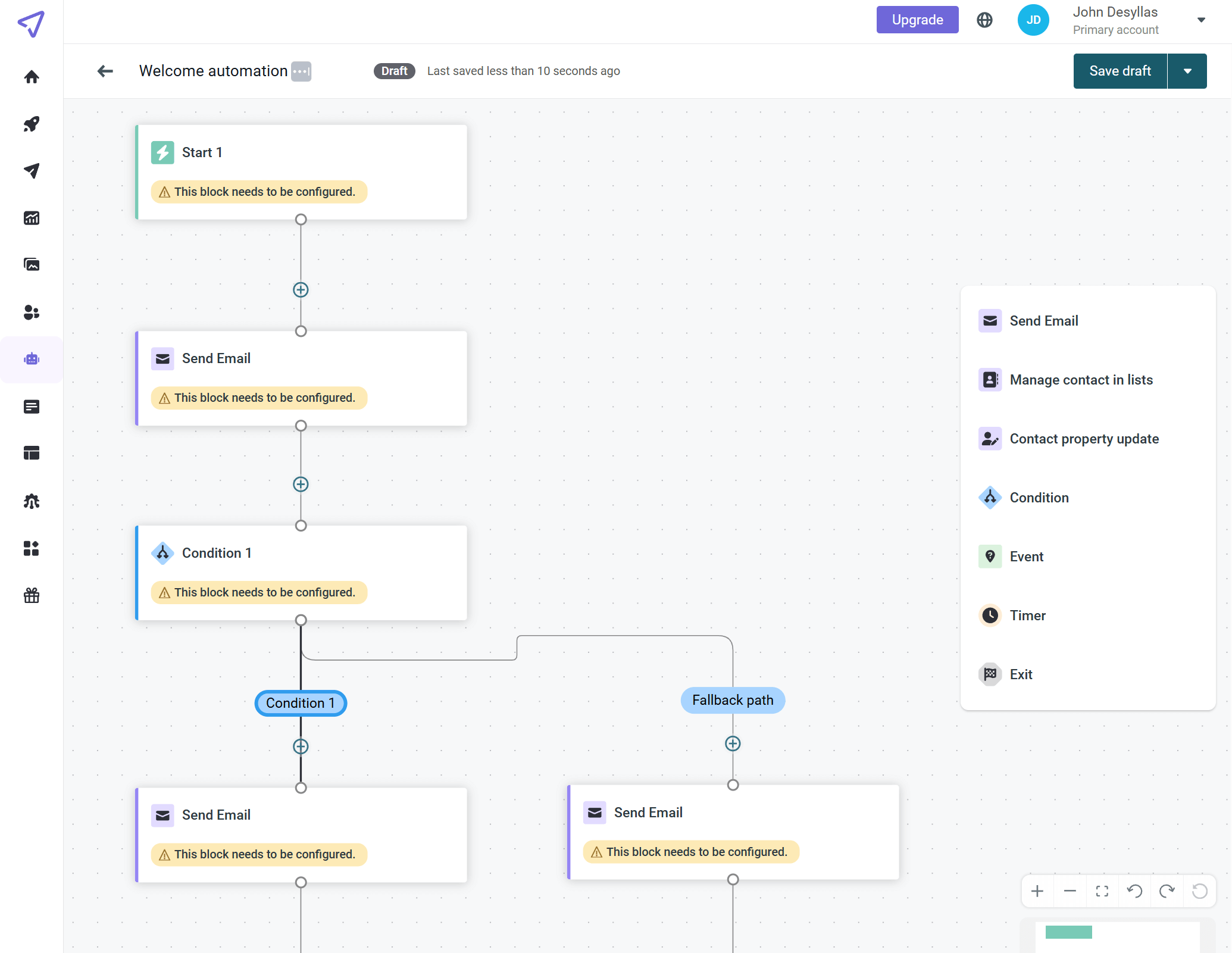
Next on our automation list is Mailjet. Powered by prebuilt automation journeys and segmentation, it helps users meet their conversion goals faster through timely customer communications.
You can also check your real-time data on the Statistics Dashboard to learn what works and improve your tactics in the future. Moreover, Mailjet’s A/B testing allows you to test different campaign variables like the subject lines, images, CTAs, and more.
Lastly, the real-time collaboration feature helps your teammates sync to get the best decisions before they hit “Send.”
Mailjet Features
- Email builder
- Multi-user account
- Pre-built automation workflows
- Email API
- SMTP Relay
Pricing
Mailjet’s email marketing platform has a free plan for up to 6,000 monthly emails with basic email capabilities. Paid plans start at $17/month with the Essential plan, but to access automation features, you need to upgrade to the Premium plan at $27/month.
13. AWeber
Pricing: Paid plans start at $15/month, free plan
Best for: Small businesses, Online creators
Best feature: Customizable campaigns
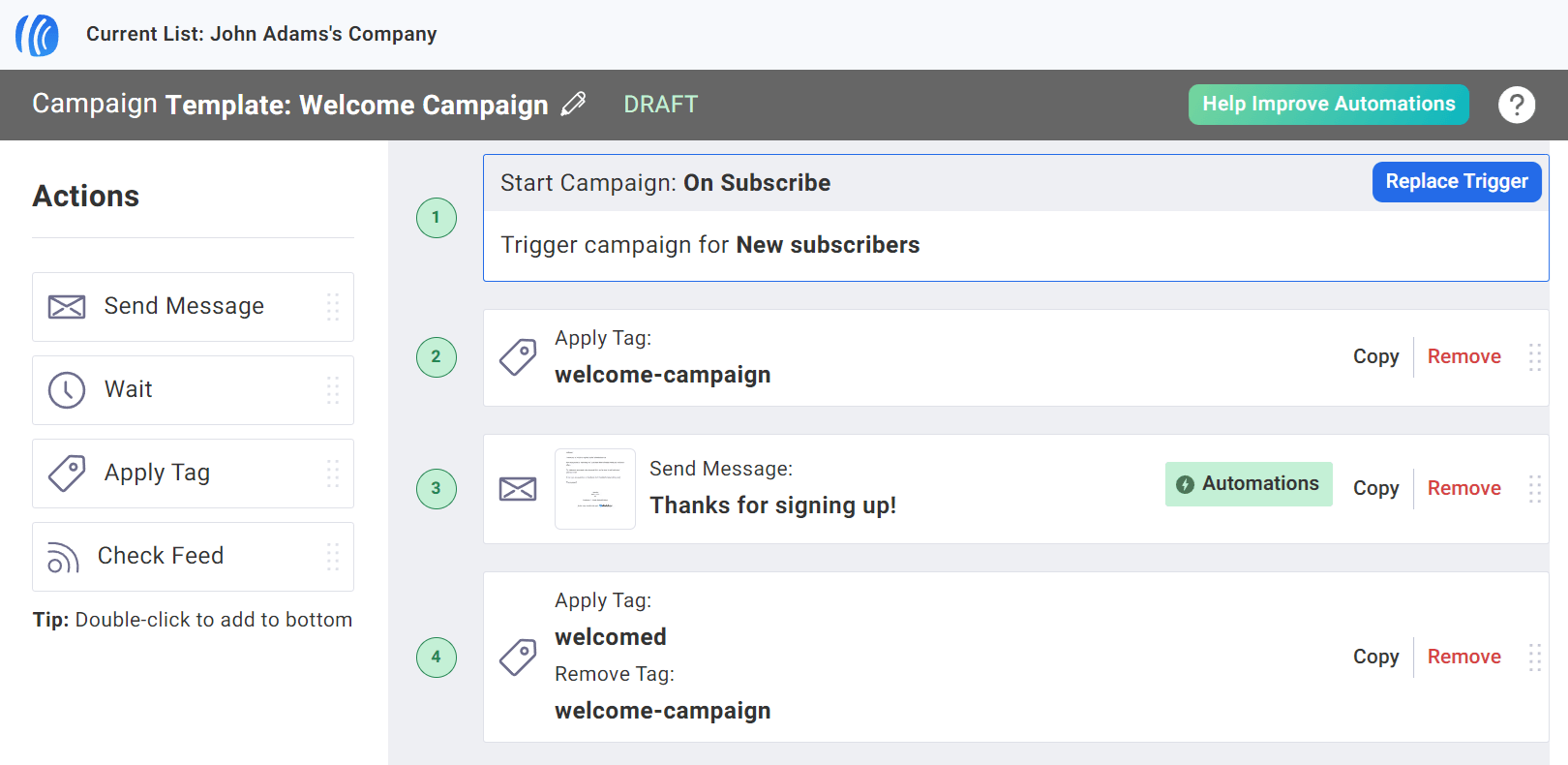
AWeber is a great tool for businesses that want to take their email marketing to the next level. They offer the essential email marketing features SMBs and freelancers need to streamline a successful email marketing strategy, from an email editor integrated with Canva to list-building tools like landing pages and forms.
Moreover, you can use autoresponders and send triggered campaigns to your audience. Combined with the segmentation tool, it’s easy to schedule highly targeted campaigns and see them convert.
The platform is easy to use overall, but its interface looks dated compared to its alternatives. You can also find pre-written email marketing campaigns to get inspired.
AWeber Features
- Native Canva integration
- Drop-down menu for personalization variables
- Web push notifications and landing pages
- SMS marketing integrations
- Cross-device and A/B testing
Pricing
AWeber’s free plan has limited capabilities, and advanced automation is not included. The first paid plan starts at $15/month and supports up to 500 contacts, allowing you to set up 3 automations. For more, you can upgrade to the Plus plan starting at $30/month.
14. Campaign Monitor
Pricing: Paid plans start at $12/month, 30-day trial
Best for: NPOs, eCommerce
Best feature: Time zone sending
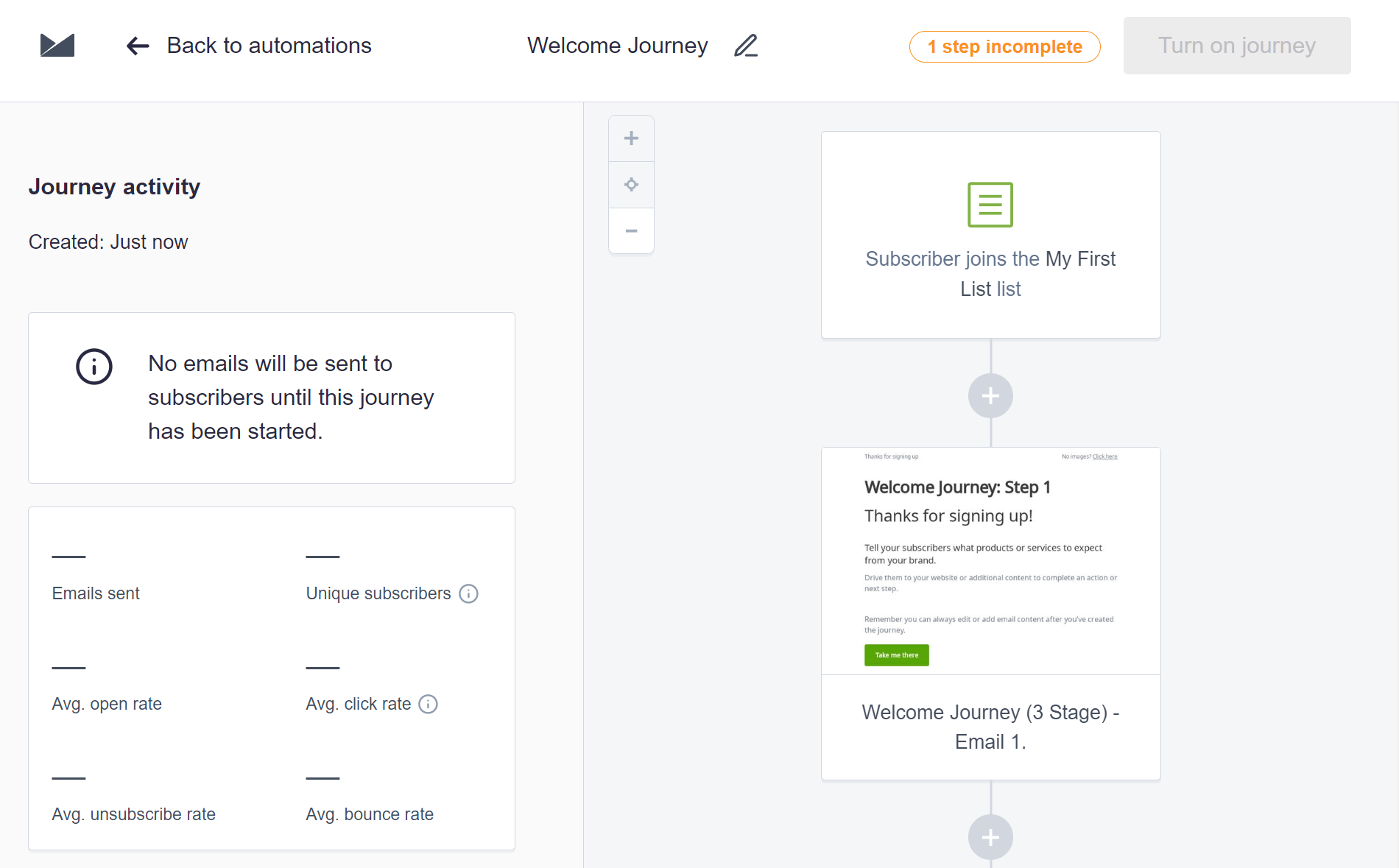
Campaign Monitor offers many email marketing tools to convert your subscribers and boost your ROI. Apart from automated sequences, its personalization features can be game-changing for your business. Time zone sending and dynamic content are also among them.
This email automation software has everything you’ll need to design beautiful transactional emails and newsletters, and fully customize them. Finally, the platform supports SMS marketing, enabling you to build an omnichannel marketing approach and win your subscribers faster.
Campaign Monitor Features
- User, role, and access management
- Transactional emails
- Template builder
- SMS marketing
- Integrations with platforms like Shopify, Salesforce, etc.
Pricing
Pricing plans start at $12/month for 500 contacts. For unlimited emails, you can choose the next plan at $29/month. There is also a 30-day free trial for 500 contacts and 500 email campaigns.
15. Benchmark Email
Pricing: Paid plans start at $37/month, limited free plan
Best for: SMBs, eCommerce
Best feature: Polls and surveys
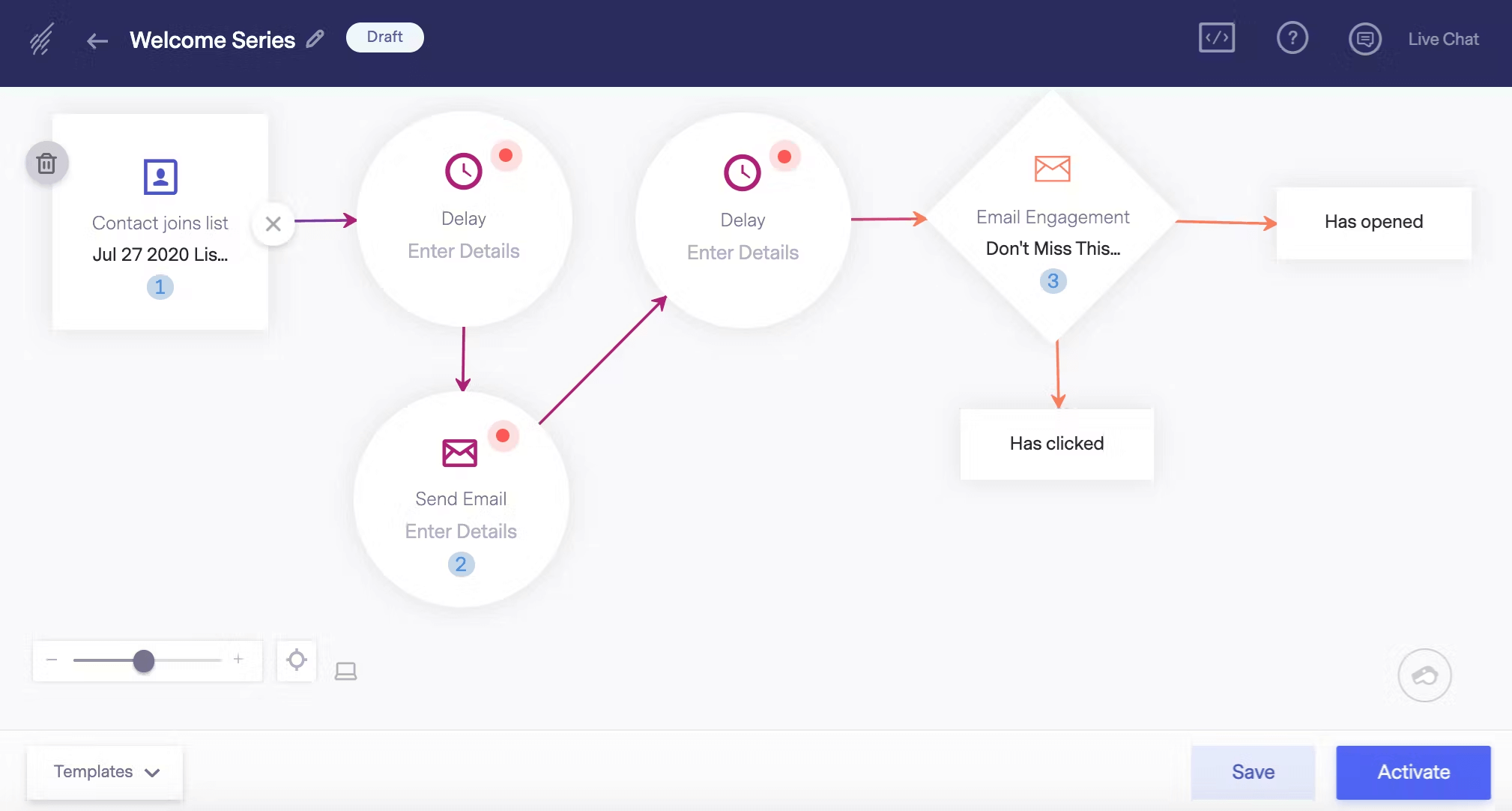
Next on the list is Benchmark Email, which has everything an email service needs to build a successful email process. You can create beautiful emails using pre-made templates or the available builder and demonstrate your products using the drag-and-drop eCommerce block.
The Automation Pro feature lets users send highly targeted automated emails with conversion-focused messaging. To see what works best on your audience, you can also conduct A/B testing to find the best variables for a winning campaign.
Benchmark Email Features
- Signup forms, polls, and surveys
- Integrations with popular platforms
- Advanced automation and segmentation
- Multi-user account
- A/B Testing
Pricing
This software offers a free plan with limited capabilities. Alternatively, you can purchase the Pro plan starting at $37/month for 2,500 contacts, and email sending that’s 10x your contact limit.
16. SendGrid
Pricing: Paid plans start at $60/month, 60-day trial
Best for: eCommerce, SaaS, Startups
Best feature: Delivery optimization tools
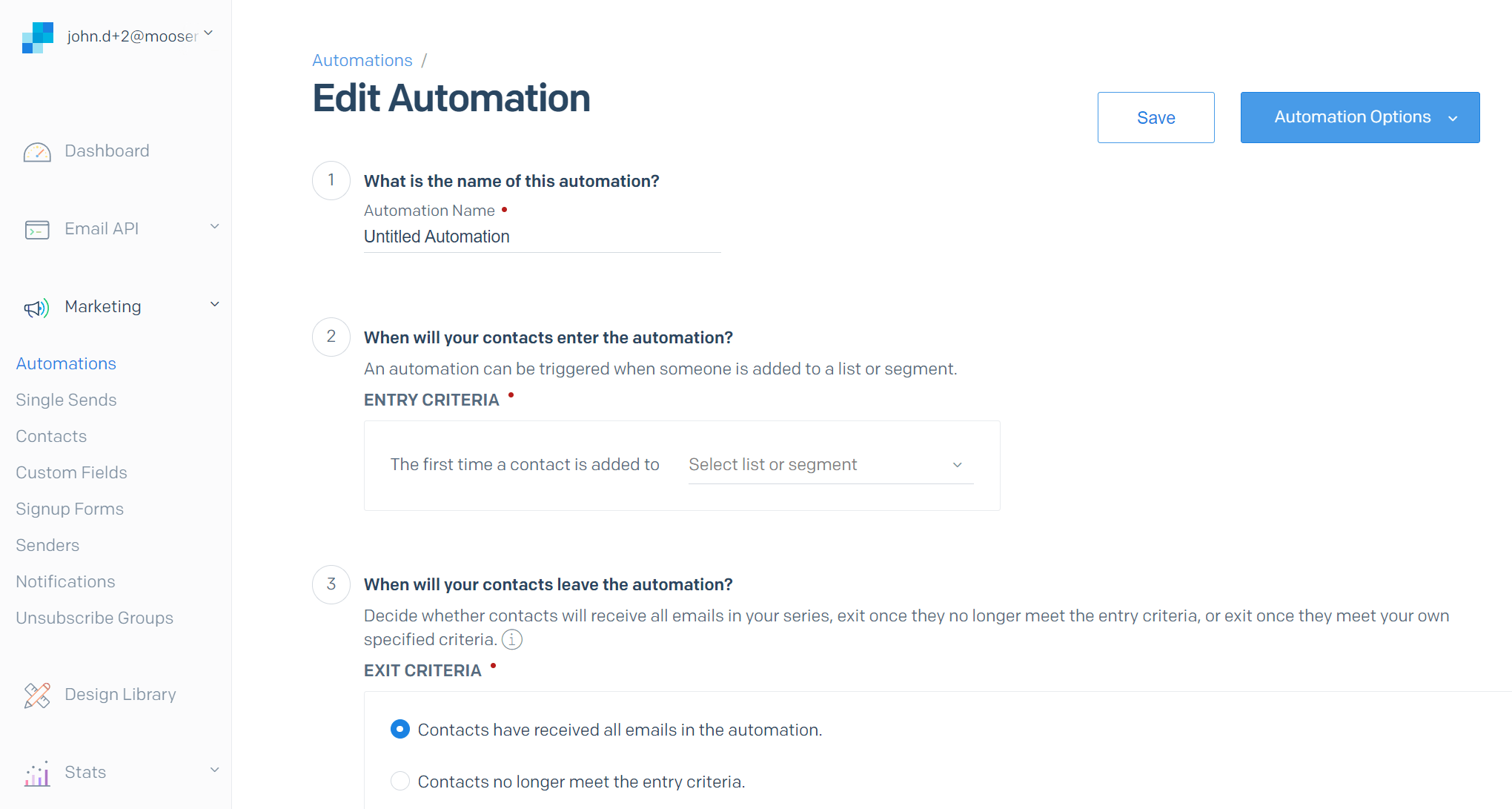
SendGrid is a well-known email service provider with tools that help ensure customer success. You can set up triggers for automated, hyper-personalized emails minus the complexity. To improve your campaigns over time, SendGrid offers a handy analytics dashboard that tracks key metrics.
You can also conduct email testing to ensure that your campaigns will be delivered flawlessly to your subscribers’ mailboxes, not the spam folder. Finally, you get access to all the essential tools to build your email lists and craft responsive emails.
SendGrid Features
- Advanced list segmentation
- Event tracking API
- Email testing feature
- Drag-and-drop editor and templates
- Marketing automation
Pricing
You can start with the 60-day free trial, which includes up to 100 contacts and 100 emails per day. Premium pricing starts at $15/month but doesn’t include automation. To get it, you need the Advanced plan starting at $60/month (10,000 contacts – 50,000 emails).
17. SendPulse
Pricing: Paid plans start at $10/month, free plan
Best for: Freelancers, SMBs, eCommerce
Best feature: Free CRM
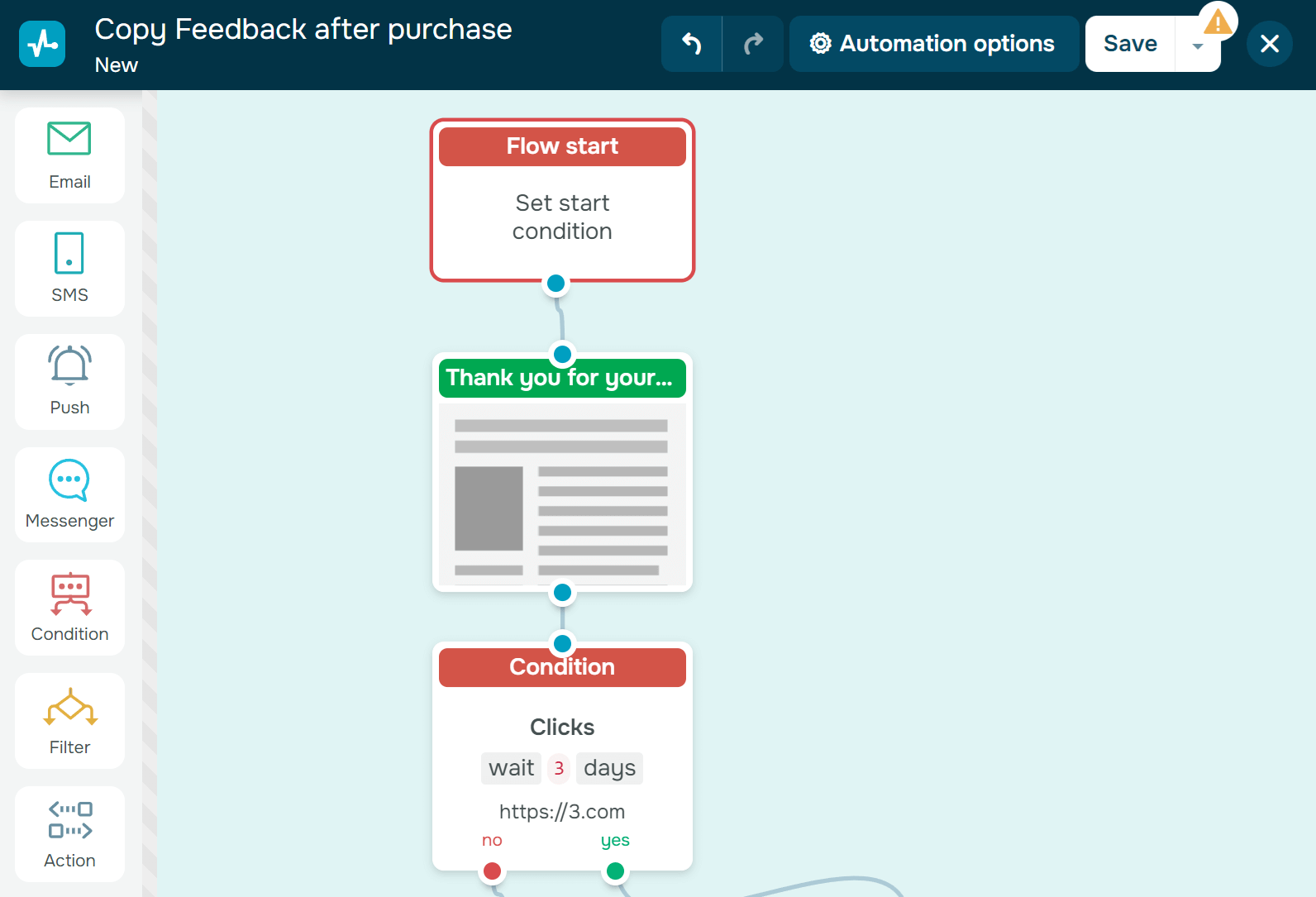
SendPulse is a holistic marketing and sales software. Its CRM solution enables users to build highly segmented email campaigns and manage lead generation successfully.
But what about automation? With its Automation 360 solution, you can closely monitor your visitors’ data and send them triggered emails at the perfect time. You can also leverage chatbots to build an ongoing communication channel with subscribers.
SendPulse Features
- SMS campaigns
- Chatbots
- Automation workflows
- Online course creator
- Signup forms and web push notifications
Pricing
This email automation software has a free plan with limited features. For more advanced features, consider purchasing a paid plan, starting at $10/month for up to 500 subscribers.
18. Emma
Pricing: Paid plans start at $99/month (billed annually)
Best for: NPOs, Agencies
Best feature: Team management
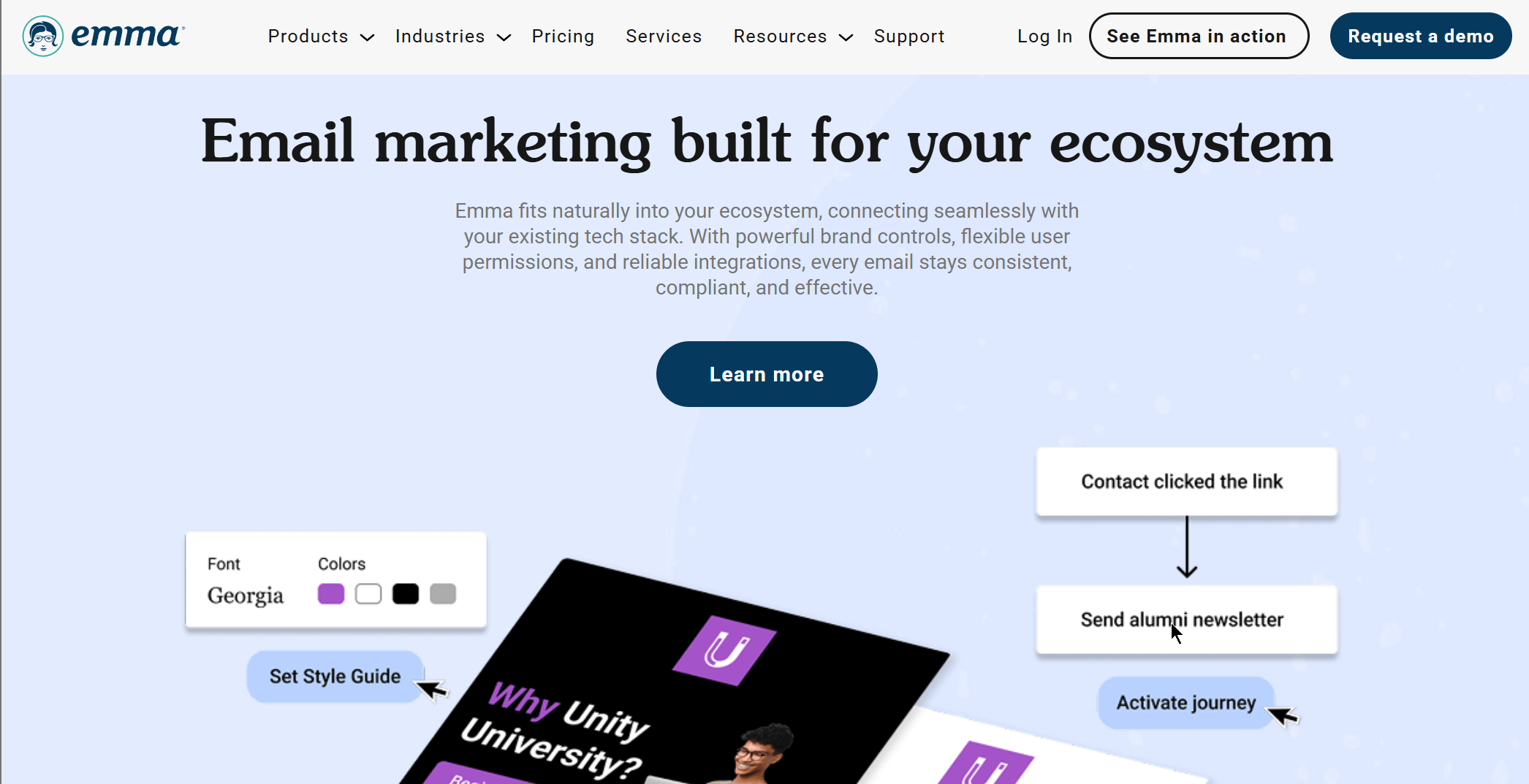
While Emma is not the most affordable email solution, it’s an excellent option if you need to distribute different access and roles to your teammates. You can schedule targeted messages for your subscribers for different customer journey stages.
Emma also has an SFTC connection that enables users to upload their contacts; if you can find integrations that suit your system. Finally, it provides users with basic reporting tools. If its steep pricing is a deal-breaker, you can explore other Emma alternative solutions.
Emma Features
- Responsive dashboard
- Drag-and-drop email editor
- Brand controls
- List segmentation
- User and account permissions
Pricing
Emma’s entry-level paid plan starts at $99/month with an annual contract for 10,000 subscribers, and allows you to set up 1 automated journey. For unlimited automation, multiple starting points, and custom event-driven automation, you need the Essentials plan at $159/month.
19. Flodesk
Pricing: Paid plans start at $25/month, free plan
Best for: Small businesses, solopreneurs, creators, coaches
Unique feature: Brand-first automation with patented email layout technology
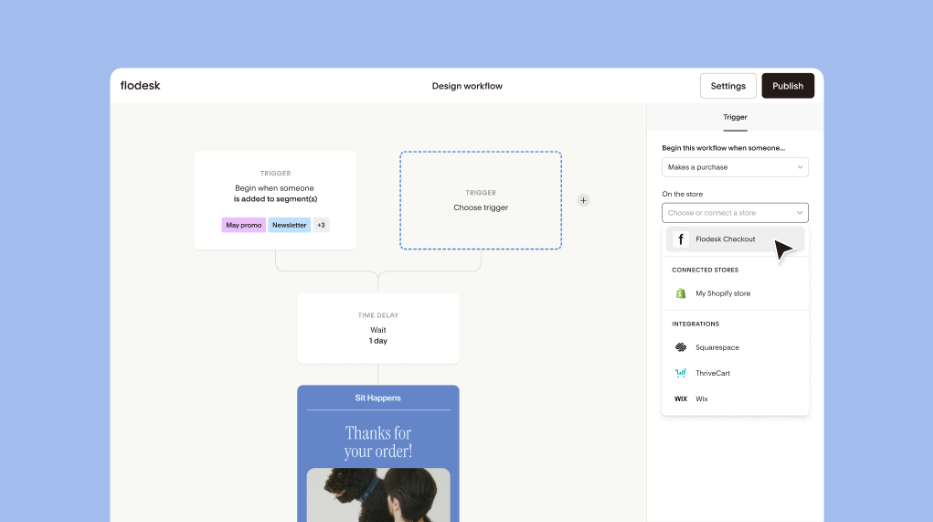
Flodesk is a design-first email marketing platform that brings together automation, branded email design, and eCommerce checkout in one place. It’s built for business owners who want their automated emails to look professional, without needing a developer or designer.
Flodesk’s automation engine supports multi-trigger workflows, real-time instant reactions, split paths with natural rejoin, and behavior-based eCommerce triggers for both Flodesk Checkout and Shopify.
Nine ready-to-use eCommerce workflow templates are included, covering scenarios like abandoned cart recovery, post-purchase sequences, and re-engagement campaigns. Per-step drop-off analytics make it easy to see exactly where subscribers exit a workflow and optimize accordingly.
The platform’s patented layout technology can also render custom fonts and image-rich designs consistently across Gmail, Apple Mail, Outlook, and mobile.
Flodesk Features
- Multi-trigger automation workflows with split paths and real-time reactions
- Behavior-based eCommerce triggers (Flodesk Checkout + Shopify)
- 8 form types, including spin-the-wheel and video forms
- Native eCommerce checkout with BNPL, Apple Pay, and abandoned cart recovery
- ~99% platform-wide deliverability with one-click domain authentication
- AI-powered subject line suggestions
Pricing
Flodesk offers a free plan only for forms and landing pages (email sending isn’t included). Paid plans start with the Lite plan at $25/month (1 automation workflow), the Pro plan at $35/month (unlimited automations), and the Everything plan at $54/month (unlimited automations and full checkout features including subscriptions and abandoned cart recovery).
All paid plans include unlimited email sends and scale by subscriber count. You can try the platform through the 30-day free trial (no credit card required).
Examples of Email Automation Workflows (From Simple to Advanced)
Email automation can vary significantly depending on your business goals, audience size, and technical setup. To make things easier to understand, here are three common levels of email automation along with real-world examples of how each one works in practice.
1. Simple email automation
Basic automation is ideal for small businesses, creators, or teams just getting started. These workflows typically use time- or list-based triggers and require little to no technical setup.
Welcome & onboarding sequences
When someone joins your email list, automation can deliver a short onboarding series over a few days. For example, an online course creator might send:
- Day 1: A welcome email with login details
- Day 3: A “how to get started” guide
- Day 5: Popular lessons or student success stories
This helps set expectations and introduces your offering without manual follow-ups.
Date-based reminders
Email automation can also send messages tied to specific dates stored in contact fields. Examples include:
- Subscription renewal reminders
- Appointment follow-ups
- Membership anniversaries or milestones
These campaigns run quietly in the background, ensuring timely communication without manual scheduling.
2. Intermediate email automation
Advanced automation goes beyond fixed schedules and reacts to how subscribers interact with your emails or website. This level is common among growing businesses and ecommerce brands.
Behavior-triggered follow-ups
Instead of sending the same message to everyone, automation can respond to user actions. For instance:
- If a subscriber clicks a link about a specific product category, they receive related content or recommendations
- If they don’t open a key email, the system sends a reminder or alternative message
This makes campaigns more relevant without increasing campaign volume.
Interest-based segmentation
Advanced tools enable you to dynamically group contacts by behavior or attributes. For example:
- Subscribers who click pricing-related emails multiple times can be grouped as “high purchase intent”
- Readers who consistently engage with educational content can receive deeper guides instead of promotions
These segments update automatically, ensuring emails stay aligned with subscriber interests over time.
3. Advanced email automation
Professional automation is designed for larger teams or businesses that want to connect email with on-site behavior, ecommerce data, or sales activity.
Multi-step workflows with conditional logic
At this level, automation adapts in real time. A single workflow might include:
- Different email paths based on whether someone opens, clicks, purchases, or stays inactive
- Delays, branching logic, and goal-based exits
For example, a SaaS company might automatically stop sending promotional emails once a user upgrades, replacing them with onboarding content.
Ecommerce and revenue-based automation
Professional tools can sync with ecommerce platforms to trigger emails based on:
- Products viewed but not purchased
- Previous orders or total spend
- Repeat purchases or churn risk
This enables advanced campaigns like replenishment reminders, loyalty rewards, or post-purchase cross-sells.
Lead qualification and sales alerts
Some platforms allow scoring contacts based on engagement and activity. Once a lead reaches a certain score, the system can:
- Notify the sales team
- Move the contact into a high-priority funnel
- Trigger more personalized outreach
This bridges the gap between marketing automation and sales workflows.
How We Selected The Tools
All of the tools in this list have been tested by our team to provide an unbiased description of its features and capabilities.
We spent hours setting up new accounts and trying each software to provide an accurate experience and show users exactly what they will come across when they sign up. Find more information about our software selection methodology on how we choose tools to feature on the Moosend Blog.
Selecting the Best Email Automation Software for Your Needs
There’s no one-size-fits-all email automation tool. The right solution depends on your business goals, audience size, and the complexity of your automation needs. Some teams need simple workflows to get started, while others rely on more advanced automation to support lead nurturing, ecommerce, or customer retention.
For most businesses, it’s best to prioritize tools that are easy to use, offer visual automation builders, and include pre-built workflows or recipes for common scenarios like welcome emails, follow-ups, or re-engagement campaigns. These features make it easier to launch effective automation quickly, while still giving you the flexibility to scale and adapt as your strategy evolves.
If you’re looking for a tool that ticks the above boxes, you can sign up for a free Moosend account and try our powerful automation and personalization features today!
Frequently Asked Questions (FAQs)
Helpful answers to common questions.
1. What are some common use cases for email automation?
Email automation can be used for various purposes, including:
- welcome emails for new subscribers
- drip campaigns for lead nurturing
- abandoned cart recovery
- birthday and anniversary emails
- behavior-based product recommendations
- customer onboarding and nurturing
2. How does email automation software handle unsubscribe requests?
Email automation tools should automatically process unsubscribe requests and remove recipients from your mailing list to comply with anti-spam regulations like CAN-SPAM and GDPR.
3. Is email automation software suitable for small businesses?
Yes, businesses of all sizes can use email marketing software with automation capabilities. Many email service providers offer plans tailored to small businesses, with affordable pricing and essential features.
4. What are some popular email automation platforms?
Some great email marketing automation platforms include Moosend, Mailchimp, HubSpot, ActiveCampaign, Drip, and Constant Contact.
5. What are the costs associated with email automation software?
Pricing for email automation software varies widely. It can be based on the number of subscribers, the features you need, and the level of automation required. Some providers offer free plans with limited features, while others have tiered pricing models.
6. Is there a learning curve to using email automation software?
The complexity of using email automation software varies by platform. For example, ActiveCampaign’s automation is far more complex than Moosend’s. Nevertheless, most providers offer tutorials, guides, and customer support to help users get started and make learning easier.
Similar Posts
 Published by

 Published by

Create, send and optimize your email marketing campaigns