















7 Affiliate Email Marketing Examples For 2026 [+ Tools]
Published By Maria Mahzabeen Alam
February 18, 2026

18/02/26
Email marketing remains one of the most reliable channels for affiliate marketers. It gives you direct access to people who have already shown interest, lets you control the message, and makes it easy to track what actually drives clicks and commissions.
To help you understand how affiliate marketing emails work in practice, we’ve gathered some great examples from real campaigns.
You’ll see what makes each message effective, why the approach works, and practical tips you can apply to your own campaigns. We’ll also highlight affiliate programs worth joining if you’re ready to put these ideas into action.
What Is Affiliate Email Marketing?
Affiliate email marketing is a digital strategy where an individual or business earns a commission by promoting another company’s products or services through email campaigns.
Affiliates use their email list to send targeted messages that guide subscribers to content where affiliate links live, such as a landing page or a blog post. When a subscriber makes a purchase, the affiliate earns a percentage of the sale.
This approach combines the relationship-building strength of email marketing with the performance-based nature of affiliate marketing to drive sales and generate ongoing revenue.
How email marketing works for affiliates
Any person or business can join an affiliate program and promote another company’s products or services in exchange for a commission on each sale.
Let’s say you follow Sarah, who shares practical tips on her blog. Over time, you trust her recommendations. One day, she emails you about an organizing tool that helped her reclaim kitchen space. You click her link, buy the product, and Sarah earns a commission.
For affiliates, the process usually looks like this:
- Promote a product using an affiliate link
- A subscriber clicks the link
- The subscriber makes a purchase
- The affiliate earns a commission
Commission rates can vary depending on the product, industry, and the brand’s agreement terms.
How affiliate email marketing works for brands
On the other hand, if you run an affiliate program, you’re the brand that offers commissions to affiliates for driving sales.
When an affiliate promotes your product through email, the affiliate network tracks clicks and purchases. If a sale happens, the system records the referral and attributes it to the affiliate who drove it.
For example, a customer buys your product after clicking Sarah’s affiliate link. Your affiliate platform detects the referral and automatically assigns a commission to Sarah.
For brands, affiliate email marketing provides access to trusted audiences, performance-based growth, and predictable costs since you only pay for completed sales. It also supports long-term revenue by building relationships through affiliates who consistently promote your products.
Top Affiliate Marketing Email Examples to Get Inspired
Now that you’ve seen how affiliate email marketing works for both affiliates and brands, let’s look at real email examples that show these strategies in action.
1. Affiliate program announcement
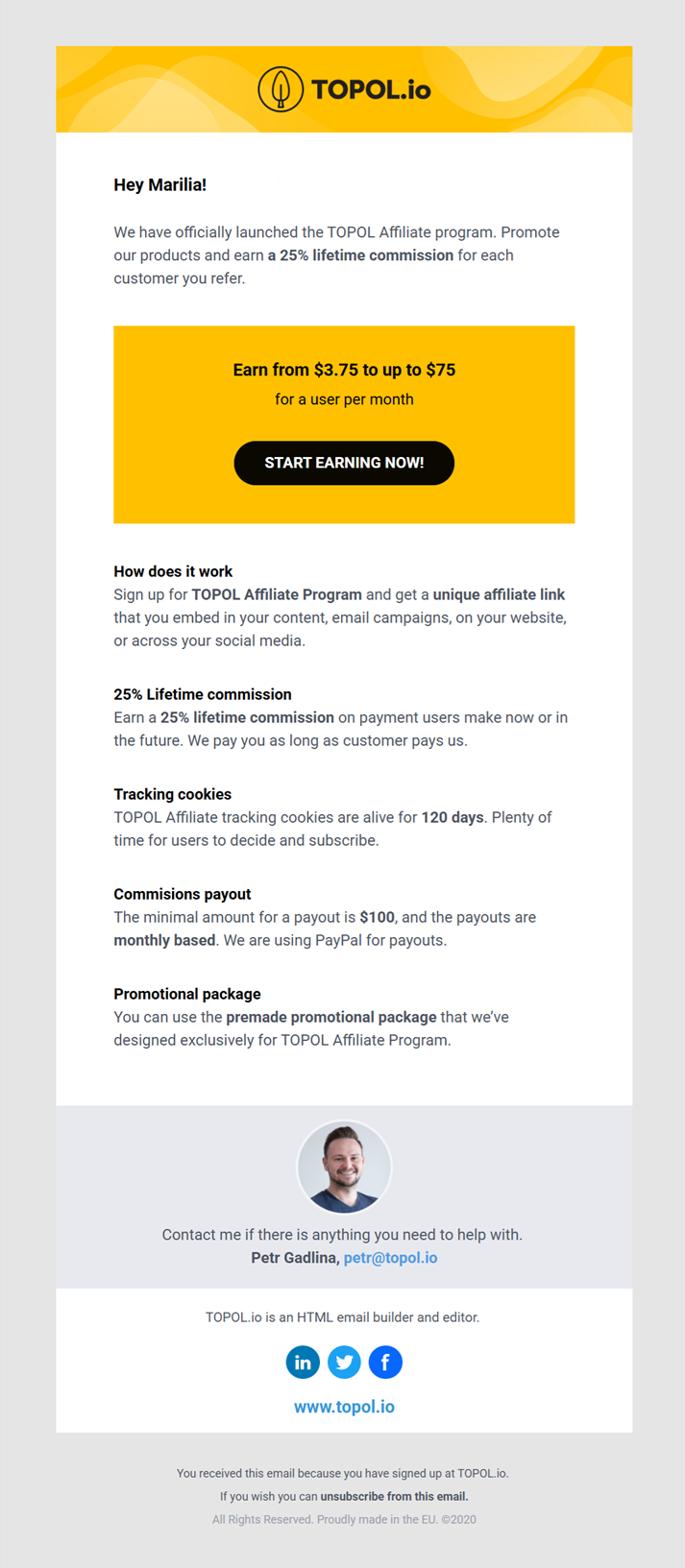
An affiliate program announcement email is usually the first touchpoint between a brand and potential affiliates. Its goal is to clearly introduce the program, highlight earning potential, and make joining feel straightforward.
Here’s how Topol.io did it.
Subject line: Affiliate Program launch is here
Why it works:
- It leads with a strong incentive, stating the lifetime commission.
- It explains how affiliates earn money using simple, scannable sections instead of long paragraphs.
- Key details such as cookie duration, payout threshold, and payment method are clearly listed, reducing uncertainty.
- The CTA focuses on action and outcome, encouraging affiliates to start earning right away.
- It includes ready-made promotional resources, signaling that affiliates won’t have to build everything from scratch.
A solid affiliate program announcement email should focus on clarity and motivation. It needs to explain what the program offers, how affiliates get paid, and what tools are available, so potential affiliates can quickly decide if the opportunity is worth pursuing.
2. Affiliate welcome email example
Once someone joins your affiliate program, a welcome email becomes one of the most important messages you’ll send. It sets expectations, confirms key details, and helps new affiliates start on the right foot from day one.
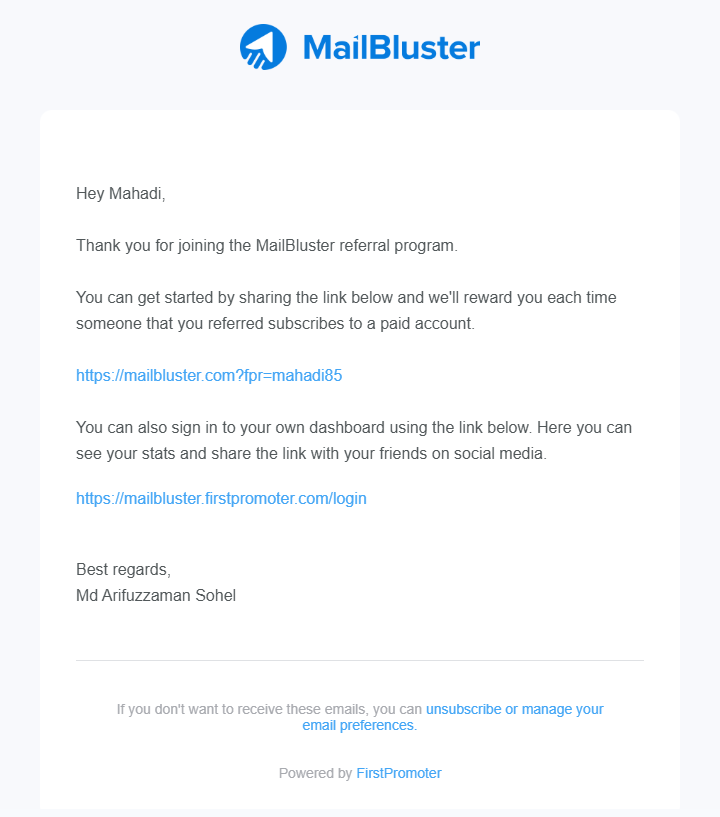
Here’s a great example from MailBluster.
Subject line: Welcome to MailBluster Affiliates!
Why it works:
- Addresses the recipient by name, creating a more personal and engaging experience.
- It’s brief and to the point, containing only essential information without unnecessary clutter.
- Provides the necessary links as email CTAs (calls-to-action) for the user to get started: a referral link to share and a dashboard link to track their performance.
- Clearly explains the affiliate program’s purpose and how affiliates will be rewarded.
- Includes a clear unsubscribe option, which is a standard best practice for email marketing.
A great affiliate welcome email should focus on clarity, trust, and fast activation. Personalize the message by addressing the affiliate by name, then clearly explain how the program works and how commissions are earned.
Include only the essential parts of the email, such as the affiliate link, dashboard access, and next steps, so new affiliates can start promoting without friction. Keep the copy short, aligned with your brand voice, and transparent about commissions and terms. Finally, make support easy to find by directing affiliates to a contact or resource they can use if questions arise.
3. Affiliate resources email campaign
Once your affiliates are onboarded, the focus shifts to enabling better promotion. Affiliate emails that share timely offers and ready-to-use assets help partners act quickly, especially during high-intent periods when conversions are more likely.
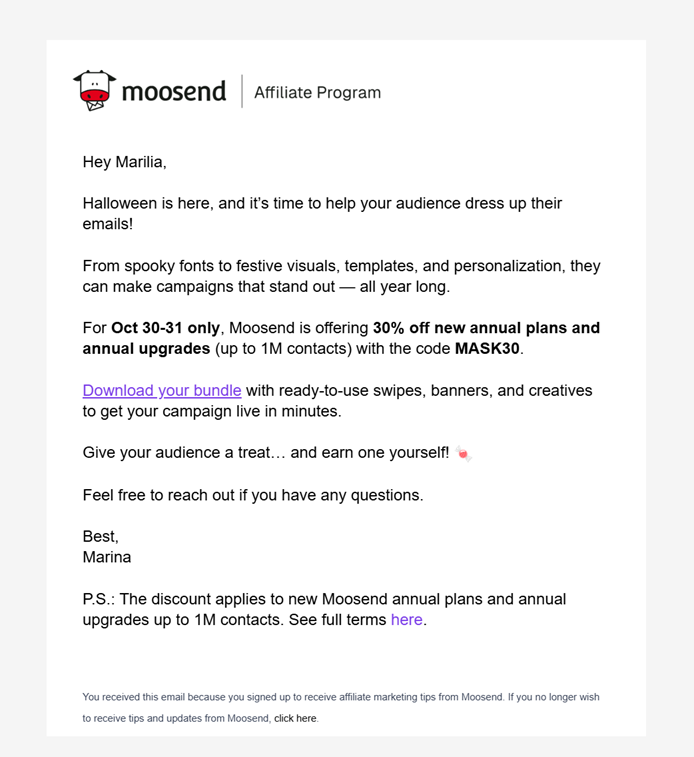
Here’s how Moosend assisted its affiliates during Halloween.
Subject line: Halloween Is Here: 30% Off Moosend Annual Plans 🎃
Why it works:
- It ties the message to a seasonal moment, giving affiliates a clear reason to promote.
- The offer is explained up front, including the discount and the limited timeframe.
- It provides ready-to-use swipes, banners, and creatives, making promotion faster and easier.
- The CTA points affiliates directly to the resources they need to get started.
- The email stays short, clear, and focused on helping affiliates take action.
A good affiliate promotional resources email focuses on timing and usefulness. It should clearly communicate what’s available, why it matters right now, and where affiliates can find everything they need to promote, so they can act quickly during high-intent periods without overthinking the setup.
4. Content-driven affiliate email example
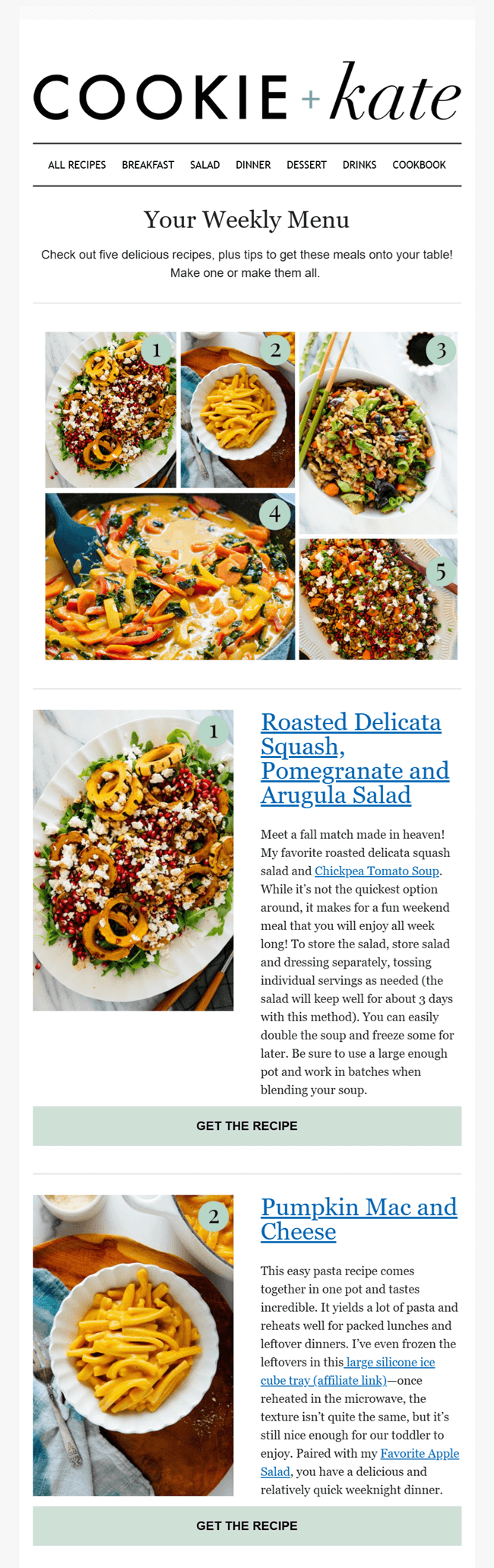
This type of affiliate email is sent by an affiliate to their own audience and focuses on delivering value first, with affiliate recommendations integrated naturally into the content.
In this example from Cookie + Kate, the affiliate link appears directly inside the email (recipe 2).
Subject line: Your weekly meal plan is here! 🎉
Why it works:
- The email leads with useful, relevant content, such as a weekly meal plan, rather than a sales message.
- Product mentions feel natural because they’re tied to real use cases within the recipes.
- Strong visuals and a clear layout keep readers engaged and scrolling.
- Clear CTAs guide readers to take the next step without pressure.
While this approach works, not all email service providers allow affiliate links. To stay compliant and avoid deliverability issues, a safer option is to link to a blog post or landing page that contains affiliate links.
5. Affiliate product review email
While content-driven messages focus on soft recommendations, an affiliate product review email takes things a step further. This type of email is from an affiliate to their own audience and relies on personal experience and social proof to support a stronger recommendation.
An affiliate product review email is typically sent to subscribers who already trust the sender and expect honest opinions on products they genuinely use.
Subject line: My honest review of the [Product name] and a (discount %)!
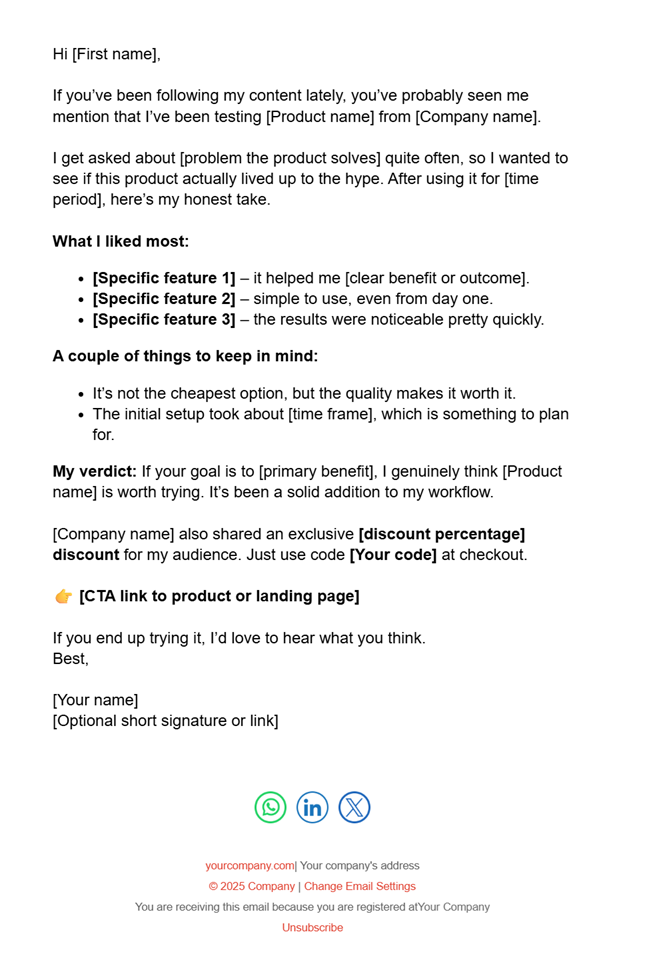
Why it works:
- The framework of an “honest review” makes people more likely to believe you, especially when you bring up possible problems.
- It discusses a common problem and explains how the tool can help.
- Bullet points help you quickly understand the pros and cons.
- People are more likely to click the offer when they see the unique discount code.
Your audience’s trust is your most valuable asset, so only review products you’ve personally used and genuinely recommend. Be transparent by letting readers know you may earn a commission if they purchase through your link, which is often a legal requirement and helps maintain credibility.
Lastly, focus on explaining how features help users, not just what they do, and make the CTA clear and easy to find. Clear CTAs can increase conversion rates by 161%, so keep discount codes and instructions simple and prominent.
6. Affiliate program recruitment email
Brands use this type of email to reach out to creators or publishers they’d like to work with. The idea isn’t to push a sign-up right away, but to start a genuine conversation around whether a partnership makes sense for both sides.
Here’s a cold outreach email example for affiliate collaboration that works.
Subject line: Partnership Opportunity: [Your company name] and [Prospect’s blog/channel name].
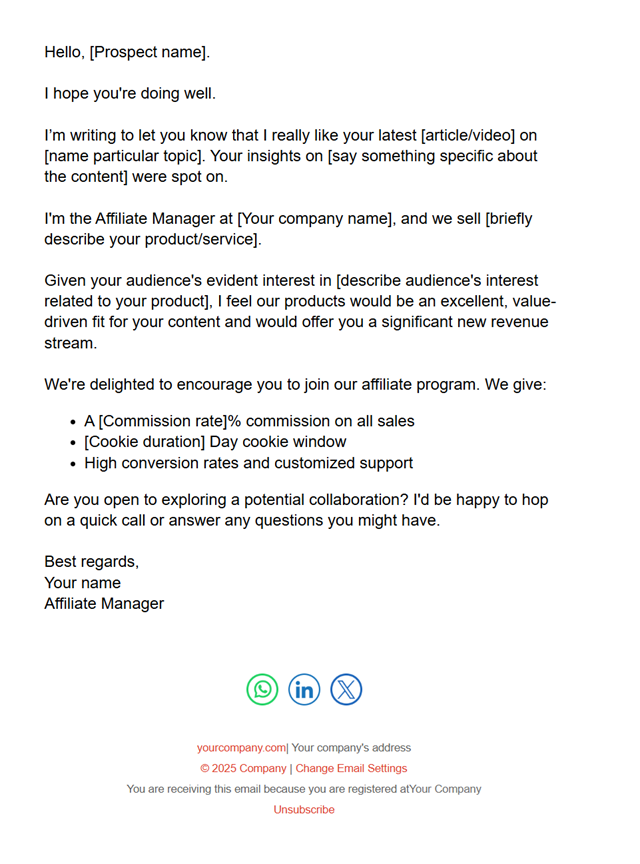
Why it works:
- The cold email subject line sets the stage for a new collaboration and makes it clear that it’s not a bulk spam email.
- Bullet points make the offer easier to read and understand by clearly showing the program’s benefits, such as commission, cookie length, etc.
- It makes sense for them to collaborate with the product, since it clearly aligns their audience’s interests with the offering.
- The closing line ends with an open-ended question, which is less demanding than something direct like “Join now.” Thus, such politeness lets it work as a soft CTA.
Before sending your email, research each prospect carefully and reference a specific piece of their content to show the message isn’t generic. Pay close attention to the subject line, since 69% of recipients report emails as spam based on it alone.
Focus the message on how the partnership benefits the affiliate and their audience. Also, respect their time by getting to the point quickly after a brief personalized opening, and consider linking to a short, clear affiliate page where they can learn more.
7. Follow-up email for disengaged affiliates
Over time, even active affiliates, including top performers, can lose momentum or shift focus. This is where follow-up emails come in to help brands reconnect with affiliates who’ve gone quiet for a while, whether that’s after 30 days or longer, and give them a reason and the support to re-engage.
Subject line: Checking in to Maximize Your [Your company name] Collaboration
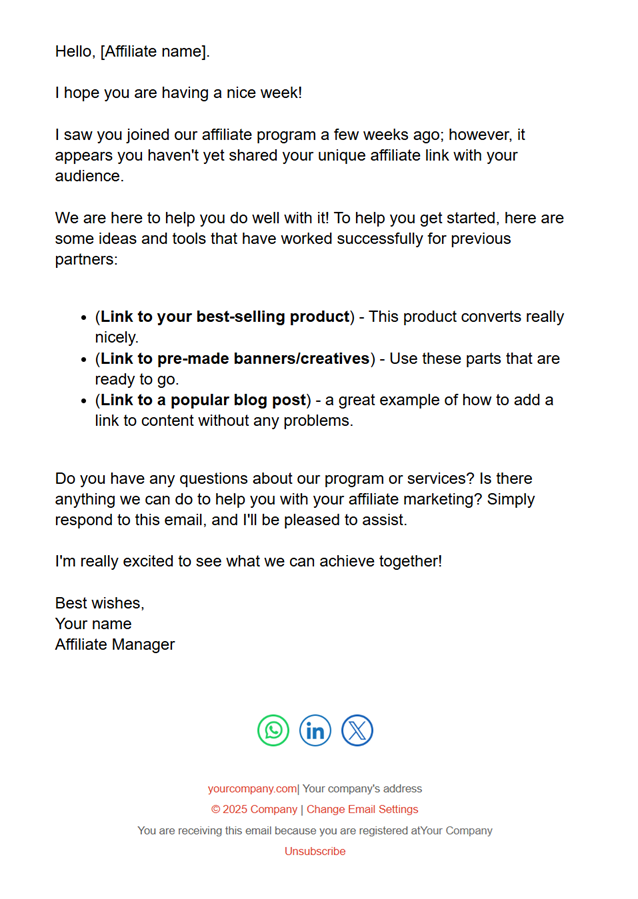
Why it works:
- The tone in this affiliate marketing email example is encouraging and helpful, not aggressive or demanding.
- It indicates to the recipient that the brand, as a partner, is interested in the affiliate’s success.
- Instead of just urging them to promote, it offers concrete ideas and resources to overcome potential hurdles.
- Directly asks if they have questions or need specific help. Such a kind gesture makes it easy for them to voice concerns.
- Gently reminds them of the opportunity without being accusatory about their lack of activity.
Tailor follow-up emails based on an affiliate’s level of inactivity, e.g., no clicks versus clicks without sales. Give them a timely reason to re-engage by highlighting upcoming promotions, seasonal offers, or sales events.
To create interest, you can also offer a limited-time higher commission or a free product sample to test. While these emails can be automated after a set period of inactivity, the message should still feel personal and friendly.
Best Affiliate Email Marketing Programs
Below, we’ll look at some top email marketing tools with affiliate programs you can join. For each one, we’ll cover the core features, commission structure, and payment details, so you can evaluate which option fits your affiliate email marketing goals.
Moosend
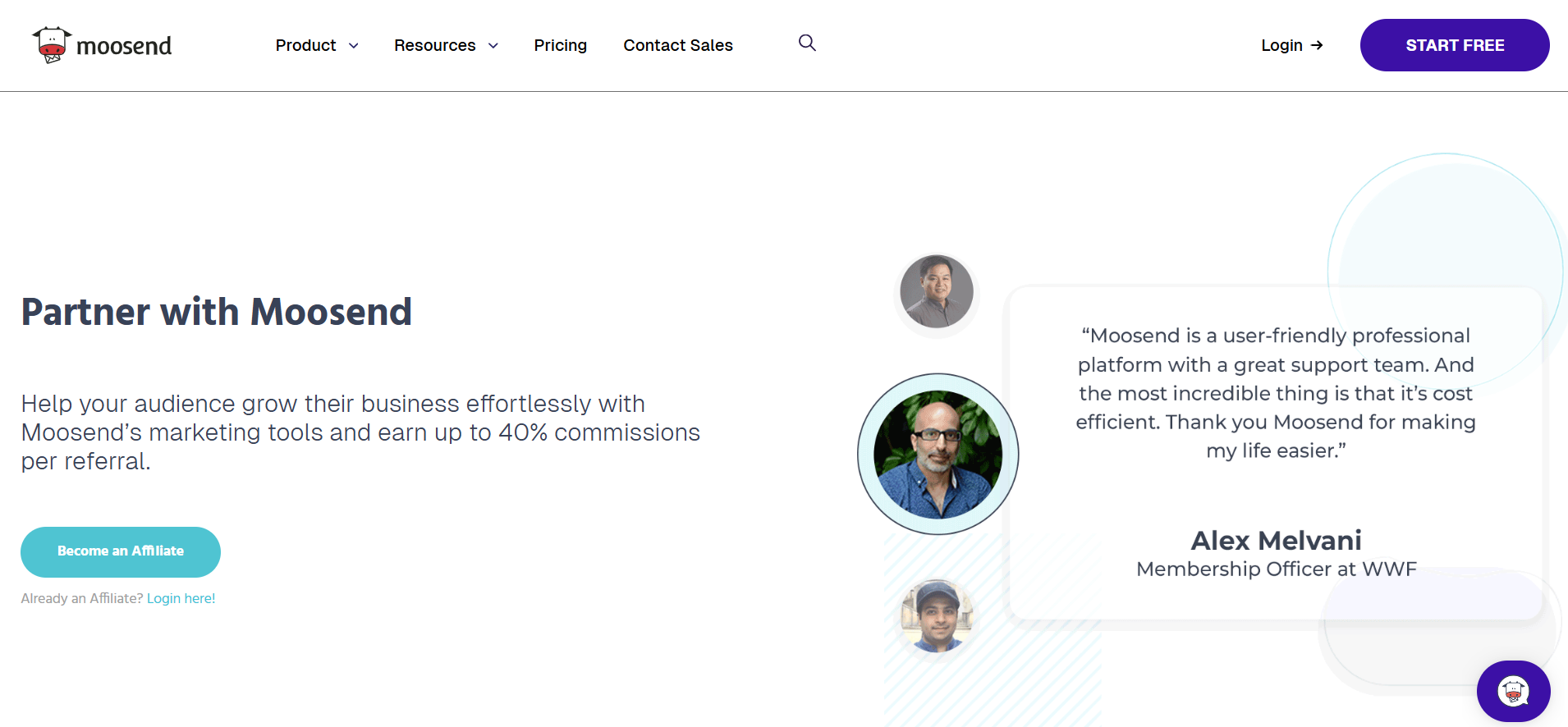
Moosend is a full-featured email marketing and automation platform with a drag-and-drop email builder, automated workflows, lead gen tools, a generative AI writer, customizable templates, and more. Among others, it’s known for its ease of bulk email sending and an excellent email deliverability rate.
The platform also includes eCommerce AI for personalized product recommendations, lead-generation tools, and seamless integration with third-party services, making it a great fit for numerous industries.
Now, joining Moosend’s affiliate program offers a tiered, lifetime recurring commission structure on the PartnerStack platform, with commissions up to 40%. This model increases earning potential while giving affiliates access to valuable resources, including promotional materials and a user-friendly dashboard. A variety of banners and logos are available through the affiliate dashboard, making promotion easier.
Overall, Moosend’s generous compensation model and affordable pricing are strong incentives for affiliates and help marketers reach their goals more effectively.
What does Moosend’s affiliate program offer?
- Commission: 40% recurring lifetime based on the number of paying customers you refer.
- Payouts:
- 90-day cookie duration
- The minimum threshold is $25
- All commissions are granted in the first 20 working days of the following month. When you reach the $5 barrier, you can claim your earned commissions.
- Payment method: PayPal and Stripe
MailBluster
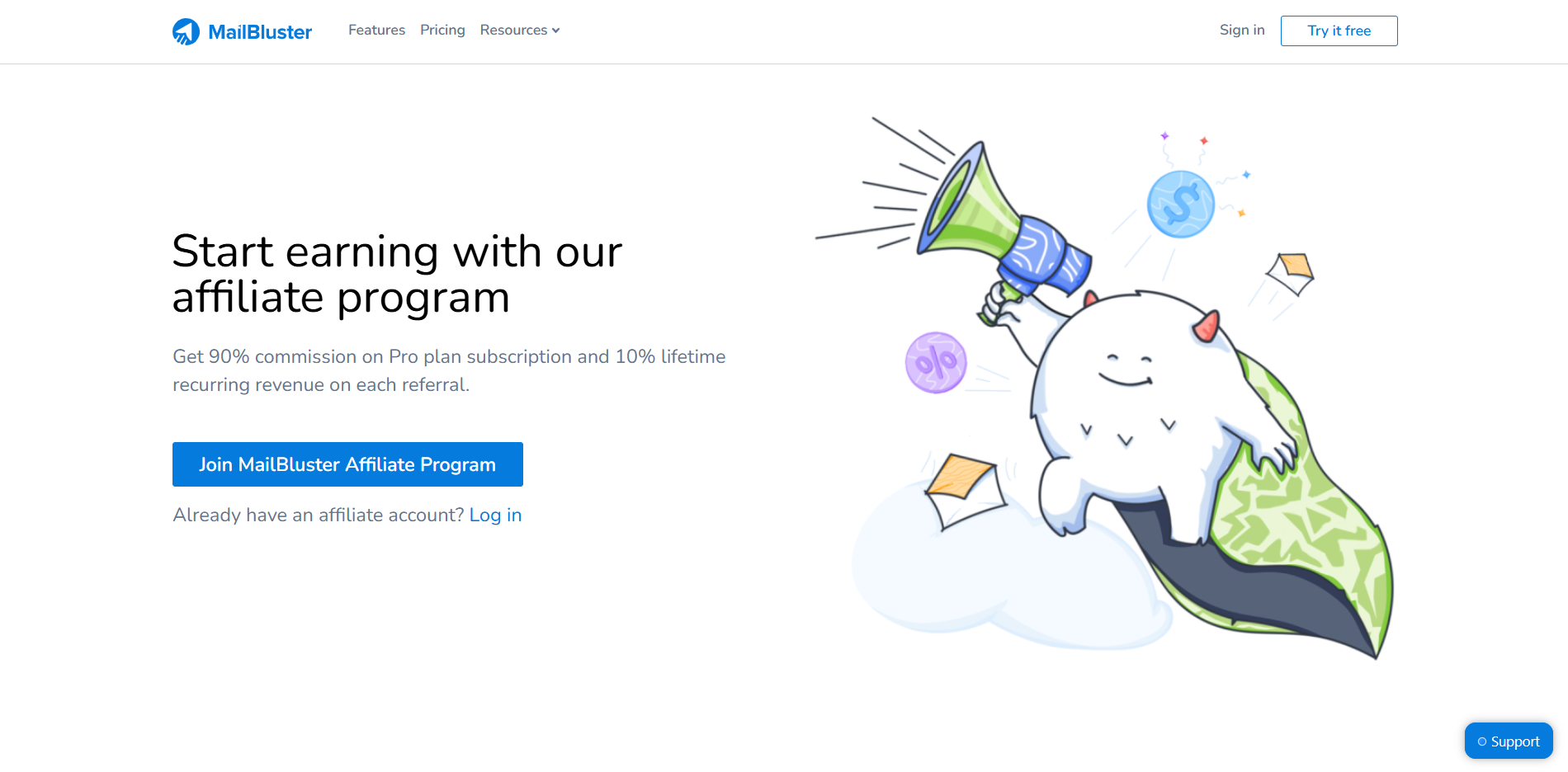
MailBluster is an email marketing platform designed to send bulk campaigns at a reasonable cost. It offers features such as advanced automation, segmentation, responsive email templates, a drag-and-drop editor, and real-time report tracking.
The platform also supports easy integrations with other marketing tools and maintains a strong focus on deliverability, making it suitable for affiliates who rely on email to drive consistent results.
With the MailBluster affiliate program, you can earn a 90% commission on the initial upgrade to the Pro plan when you refer a new customer. After five Pro referrals, you also receive a 10% lifetime recurring commission on all future purchases from those customers.
Affiliates have access to free promotional materials, including banners and logos, and during seasonal events such as Black Friday, Cyber Monday, and Christmas, exclusive promo codes are often provided to support promotions.
What does MailBluster’s affiliate program offer?
- Commission:
- Initial: 90% commission on a referred customer’s first purchase.
- Recurring: After referring five Pro customers, you become a “Gold Affiliate” and earn 10% recurring commission on all monthly payments.
- Payouts:
- Cookie duration is 90 days
- The threshold is $100 minimum for payout
- Payouts are completed on a monthly basis, often in the first week of the month. Your profits will be sent into your account as soon as you achieve the minimum payout level.
- Payment method: PayPal, Wise, and bank transfers.
GetResponse
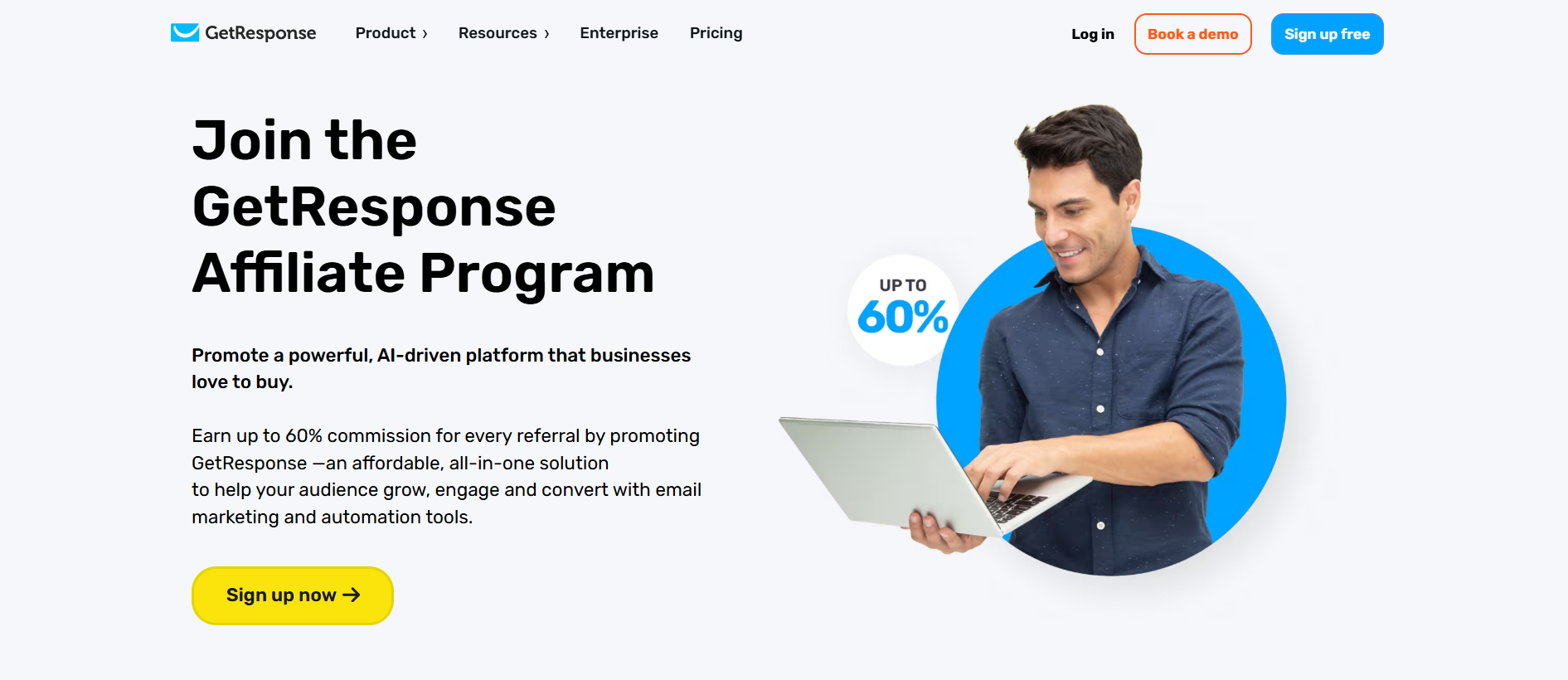
GetResponse is designed for bloggers, coaches, and marketers to earn passive income by referring new customers. It offers affiliate resources, essential features such as automation, a drag-and-drop email builder, and reports, along with lucrative, recurring commissions.
The platform recently revamped its affiliate program to offer tiered recurring commissions for the first year of a customer’s subscription, and it also uses PartnerStack. The GetResponse affiliate program offers two main commission models:
- A 12-month recurring commission of 40%, rising to 50% after 50 sales and 60% after 100 sales.
- An upfront bounty program that pays $100 per sale. Affiliates can access free promotional materials, 120-day cookie tracking, and a private Slack community.
What does GetResponse’s affiliate program offer?
Let’s check out the basics in brief:
- Commission: tiered system that pays for the first 12 months of a customer’s subscription. The commission is up to 60% for every referral.
- Payouts:
- Cookie duration is 90 days
- The threshold is a $50 minimum payout (or higher for wire transfers).
- Payment method: PayPal, Wire Transfer, and other options depending on location.
Bringing It All Together
Email remains one of the most effective channels for affiliate marketing when it’s used with intention.
The examples covered in this guide show how affiliate emails can serve different purposes, from onboarding and re-engagement to content-driven recommendations and product reviews.
By applying these patterns and adapting them to your audience, you can build trust, promote relevant offers, and create affiliate campaigns that perform consistently over time.
Similar Posts

 Published by


Create, send and optimize your email marketing campaigns