











How to Scale Your Ecommerce Business with Email Marketing
Published By Marilia Dimitriou
February 23, 2026

23/02/26
Scaling an online store is exciting, but it’s also where many eCommerce brands get stuck.
More traffic doesn’t always lead to real growth, and bigger campaigns don’t always mean higher profits. To scale your eCommerce business the right way, you need tactics that increase revenue without adding unnecessary tools or extra work.
Email plays a central role in that process. It helps automate communication, build repeat purchases, and turn customer data into actions at scale. Moreover, when used alongside other channels like SMS, social media, or search, email becomes the system that keeps growth efficient and sustainable.
In this guide, you’ll learn how to use email-first strategies, supported by a few key channel combinations, to set your online business up for success.
Ready, set, scale!
Smarter automation and optimization for growth without the extra cost.
Try MoosendScaling Vs. Growing Your Online Brand
Growing your eCommerce business usually means increasing output by adding more resources. It entails more campaigns, ad spend, tools, and manual work. Growth happens, but costs and effort rise at the same pace.
Scaling, on the other hand, is about boosting revenue without the extra cost. The focus shifts to automated systems, channel integration, and data that drive decisions. The best channel for scaling is eCommerce email marketing, which allows you to automate communication, personalize messages, and support other channels without creating extra workload.
In short, growth adds more, whereas scaling makes what you already have work better.
When Is Your eCommerce Business Ready to Scale?
Scaling too early can create more problems than growth. Before investing in advanced email automation and multi-channel campaigns, make sure the basics are working:
- Sales and traffic are consistent. If orders come in sporadically or only during heavy promotions, scaling efforts will create instability rather than increase revenue.
- Core email flows are already live. This includes a welcome series, abandoned cart emails, win-back, and post-purchase messages. These don’t need to be perfect, but they should be generating steady engagement and revenue.
- Store data is reliable. Product feeds, order tracking, and customer behavior need to sync correctly with your email platform. Without clean data, advanced automation and personalization won’t work.
- You know who your best customers are. If you can identify repeat buyers, high-value orders, or top-performing products, you’re ready to scale.
Once these foundations are in place, scaling becomes a matter of finding the right tactics and channel combinations.
Simple Strategies to Scale Your Ecommerce Business
With the basics covered, let’s see some email marketing tactics you can use to expand your business without additional cost.
1. Improve core email workflows that drive revenue
Most eCommerce brands already use basic automations. The real scaling opportunity comes from refining them using up-to-date customer behavior and purchase data. To do that effectively, focus on the automation flows with the greatest impact on revenue and optimize them.
Start with your welcome flows and improve their logic. Split subscribers by entry point and intent to keep journeys aligned with buying readiness and reduce manual segmentation. For example:
- Customers who sign up after checkout should move straight into product education and receive repeat-purchase nudges.
- Discount-driven signups should see urgency, best sellers, and a clear path to their first purchase.
For browse and cart abandonment, focus on enhancing the decision logic and grouping shoppers by intent and product value.
- High-intent shoppers who return to the same product or cart multiple times should receive decision-support emails, such as reviews, FAQs, delivery details, or return policies.
- High-value carts should trigger fewer emails that focus on building trust rather than discounts.
Lastly, for post-purchase automation, replace repeat campaigns with behavior-driven flows. Divide customers by what they bought, how often they make purchases, and how long it usually takes them to reorder. For example:
- Consumable or repeat-purchase products should trigger replenishment reminders based on actual reorder timing.
- First-time shoppers should enter educational flows that explain usage, benefits, and next-best products before seeing any promotional messages.
- High-value products should trigger review requests, how-to content, or support resources before referrals or upsells.
2. Replace bulk emails with context-based messages
As your eCommerce business grows, bulk campaigns can become an issue. They’ll require more planning, copy, and sending volume, while returns will drop over time. To scale, you need to move away from “everyone should receive this message” and toward “the right message should reach the right customer.”
Start by identifying decision-making groups instead of sending the same campaign to your entire list. Basic personalization, like using a customer’s name in the subject line or copy, is rarely enough. To achieve better results, you need to decide who should receive the message.
Purchase frequency, average order value (AOV), and product categories are some signals that can help you create more relevant segments. By targeting campaigns based on behavior rather than sending bulk emails, you increase relevance without additional send volume or marketing spend.
Here’s an example from Fashion Nova using browsing behavior to trigger a targeted message.
Subject line: We Saw You Wanted This!
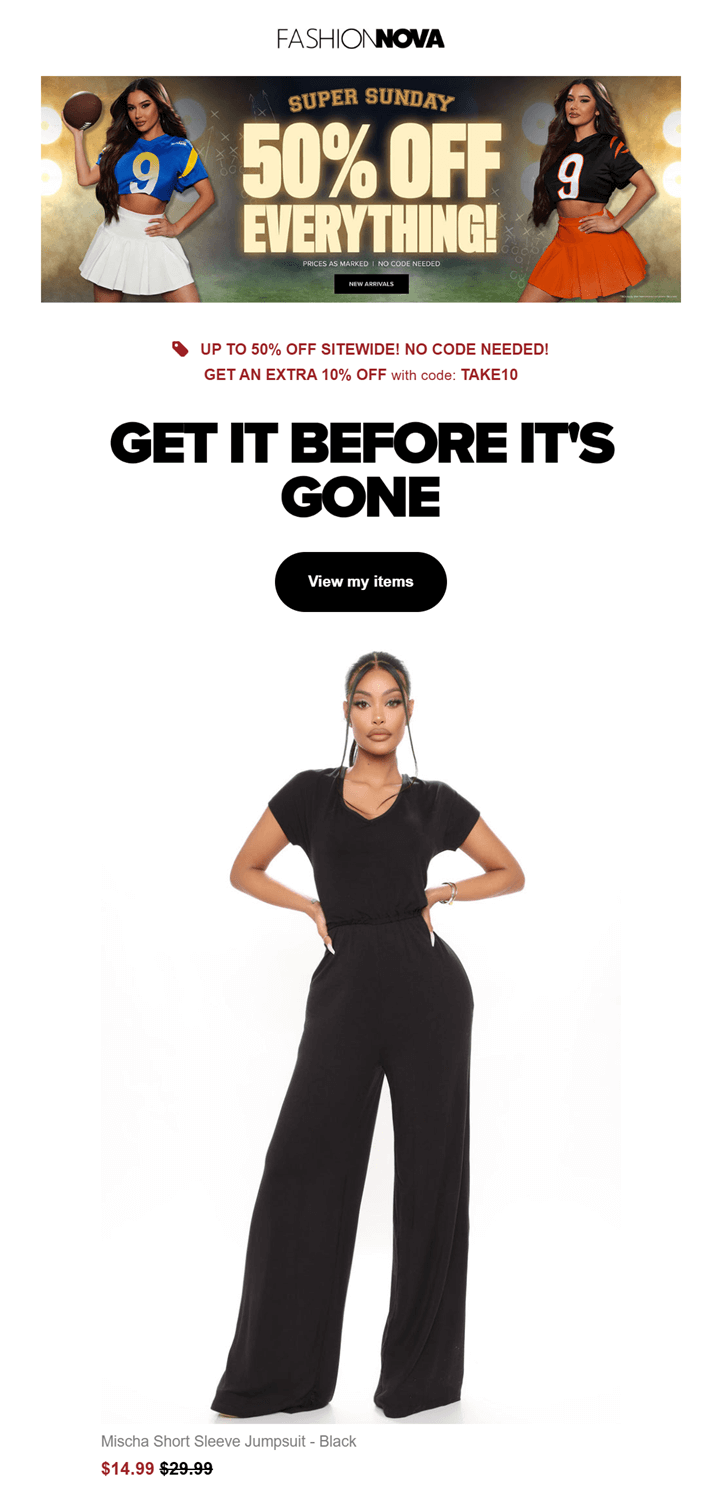
Instead of a bulk promotion, the email highlights items the shopper previously viewed, reminds them of the ongoing sale, and offers an additional discount.
To move from bulk messaging to targeted emails like Fashion Nova’s, base each campaign on context. Build emails around a single product or action and send them only to customers whose recent behavior justifies that message. Also, avoid the urge to hyperpersonalize every detail, as this adds noise and slows execution.
3. Focus on customer loyalty
Acquiring new customers gets expensive fast, especially when paid ads do most of the work. Email helps balance that by turning first-time buyers into repeat customers.
Loyal customers are easier to reach, quicker to convert, and more likely to buy again. This customer segment doesn’t need heavy persuasion, but timely, relevant communication.
This is where your campaigns can make a difference. New customers should receive short, value-driven emails that explain what your product does and why it matters.
Loyal customers, on the other hand, should get messages that reward their commitment and encourage return visits. To do that, you can offer early access to launches, let them unlock perks through purchase milestones, and trigger reminders based on customer activity instead of fixed dates.
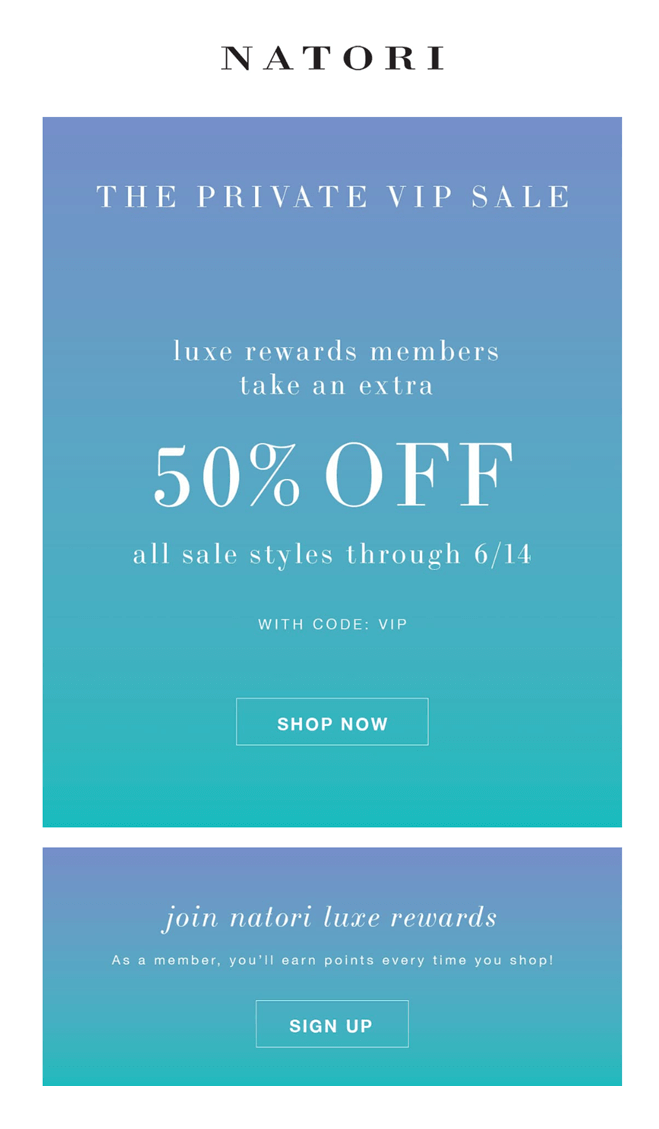
Here’s an example from Natori, rewarding loyal customers with a private VIP sale.
Subject line: Exclusive Access: Extra 50% Off
Before you plan your sequences, it’s important to avoid sending the same messages to loyal customers as to first-time buyers.
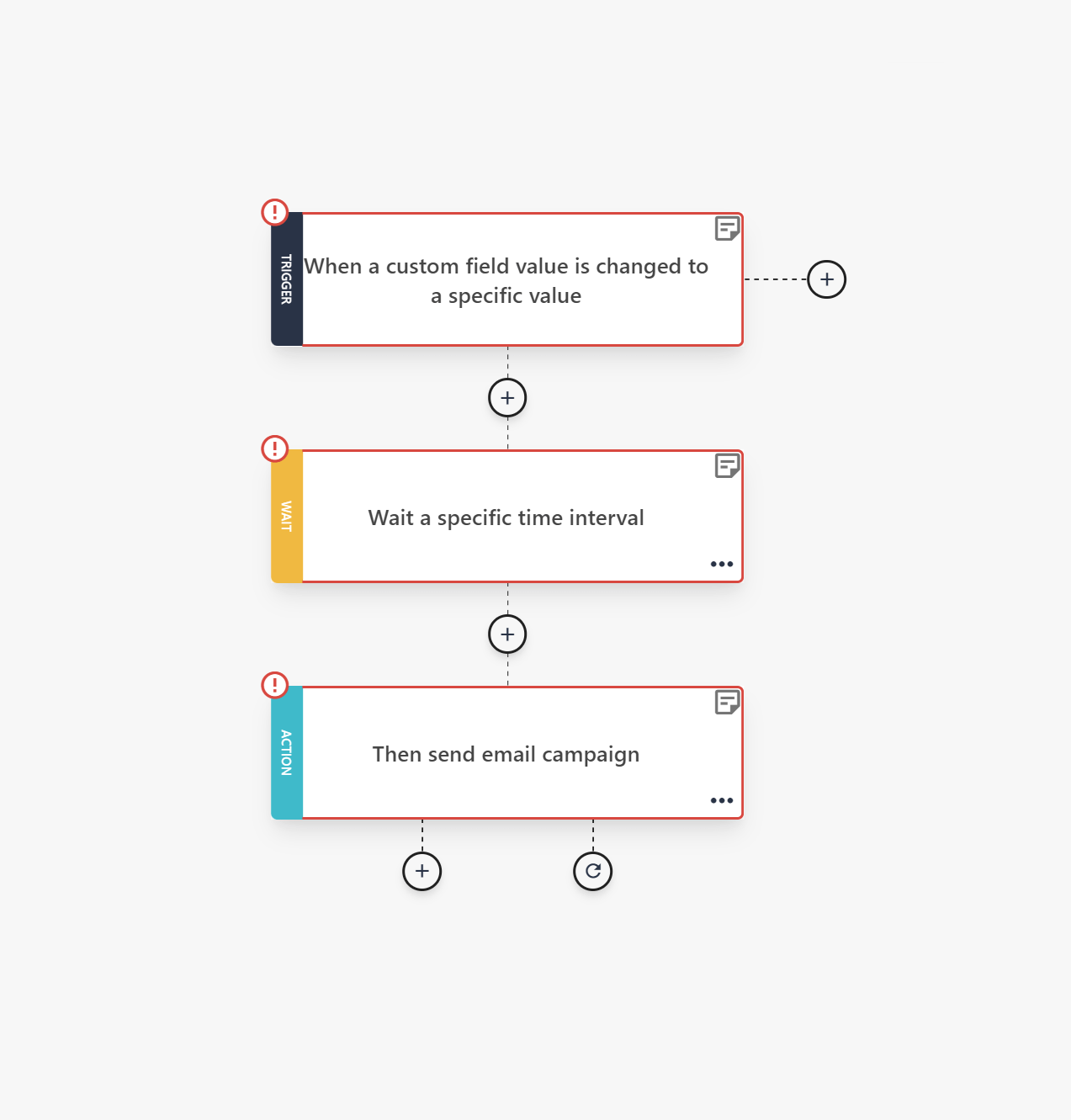
You can handle this with simple automation logic. For instance, trigger emails when a customer status changes (e.g., from first-time to repeat buyer), add a short delay, and then send a message that matches their stage. This keeps loyalty messaging relevant and effective.
4. Use transactional emails for soft cross-promotion
Transactional emails aren’t marketing emails, and they shouldn’t be treated as such. Order confirmations, payment receipts, and password resets must remain free or promotional content to avoid harming trust and deliverability.
At the same time, transactional communication is essential to scaling eCommerce operations. These emails have some of the highest open rates, making them ideal moments to guide the next action, provided the promotion is placed strategically.
To capitalize on their traction, keep core transactional emails focused on the action they confirm. Then use follow-up messages tied to the same event to drive revenue or reduce future workload.
For example, you can:
- Use post-delivery emails to recommend one or two complementary items, such as accessories, refills, or add-ons that improve usage.
- Send emails requesting reviews only after enough time has passed for the customer to try the product, and pair the request with simple prompts such as fit, quality, or ease of use to increase response rates.
- Trigger follow-up order emails to introduce referral programs once the customer has received and used the product, positioning referrals as a reward for sharing a positive experience rather than as a generic promotion.
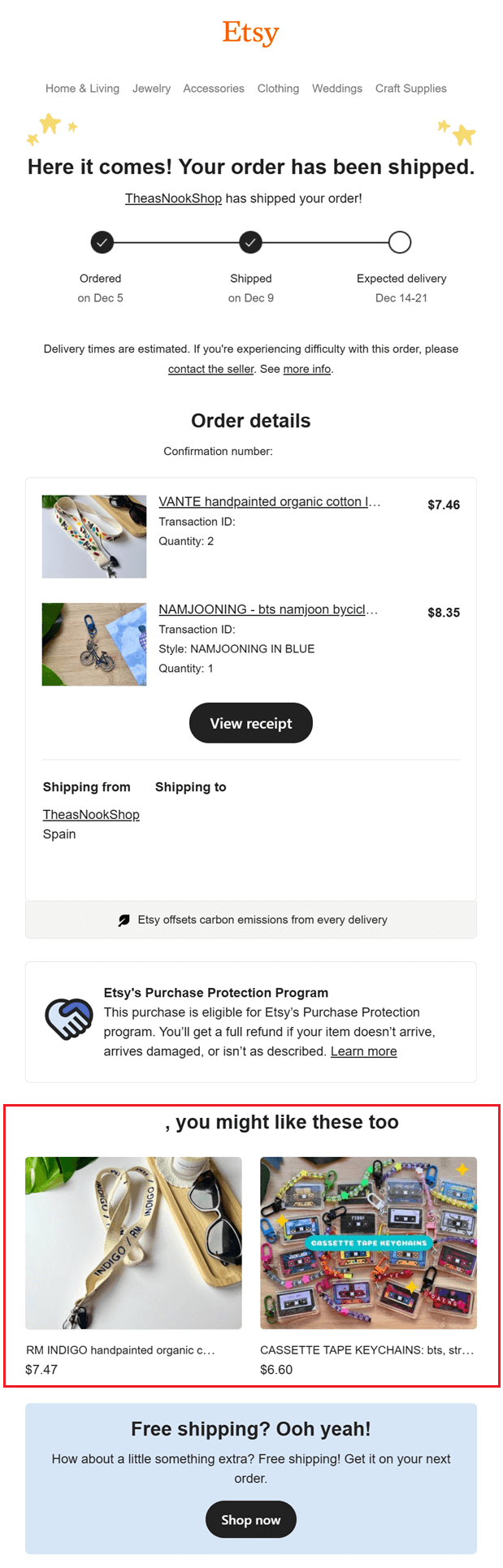
If you want to add recommendations to the transactional emails themselves, shipping and delivery updates offer the most flexibility. When placed at the very bottom, clearly separated from the main message and related to the original purchase, they feel helpful rather than promotional.
Here’s a subtle example from Etsy’s shipping email that promotes relevant items.
Subject line: Your Etsy order shipped (Receipt #xxxxxxxxxx)
5. Qualify customers based on engagement
Not every subscriber needs the same level of attention, and treating them that way makes scaling harder than it needs to be. Email engagement gives you a simple way to see who’s actually paying attention before you invest more time or effort.
You can look for clear intent signals, such as clicks, repeat opens, and purchases that happen after an email is sent. These behaviors matter far more than how big your list is or how someone signed up.
Then turn that insight into rules you can act on. For example, flag subscribers as high-intent if they’ve opened or clicked at least one email in the last 30 days or completed a purchase after an email. Anyone outside that window is considered low-intent by default.
Once those groups are defined, adjust how you communicate with them:
- Send launches, new products, or direct offers only to high-intent subscribers.
- Use lighter re-engagement messages for inactive contacts, or remove them from your list altogether.
- Stop increasing send volume just to hit the same people again.
This way, your campaigns scale by focusing on people who are already engaged, rather than pushing harder to the entire list.
6. Optimize campaigns using behavioral data
Email engagement can surely help qualify customers, but success depends on knowing which patterns are worth repeating. Your email platform already gives you this data for free.
Email marketing automation tools, such as Moosend, provide performance metrics for your eCommerce campaigns, making it easy to see which emails drive revenue.
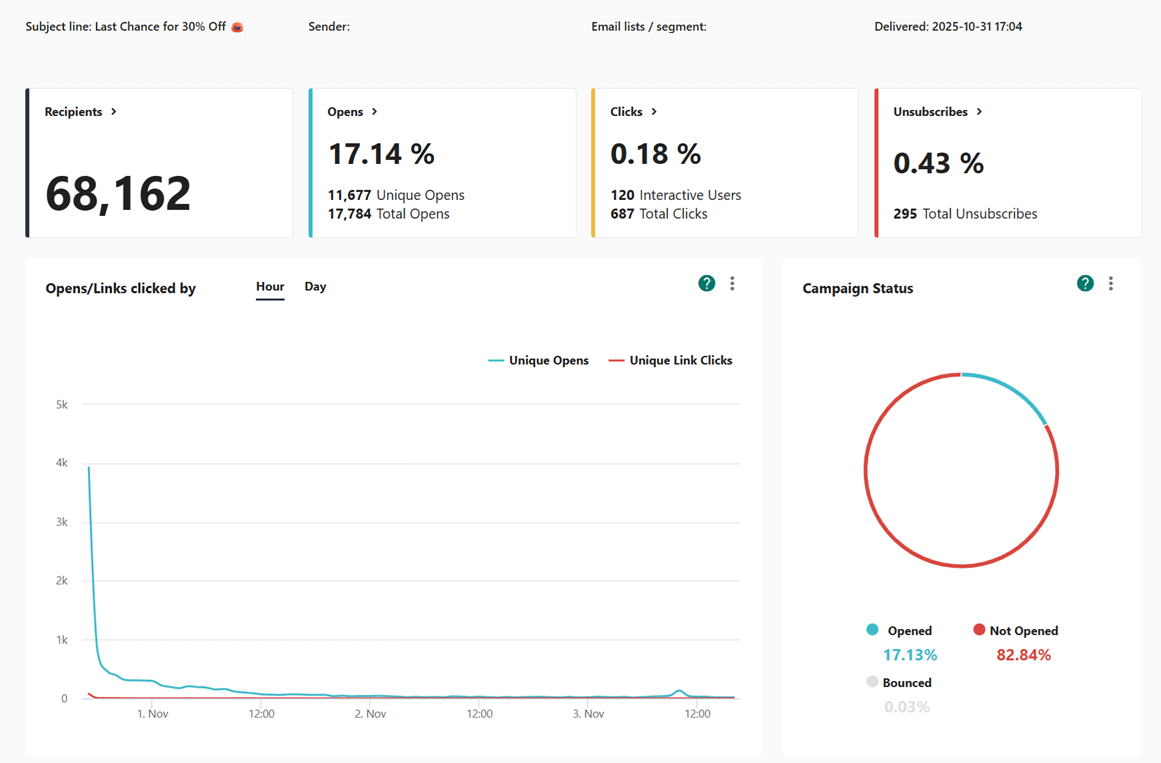
You can also create custom reports to track revenue per email, conversions by segment, and repeat purchases. These insights help you improve your emails across the board, from copy and offers to send times and product placement.
A/B or split testing then allows you to compare small, controlled changes such as subject lines, offers, CTAs, or send times and identify which version delivers the strongest business results.
At scale, this type of testing shouldn’t focus only on higher open rates, but on validating decisions that directly impact revenue. An email with fewer opens but stronger revenue performance, for example, is often more scalable than one that performs well on engagement alone.
You can use A/B testing to:
- Test offer framing, such as free shipping vs a small percentage discount, to see which option leads to repeat purchases. Once a winner is clear, apply that incentive consistently across campaigns and post-purchase flows.
- Optimize send timing around customer behavior. For example, send post-purchase emails 3 days after delivery versus 7 days, and incorporate the timing that drives higher conversion into your strategy.
- Experiment with product or bundle visibility, such as featuring a single complementary product versus a small bundle, to identify what increases average order value. Then reuse that layout across similar campaigns.
For example, if a post-purchase email promoting a refill bundle outperforms a discount-based follow-up in repeat purchases, stop testing and apply that bundle across all relevant flows.
7. Use AI without sounding like everyone else
Right now, many eCommerce businesses use AI to speed up email copy creation, which often results in emails that look fine on the surface but feel familiar. Sadly, that sameness has become noticeable. When messages appear automated, customers disengage, and performance gradually declines.
A smarter approach is to protect originality and automate repetition. For eCommerce teams, this means using AI to handle tasks that slow execution without requiring creative judgment. Here’s what you can do:
- Summarize campaign performance and highlight potential issues
- Clean and structure product data for email feeds
- Identify repetitive questions from reviews or support tickets
- Generate copy variants for internal testing, not final messaging
At the same time, keep creativity, tone, and positioning as human as possible. Original content is what differentiates your brand as your audience grows. AI should support execution rather than drive your customer away.
For instance, instead of using AI to write a product launch email from scratch, use it to analyze past launches and reveal which angles drove repeat purchases. Then create the email copy yourself and use an AI writing tool, like ChatGPT or Moosend’s AI Writer, to refine structure and test variations without losing your brand voice.
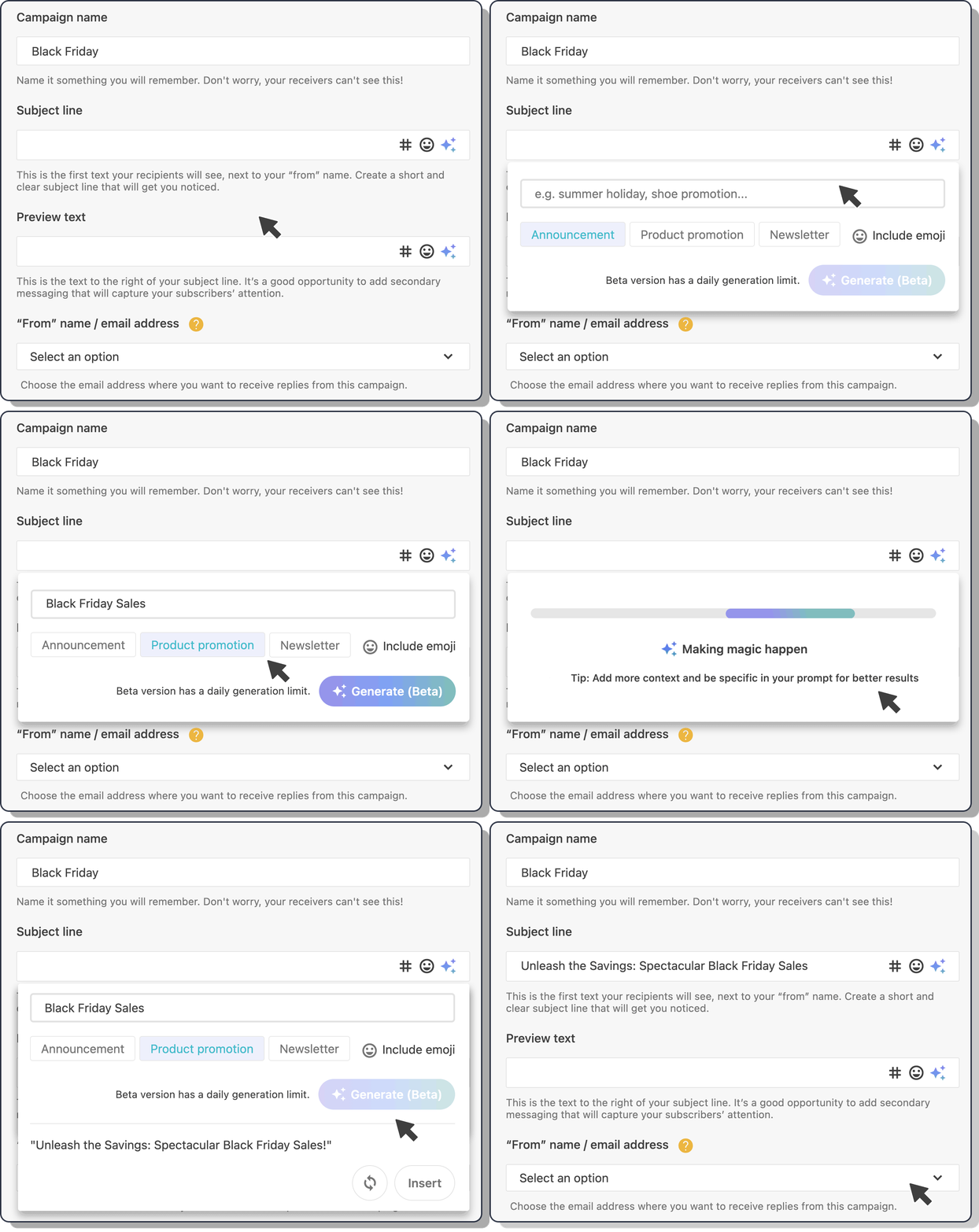
This approach prevents AI fatigue and keeps your brand distinct. And remember, scaling works best when systems do the busy work, and humans stay in control of the message.
Additional resources:
- Why AI Tools Should Help You Write Smarter, Not Faster
- Innovative ChatGPT Prompts For Email Marketing [+Output]
- Powerful AI Email Marketing Tools We Recommend
8. Reduce customer support load with educational emails
As order volume grows, customer support often becomes a hidden blocker. The more customers you have, the more questions come in. Without proactive communication, your support team spends time solving the same issues instead of handling real problems.
Email helps you scale by educating customers before they need help. Focus on identifying repeat questions your support team receives. Shipping delays, setup issues, returns, and “how do I use this?” emails are all signals that information is missing at key moments. Then, turn those answers into automated emails triggered by customer actions.
Here’s a good example from Visme. Instead of waiting for users to ask how timelines work, the email explains the concept, provides examples, and walks readers through getting started. The result is fewer “how does this work?” questions and more confident users.
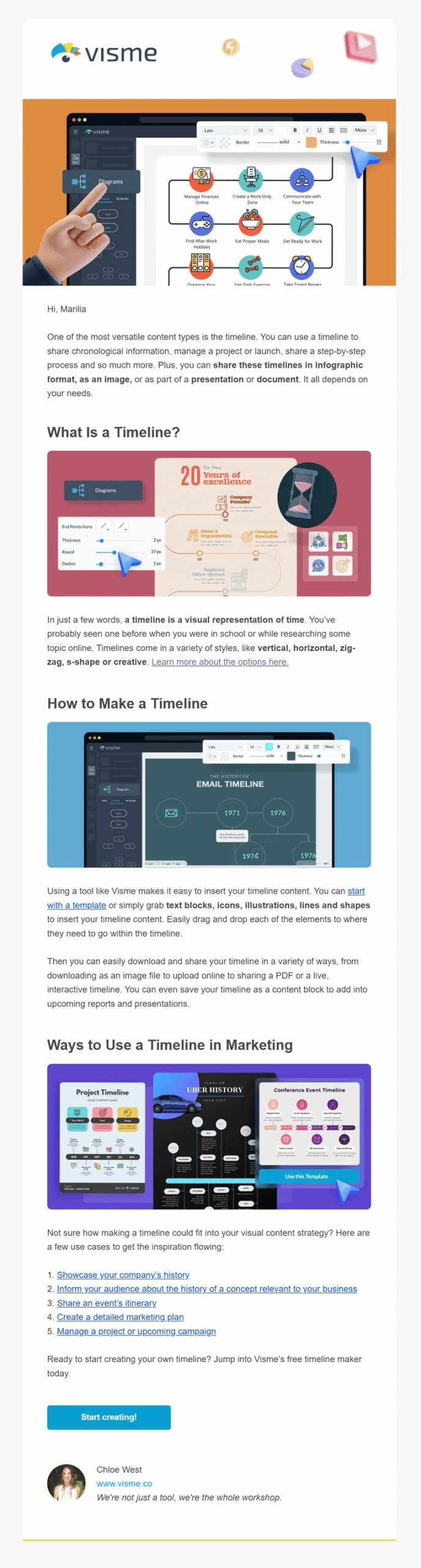
You can follow the same approach by:
- Sending delivery timeline emails during busy periods to set expectations and reduce “Where is my order?” tickets.
- Following up on returns and exchanges with emails that clearly explain the process before customers contact support.
- Using post-delivery product education emails to show how to use, care for, or set up products correctly.
Educated customers are easier to support and more likely to stay loyal. By automatically answering common questions, email reduces ticket volume and enables your support team to scale without increasing headcount.
9. Increase your credibility with social-proofed emails
As your target audience expands, so does skepticism around your brand. Social proof helps bridge that gap.
Instead of letting reviews live only on product pages, bring them into your emails. Collect feedback after purchase, then reuse short, product-specific quotes in sales campaigns, cart abandonment emails, or browse follow-ups.
Focus on reviews that answer common questions, such as quality or results, rather than generic praise.
Here’s how Harry’s uses customer reviews in a promotional email.
Subject line: Reviews that say it all✍️
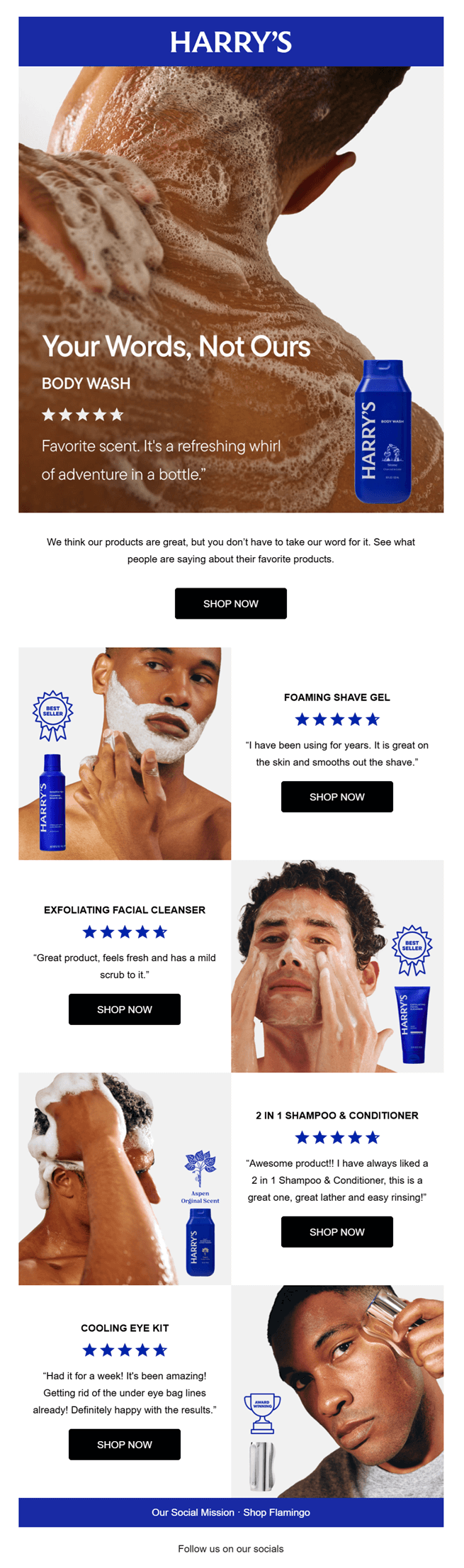
The brand employs real customer voices, combining products with ratings and short quotes. As a result, the message shifts from “here’s what we sell” to “here’s what customers say,” which lowers hesitation.
10. Combine email with your social media platforms
Another mistake many eCommerce teams make is trying to sell directly on social platforms, where space and intent are limited. A more effective approach is to use social media to discover buying signals, then use email to act on them.
Publish short, product-focused content on platforms like Instagram, Facebook, or TikTok that highlights a single outcome or problem your product solves. Instead of linking straight to a product page, invite users to subscribe to your list for something specific, such as early access, restock alerts, a giveaway, or a limited drop. This helps you capture high-intent users without paying for more ads.
Once those users enter your email list, deliver a focused message that explains the value they’ll gain from you.
Here’s how e.l.f. Cosmetics use email and social media to drive more sales.
Subject line: NEW Glow Reviver Slipstick 💄 Only on TikTok Shop!
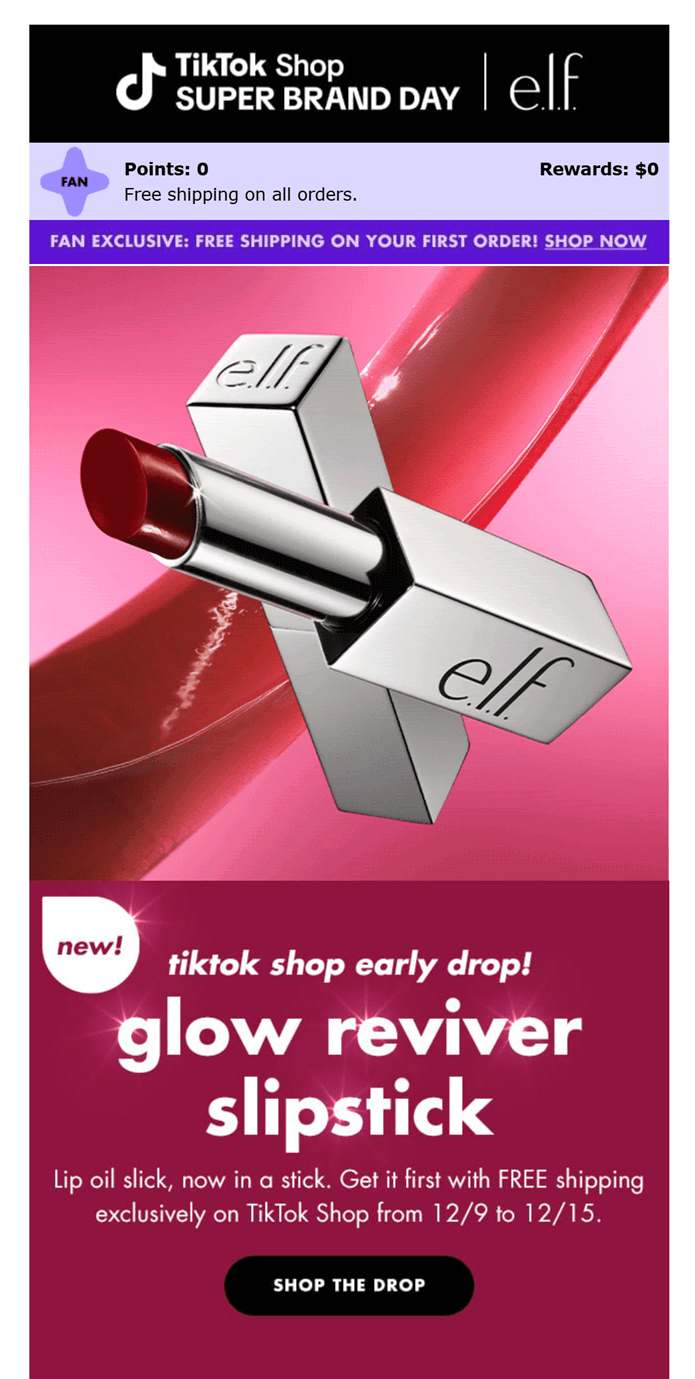
Instead of relying only on social reach, the brand uses email to clearly communicate timing, exclusivity, and free shipping in one place. Here, TikTok drives discovery, while email makes the offer repeatable and easier to share with a more engaged audience without extra spend.
Influencer content also fits naturally into this flow. You can reuse short influencer quotes or visuals inside email campaigns tied to the same products. This reinforces credibility at the exact moment customers are deciding, without paying for additional posts or running costly ads.
Additional reading:
- Social Media Marketing: Definition and Guide
- Instagram Marketing: Your Guide to Mastering Engagement
- Facebook Marketing: Everything You Need To Know
11. Streamline the customer journey with email and SMS
Email and SMS work best together when each channel has a clear role. Email is designed for communicating larger amounts of information, while SMS is for speed. Scaling means using both without duplicating messages or overwhelming customers.
For instance, you can use email to do the heavy lifting. Explain the offer, product benefits, pricing, and any rules around sales or promotions. This gives customers the context they need to make a decision without pressure.
Then, you can use SMS only for moments that depend on timing. This includes reminders like “ending tonight” and “last items left,” as well as order-related updates such as “shipped” or “out for delivery.” Avoid introducing new information in SMS. Also, keep the copy short and directly tied to what was already explained in your email.
You can see this split clearly in action in this example from Kudu Coffee:
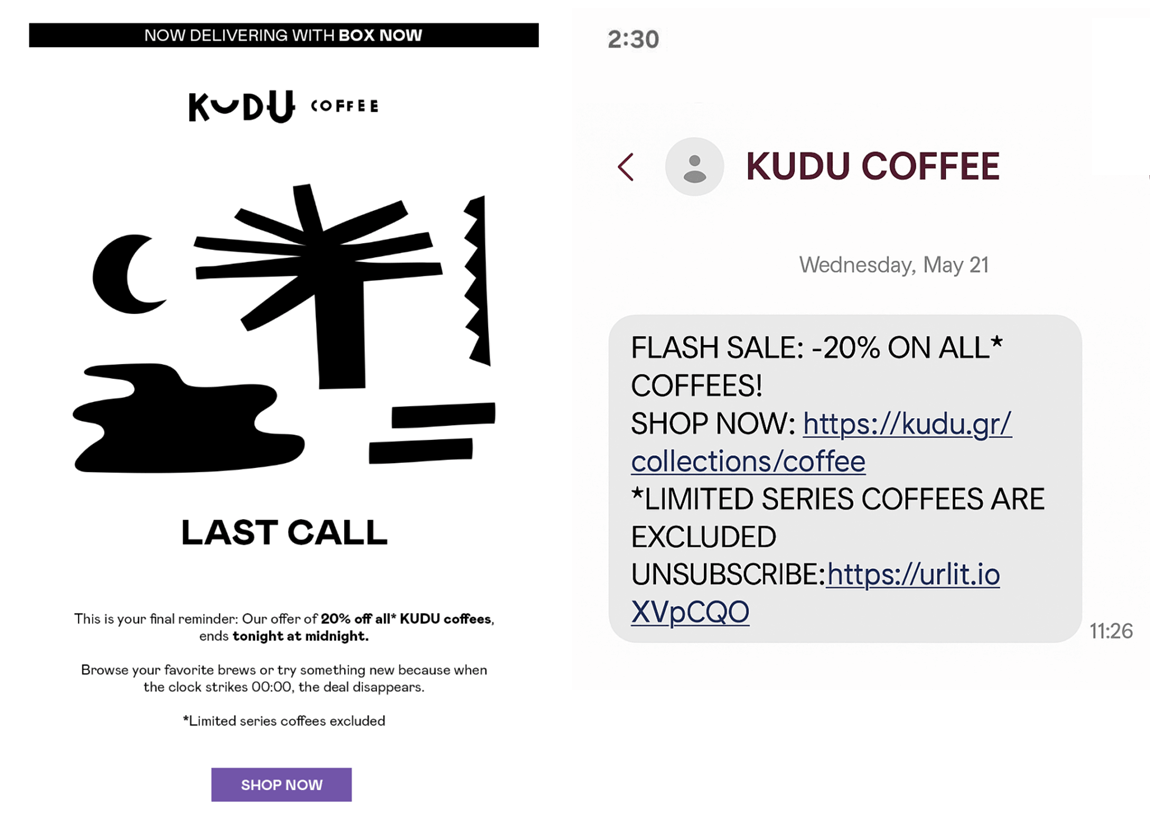
The brand uses email to communicate the full context of the offer, including what’s included, what’s excluded, and when the sale ends. Later, a short SMS follows with a simple reminder that the flash sale is live, linking directly to the relevant collection.
12. Turn search demand into engaging emails
Now, what if you could use SEO to see what customers are already searching for, and email to act on that demand right away?
All you have to do is find trending or rising keywords in your niche using SEO tools like Ahrefs, Semrush, or Google Search Console. Then, look for keywords tied to problems, comparisons, seasonal needs, or emerging product categories. These signals show where demand is building.
Once you spot a keyword trend, use email to:
- Create a focused email campaign around the topic, product, or use case behind the keyword.
- Align the email message with the same language people use in search, so the intent matches.
- Link to a relevant category, guide, or product collection, not your homepage.
For example, when Netflix’s Stranger Things was trending, and searches for Joe Keery spiked, Mateo brand aligned its email campaign with that demand by featuring him wearing their jewelry on the cover of WWD.
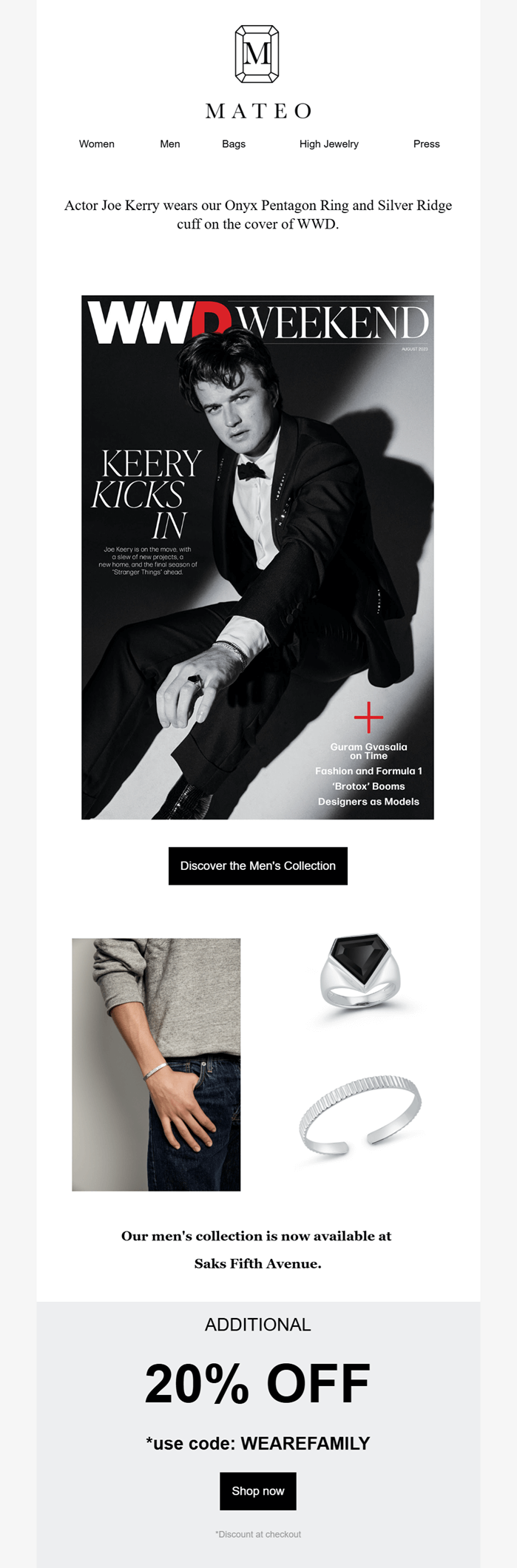
Instead of treating the moment as PR-only, Mateo used email to act on existing search interest. The campaign linked a trending topic to a relevant product collection and added a clear incentive to convert.
This shows how channels such as SEO and email can work together to deliver fresh, relevant content.
Scaling Your Ecommerce Business Successfully
At this point, the next step is simple. Look at what already brings in revenue and make it repeatable. That means doubling down on the emails, segments, and workflows that perform well and automating them, rather than launching more one-off campaigns.
Email gives you the visibility to do that. When you use engagement and purchase data to guide your decisions, scaling becomes easier to manage and easier to sustain.
If you’re looking for a single platform that helps you build, test, automate, and optimize these strategies without adding extra tools, Moosend gives you everything you need. From advanced automation and segmentation to reporting and multi-channel support, having your growth tools in one place saves time, reduces costs, and makes scaling sustainable.
FAQs
Here are some common questions on how to scale your eCommerce business.
1. Is email still worth investing in compared to newer channels?
Email marketing remains one of the few owned channels where you control audience access, messaging, and data. New channels can support growth, but email is what makes scaling sustainable because it doesn’t rely on rising ad costs or platform algorithms.
2. How long does it take to see results when scaling eCommerce with email?
Scaling with email is cumulative. Some improvements, such as abandoned-cart optimization or better segmentation, can increase revenue within weeks. Others, such as loyalty programs or review-driven campaigns, compound over months. The key is consistency and applying proven patterns across campaigns, rather than chasing short-term spikes.
3. Can small eCommerce businesses scale effectively with email, or is this only for large stores?
Email scaling is often more effective for small and mid-sized stores because it relies on automation and existing data rather than large budgets. Even with a modest list, optimizing workflows, targeting high-intent customers, and reducing manual work can unlock disproportionate growth.
4. How do you scale email marketing without hurting deliverability?
Scaling responsibly means sending fewer, more relevant emails. Focus on engagement-based targeting, suppress inactive subscribers, and let automation handle timing. When relevance increases, deliverability usually improves.
Similar Posts
 Published by
Create, send and optimize your email marketing campaigns