










22 Employee Newsletter Ideas & Examples to Inspire Your Own
Published By Maria Fintanidou
June 3, 2026

03/06/26
Employee newsletters come in all shapes and sizes. But the most engaging ones do more than deliver info and keep everyone posted. They make employees feel included and excited about where they work.
When that happens, reading these emails becomes a daily habit. They open them to learn the latest company updates and be part of an active community. This little moment of engagement is what businesses are looking for.
But to reap their benefits, you shouldn’t limit the content of these emails to business updates and announcements. To tap into every engagement opportunity, here are top employee newsletter ideas, examples, and tips to keep everyone more than just informed.
Where business news meet team-bonding and fun
Turn employee newsletters into moments of connection from $9/month.
Start for freeWhy Should Businesses Create Employee Newsletters?
A recent Microsoft report reveals that employees receive 117 emails daily. With this number in mind, making team members look forward to internal newsletters gets challenging.
But if you do it right, these messages can grab attention and motivate employees to come back for the next update. Let’s see why:
- Improve employee engagement: Regular newsletters allow you to share business updates, industry news, and employee spotlights. Through them, you generate conversations and keep people invested in your company’s culture.
- Create a sense of belonging: Remote work has become the norm for many companies. Internal communication emails help employees feel connected and included, instead of isolated.
- Boost employee satisfaction: These messages show that you value employee contribution to your company goals. Brands that celebrate team and individual achievements in their newsletters boost employee morale and make them feel appreciated.
- Prevent information overload: When you keep team members informed through regular newsletters, you save them time from chasing updates across multiple channels. That way, you help them stay focused and productive, improving employee experience.
- Enhance transparency: Timely internal newsletters let your employees know what’s happening across teams and projects. This is essential to reduce concerns and unnecessary rumors while maintaining trust.
- Encourage employee growth: You can use these emails to share training opportunities, upcoming events, job openings, well-being tips, and educational content. By doing so, companies actively invest in employee development.
Top Employee Newsletter Ideas and Examples
Ready to engage your employees with your company newsletters? We’ve got you covered with creative ideas to keep your workforce satisfied and aligned with your goals. You’ll also find some of Moosend’s pre-made, fully customizable email templates you can use as a foundation.
1. Business changes
Employees should learn about company changes directly from leaders like the CEO or the HR Manager, not through office chitchats or a private Slack channel. Notify people about strategy, leadership, and policy changes to avoid the negative consequences of misinformation.
Make sure to be proactive by answering potential questions ahead and explaining how these changes may affect different departments or your customers. You can share an FAQ section or follow up with an anonymous survey to encourage them to share their questions or concerns.
If the update is complex or lengthy, break it down with bullet points and “takeaways” to make the content digestible.
2. Product launches or updates
By sharing product launches or updates, you help employees understand the value proposition and how different departments contribute to your business’s success.
Also, an internal newsletter that keeps everyone up to date about new or enhanced products can serve as a shoutout to those involved in the project. Consider including relevant blog content or product pages in your email so employees can check them at their own pace.
Here’s an employee newsletter example by Moosend informing team members about product improvements:
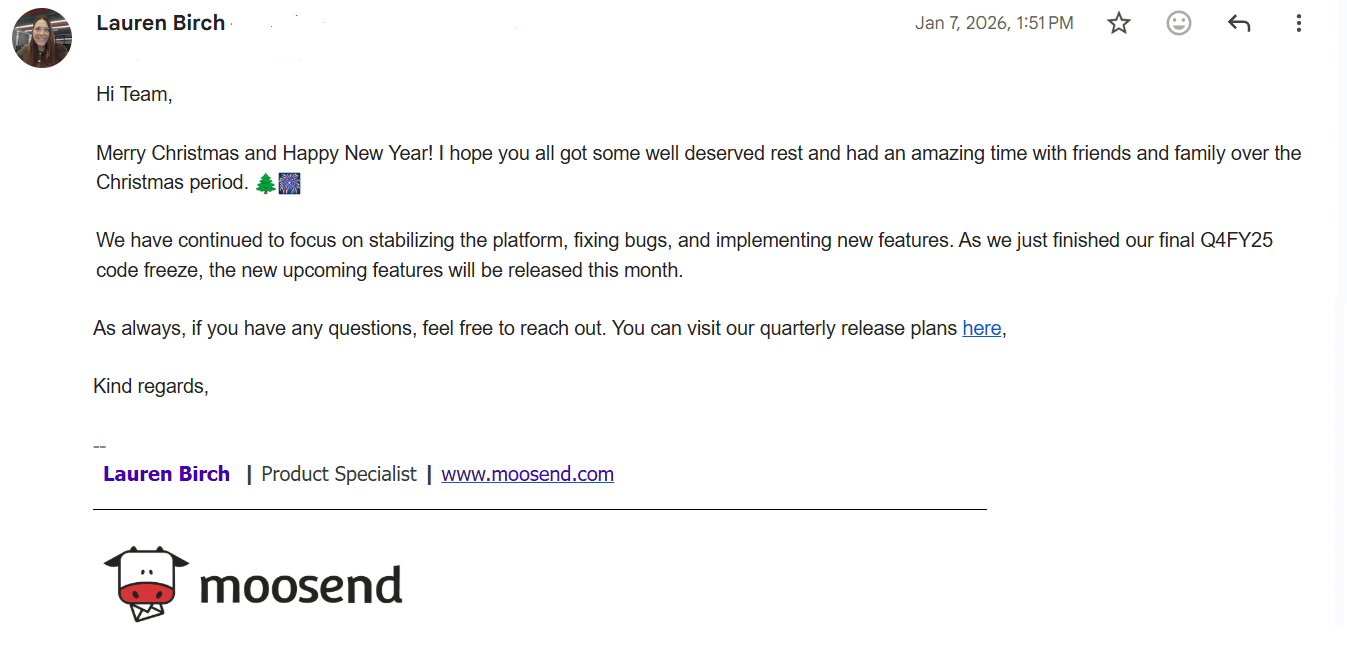
Want to gather employee insights before getting your new product or service out in the world? Use an email solution like Moosend to create and share a feedback form in your employee newsletter to learn their opinion.
3. Company initiatives
Do you have an exciting event planned, such as an office party or a team-building day? Or want to prompt employees to join volunteer projects, emphasizing their positive impact on the environment or the community? Then share those initiatives in your next employee communications message.
To make these employee newsletters work, identify the optimal time to send them so your employees can plan ahead.
Keep in mind that out-of-office initiatives and in-person events may interrupt workflows and employee routines. So, share all relevant information in advance, including signup details and whether attendance is optional or mandatory.
4. Industry news
Delivering regular industry updates demonstrates your company’s commitment to development. When employees are aware of industry trends, they can easily adapt and follow changing guidelines to align with new goals and strategies.
Use your company newsletter to share the latest news from your niche. If you want it even more effective, make it team-specific. For example, keep your marketing team up to date with email marketing growth trends and offer sneak peeks into what your competitors are up to.
To encourage participation, invite employees to submit niche-specific updates they find interesting so you can feature them in the next newsletter. Besides contributing to content creation, this shows that you value their opinion and expertise.
5. Employee achievements
Celebrating employee achievements in your company newsletter makes team members feel rewarded for the effort they put in day-to-day. This is particularly true for remote employees or newcomers who may not have had the opportunity to connect with their coworkers.
This kind of recognition in your newsletter increases overall employee satisfaction.
For a more personal touch, let your people talk about their journey, challenges, and aspirations. If you feature several employees, narrow it down to a few quotes to avoid overwhelming readers.
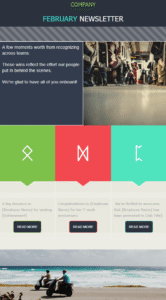
You can use a newsletter template like the one below and tweak its sections to highlight employee achievements and celebrate milestones like work anniversaries. Make sure to include images so their coworkers can put a face to the stories.
6. New hire onboarding
You probably already send onboarding emails, so why not do the same for new hires? A timely and carefully-crafted company newsletter is the perfect way to welcome them and help them understand your products, services, and processes early on.
A welcome note from the founder or CEO is always a nice touch, making every newcomer feel appreciated and part of the team from day one. You can also deliver educational and training materials or short FAQs that support employees during their first days or weeks.
Another approach is to assign each new team member to a “buddy,” meaning a go-to person for queries and concerns. In this case, use this employee newsletter idea to introduce that person and the details of the buddy program.
7. Company culture
Employees who feel connected to their company’s culture mention they’re 47% less likely to explore new work opportunities. This indicates that promoting your business culture shouldn’t come as an afterthought.
These are some effective ways to inspire employees with your core company values:
- Share stories of team leaders and members explaining the company culture.
- Feature behind-the-scenes content showing how culture shapes everyday decisions.
- Highlight projects (e.g., well-being courses) that employees can participate in.
For a lighthearted approach, focus on team traditions or workplace rituals that showcase your company’s personality.
Welcome Pickups engages employees through a dedicated Fun corner. There, they encourage team members to share hilarious moments from their days in the office so the company can promote a positive workplace in future emails.

8. Press coverage
Company-wide news isn’t the only updates your employees care about. They may also be interested in how your business looks on the outside. This is why company emails should include latest press coverage and media mentions of your organization, products, and services.
This is an excellent method to emphasize the effect of your employees’ work on your products, services, and customers. Make sure to point out which individuals or teams contributed to the positive publicity.
You can also use AI to summarize key points from longer articles. By doing so, you save time from turning press coverage into employee-focused takeaways. It’s also an effective way to grab attention faster and make the content easy to scan.
9. Employee highlights
Every employee deserves a special spot in your newsletter, so dedicate a section to introduce a different employee each time. Make sure to highlight their role in the organization and key projects they’ve managed.
To add a human touch, include outside-work routines, fun facts, and interests so their coworkers can understand more about them, not just what they do for a living. You can turn it into a short interview with unexpected questions, such as: “If you could spend time with a historical figure or a famous person, who would it be and why?”
Or ask them to recommend their favorite books, podcasts, TV shows, recipes, and the list goes on.
10. Personal development resources
Learning is an ongoing process. Businesses that invest in their workforce’s professional development are more likely to score higher on employee engagement and retention. Another benefit for companies is that people earn new skills that help them thrive in their roles.
Use this email newsletter idea to inform employees about available training sessions or webinars. If your company participates in industry conferences, make sure to offer them the opportunity to attend. Simplify the process by letting them register for the conference or course directly through the CTA.
If possible, include feedback from peers who have completed the training to make it more inviting.
You can also gather learning preferences during employee onboarding, so you can tailor training opportunities from the start. This way, employees will tell you’re committed to personalizing employee perks.
11. Internal mobility opportunities
Some of your employees may have reached the end of the road in their current role. So, instead of losing them to a competitor, why not guide them toward internal roles?
Your internal newsletter could offer them early access to open positions across the company, which is an effective way to reward their loyalty.
To simplify the process, add a CTA that links directly to the job posting. You can also share the contact details of the HR representative managing the role, along with simple instructions on how to apply.
12. Crisis support
You should treat your business as a living entity. With that comes the responsibility to respond thoughtfully to real-world events, such as social and economic crises or natural disasters.
Employees expect their company to be present when emergencies arise. You can show how you care by providing real support and keeping everyone updated about measures your company is taking.
List segmentation allows you to reach each employee with the right message. For example, if your business operates worldwide, you can group employees based on their location.
In the event of a local emergency, such as an earthquake, consider sending practical resources to those in affected regions, like evacuation guidance. For the rest of your workforce, share suggestions to support relief efforts, such as donation programs.
If your internal communication platform doesn’t offer this option, you can use Moosend’s tools to segment employees by location. Then, automate your newsletters to reach each employee at the optimal time based on their timezone. Just sign up for an account to start creating and scheduling your internal emails.
13. Employee referral programs
Perhaps your employees aren’t looking to switch roles themselves, but they can still benefit from open positions in another way: by referring a friend.
When searching for applicants, create a newsletter to promote your new hire referral program and encourage employees to bring in qualified candidates.
The email content should clarify how the referral program works, outlining the steps employees should take to recommend a candidate. Also, using incentives like a bonus or extra paid time off helps businesses drive more referrals.
14. Holiday celebrations
Employees often wait for the holidays to relax and spend time with their family and friends. For businesses, this time of the year offers the opportunity to foster a sense of belonging and community with holiday-themed email content.
It could take the form of:
- Local traditions
- Funny stories from past celebrations
- Videos from holiday events on different office locations
- Recipes or decoration tips
You can add a greeting from the founder where they thank all employees for their effort and reflect on the company journey. Want to give people more reasons to open the next company newsletter? Organize an internal giveaway and announce the winners in the email.
If you operate in different countries or have culturally diverse teams, consider featuring holidays and traditions from different countries and cultures. This helps you showcase your commitment to equity and diversity, making sure every employee feels included.
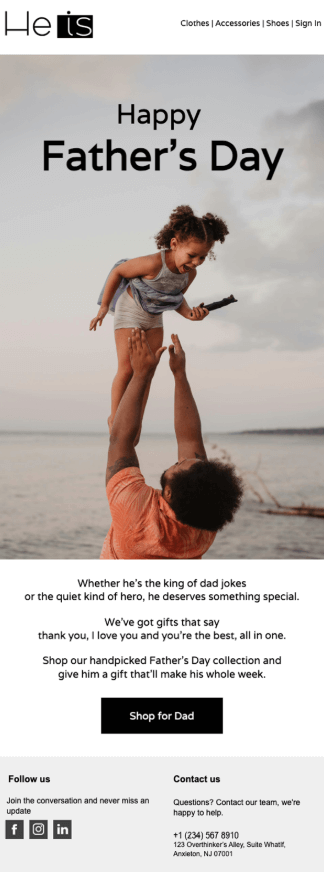
You could also leverage special occasions to highlight milestones. For example, use the Father’s Day email template below to celebrate dads in your workforce. Personalize it by adding their names and photos, along with short quotes about their fatherhood experience.
15. Wellness resources
Work-life balance isn’t just a buzzword. Caring for employee well-being should be a top priority since it shows a positive company culture while ensuring loyalty and productivity.
Here are some ideas on what to include in these newsletters:
- Actionable tips for a healthy lifestyle
- Mental health-focused resources
- Easy-to-make and balanced recipes
- Success stories of people who embraced change
- Wellness challenges like a 7-day hydration streak
Now, when can you leverage this employee newsletter idea? It could be a monthly newsletter that supports your team members consistently. Alternatively, check the calendar for seasonal occasions, like Blue Monday, or any health-specific holiday to deliver relevant resources. You can also feature content like healthy recipes or workout tips.
Another option is to include stories from employees who improved their wellbeing and lifestyle, for example by adopting a pet or becoming a yoga instructor.
16. Employee surveys
Employee feedback helps brands gauge sentiment across teams and understand their pain points. With a regular newsletter, you can ask for their input on various areas and initiatives through embedded polls or surveys.
Here are a few topics worth exploring:
- Working conditions
- Office space and management
- Learning opportunities
- Feedback on team leadership
- Internal communication and transparency
To increase completion rates, keep the survey short and focused. It’s better to ask for feedback on a quarterly basis than bombarding them with different-themed questions at once.
Also, mention that the survey is anonymous and communicate how you’ll use the insights. Lastly, if you acted on past feedback, share those changes with employees to show you’re listening.
17. Sustainability initiatives
If your employees care and probably already participate in environmental initiatives, then why not join forces? Use your internal newsletter to let your people know how your business is making a difference.
Start with any action you’re taking towards sustainability, whether it’s in manufacturing, packaging, or shipping. If you don’t sell physical products, outline initiatives in business operations, such as using sustainable email marketing or reducing office waste.
Motivate employees to get involved by offering practical tips they can follow in the workplace and at home. Another way to encourage participation is sharing images or videos of past sustainability projects and their positive impact.
18. Perks updates
Just the other day, I revealed a top company secret to a colleague: how they can use their private health insurance. It’s not like they had never heard of it before, they had just forgotten the process.
To avoid these missteps or misconceptions, invest in employee newsletters to remind existing employees and inform new ones about company benefits.
The same goes if there are updates, such as benefits added to or removed from your list and instructions on how to use them. Include resources like videos to make the information easier to digest. That way, employees can revisit them at their own time without the need to reach out to their manager or human resources.
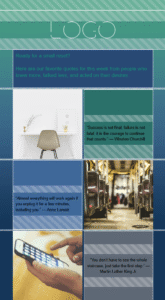
19. Motivational quotes
Motivational quotes from well-known figures may offer employees a quick boost or help them get through a rough day.
For a more personal touch, ask team members to share their favorite quotes and feature them in the newsletter next to their name and headshot. You can increase employee engagement by allowing people to vote for their favorite quote through an embedded poll.
Consider turning this into a regular newsletter that employees expect every Monday morning. A small dose of motivation might be all they need to start the week on the right foot.
Here’s a pre-built template you can use to share your favorite quotes. To involve employees in the process, include a quick survey so they can submit their own inspiring quotes.
20. Meeting recaps
This is one of the most common employee newsletter types, aiming to inform employees about recent meetings. Typically, they include the recording so employees who missed the meeting or want to watch it again can catch up anytime.
Use your internal emails to recap key takeaways in a digestible format using bullet points or short paragraphs. You can also mention upcoming meetings and presentations to build anticipation. Teams that regularly share presentation materials can also integrate best PowerPoint APIs to automate slide generation, distribution, and updates for recurring meetings and company announcements.
But if you want to take this employee newsletter idea a step further, leverage the opportunity to keep the conversation going. Allow employees to submit questions regarding past or upcoming meetings or suggest new topics.
21. Fun facts and trivia
Most people love a good trivia contest. It’s super fun and initiates useful conversations. To make your trivia newsletter the next talk of the office, share fun facts about your company, its products or services, and people.
It’s probably the coolest way to talk about the origins of your business. Start by asking employees whether they know how the founders came up with the business idea. Consider turning it into a true or false game, like “Did our founder get the idea from their mom?”.
You can do the same with surprising achievements, like Brad from the Product Team running a marathon seven years in a row. To spice things up, offer a small prize to the employee who gets the most answers right.
22. Pet stories
Who says pet photos are only for Slack? Most employees love seeing cute or funny moments of their coworkers’ furry friends and your employee newsletter is the ideal space to feature them.
A “Pet of the month” section with a short bio and details like favorite snacks can easily capture attention or even give everyone a good laugh.
Engage employees further by encouraging them to share photos and stories about their pets. To get them into a friendly-competition mood, add an interactive element like a poll so you can crown the champion.
How to Create an Effective Internal Newsletter
Above all, you need your employee newsletter to resonate with your team. Here’s how you can create engaging emails:
- Use an email marketing platform: Tools like Moosend, ConstantContact, and MailerLite allow you to craft professional emails, segment your list, and personalize your content. You can also set up automation workflows for timely messages and measure engagement through email analytics.
- Create branded templates: The platforms mentioned offer drag-and-drop editors and built-in newsletter templates that speed up content creation. You can easily customize the design to match your branding by incorporating your logo, colors, and visuals. Also, most email solutions let you save your templates and reuse them in future emails.
- Segment your list: To ensure you target the right employees with the right message, you need to segment your email lists. For example, separate employees by role or interests to send them tailored training recommendations.
- Put people and value first: To avoid overwhelming busy employees, prioritize content that genuinely interests your team over routine broadcasts. Well-being tips, real-time business updates, and development resources perform better, as they can become tools of professional and personal growth.
- Make the design scannable: Invest in a clear structure with headings, short sections, information hierarchy, and white space for a clean design. Avoid long-form text, but if you must use it, break it up with bullet points and visuals to make it more readable.
- Choose a human tone: In internal communications, there’s usually a thin line between informing and sounding patronizing. Adopt a friendly, human tone and corporate jargon-free language. This approachable style helps employees relate to your company.
- Set a regular schedule: Sending one employee newsletter and disappearing for months won’t work to boost employee engagement. Instead, send your emails at a regular frequency (like weekly or bi-weekly) to train employees to expect your news. Consistency matters, but you can deliver newsletters outside of the cadence if there’s a timely message, like a new hire or industry news that can’t wait.
- Measure employee engagement: Understanding the effectiveness of your internal newsletters is key to seeing what brings results. Monitor opens, clicks, and analyze heatmaps to see which content types had the most traction. Don’t forget to use surveys and polls regularly to ask for direct employee feedback.
Get Your Employees on Board
Effective internal newsletters aren’t empty, generic updates. They foster a sense of connection, communicate values, and celebrate the people behind the brand.
Get inspired by our favorite employee newsletter ideas to increase employee satisfaction and retention. While brainstorming, consider involving employees in the email creation process by asking for their input or employee-generated content to feature in the next newsletter.
Lastly, keep in mind that practice makes perfect. So, always experiment with new employee newsletter content ideas to see what makes people anticipate company emails the most.
FAQs
Let’s check some frequently asked questions about employee newsletters:
1. What is an employee newsletter?
An employee newsletter or company newsletter is an email campaign designed for internal communications. Business owners and executives use them to keep employees informed about anything happening across the company. For example, they can share product launches, company events and initiatives, and milestones, among others.
2. What makes an engaging company newsletter?
Engaging newsletters are easy-to-read, engaging, and professional. Focus on creating clean and polished designs and leave breathing room between different sections. Also, it’s important to share practical resources depending on the topic. You can add interactive components like surveys or polls to increase engagement. Lastly, adopt a professional but friendly voice to establish connections easier.
3. What is the optimal frequency for employee newsletters?
There’s no right or wrong here. The key is to decide on a schedule that serves your newsletter goals while respecting your employees’ workload. Most businesses opt for a monthly or bi-weekly cadence. What’s more important is to stick to the schedule. However, not every minor update deserves an employee newsletter, so make sure to send one when there’s something employees can learn, enjoy, or take part in.
Similar Posts
 Published by
 Published by
Create, send and optimize your email marketing campaigns