













Ecommerce CRM: Benefits & Best Tools [2026]
Published By John Desyllas
January 19, 2026

19/01/26
Running an online store today means managing email campaigns, product updates, customer inquiries, abandoned carts, and more. As your store grows, spreadsheets and manual processes will slow you down. That’s where an eCommerce CRM comes in.
Think of it as your command center. It keeps customer interactions, purchases, and preferences in one place, helping you understand what people buy and what brings them back. With competition rising and acquisition costs climbing, investing in the right CRM is how modern online brands can grow smarter.
In this blog post, we’ll break down what an eCommerce CRM is, its benefits, key features, and top tools to help you choose a platform that fits your business and supports your long-term goals.
What is a CRM for Ecommerce?
An eCommerce CRM (Customer Relationship Management) is a tool that helps online stores manage and understand their customers. It replaces guesswork by centralizing customer profiles, purchase history, browsing behavior, support conversations, and marketing interactions.
Unlike traditional CRMs (such as Salesforce), which are built primarily for sales teams and longer buyer cycles, an eCommerce CRM is designed for online shopping. It connects directly to your store and marketing tools, helping you automate follow-ups, segment shoppers by behavior, and track revenue from every campaign.
Benefits of Using an Ecommerce CRM
A good eCommerce CRM can become the backbone of your customer experience, helping you make smarter decisions. Here’s why it’s worth the investment:
- Complete view of each customer: You can see every interaction in one place, from purchases and browsing behavior to support tickets and email engagement. This helps you understand what customers want and how to serve them better.
- Stronger customer relationships: With accurate data, you can personalize communication, recommend the right products, and keep shoppers engaged long after their first purchase.
- Higher customer retention and repeat sales: CRMs help you automate timely follow-ups, win-back campaigns, and loyalty flows that bring customers back without relying on expensive acquisition tactics.
- Easier segmentation and targeting: Grouping customers by behavior, value, and preferences makes every message more relevant and increases conversions across your marketing channels.
- Better decision-making with real data: You can track trends, identify your most valuable segments, and see which campaigns drive revenue. Then, you can stop guessing and start optimizing what really works.
- More efficient workflows: Automate routine tasks like tagging customers, sending follow-ups, and syncing data across tools, giving your team more time to focus on growth.
These benefits create the foundation for a more scalable business. Now, let’s look at the key features to prioritize.
What Features Should an Ecommerce CRM Have?
There are several key features that a great eCommerce CRM should include:
Unified customer profiles
A complete view of each customer, including all relevant data in one place. This data includes contact information, purchase history, browsing behavior, engagement history, and preferences.
For example, seeing that a customer bought twice, abandoned a cart, and clicked a product email helps you tailor follow-ups or offers rather than sending generic messages.
Real-time data syncing
Your CRM should sync data in real time and automatically update your online store and marketing platform. This way, you always work with up-to-date information.
Advanced segmentation
Tools to group customers based on behavior, spend, lifecycle stage, and other attributes that help you target more precisely. For instance, you can target high-spending customers with VIP offers, re-engage inactive buyers after 60 days, or promote replenishment products to repeat purchasers.
Marketing automation
Marketing automation gives you the power to create automated flows like welcome sequences, abandoned cart reminders, win-back campaigns, and product recommendations. All these campaigns can be triggered by customer actions, eliminating the need for manual scheduling.
Analytics and revenue tracking
Clear insights into customer lifetime value, repeat purchase rates, segmentation performance, and campaign-driven revenue.
Personalization capabilities
Dynamic content, tailored offers, and product recommendations based on browsing and buying habits.
Integrations with your tech stack
Smooth connections with eCommerce platforms (e.g., Shopify, WooCommerce, BigCommerce), email and SMS tools, customer support apps, and loyalty programs.
Now, let’s see some of the top tools in the market.
Best Ecommerce CRM Platforms for Your Business
Below, let’s take a look at the best CRM options for online stores.
1. HubSpot
Pricing: Paid plans start at $20/month, free plan
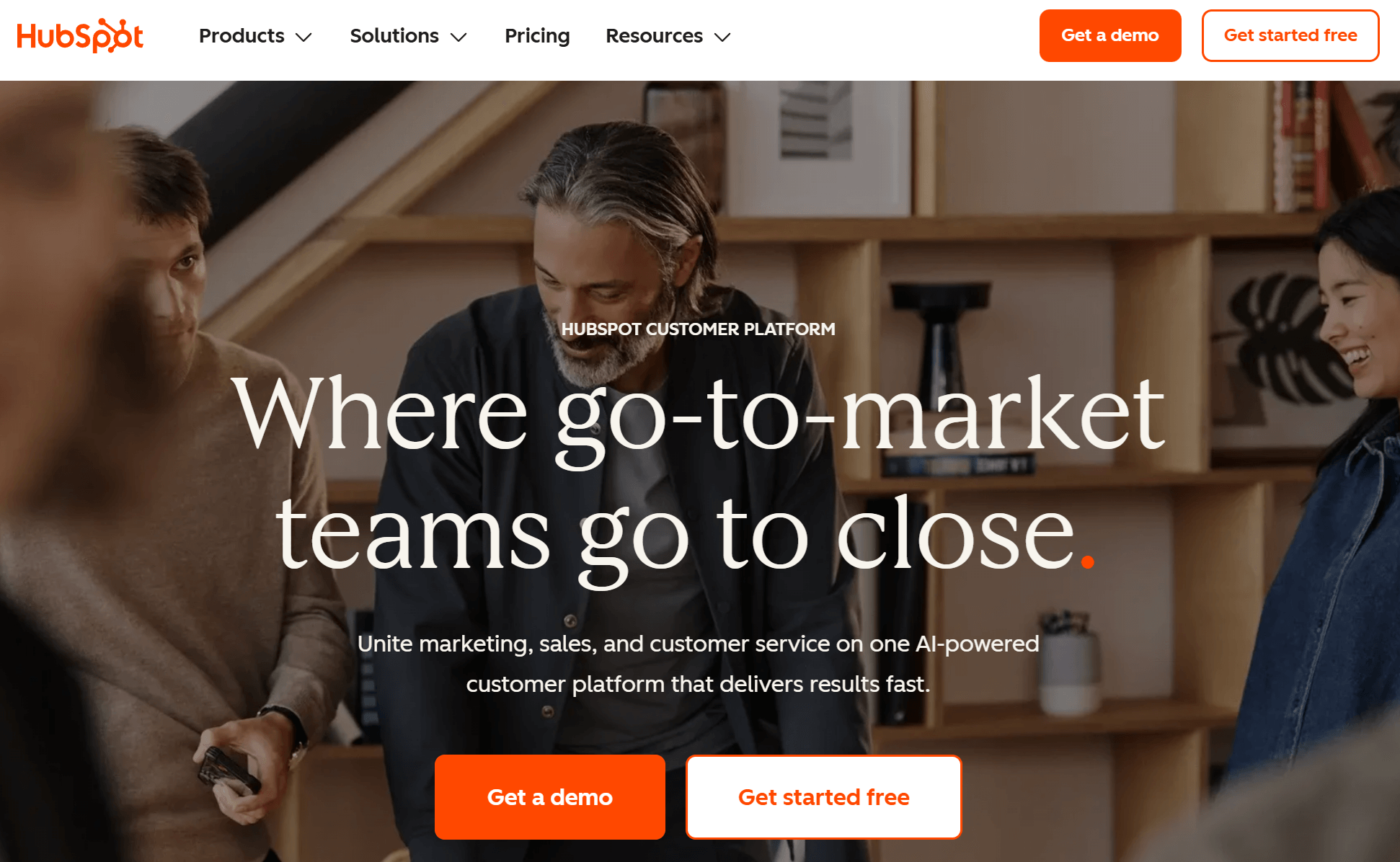
HubSpot is a popular all-in-one customer platform, with a CRM that gives eCommerce stores everything they need to manage contacts, automate marketing, and track revenue.
This tool can meet various needs since it offers paid plans for both smaller and larger businesses. It has a user-friendly interface, an intuitive email builder, and strong marketing automation capabilities.
While the platform is easy to navigate, its CRM will need some getting used to. Nevertheless, the Sales Pipeline (Deals) lets you track deals and identify top prospects in a clear, non-confusing way. HubSpot’s biggest benefit is arguably its free CRM suite, letting you get started without an upfront investment. However, if you need more advanced features, you’ll find that some of them are only available on the paid plans.
HubSpot Features
- Pipeline and deal tracking
- In-depth reports and analytics
- Lead capture tools (forms, pop-ups)
- Drag-and-drop email editor
- Live chat and chatbot builder
Pros
- Generous free plan with essential CRM and marketing features
- User-friendly interface with helpful onboarding resources
- Solid automation capabilities
Cons
- Advanced automation and reporting can get expensive
- The ecosystem can feel overwhelming for small teams
Pricing
HubSpot has a great free plan that lets you access the CRM, build email campaigns, set up one automated action, track replies, and more. Also, you can send up to 2,000 emails per calendar month and store up to one million contacts.
To unlock advanced functionality and better automation, you’ll need to upgrade to a paid plan starting at $20/month (Starter plan for individuals and small teams).
2. Moosend
Pricing: Paid plans start at $9/month, 30-day free trial (Sign up here)
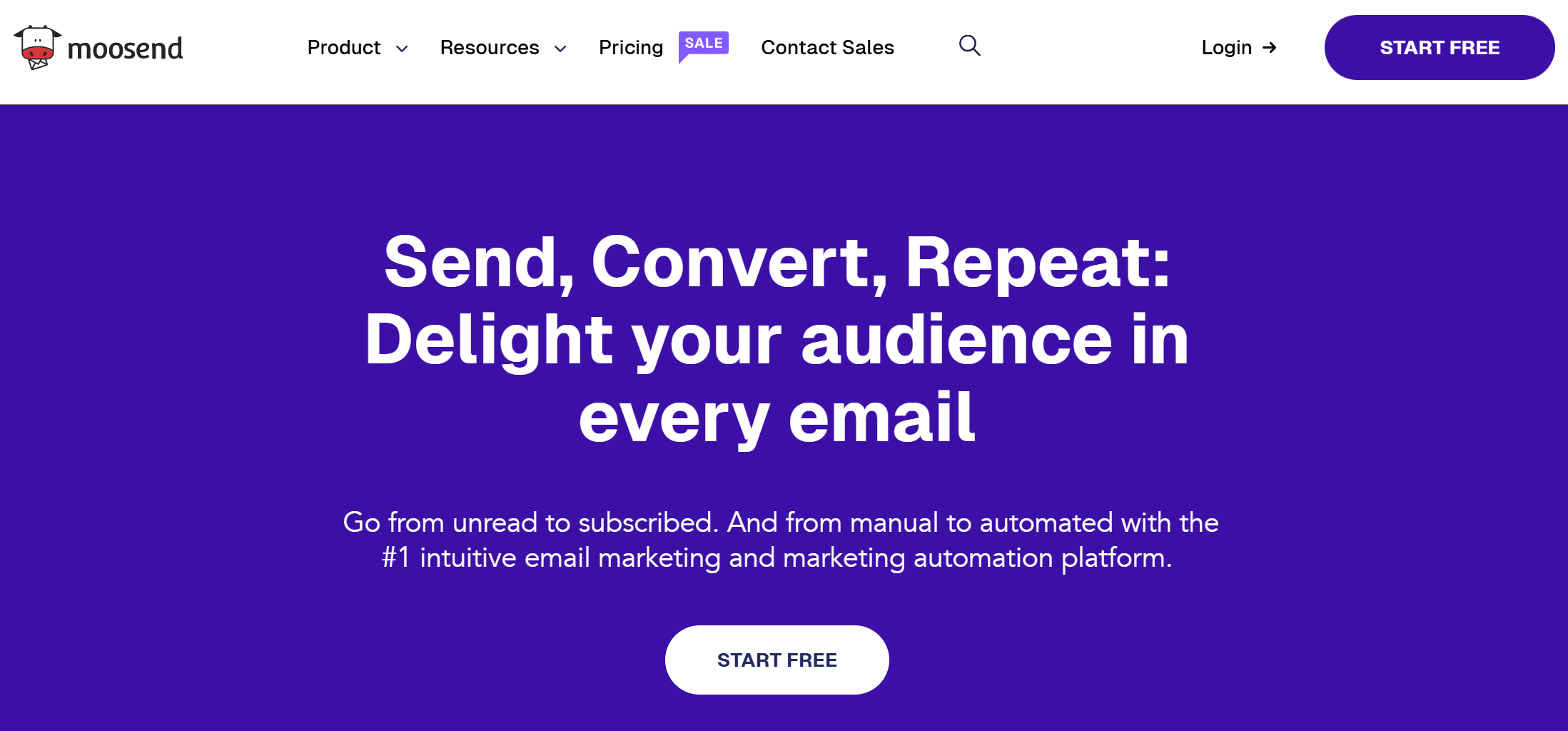
Moosend is an email marketing and automation platform with built-in CRM features designed for eCommerce and SMBs. While it’s not a dedicated CRM, Moosend is known for its fast setup, ease of use, and budget-friendly pricing, without sacrificing functionality.
The visual automation builder makes it effortless to design personalized journeys, track revenue, and follow your customers through the entire lifecycle. You also get advanced customer segmentation, behavioral tracking, and a clean drag-and-drop email editor that works well for beginners and experienced users.
Among Moosend’s strongest features is Audience Discovery. This lets you automatically identify your best-performing customer groups and send campaigns that convert. Moosend integrates with all major eCommerce platforms, enabling you to sync your data and gain valuable insights.
Overall, it’s a solid choice for stores looking to boost repeat purchases and customer engagement without using complex enterprise tools.
Moosend Features
- Visual automation builder
- Behavioral and product-level segmentation
- Landing pages and subscription forms
- Transactional emails (SMTP + API)
- Integrations with Shopify, WooCommerce, PrestaShop, and more
Pros
- Easy-to-use with a beginner-friendly interface
- Affordable pricing compared to most competitors
- Strong automation capabilities for eCommerce journeys
Cons
- Limited CRM depth compared to other platforms
- Signup forms could be more customizable
Pricing
Moosend offers a 30-day free trial for up to 1,000 subscribers, including unlimited emails. Paid plans start at $9/month and give you access to the workflow builder, signup forms and landing pages, and the SMTP server.
If you opt for the Moosend+ plan, you can add enterprise-grade features to your stack, such as transactional emails, Audience Discovery, and more.
3. Agile CRM
Pricing: Paid plans start at $14.99/month, free plan
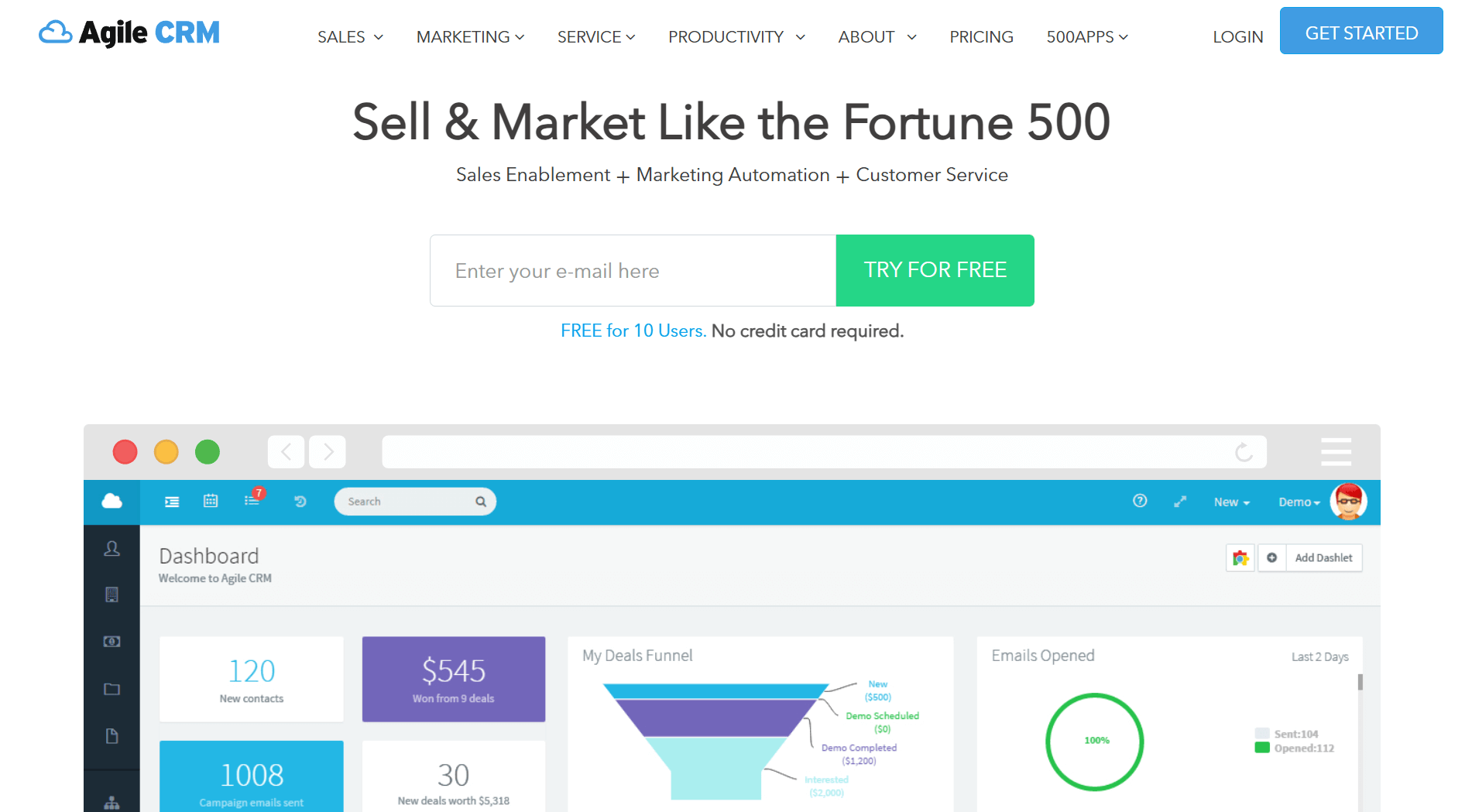
Agile CRM is a customer management platform built for small and growing businesses. It combines sales, marketing, and service tools under one roof, making it useful for eCommerce brands that need CRM capabilities together with automation.
It supports detailed contact tracking, behavior-based segmentation, and automated workflows that help you nurture leads and retain customers.
Agile CRM also offers multichannel outreach for email, SMS, social, and telephony, so you can manage everything from one system. Due to its cloud-based nature, it is mobile-ready, fast, and simple to use.
Agile CRM Features
- Behavior-based segmentation and tagging
- Web and event tracking
- Automated customer journeys based on actions and lifecycle stages
- Lead scoring and deal tracking
- Built-in helpdesk and ticketing
Pros
- Free plan for up to 10 users
- Good segmentation and contact scoring options
- Useful for eCommerce stores wanting a more advanced CRM structure
Cons
- Interface is dated compared to other tools in this list
- Some automation features are limited on lower plans
- Setup may require more time for beginners
Pricing
Agile CRM offers a free plan for up to 10 users that includes basic CRM features, unlimited deals and tasks, and lead scoring. Paid plans start at $14.99/user/month (billed monthly) and unlock more automation, segmentation, and marketing features. Higher tiers include advanced reporting, integrations, and phone support.
4. Klaviyo
Pricing: Paid plans start at $20/month, free plan
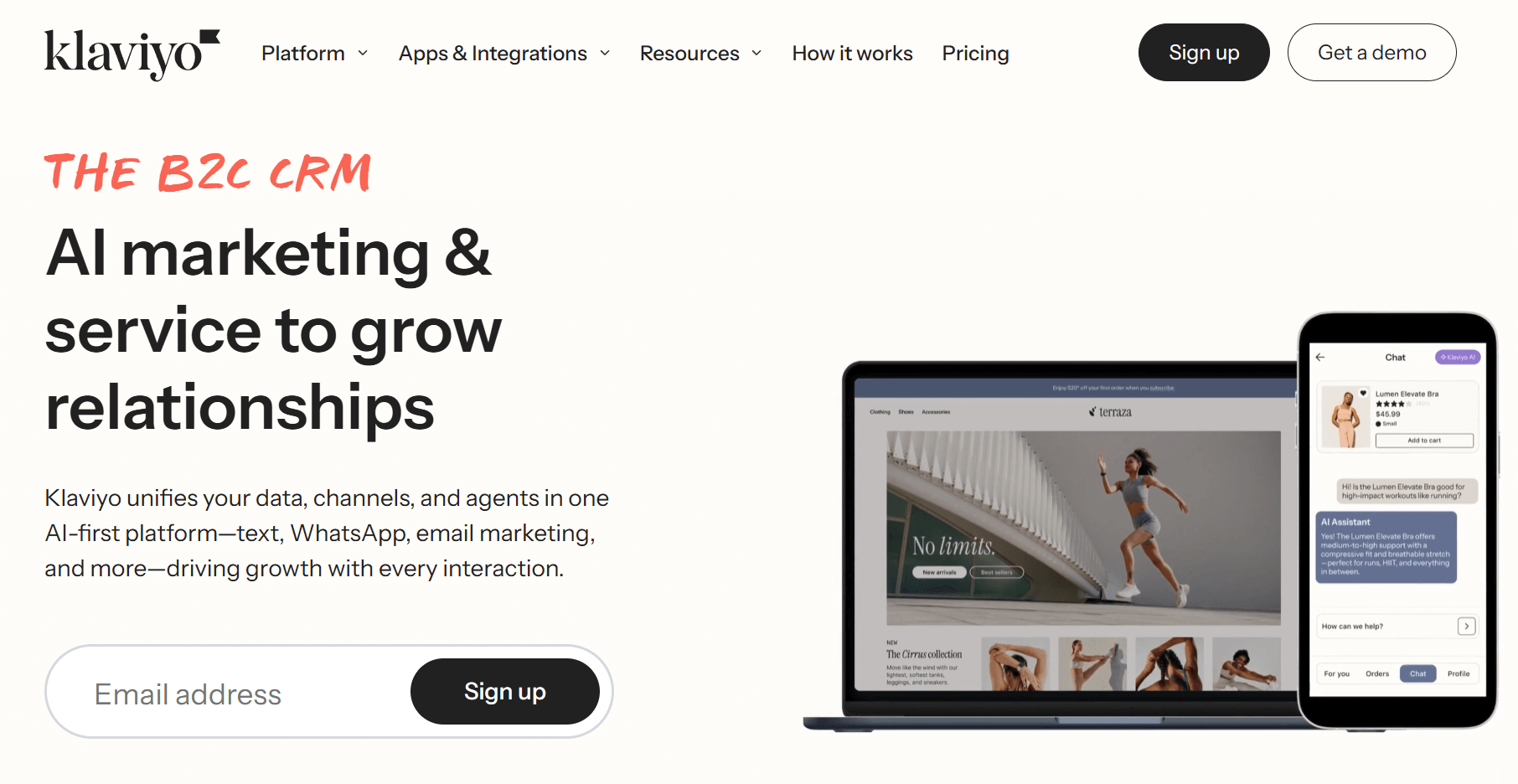
Klaviyo is among the best email marketing software for eCommerce, known for its exceptional segmentation, dynamic personalization, and powerful automated customer journeys.
Built specifically for online stores, Klaviyo integrates deeply with eCommerce platforms and pulls in rich customer data, including browsing and purchasing behavior. It also provides predictive insights, making it one of the strongest B2C CRM tools for lifecycle marketing.
The platform also includes SMS marketing, A/B testing, and AI agents to help you grow and optimize your processes. You also get revenue tracking to understand your customers and increase retention. Finally, for brands with larger budgets, Klaviyo offers some advanced add-ons that can boost your marketing efforts and provide richer insights.
Klaviyo Features
- Unified customer profiles with detailed activity timelines
- Advanced eCommerce automation
- Pre-built automated journeys (welcome, abandoned cart, post-purchase, etc.)
- Multi-channel segmentation
- 350+ built-in integrations
Pros
- eCommerce-focused segmentation
- Highly advanced automation and pre-built flows
- Great for brands focused on retention and lifetime value (LTV)
Cons
- Pricing increases quickly as your list grows
- It can feel overwhelming for small stores
Pricing
Klaviyo has a free plan for up to 250 active profiles (contacts) and 500 monthly emails. Paid plans start at $20/month, with pricing scaling based on your list size. SMS and advanced features are available in combined plans.
5. Zoho CRM
Pricing: Paid plans start at $20/month, free plan
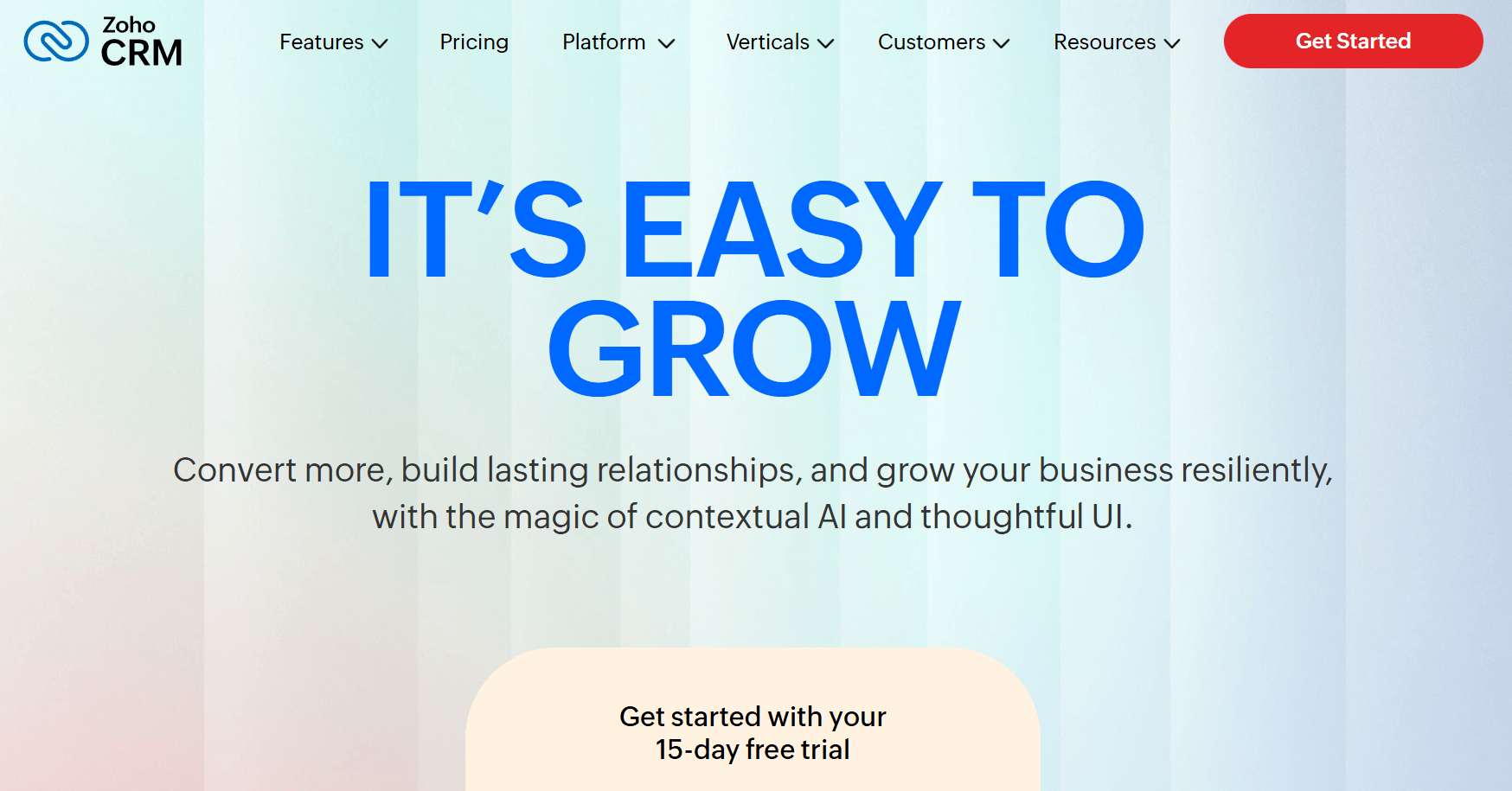
Zoho CRM is a flexible, all-in-one customer management platform designed for businesses that want deep customization, automation, and multi-channel communication.
While it’s not eCommerce-specific, it integrates well with online stores and provides customers with the visibility and workflow automation many eCommerce brands rely on.
With detailed customer profiles, lead scoring, segmentation, and automated workflows, Zoho CRM helps you centralize shopper data and build structured journeys to convert and nurture customers.
Zoho CRM Features
- Workflow automation for follow-ups, tagging, and task assignment
- Lead scoring and AI-based predictions (Zia AI)
- Customizable customer pipelines
- Real-time analytics and revenue dashboards
- Webforms, live chat, and omnichannel communication
Pros
- Highly customizable CRM with flexible workflows
- AI tools that help score leads and predict outcomes
Cons
- Some customizations require more setup time
- The interface may be complicated for beginners
Pricing
This CRM tool has a free plan for up to 3 users, including essential features. Paid plans start at $20/user/month and include advanced automation, segmentation, analytics, and custom dashboards. Higher tiers unlock AI insights, more customization, and multi-channel communication options.
6. Pipedrive
Pricing: Paid plans start at $24/month, 14-day trial
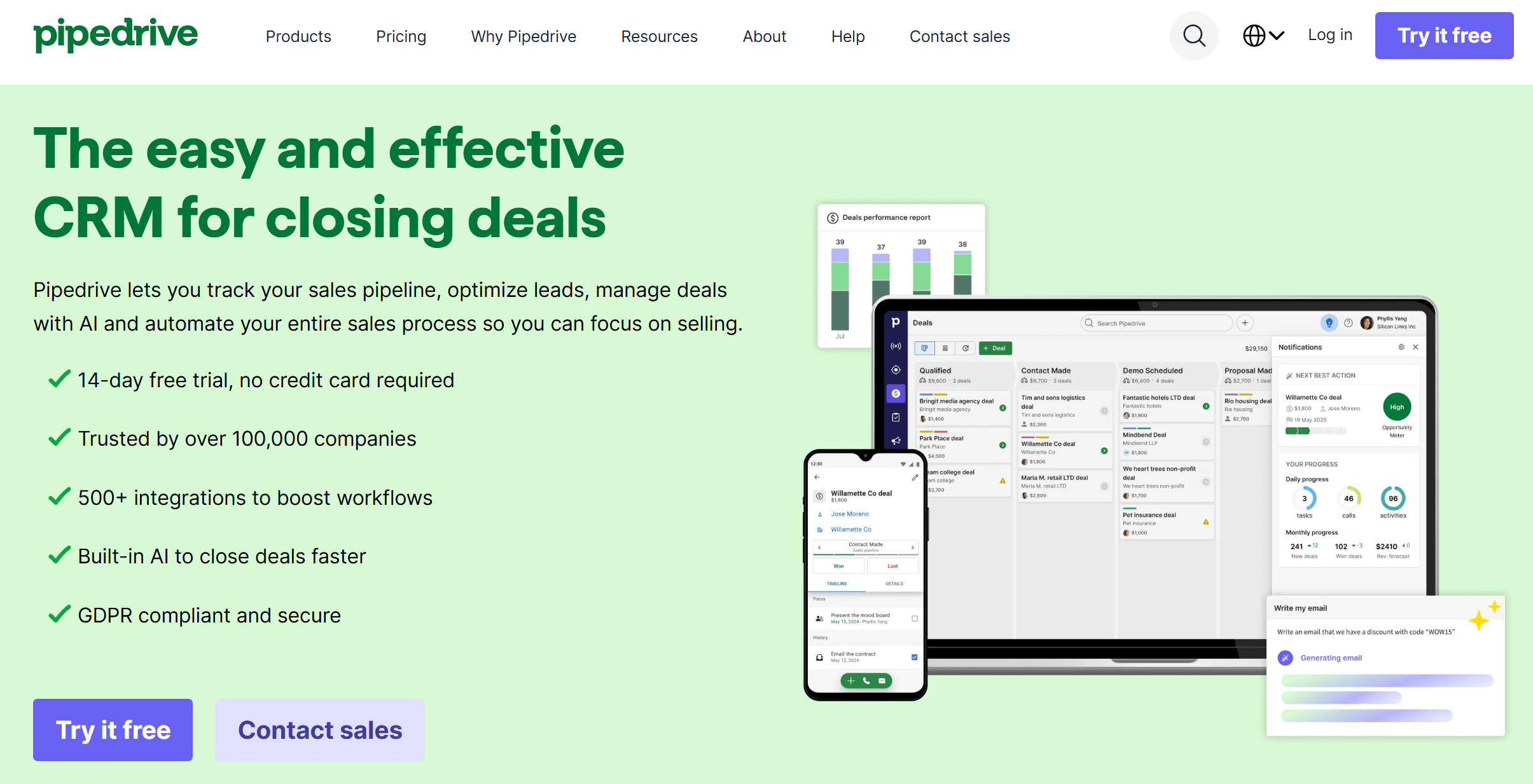
Pipedrive is a sales-focused CRM built to help teams track leads, manage customer pipelines, and automate follow-ups. Though not dedicated to eCommerce, it works well for online stores that want a clean, visual CRM to track customer inquiries, wholesale accounts, or high-value orders. The simple interface makes it easy for teams to stay organized and act quickly on customer opportunities.
Its automation features, segmentation, and deal tracking help you build dedicated customer journeys for post-purchase nurturing, upselling, and B2B eCommerce workflows.
Pipedrive Features
- Visual pipelines for tracking customer deals and orders
- Segmentation based on customer attributes, behavior, or deal value
- AI functionality for emails and reporting
- Revenue forecasting and reporting
- A vast list of integrations
Pros
- Among the most user-friendly CRMs
- Great pipeline management and tracking
- Easy to customize for eCommerce use cases
Cons
- Limited built-in marketing automation
- Lacks advanced personalization
Pricing
Pipedrive offers a 14-day free trial that you can use without providing a credit card. Paid plans start at $24/seat/month and offer essential CRM features, automations, and pipeline management.
7. Less Annoying CRM
Pricing: Paid plans start at $15/month, 30-day trial
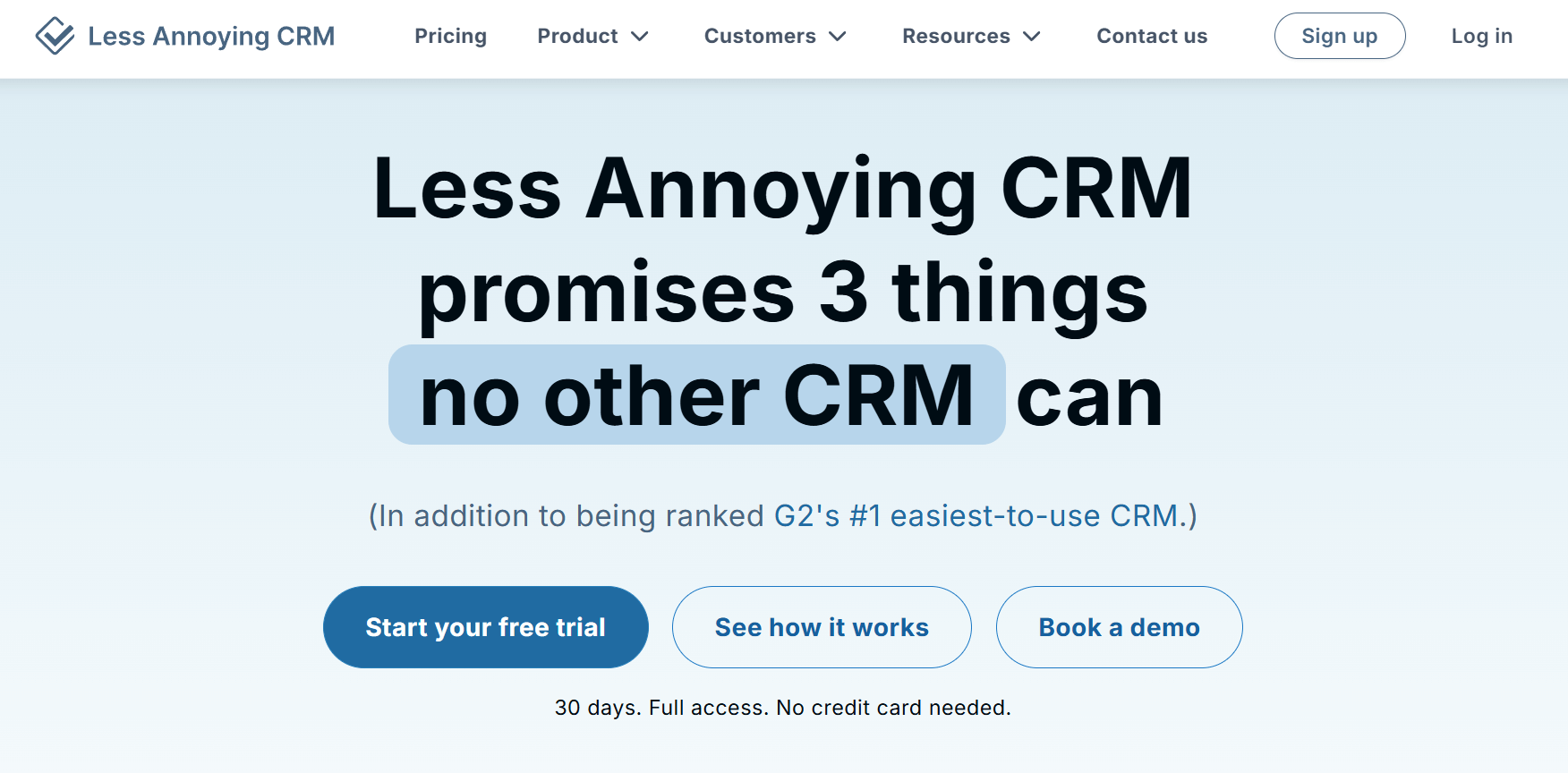
Less Annoying CRM is a simple customer management platform designed primarily for small businesses seeking an easy, clutter-free way to organize customer data. This eCommerce CRM has a straightforward interface and customizable pipelines.
Coupled with strong contact management features, the platform is a practical option for online stores seeking a lightweight CRM to track customers, inquiries, and follow-ups.
It’s built for teams that want to avoid complexity and prefer a CRM that “just works” without steep learning curves or complicated configuration.
Less Annoying CRM Features
- Customizable pipelines for orders, leads, or support inquiries
- Calendar and task management for follow-ups.
- Basic automation for tasks and reminders
- Email logging and template support
- Responsive and knowledgeable customer service
Pros
- Easy to learn and navigate
- Transparent pricing with a single plan
- Great customer support
Cons
- Limited automation compared to advanced CRMs
- No built-in marketing automation or email campaigns
Pricing
Less Annoying CRM offers a single plan at $15/user/month, which includes all features (contacts, pipelines, calendars, reminders, and basic automation). A 30-day free trial is also available with full functionality.
Selecting the Right Ecommerce CRM
Choosing the best eCommerce CRM comes down to understanding your store’s needs and how each tool supports your customer journey. Some platforms offer full CRM functionality with deep sales pipelines and advanced workflows, while others focus on marketing automation, segmentation, and revenue-driven personalization.
Before deciding, consider your goals. Do you need robust lifecycle automation? Detailed customer profiles? Easier contact management? Or a solution that ties marketing and CRM data together?
Consider your team size, growth stage, and budget, and prioritize features that help you improve retention, personalize communication, and streamline your daily processes. With the right CRM in place, you’ll be better equipped to build stronger customer relationships, drive repeat purchases, and scale your ecommerce business more confidently.
Frequently Asked Questions (FAQs)
Here are some common questions and their answers regarding eCommerce CRM software.
1. What’s the difference between an eCommerce CRM and a traditional CRM?
An eCommerce CRM is designed specifically for online stores. It pulls in shopping behavior, purchase history, and lifecycle data to automate abandoned cart emails, segment customers, and track revenue from campaigns. Traditional CRMs focus more on sales pipelines and manual outreach, and usually lack built-in ecommerce insights or marketing automation.
2. Do small online stores need an eCommerce CRM?
Yes, especially if you want to improve customer retention. Even small stores benefit from having centralized customer data, automated follow-ups, and better segmentation. A CRM helps you stay organized, personalize communication, and generate consistent repeat sales without manually tracking everything.
3. What key features should I look for in an eCommerce CRM?
Look for tools that offer behavioral segmentation, automation workflows, unified customer profiles, revenue tracking, and strong integrations with your ecommerce platform. These features ensure you can create personalized journeys and understand which customer groups drive the most value.
Similar Posts
 Published by

Create, send and optimize your email marketing campaigns