













Best Brand Marketing Tools to Increase Awareness in 2026
Published By John Desyllas
September 17, 2026

17/09/26
Brand marketing isn’t something you see results from overnight. It’s what makes people think of you when the time comes to buy.
But here’s the challenge: there’s no single category called “brand marketing tools.” Instead, brands rely on a combination of platforms to tell their story, build community, monitor conversations, and measure awareness across channels.
In this guide, we’ll break down the best brand marketing tools and show you how each one supports brand visibility, trust, and long-term growth.
What Are Brand Marketing Platforms?
Brand marketing tools are platforms that help businesses shape how their audience perceives them over time. These solutions support storytelling, community building, reputation management, and measurement of brand visibility.
They help you communicate your values consistently, monitor conversations about your business, and track awareness signals like direct traffic or branded search growth.
In short, brand marketing tools don’t just drive clicks; they help you build recognition, trust, and long-term relevance in your market.
Why Brand Marketing Tools Don’t Fit into One Category
There isn’t a single software category labelled “brand marketing.”
Instead, brand-building happens across multiple channels. For example, email platforms support narrative-driven communication. Social media tools help build community and maintain a consistent voice. Social listening tools monitor sentiment and conversations. Analytics platforms measure awareness signals.
Together, these tools form a brand marketing ecosystem rather than a standalone solution.
Now, let’s explore some of the top tools for brand marketing worth your attention.
1. Moosend – Email Marketing for Brand Storytelling and Audience Relationships
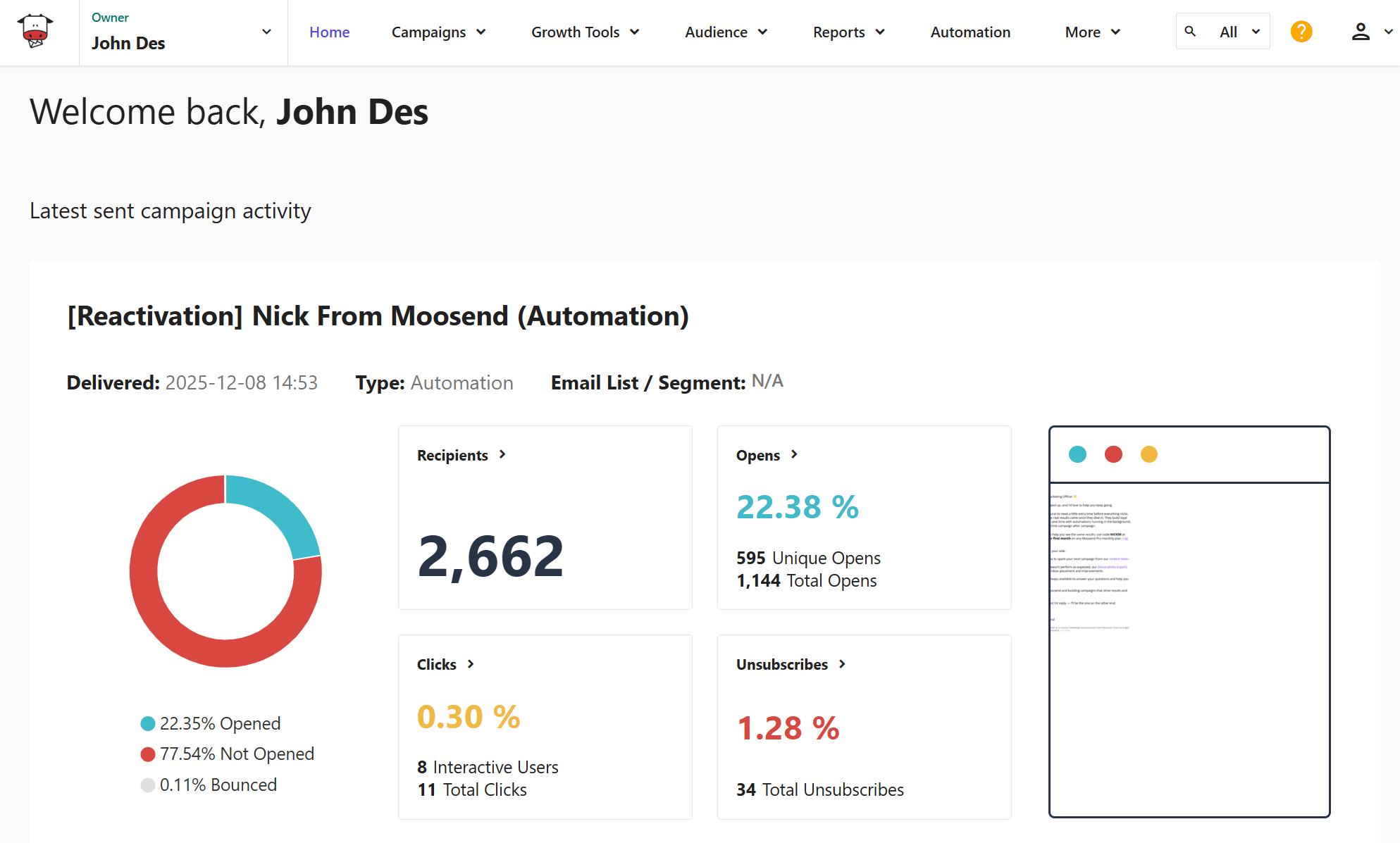
Email marketing plays a unique role in brand marketing because it’s an owned channel. This means that brands control how and when they communicate with their subscribers. Moosend is an email marketing automation platform that helps brands use email to communicate consistently with subscribers, share their story, and strengthen their identity over time.
Using an intuitive drag-and-drop editor, you can send narrative-driven newsletters, such as behind-the-scenes insights and customer success stories, that reinforce brand voice and values. Additionally, the platform lets you create automated onboarding sequences that introduce new subscribers to your brand story, product philosophy, or community.
As your list grows, Moosend’s tools let you segment your audience to deliver more relevant and personalised messaging. You also get customizable templates to maintain a consistent brand identity.
Pricing
Moosend offers a 30-day free trial that allows you to deliver unlimited email campaigns, access free templates, and use the landing page and form builders. Paid plans then start at $9/month for 500 subscribers and unlimited emails.
2. Constant Contact – Consistent Brand Communication with Email, SMS, And Social Campaigns
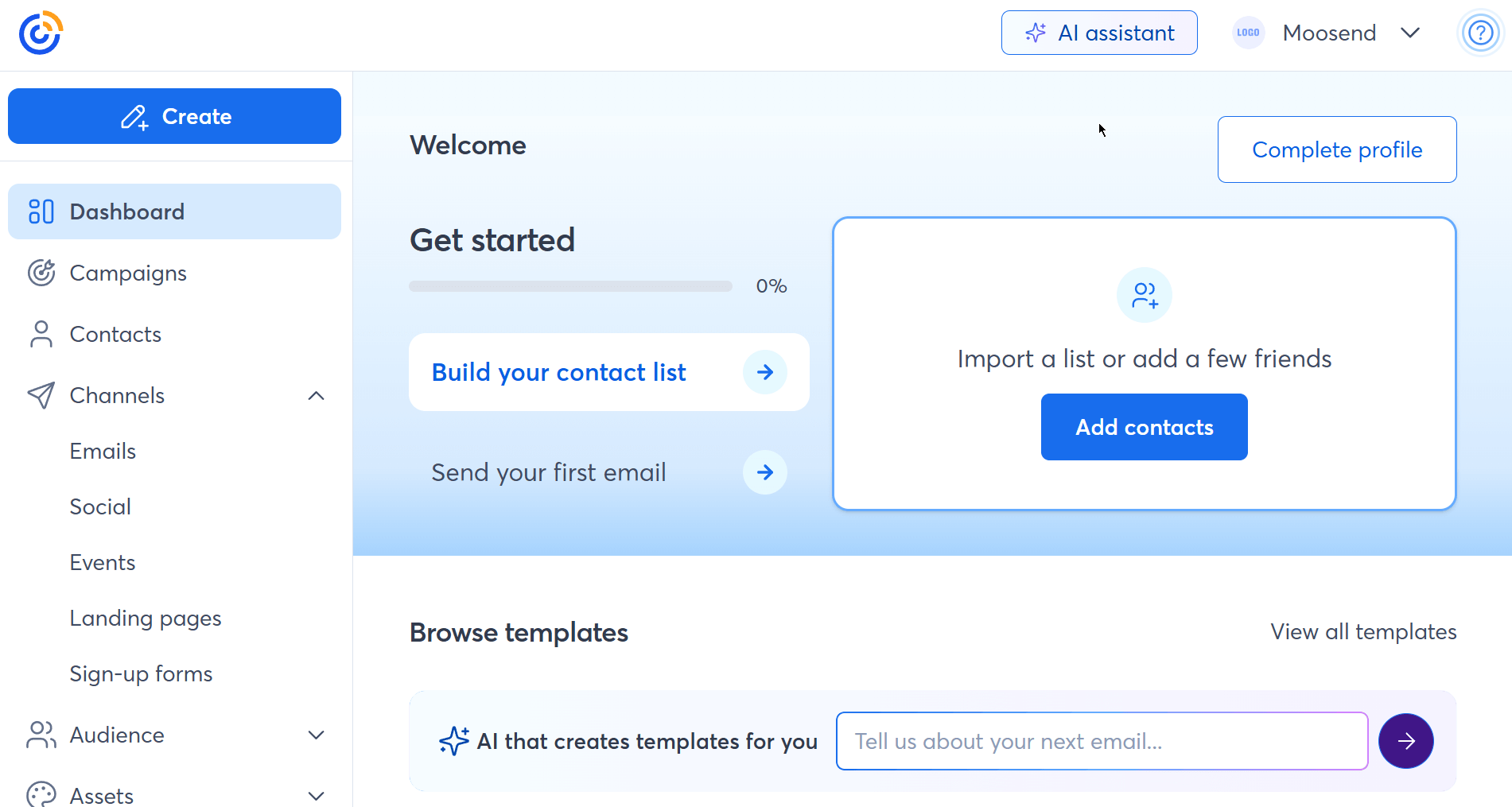
Constant Contact helps businesses maintain a steady brand presence through newsletters, announcements, and customer updates. With its email builder, template library, and audience management tools, teams can create high-impact campaigns that keep your business top-of-mind and drive repeat sales.
For brand marketing, consistency matters as much as reach. Constant Contact allows businesses to highlight brand stories, share customer testimonials, and promote community initiatives, all while keeping messaging aligned with their visual branding.
On top of that, Constant Contact lets you schedule social media campaigns and reach your audience with SMS. As such, it’s a versatile tool that allows you to do more with less. Overall, this tool has a minimal learning curve, making it an ideal solution for beginners.
Pricing
This brand marketing solution has a 30-day trial. Paid plans start at $12/month, giving you all the essential tools to get started.
3. HubSpot – CRM-Driven Brand Marketing and Social Listening
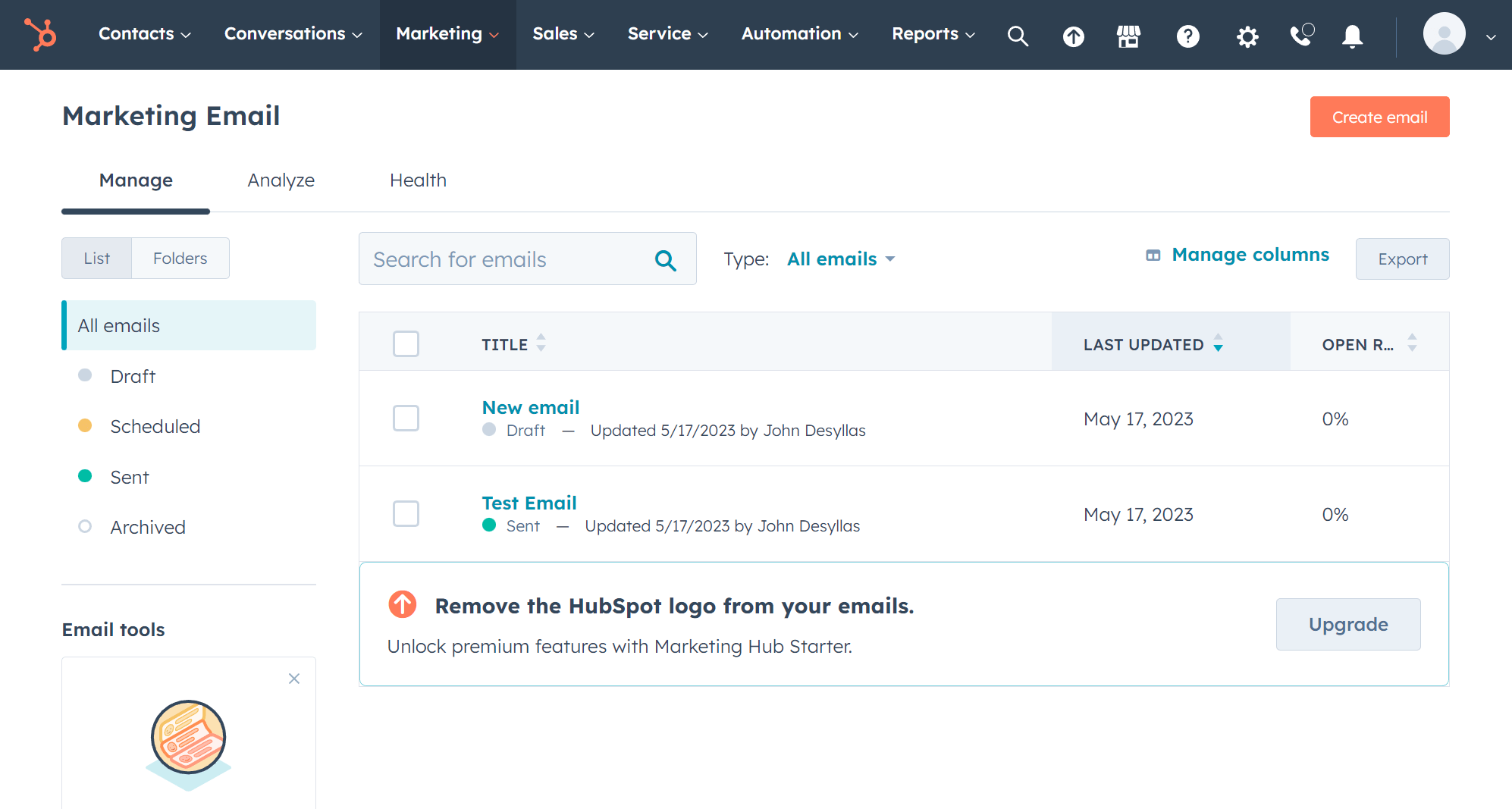
HubSpot combines customer relationship management (CRM), marketing automation, and social media tools to help businesses build a seamless brand experience across the customer lifecycle. Instead of treating brand awareness as a separate activity, HubSpot connects content, campaigns, and customer interactions into a single platform.
For brand marketing, HubSpot makes it easier to maintain consistent messaging across channels while understanding how audiences engage with your brand. Teams can manage campaigns, track audience behavior, and connect marketing efforts with CRM insights to build more personalized brand experiences.
HubSpot also includes social media monitoring features that allow teams to track brand mentions, keywords, and conversations across connected social platforms. By setting up monitoring streams, marketers can identify when people talk about their brand, join conversations, and respond quickly to customer feedback or questions.
Pricing
HubSpot offers a free plan with limited functionality. Paid pricing starts at $20/month. To unlock social media monitoring functionality, you’ll need to upgrade to the Professional plan starting at $890/month.
4. Brand24 – Social Listening and Brand Mention Monitoring
Brand24 helps businesses understand how people perceive them online. The platform tracks brand mentions in real time across social media platforms, blogs, forums, news sites, and other online sources. This gives marketing teams visibility into conversations happening beyond their owned channels.
Apart from tracking mentions, Brand24 lets you identify influential voices driving conversations in your niche. These insights help marketers understand audience perception, respond to feedback quickly, and participate in discussions where their brand is already being referenced.
For example, when influencers and customers begin discussing the product organically, your team can join the conversation, share additional content, and build relationships with creators who are already amplifying the brand.
Pricing
This AI social listening tool offers a 14-day free trial. After the trial period, paid plans start at $249/month (billed monthly).
5. Ahrefs – SEO Insights for Measuring Brand Visibility
While it’s widely known for keyword research and backlink analysis, Ahrefs is a valuable tool for brand marketing because it reveals how often people search for your brand and how your website performs in organic search results.
By tracking branded keywords and search volume, marketers can measure whether brand awareness is growing over time. Ahrefs also provides insights into backlinks and content performance, helping teams understand which campaigns, partnerships, or media mentions are driving visibility and authority.
Pricing
Ahrefs provides free, limited access to its Site Explorer & Site Audit features. Paid plans start at $129/month.
6. Canva – Visual Identity & Consistent Brand Assets
Canva is a visual suite that can help you create and maintain a recognizable visual identity across your marketing channels. With its drag-and-drop editor, brand kits, and large template library, you can quickly design social media graphics, presentations, ads, and other visual assets while keeping colors, fonts, and logos consistent.
Marketing teams also use Canva to produce cohesive content across channels. That includes creating a series of LinkedIn carousel posts, Instagram graphics, and promotional banners that all follow the same brand guidelines. By using shared templates and brand kits, you can ensure that every visual asset stays true to your brand’s identity, even when multiple people are creating content.
Consequently, as audiences encounter the same design style across social media, email campaigns, and website content, it becomes easier to identify and remember your brand.
Pricing
Canva has a free plan that you can use. Paid plans start at $15/month.
7. Hootsuite – Social Media Brand Presence & Community Building
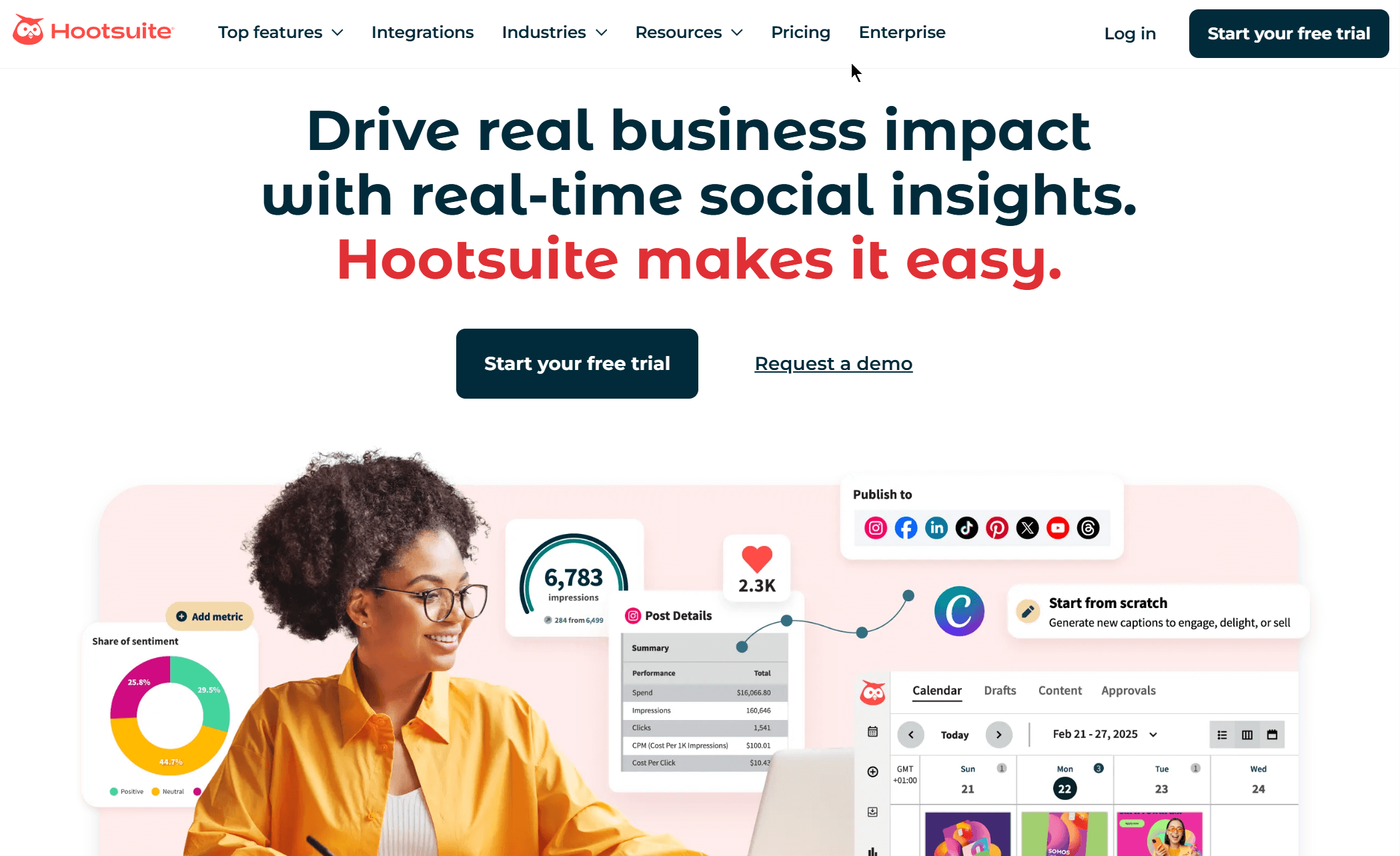
Hootsuite is a social media marketing and management tool that enables brands to maintain a presence across multiple social media platforms. With scheduling, content planning, and engagement tracking tools, marketing teams can coordinate posts across channels while ensuring their messaging, tone, and visual identity remain aligned.
Using Hootsuite, you can plan campaigns across platforms like Instagram, LinkedIn, and TikTok, schedule posts in advance, and monitor engagement in one place.
For example, during a product launch, a company might use Hootsuite to roll out coordinated announcements across its social channels, sharing behind-the-scenes content on Instagram, thought-leadership posts on LinkedIn, and short product teasers on TikTok. By managing these touchpoints centrally, you can have full control over the messaging while tracking how audiences respond to each piece of content.
Pricing
Hootsuite offers a 30-day trial to explore its functionality. Paid plans of this brand marketing tool start at $249/month (billed monthly).
Using Brand Marketing as a System
Strong brands aren’t built through one channel or platform. They emerge from consistent storytelling, recognizable visuals, active community engagement, and careful measurement of how audiences respond.
The tools in this guide help support those efforts. Used together, they create a system that strengthens visibility, trust, and long-term brand awareness.
FAQs
Here are some frequently asked questions about brand marketing.
1. What is brand marketing?
Brand marketing focuses on shaping how people perceive and remember a business. Instead of targeting immediate conversions, it aims to build recognition, trust, and emotional connection through consistent messaging, storytelling, and a unified visual identity across marketing channels.
2. What tools are used for brand marketing?
Brand marketing often relies on a combination of tools rather than a single platform. Businesses typically use email marketing tools, social media management platforms, design tools, analytics software, and social listening tools to promote their story, monitor audience perception, and measure brand awareness.
3. Why do businesses need brand marketing tools?
Businesses need brand marketing tools to manage how their brand is presented, discovered, and discussed across channels. Without them, messaging becomes inconsistent and brand visibility is harder to track. This can lead to missed opportunities, weaker recognition, and slower audience trust compared to competitors with a structured brand strategy.
Similar Posts


Create, send and optimize your email marketing campaigns