














8 Affordable Marketing Automation Tools for Startups [2026]
Published By John Desyllas
March 18, 2026

18/03/26
When you’re building a company from the ground up, time and budgets are limited. There’s little room for lengthy onboarding processes, steep learning curves, or software that demands a dedicated specialist to run everything.
Startups need tools that are quick to set up and powerful enough to automate essential marketing tasks without draining resources.
But not all marketing automation software is built for startups. Some platforms are overpriced, while others are overloaded with features you’ll never use.
Below, you’ll find the best marketing automation tools for startups, balancing affordability, ease of use, and scalability, so you can grow efficiently from day one.
Why Startups Need Marketing Automation Tools
Early-stage companies operate in survival mode. Every lead matters, while missed follow-ups can mean lost revenue. Marketing automation helps startups create structure without adding headcount. Many email marketing tools designed for startups now include automation features that make this possible even for small teams.
Instead of manually sending onboarding emails, promotional offers, or re-engagement campaigns, automation lets you build workflows once and run them in the background. This ensures timely communication with prospects and customers, even when your team is focused on product development, fundraising, or customer support.
Marketing automation tools also improve consistency. Startups can nurture leads with personalized email sequences, segment audiences by behavior, and trigger messages in response to real-time actions. This means better engagement without extra manual effort.
Equally important, automation provides measurable insights. With access to campaign performance data, startups can identify what works, optimize more quickly, and make informed decisions rather than guess.
Marketing Automation Tools for Startups: Overview
Now, let’s see a quick overview of the top tools you can consider for your startup.
| Pricing | Free Plan | Best Feature | |
| Moosend | $9/month | 30-day trial | Easy-to-implement automation with a wide range of triggers |
| HubSpot | $20/month | ✔️ | Powerful free CRM |
| ActiveCampaign | $19/month | 14-day trial | Vast library of automation templates |
| Zoho CRM | $20/month | 15-day trial | Customizable sales workflows |
| Brevo | $9/month | ✔️ | SMS & WhatsApp campaigns |
| Zapier | $19.99/month | ✔️ | No-code automation across 5,000+ apps |
| Hootsuite | $249/month | 30-day trial | Multi-platform social scheduling |
| Mailchimp | $13/month | ✔️ | Intuitive customer journey builder |
1. Moosend
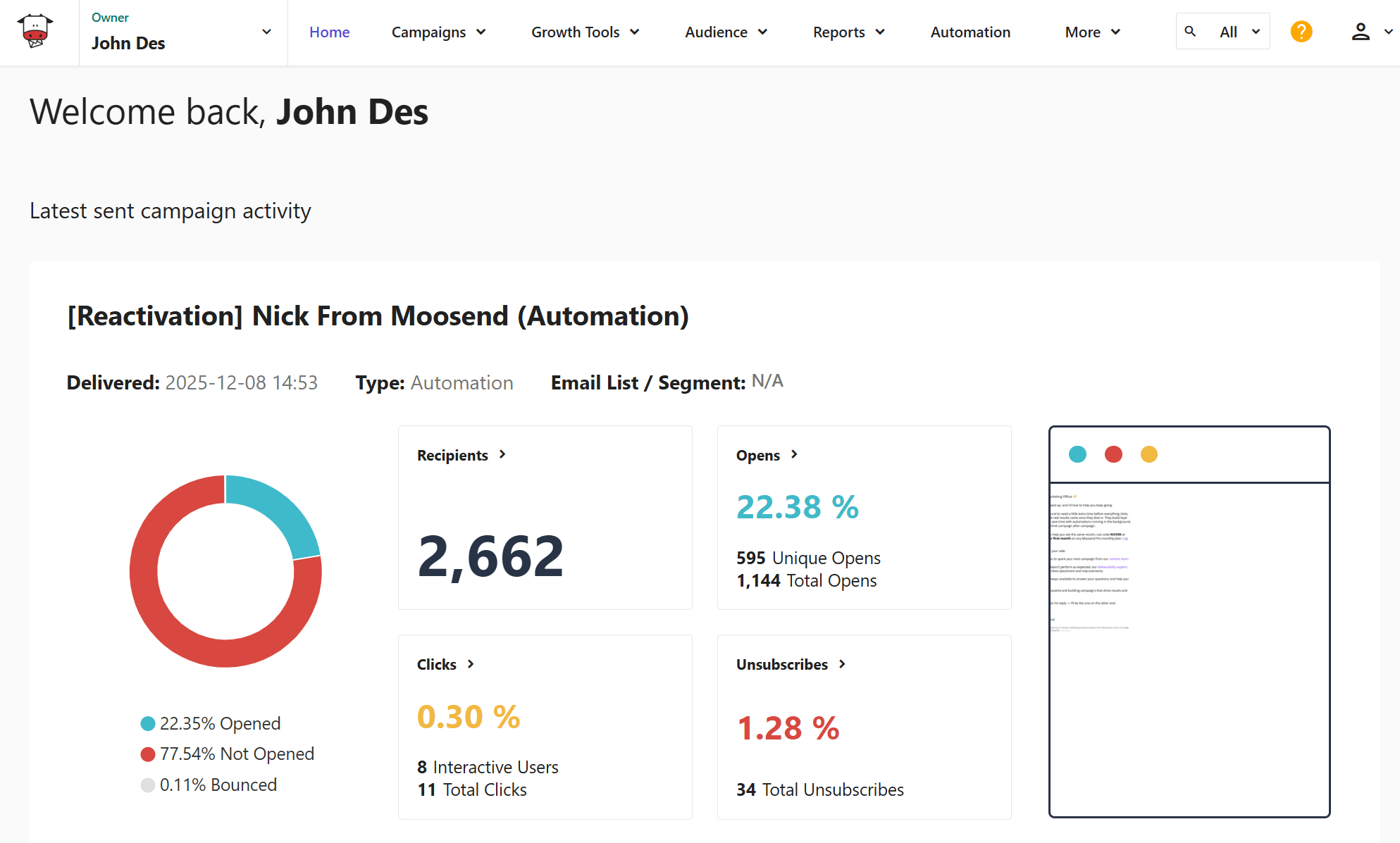
Moosend is an email marketing and marketing automation platform designed to give startups access to advanced functionality without the high costs or complexity typically associated with such platforms.
Its interface is clean and intuitive, allowing teams to create campaigns, set up automations, and manage lists without a steep learning curve. For early-stage companies, this ease of use can significantly reduce onboarding time and execution delays.
From an automation standpoint, Moosend offers a visual workflow builder that supports behavior-based triggers, conditional logic, and advanced segmentation. Startups can automate onboarding sequences, cart abandonment emails, re-engagement campaigns, and lead-nurturing flows with minimal setup.
The platform also includes transactional emails, landing pages, signup forms, and real-time reporting, enabling businesses to centralize multiple marketing functions in a single tool. This makes it suitable for startups looking to build structured, scalable campaigns without investing in multiple separate solutions.
Regarding pricing, Moosend remains competitive with many automation-first platforms, making it accessible for startups operating with limited budgets. Its feature set supports both B2C and SaaS use cases, particularly for teams that need strong segmentation and automated lifecycle marketing from the start.
Pros
- Advanced automation workflows at a competitive entry price
- Strong segmentation capabilities for personalized campaigns
- Includes transactional emails and landing pages in one platform
Cons
- Smaller native integration ecosystem (compared to larger competitors)
- Fewer built-in CRM features than other tools in the list
Pricing: Starts at $9/month. There is also a 30-day trial you can sign up for free.
2. HubSpot
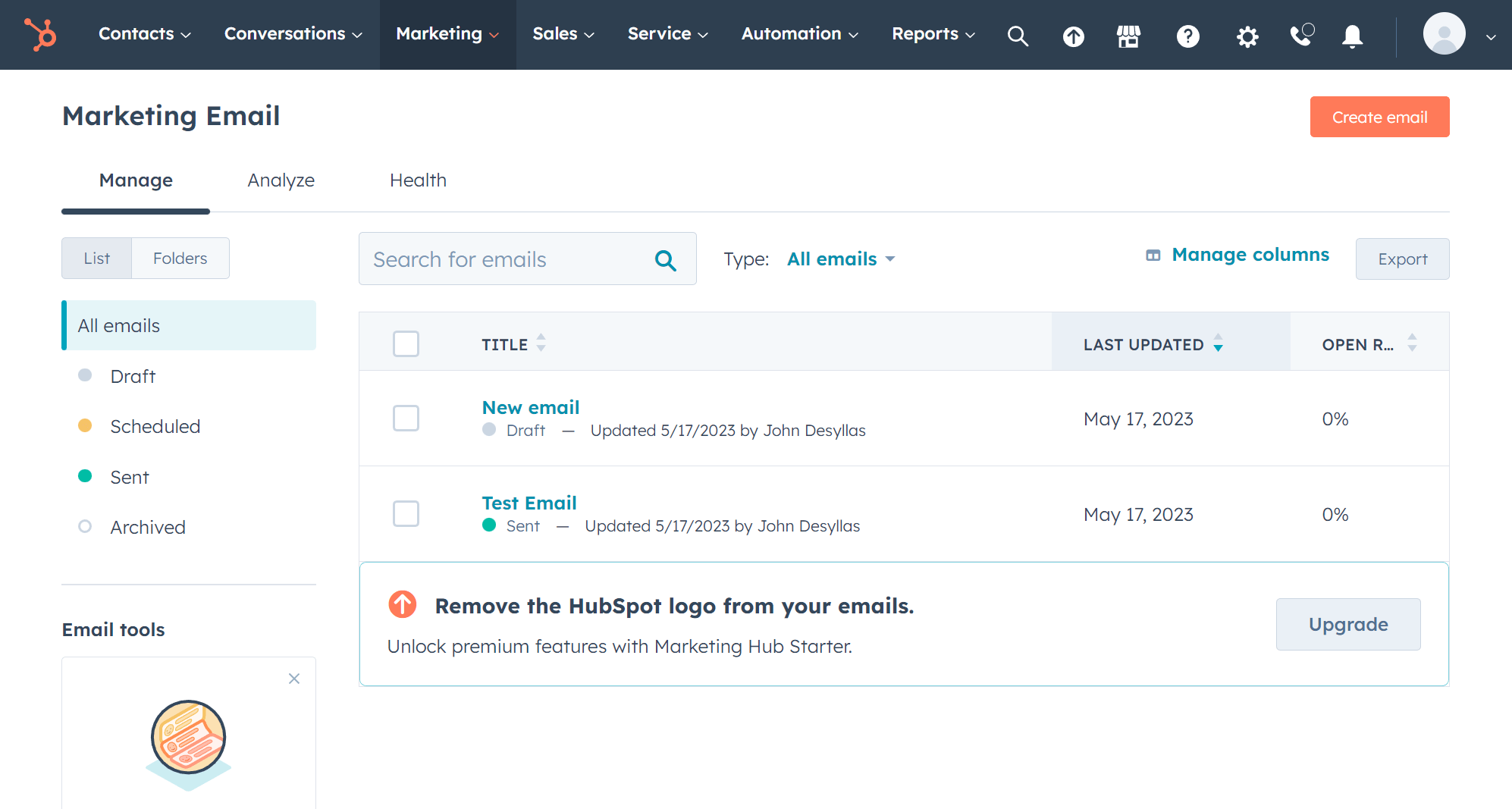
HubSpot is a well-known marketing automation platform that combines email marketing, automation, and CRM functionality in a single ecosystem.
If you want to align marketing and sales from day one, HubSpot’s built-in CRM is one of its strongest advantages. It allows teams to track contacts, manage pipelines, monitor deal stages, and view customer interactions in one centralized dashboard without a separate CRM tool.
This solution comes with a visual workflow builder that supports lead nurturing, internal notifications, scoring, and lifecycle-based campaigns. Startups can automate onboarding emails, content follow-ups, demo reminders, and sales handoffs.
The platform also includes landing pages, forms, live chat, reporting dashboards, and lead-tracking tools, making it a comprehensive solution for companies that want structured growth processes early on. Its analytics can help founders and marketers understand which campaigns drive conversions and revenue, not just opens and clicks.
All in all, for early-stage teams that prioritize CRM alignment and long-term expansion, HubSpot can serve as a growth platform, provided the budget supports it.
Pros
- Powerful built-in CRM with sales pipeline tracking
- Strong marketing–sales alignment and lifecycle automation
- Extensive reporting and contact tracking capabilities
Cons
- Price increases significantly with advanced automation features
- Automation functionality is limited on lower-tier plans
- Can feel complex for very small teams with simple needs
Pricing: Starts at $20/month. Free plan available with foundational tools.
3. ActiveCampaign
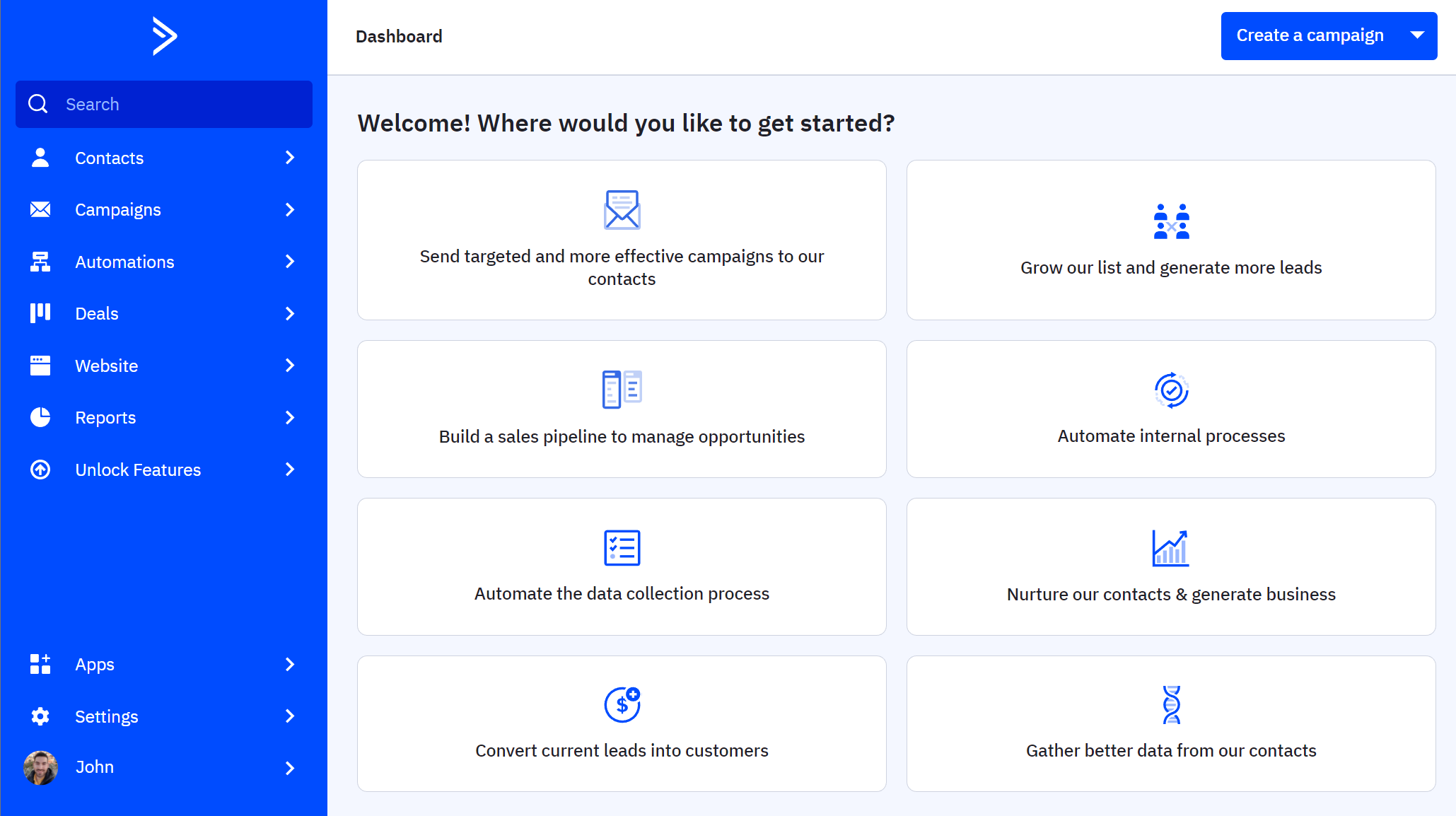
ActiveCampaign is a marketing automation platform built around advanced automation and customer experience workflows.
For startups that want more than basic email sequences, it offers a powerful visual automation builder with conditional logic, behavioral triggers, lead scoring, and dynamic content. The platform also includes a large library of pre-built automation journeys to help startups automate their strategy quickly.
Beyond email marketing, ActiveCampaign includes a built-in CRM (available on higher-tier plans), sales automation, SMS marketing, and site tracking.
Startups can automate onboarding flows, trial-to-paid conversion sequences, abandoned cart reminders, and post-purchase follow-ups. Its tagging and segmentation system allows for highly targeted campaigns based on user actions, engagement, or purchase behavior. For SaaS and eCommerce startups, especially, this level of behavioral automation can help increase conversions without increasing team workload.
While the platform is flexible, setting up advanced automations may require time and experimentation. Pricing also scales based on contacts and features, so startups need to assess whether they’ll fully use its more sophisticated capabilities.
Pros
- Highly advanced automation builder with conditional logic
- SMS marketing
Cons
- Steeper learning curve compared to simpler tools
- Some advanced features are locked behind higher-tier plans
Pricing: Starts at $19/month. There is also a 14-day free trial.
4. Zoho CRM
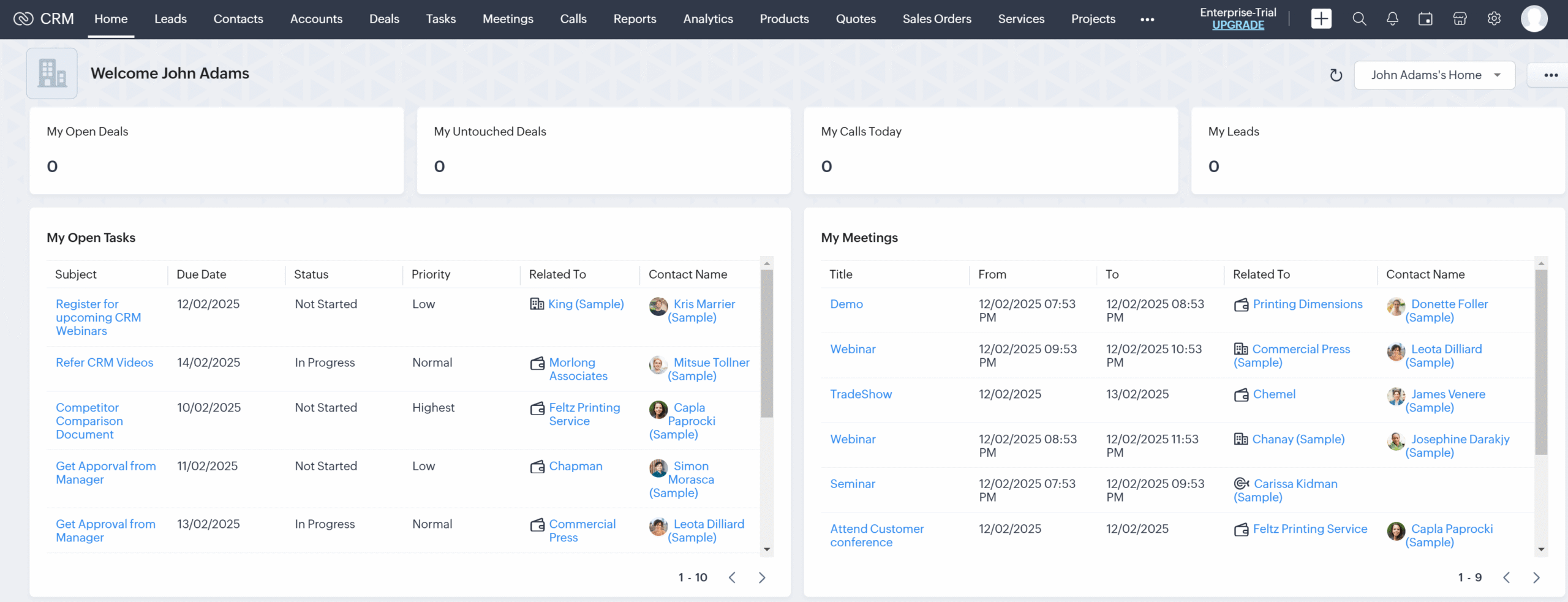
Zoho CRM is a sales-focused platform that includes marketing automation capabilities as part of the broader Zoho ecosystem. For startups that want to structure their sales process early and centralize customer data, it offers a practical alternative to using separate CRM and automation tools. Instead of focusing solely on email campaigns, Zoho CRM helps teams manage leads, track deals, automate follow-ups, and monitor pipeline performance in one system.
Startups can also capture new leads through web forms, automatically assign them to team members, score them based on predefined rules, and trigger email workflows directly within the CRM.
Workflow automation streamlines repetitive tasks such as status updates, notifications, and task creation. Built-in reporting dashboards and forecasting tools provide visibility into sales performance, helping founders make data-driven decisions without exporting data across platforms.
Zoho CRM becomes more powerful when used alongside other Zoho products like Zoho Campaigns, Zoho Desk, and Zoho Books. This integration can reduce software fragmentation for startups already operating within the Zoho environment.
Pros
- Strong lead management and pipeline tracking
- Affordable pricing compared to many CRM alternatives
- Integrates seamlessly within the broader Zoho ecosystem
Cons
- The interface can feel complicated for beginners
- Advanced automation and customization require higher-tier plans
Pricing: Starts at $20/month. There is a 15-day trial of the paid plans and a free edition with essential features.
5. Brevo
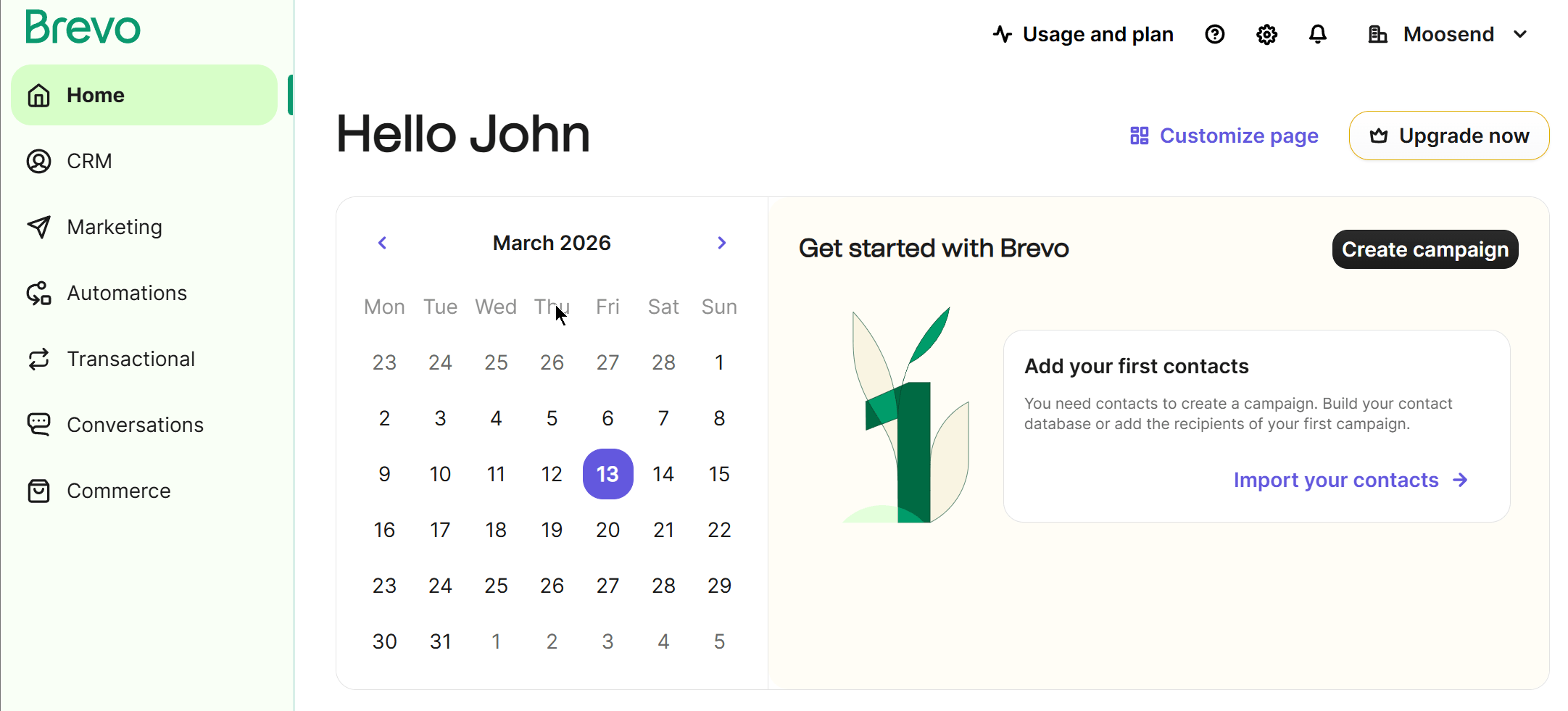
Brevo is another popular marketing automation platform that offers email marketing, SMS, WhatsApp, and web push notifications. It has a modern interface that makes navigation of the platform effortless.
You get a great workflow builder that lets you create behavior-based workflows triggered by email activity, website visits, or custom events. What’s more, Brevo can handle transactional emails through its infrastructure, making it useful for SaaS and eCommerce startups that need order confirmations, account notifications, and system emails alongside promotional campaigns.
The platform also provides lead-generation tools, such as landing pages and signup forms. It goes without saying that you get a bunch of beautiful templates to get started fast. Last but not least, Brevo’s CRM functionality will help startups centralize customer data and campaign execution.
Pros
- Supports email, SMS, and transactional messaging
- Email volume-based pricing
- Multi-channel automation capabilities
Cons
- Reporting depth can feel limited for data-heavy teams
- Advanced sales automation costs extra ($31/month)
Pricing: Starts at $9/month. A limited free plan is also available.
6. Zapier
Zapier isn’t a traditional marketing automation platform. Instead, it acts as a connector between apps, allowing startups to automate workflows across thousands of tools without writing code. For lean teams using multiple SaaS products (CRM, email platform, forms, payment tools, project management software), Zapier helps eliminate manual data transfers and repetitive admin tasks.
Startups can create “Zaps” that automatically trigger actions, such as adding new form submissions to an email list, notifying a Slack channel when a lead signs up, or updating a CRM when a purchase occurs. This makes it especially useful for companies that don’t want to commit to an all-in-one suite but still need operational efficiency.
Pros
- Connects 5,000+ apps without coding
- Reduces manual data entry and tool switching
- Flexible automation across multiple systems
Cons
- Not a full marketing automation platform
- Costs increase with task volume
- Complex workflows may require paid tiers
Pricing: Starts at $19.99/month. Free plan available with limited tasks.
7. Hootsuite
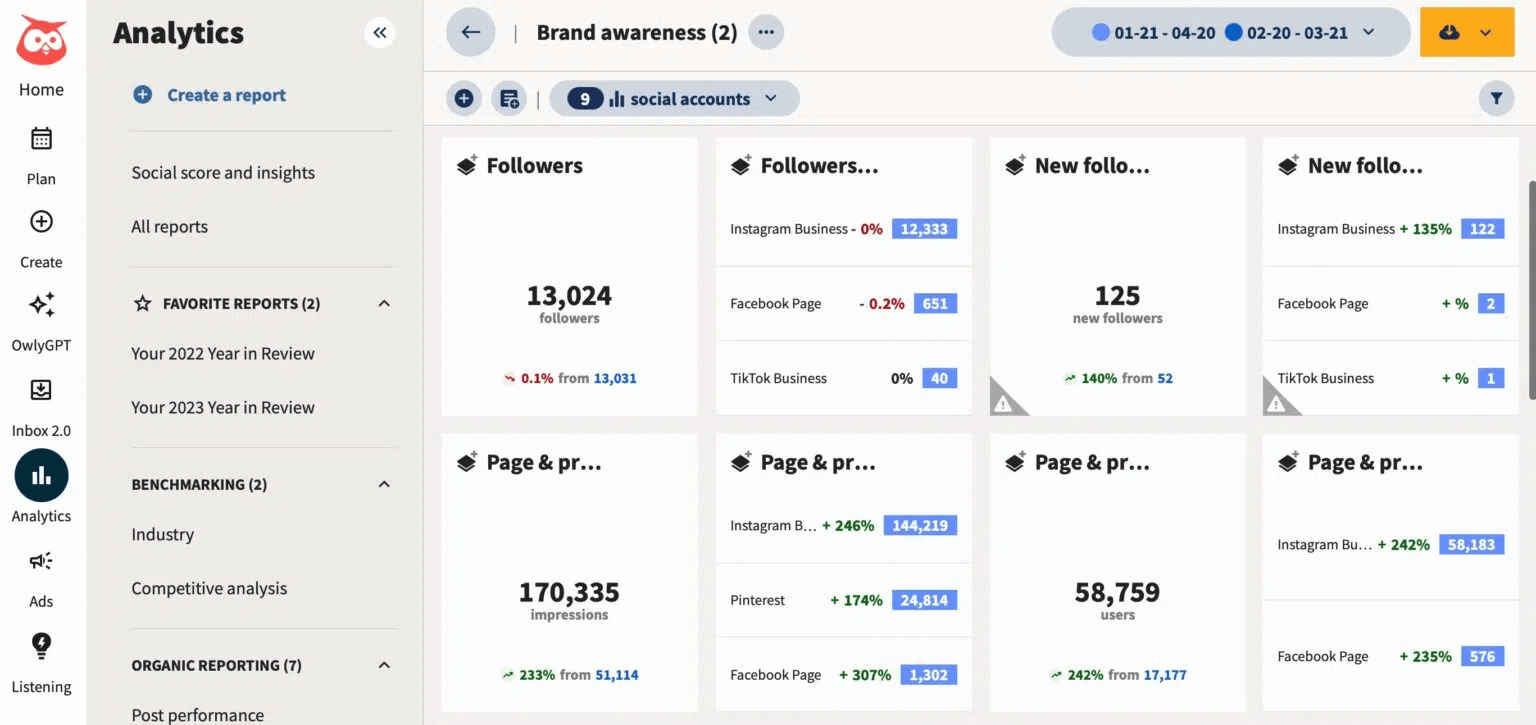
Hootsuite is a social media management platform that helps startups plan, schedule, and monitor content across multiple social networks. While it’s not a traditional email marketing automation tool, it supports marketing automation through social scheduling, content workflows, and performance tracking. For startups building brand awareness early, automating social media activity can free up valuable time.
The platform allows teams to schedule posts in advance, monitor mentions and conversations, and manage multiple social accounts without switching platforms. Built-in analytics help startups understand engagement trends, top-performing content, and audience behavior. Hootsuite also includes collaboration features, making it easier for small teams to assign tasks, approve content, and maintain a consistent publishing schedule.
For startups relying heavily on social channels for growth, Hootsuite can streamline execution and reduce manual posting. However, it focuses on social automation rather than full-funnel marketing automation, so it works best alongside email or CRM tools.
Pros
- Centralized management of multiple social media accounts
- Advanced scheduling and content calendar tools
- Social analytics and monitoring features
Cons
- Advanced analytics available on higher plans
- Cost may be too high for some startups
Pricing: Starts at $249/month (billed monthly). There is also a 30-day free trial.
8. Mailchimp
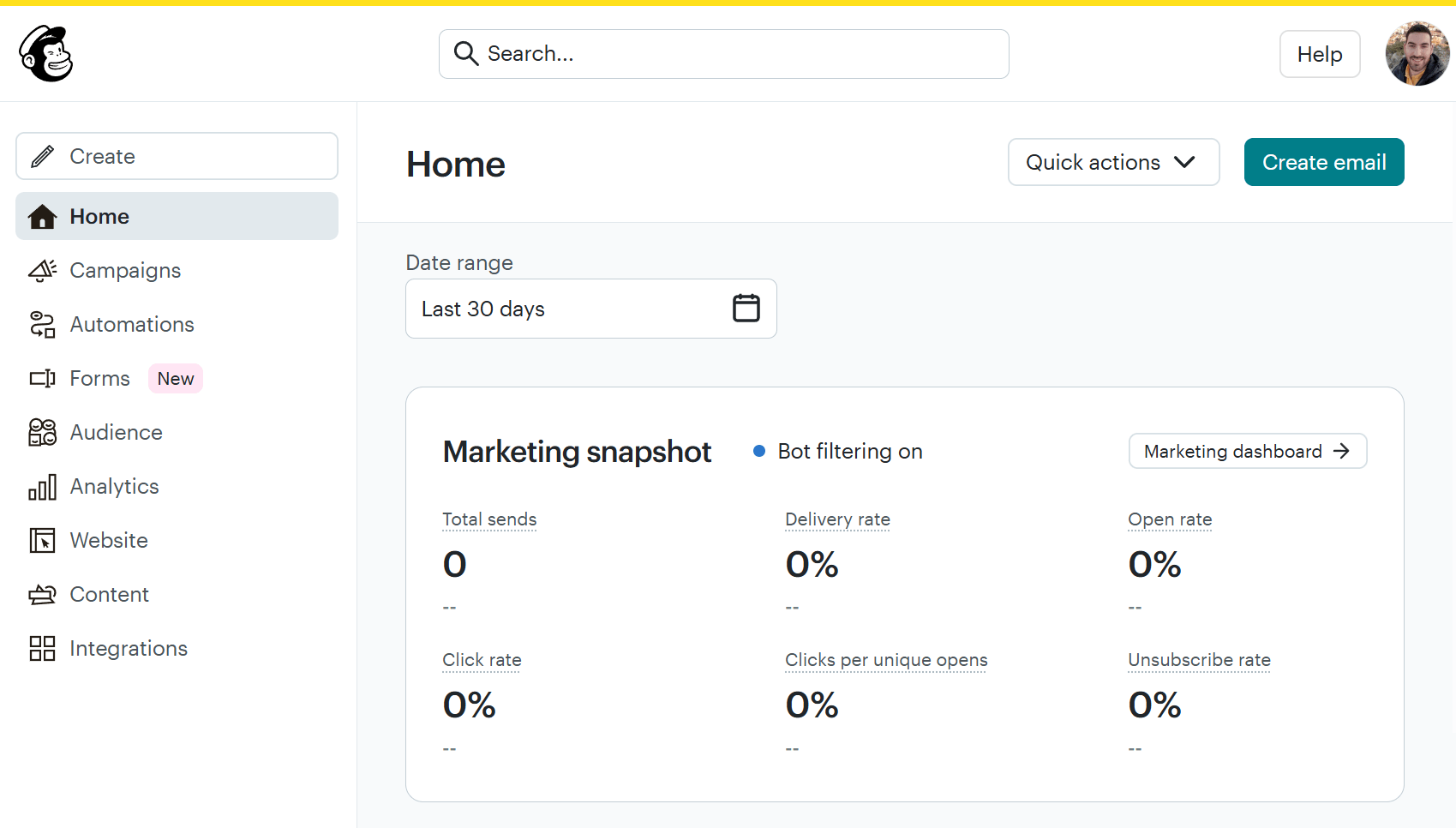
Mailchimp is another marketing automation tool for startups worth checking out. This popular email marketing platform can help you set up a complete automated marketing strategy with its pre-made customer journeys and intuitive workflow builder.
Despite its ample functionality, the platform is easy to explore and understand its key features. You also get extensive documentation and guided onboarding. Among others, Mailchimp includes A/B testing, signup forms, and rich analytics to understand whether your campaigns perform as expected. Additionally, the platform comes with social posting and ad integrations, making it more than just an email tool.
However, while Mailchimp is easy to start with, costs can increase as contact lists grow. Specifically, the platform charges you for duplicate contacts, and more advanced automation features may require higher-tier plans. Nevertheless, for startups that need intuitive automation and brand recognition, this tool can be a practical starting point.
Pros
- Beginner-friendly interface and large template library
- Guided onboarding
- It can also handle transactional emails (at an extra cost)
Cons
- Advanced automation and segmentation are unlocked on higher tiers
- The free plan is very limited
Pricing: Starts at $13/month. There is also a limited free plan.
Finding the Right Marketing Automation Tool for Your Startup
Choosing the right marketing automation tool depends on your startup’s stage, budget, and growth goals. Some teams need simple email workflows to save time, while others require CRM integration, multi-channel communication, or advanced segmentation from day one.
The key is to select a solution that meets your current needs without adding unnecessary complexity. Start lean, prioritize ease of use, and choose a platform that can scale as your startup grows.
FAQs
Here are some frequently asked questions and their answers.
1. What is the best marketing automation tool for early-stage startups?
The best marketing automation tool for early-stage startups depends on your immediate priorities. If your goal is simple email automation and affordability, lightweight platforms like Moosend and Brevo are ideal. If you need sales tracking and pipeline visibility, a CRM-based solution may be more suitable, such as HubSpot and ActiveCampaign. Startups should generally prioritize ease of setup, transparent pricing, and scalability over complex features they may never use.
2. How much should a startup spend on marketing automation software?
Most startups can expect to spend anywhere from $0 to $50 per month at the early stage, depending on list size and required features. Many tools offer free plans or trials that let startups test functionality before committing. As your contact list grows and automation needs become more advanced, pricing typically scales based on the number of subscribers, users, or tasks.
3. Can marketing automation replace a marketing team in a startup?
Marketing automation cannot replace strategy, creativity, or decision-making, but it can significantly reduce manual workload. Automation handles repetitive tasks such as welcome emails, follow-ups, segmentation, and reporting. This allows small teams to focus on growth initiatives, partnerships, and campaign optimization instead of routine execution.
Similar Posts
 Published by

 Published by

Create, send and optimize your email marketing campaigns