














AI Burnout in Marketing: The High Cost of Chasing Productivity [2026]
Published By Marilia Dimitriou
November 17, 2025

17/11/25
Remember the first time you tried ChatGPT for work? You asked for something simple, but instead of saving time, you spent hours rewriting, prompting, and editing until you got what you needed.
That’s how AI burnout starts.
Despite promising to make work easier, marketers are burning out under the pressure to test endless tools, learn new platforms overnight, and deliver more with smaller budgets. Add privacy risks and the temptation to hand creativity over to machines, and it’s no wonder exhaustion is spreading across marketing teams.
So, if AI promised ease, why does it feel like marketing is only getting harder?
AI in the Workplace Statistics
AI adoption has exploded in just a few years, with 1.8 billion people experimenting, subscribing, and using these tools in their daily routines.
Now, when it comes to AI in the workplace, McKinsey’s report highlights that:
- 90% of Fortune 500 companies use OpenAI technology.
- 94% of employees and 99% of C-suite leaders are familiar with generative AI.
- Leaders estimate only 4% of employees use AI for more than 30% of their daily work, but employees self-report 13% already do.
- 48% of employees say that formal training would boost their daily use, yet 22% report receiving little to no support today.
- 68% of managers recommended a Gen-AI tool to their teams in the past month.
With adoption moving this fast, training, support, and governance can’t keep up. The result isn’t innovation but exhaustion, and that’s where burnout begins.
AI Burnout Scenarios
Let’s examine a few scenarios that’ll help us see AI burnout in action.
Prompt loops
Marina, an affiliate manager, needs to draft a short email announcing a new commission rewards initiative to her partners. It should be a quick ten-minute task before her afternoon check-in with the sales director.
She opens her AI tool and asks for something clear and motivating. The first draft comes back bland, so she re-prompts for a warmer tone. The next one sounds stiff, so she tries again for something more personal, but it turns out robotic and full of clichés.
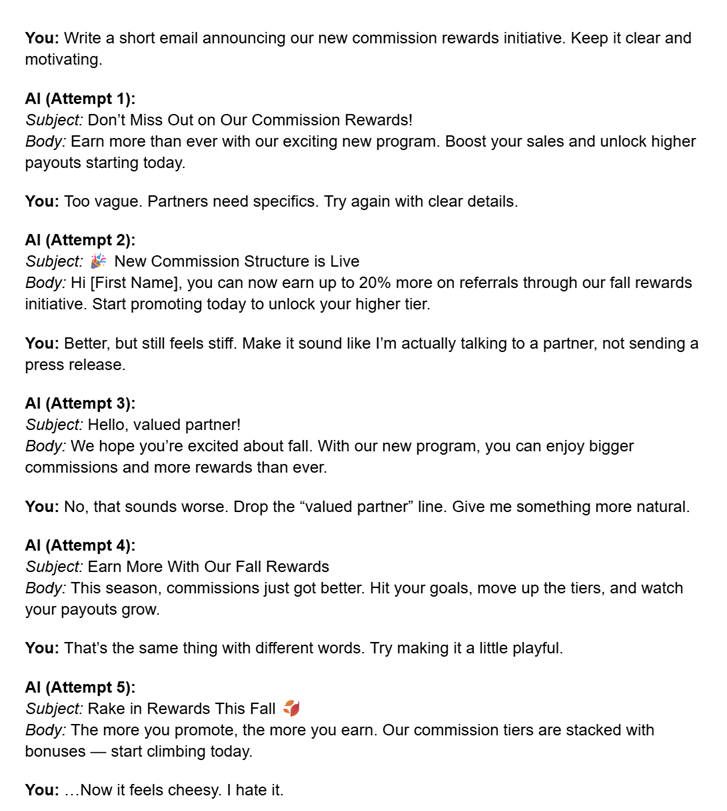
After five or six rounds, Marina is still editing heavily while Slack notifications pile up in the corner of her screen. Instead of saving time, the process has eaten half her day, left her annoyed, and pushed her other tasks behind schedule.
By the time she finally decides on a version, she realizes it would have been faster to write the email herself.
New AI user
On the other hand, Daniel, a retail marketing coordinator, has never really used AI at work. On Monday morning, his manager asks him to “experiment with AI” for the upcoming holiday campaign.
By lunchtime, Daniel has signed up for three different platforms: one for ad creatives, one for product descriptions, and another for customer segmentation. Each tool comes with its own logins, tutorials, and confusing pricing tiers. None of them connect smoothly with the company’s existing systems.
Instead of focusing on the campaign itself, Daniel spends most of the day bouncing between trial dashboards, watching how-to videos, and trying to stitch everything together. By late afternoon, the deadline is getting closer, but he hasn’t produced a single finished asset.
What was meant to improve efficiency has only created stress, leaving Daniel rushed, frustrated, and already behind schedule.
What AI Burnout Means & What Causes It
Marina’s endless prompt loops and Daniel’s struggle aren’t just bad days at work but signs of AI burnout.
For marketers, this happens when the promise of efficiency collides with the reality of constant pressure to keep up. Instead of simplifying work, AI often creates new layers of stress.
But how is this burnout caused? Is it real, and how does it affect your workload?
Constant tool testing and evaluations
There are dozens of AI tools promising to help users write copy, design creatives, analyze data, or even automate entire campaigns. Jasper, Midjourney, Canva’s Magic Studio, ChatGPT, Gemini, and Copilot are just some of them.
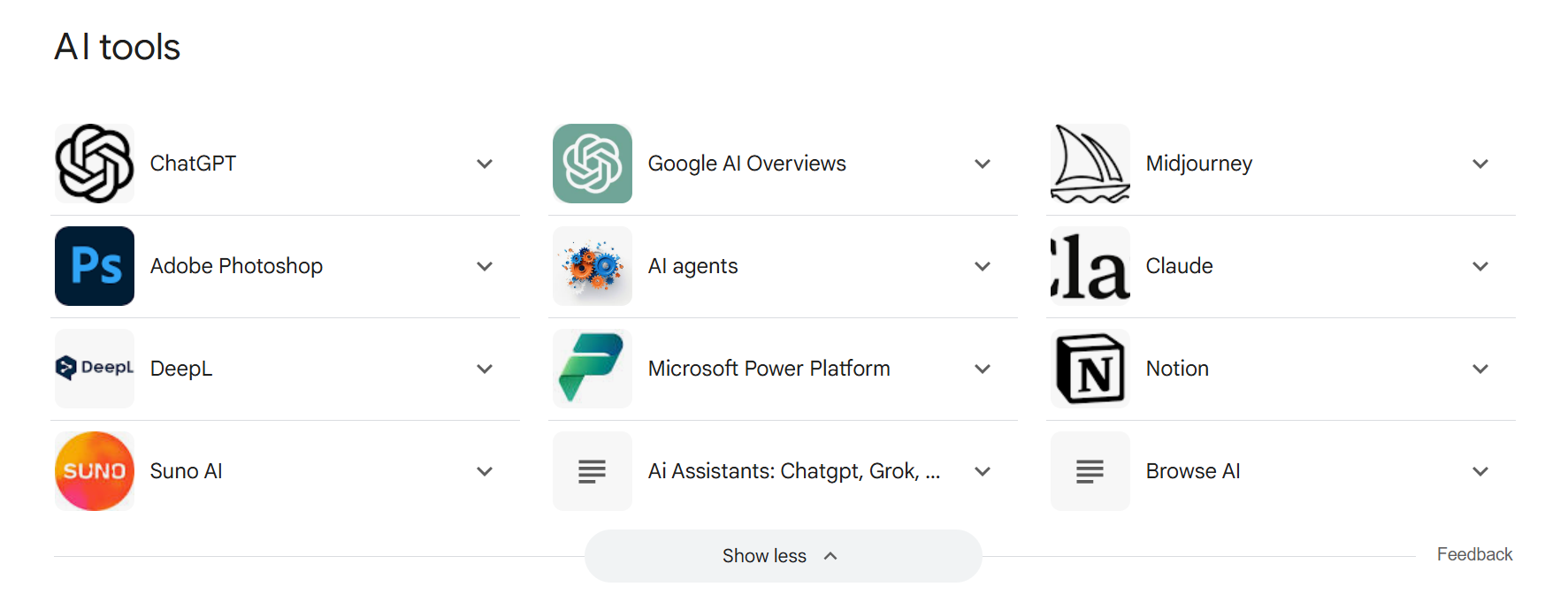
Every week, a new “must-try” tool launches, and marketers feel compelled to test it in case they’re missing out on something their peers have already started “leveraging.” What should be a time-saver quickly becomes another full-time job: evaluating, comparing, and reporting on software that may or may not stick.
The problem is that this cycle rarely comes to an end. Tools overlap in features, constantly update, or shut down entirely, meaning teams are trapped in a loop of trial and error. Instead of focusing on campaigns, marketers spend hours onboarding into new platforms, learning prompt structures, and explaining to leadership why last quarter’s “game-changing AI” is already outdated.
Consequently, this constant churn fuels exhaustion and decision fatigue.
Pressure to master AI overnight
If you don’t learn fast, you risk feeling left behind. Many marketers observe their peers using three or four different AI apps in their daily workflows, while they’re still trying to master prompt engineering for ChatGPT.
This, in turn, creates a sort of “peer pressure” tied to culture. Conference talks, LinkedIn posts, and internal meetings often give the impression that “everyone else has it figured out.”
That gap between perception and reality fuels impostor syndrome, leaving professionals anxious that they’re not moving fast enough. Without proper training or guidance, the push to become an “AI expert” overnight can quickly turn into frustration and self-doubt, two of the biggest accelerators of burnout.
Expectations to deliver more with fewer resources
Leadership assumes that since AI tools exist, campaigns can be executed faster and with smaller teams. The catch, though, is that most AI platforms only perform well behind paywalls, such as ChatGPT-5, Jasper’s advanced features, or premium Midjourney plans.
For marketers, this means that workloads continue to grow while support resources shrink. The pressure increases when those same “time-saving” AI tools require paid upgrades, constant fine-tuning, and heavy editing to deliver usable results.
Instead of lightening the load, AI becomes another demand on already exhausted teams, driving longer hours, higher stress, and ultimately, burnout.
The Ripple Effects of AI Burnout on Marketing Teams
Endless edits and tool overload are just the tip of the iceberg. AI is transforming the way marketing teams operate at every level. It affects creativity, raises new data and privacy risks, disrupts established processes, and alters how teams perceive their roles and responsibilities.
Understanding these effects is key to seeing why burnout is spreading and how to prevent it.
1. Creativity
AI can brainstorm hundreds of campaign ideas in seconds, draft blog posts, or design social graphics. But when brands lean too heavily on it, content starts to look and feel the same. Instead of bold creative risks, teams default to “what the AI suggested.”
Here’s a simple example. We asked two different AI tools (ChatGPT and Gemini) to write an email with a 40% discount for best-selling beauty products. The results feel similar, with subject lines, phrasing, and structure that overlap.
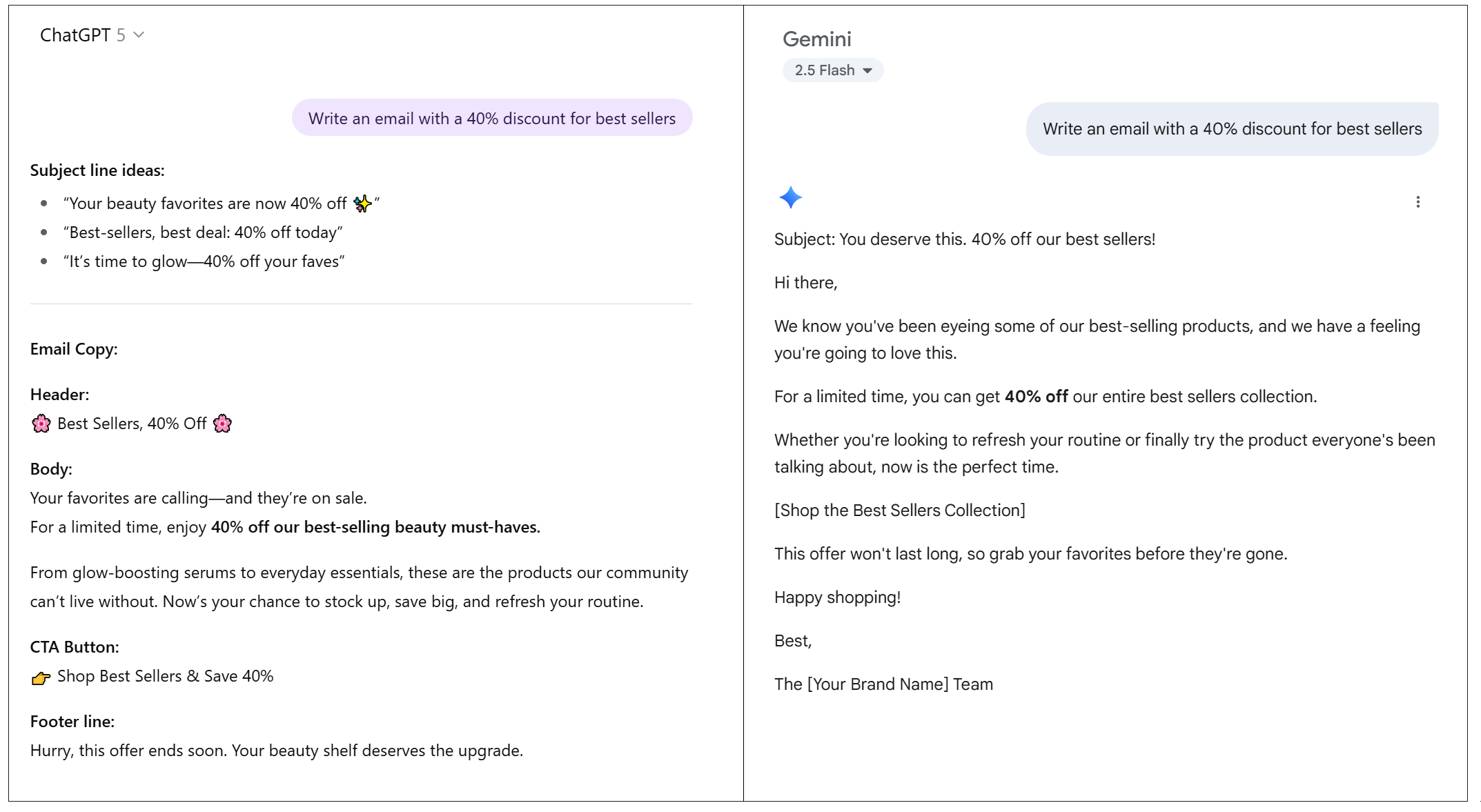
This shows that, over time, originality suffers and brands risk losing the unique voice that once set them apart. Inevitably, marketers shift from being storytellers to being operators of prompts.
2. Data and privacy concerns
Most AI platforms learn from user input. That means when a marketer uploads customer data, campaign performance reports, or even drafts of confidential strategies, they may be unknowingly feeding sensitive information into external systems.
This creates compliance risks with GDPR, CCPA, and other regulations, but it also fuels growing skepticism. Customers are increasingly wary that their data might be used to “train” a model, and if that suspicion takes hold, a brand can quickly lose customer trust.
The concern, though, isn’t only external. Inside organizations, employees themselves highlight the same risks. In a recent survey, 51% cite cybersecurity, 50% cite inaccuracies, 43% worry about personal privacy, and 40% point to IP infringement as their top concerns with generative AI.
In a nutshell, data and privacy concerns significantly influence how customers perceive a brand and how secure employees feel when using AI. When trust breaks down on both sides, marketing takes a direct hit.
3. Disruption of traditional processes and channels
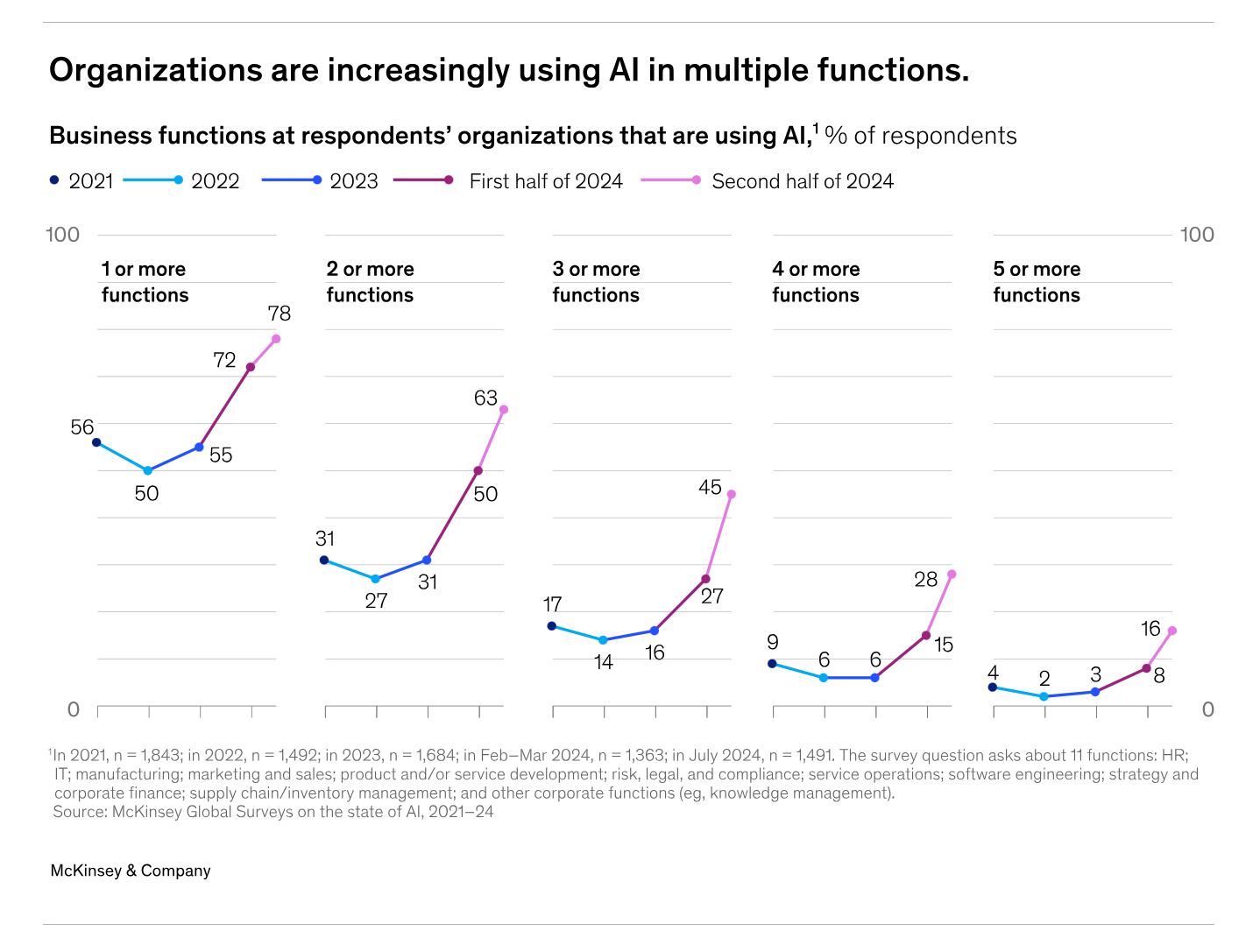
Traditional marketing processes are being rewritten at lightning speed. A McKinsey study found that 78% of companies already use AI in at least one business function, reshaping how teams plan and execute campaigns.
What used to follow predictable workflows now demands constant adaptation.
Campaigns built around long lead times must compete with real-time AI-generated assets. SEO teams need to optimize not just for people but also for AI-powered search engines that rank content differently. Even email marketing and paid media are shifting as AI-driven personalization changes how messages are delivered and measured.
The result is that instead of streamlining processes, AI often adds new layers of work, which demand more skills, awareness, and energy from already busy teams.
4. Team morale and shift of roles
Speaking of teams, when AI takes over ideation, copywriting, and even reporting, human contributions can feel undervalued.
Junior marketers, who once built skills through hands-on work, now risk losing those opportunities. A social media coordinator, for instance, may be told to “use AI for captions.” Instead of experimenting and developing their own voice, they spend most of their time copying and pasting prompts and lightly editing the output. This may be fast in the short term, but limiting for growth.
At the same time, senior marketers face role confusion. Along with leading campaigns, they’re suddenly tasked with reviewing AI outputs and supervising tools they were never trained to manage.
The result is a team dynamic where juniors feel replaceable and seniors feel overburdened, fueling anxiety and lowering morale across the board. Over time, core skills like persuasive writing, critical data analysis, and original campaign strategy begin to fade, leaving the team less capable and more reliant on AI.
5. Customer perception
Despite AI adoption being on the rise, audiences are becoming more skeptical of AI-generated campaigns.
Research indicates that 57% of people trust human-generated content more than AI-generated content, and 63% can already distinguish between the two. Even among younger audiences, where 32% of 25–34-year-olds are more open to AI, the majority (52%) still say they prefer human writing.
This trust gap also affects behavior, with 34% of consumers saying they’d be less likely to buy from a brand if they knew its marketing was AI-generated. When brands lean too heavily on AI, they risk losing the nuance and authenticity that build loyalty. This becomes a serious problem in industries where credibility is essential for conducting business, such as finance, healthcare, or education.
How to Mitigate AI Burnout
Burnout isn’t inevitable, but with the right best practices, you and your team can use AI without being consumed by it.
- Set realistic expectations: Define exactly where AI fits into your workflows. Create a simple policy that states what AI can support (drafting, research, repetitive tasks) and what remains human-driven (strategy, final approvals, creative direction). A few clear SOPs will save your team from confusion and ensure consistent adoption.
- Provide training: Many employees say they would use AI more if they had proper guidance, yet support is often missing. Close the gap with onboarding workshops, a shared prompt library of proven examples, and monthly Q&A sessions to tackle real use cases.
- Choose tools carefully: Ask yourself whether they’ll save time, improve quality, or integrate well with what your team is already using. If not, skip them. Start with a small pilot group, track time saved and output quality, and gather feedback on usability. Only roll out a platform to the whole team if the pilot shows clear benefits and minimal friction.
- Promote creativity: Use AI for first drafts, background research, or data-heavy tasks, but let people shape the brand voice, storytelling, and final creative direction. To prevent skill atrophy, rotate creative assignments across the team. For example, have juniors draft campaign concepts while seniors refine strategy, so everyone gets involved in the process.
- Support your team after adoption: Once a new tool is in place, check how it’s impacting daily work. Run quick feedback surveys or short team huddles to identify issues like tool fatigue or workflow slowdowns. Share what you learn and adjust processes so adoption feels supportive, not forced.
- Protect data and privacy: Write clear guidelines for what information can be entered into AI systems. Limit the use of customer data, stick to compliant platforms, and regularly audit usage.
Using AI Strategically
AI is not the enemy of marketers, but it’s not the silver bullet either. The real value lies in stopping to treat it as a shortcut and instead using it as a support system. Marketers who take a strategic approach will be the ones who stay ahead.
And remember, the future of marketing won’t belong to the brands with the most AI, but to those that know how to use it without losing themselves.
FAQs
Below, let’s see some common questions about AI burnout in marketing.
1. What is AI burnout in marketing?
AI burnout occurs when the pressure to constantly test tools, master new platforms, and meet rising expectations exceeds the benefits AI is intended to bring. Instead of saving time, AI ends up adding stress and complexity to a marketer’s workload.
2. Are managers and senior leaders more vulnerable to AI burnout than employees?
Employees may feel the strain of extra work and new tools, but leaders carry another layer of stress. They are under pressure to demonstrate quick wins from AI, keep pace with rapid changes, and address the larger ethical questions that come with it. With the added expectation to be “always on,” decision fatigue and stress can hit them hard, sometimes even harder than their teams.
3. How can I tell if my team is experiencing AI burnout?
Look for signs such as increased stress, tool fatigue, declining morale, over-reliance on AI outputs, or content that starts to lose its originality. If team members feel more like operators than creatives, burnout may already be setting in.
4. Does using AI really save money in marketing?
While AI can automate certain tasks, most tools only perform well with paid plans. Without a clear ROI, subscriptions can pile up and eat into budgets. In some cases, editing and supervising AI output can be more time-consuming and costly than expected.
5. What are the risks of relying too much on AI-generated content?
Over-reliance can lead to generic messaging, a loss of brand authenticity, compliance issues with sensitive data, and a decline in core marketing skills. Most importantly, it can weaken trust and loyalty among customers who crave human connection.
Similar Posts
 Published by

Create, send and optimize your email marketing campaigns