















How to Add Humor in Your B2B Email Marketing Campaigns [2026]
Published By Sean Begg Flint
February 9, 2026

09/02/26
If the Joker read most B2B email campaigns today, he’d probably raise an eyebrow and say, “Why so serious?”
Too many brands play it safe. They treat humor like a liability, something risky, unpredictable, and better left out of serious business conversations. In B2B email marketing, this often results in messages that are polite, polished, and forgettable.
Yes, humor in B2B email marketing can go wrong. You might miss the mark, sound awkward, or offend the wrong audience. But when it’s done right, humor becomes a powerful way to grab attention, sound human, and build real connections instead of blending into the inbox noise.
Template first, dad jokes later
We add the newsletter template. You add the personality that gets clicks.
Try MoosendWhy Humor Works in Email Marketing
Humor works in email marketing for the same reason it works in real life. It breaks the ice, builds a connection, and makes people more open to what you have to say.
In B2B email communications, humor:
- Cuts through the noise: B2B audiences are used to professional and polished emails from brands. When you do something different, it immediately stands out. Especially among AI-generated emails.
- Makes your brand more memorable: People remember how you made them feel, not just what you said. Humor creates a positive emotion, and people will associate that feeling with your brand the next time your name appears in their inbox.
- Allows people to let their guard down: Humor serves as a natural icebreaker in professional settings, including meetings, conferences, and networking events. The same psychology applies to email marketing and cold outreach.
In fact, according to Oracle, 72% of people would choose a brand that made them laugh over a competitor.
While that study is focused more on B2C consumers, let’s not forget that B2B decision makers are still people with emotions.
They still appreciate a good laugh. And if your email can make their day a little lighter, you’ve already won half the battle.
When Using Humor in Marketing Can Go Wrong
Humor is powerful, but it’s not risk-free. There are a few situations where trying to be funny can do more harm than good.
The most obvious one is saying anything that’s inappropriate, political, culturally sensitive, or offensive. Even if your intent is harmless, it’s easy for these topics to be misunderstood and damage trust.
Also, beware of generation gaps. Dropping 90s references might get nostalgic laughs from Millennials, but Gen Z will just wonder what decade you’re stuck in.
Similarly, heavy use of Gen Z slang in a B2B email to Boomer C-suite executives will feel like a desperate attempt to be relevant.
Last but not least, using humor in serious matters can backfire. Service outages, security issues, billing problems, and customer complaints aren’t opportunities for jokes. Read the situation and respond with clarity and empathy when it matters most.
How to Write Funny Emails for a B2B Audience
Now, let’s see how you can inject humor into your B2B email marketing campaigns without forcing it.
1. Know your audience
Before you start dropping jokes into your email, make sure your audience has the appetite for humor.
There are two ways to determine that. The first one is to look at existing data about your target customers:
- Analyze your customer demographics: Age, industry, and cultural background all influence humor preferences. A Gen Z SaaS startup founder in Austin will respond differently from a Boomer CFO at a Fortune 500 in Frankfurt.
- Use audience research tools: Intelligence tools such as SparkToro and Audiense help you monitor what content your audience consumes online. For instance, if they follow meme accounts or repost funny LinkedIn posts about workplace culture.
- Review past email performance: If you’ve tested playful subject lines or memes before, compare their open rates, click-throughs, and replies against your standard emails.
The second method takes more effort, but can provide you with more accurate insights into your audience’s preferences:
- Ask your subscribers: Send a survey or quick poll to ask your audience which tone they prefer in your emails: professional, funny, or a bit of both.
- Do A/B testing: Split your list and send two versions of the same email. One will have a funny subject line or body copy; one will not. Track which performs better across opens, clicks, and conversions.
Once you know for sure that your subscribers aren’t allergic to jokes, then it’s time to actually think about what kind of humor will land.
2. Use insider jokes
The best humor is natural and relatable, not forced. It blends seamlessly into the story you’re telling or the problem you’re solving.
One way to do that is by using insider jokes, references that only people in your industry would immediately understand.
This is a perfect example from Ahrefs, an all-in-one SEO and marketing platform. Every newsletter they send always opens with a meme that digital marketers can relate to.
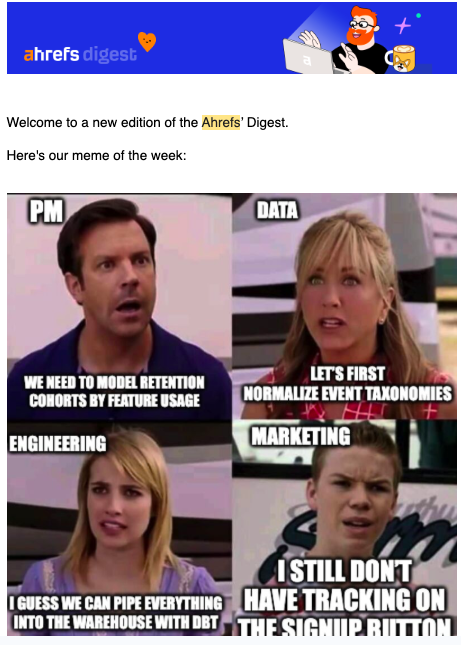
Insider jokes work because there’s no explanation needed. You don’t need to write a full paragraph just to set up your punchline or explain what the joke is about.
One simple meme is enough to put a smile on your audience’s face, as long as it’s super relevant.
3. Leverage a specific time of the year
In comedy, timing is everything. Instead of forcing jokes into every email, use moments your audience already cares about, including holidays, shopping seasons, or industry events, as a natural hook.
Here’s a good summer email campaign from Recess, a beverage company that sells calming drinks infused with hemp and adaptogens.
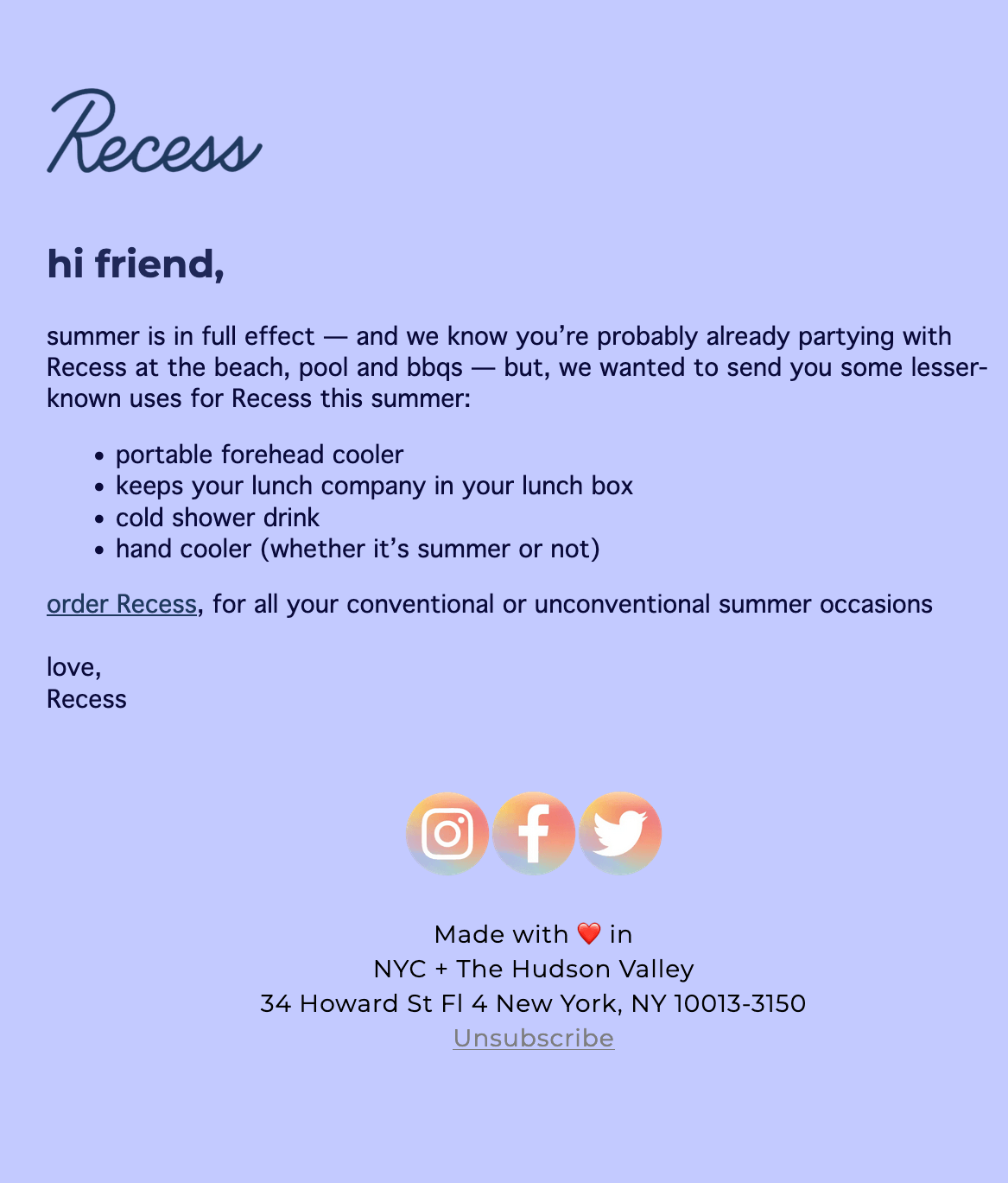
Most cold-drink brands use summer emails to highlight refreshment, flavor, or hydration. Recess took the opposite approach. Instead of listing product benefits, they highlighted unexpected, slightly absurd ways you could use a can of Recess on a hot day.
Nobody opens an email from a beverage company expecting to read about using a can of drink as a forehead cooler. But that’s exactly what makes it stick.
Here’s another example from Beehiv, a Black Friday email campaign that landed in my inbox several days ago.
I rarely open emails from brands. But the subject line, which reads “emergency meeting,” piqued my interest.
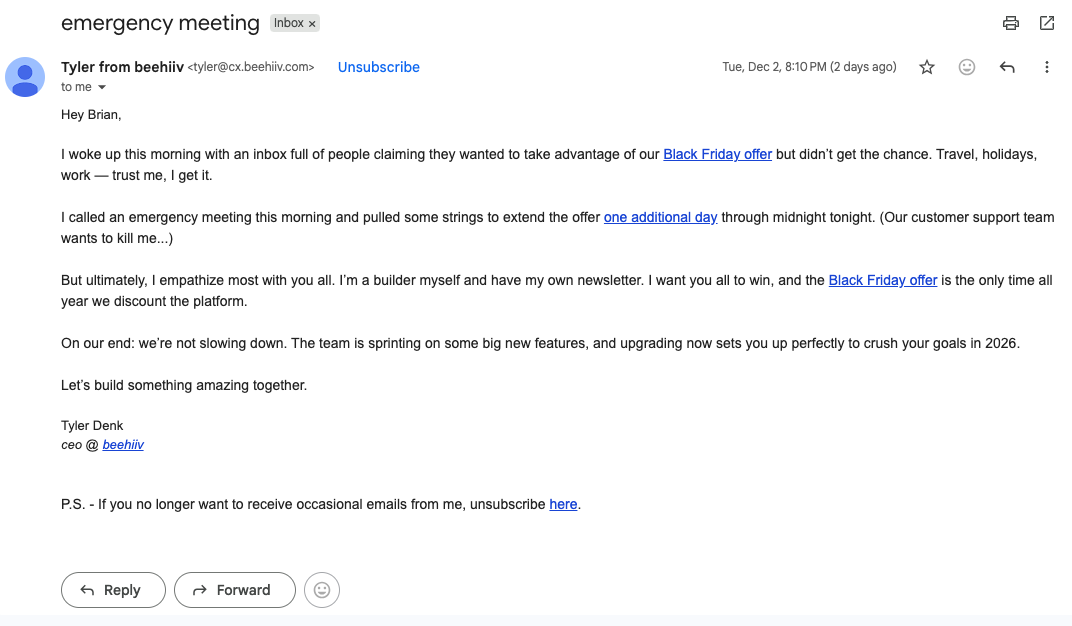
There’s no fancy design, corporate jargon, or gigantic discount numbers on display here. It feels like a genuine email from a real person with a good sense of humor, and that’s exactly why it works.
If you need design inspiration, check out these holiday email examples and templates you can customize to your liking.
4. Catch people off guard
The human brain is wired to recognize patterns. If you say something out of the ordinary, in the most unexpected places, people will notice.
This footer copy from Dave Harland, a copywriting agency founder, has been living rent-free in my head since the first time I read it.
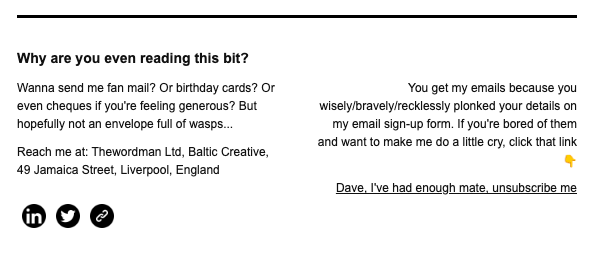
Many brands spend all their energy on subject lines and body copy, then slap in a generic footer. Dave turns the most overlooked part of the email into the most memorable one.
5. Borrow popular references
Popular quotes, movies, or songs are instantly recognizable, and they can grab attention quickly.
Musicbed, a music licensing platform for filmmakers, sent this summer’s email campaign using the “Barbenheimer” phenomenon, the cultural moment when Barbie and Oppenheimer were released on the same day and became an internet sensation.
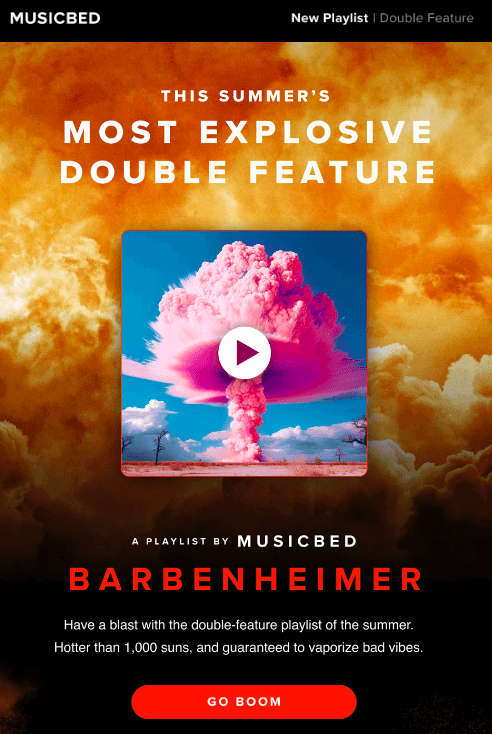
Combined with a playful tone and creative email copy, this email surely stood out in inboxes during a summer flooded with generic promotional messages.
6. Run A/B testing
You can be as creative as you want and try different sorts of jokes. But at the end of the day, your audience is the judge.
What you think is hilarious might fall flat, or what seems too risky might be exactly what resonates. The only way to know for sure is to test.
Send different versions of the same email to different segments of your subscribers and measure what actually drives results. You can easily do this with a tool like Moosend’s A/B testing functionality.
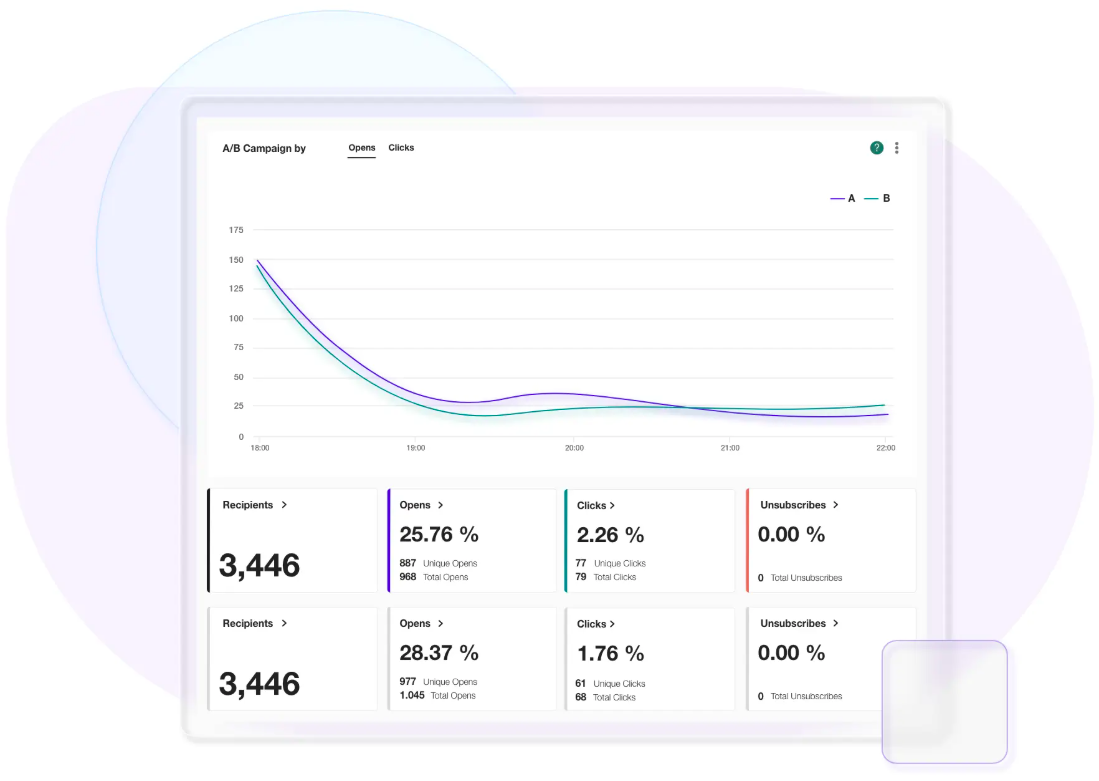
What to test:
- Humor vs. no humor: Does a playful subject line outperform a straightforward one? Does it get more opens but fewer clicks? Test to find out.
- Different humor styles: Pit a meme-based email against self-deprecating humor, or compare a pop culture reference to an industry inside joke. Which style lands best with your specific audience?
- Placement and intensity: Try humor in the subject line only, in the opening line, or sprinkled throughout. Test subtle wit against more obvious jokes to see what your audience prefers.
After running your test, make sure to measure the following metrics:
- Open rates: Do your funny subject lines grab attention?
- Click-through rates: Do people engage with the content, or just chuckle and move on?
- Unsubscribe rates: If you see a spike, you’ve probably crossed the line.
- Reply rates: Positive replies and engagement are strong signals you’re on the right track.
- Conversion rates: This is what matters most. Does humor actually drive the action you want?
Real-Life Examples of Humor in B2B Email Marketing
Here are some examples of funny emails that you can steal for your next campaign.
Windscribe
Windscribe is a VPN provider, so you’d expect them to be all techy and serious. They’re not.
This is a re-engagement email they sent to former users to win them back. And it’s anything but boring.
Subject line: We know you miss our sweet touch
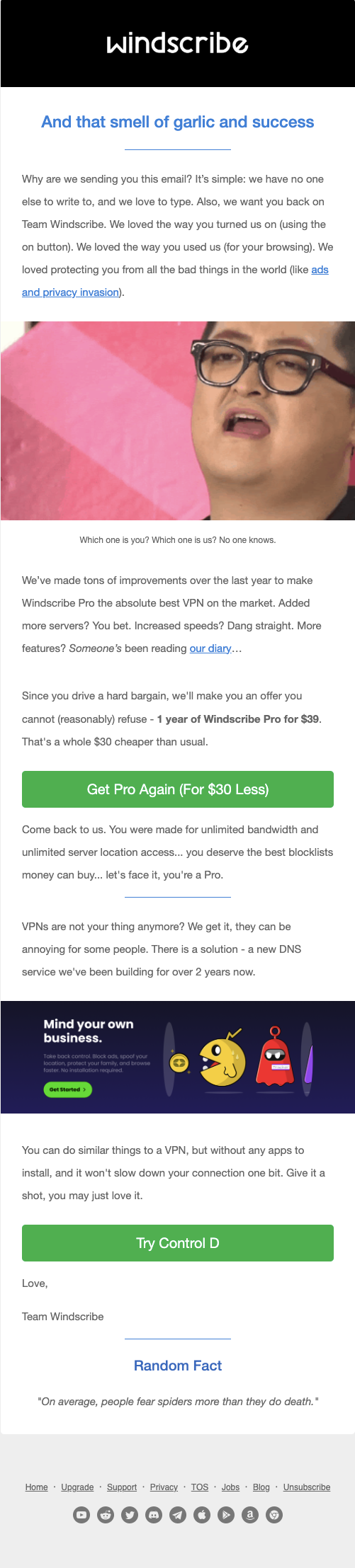
Why it works:
Windscribe leans into a playful, flirtatious tone like an ex trying to win you back. But beneath the humor, the message still ties back to their core value: a VPN that protects you (and maybe even understands you a little too well).
It’s a great example of humor supporting the message rather than distracting from it.
Clearbit
Clearbit is a B2B prospecting platform for marketing and sales teams.
While most B2B SaaS emails sound professional (and a bit boring), Clearbit decides to incorporate an unconventional and quirky tone in its newsletter.
Subject line: I’m not Brad. (Monthly Newsletter)

Why it works:
Partnership announcements and product promotions are usually the routine items people skip, but Clearbit makes them interesting. They cleverly hook readers in with storytelling and humor before revealing what they actually want to promote.
For instance, instead of leading with “We’re excited to announce our partnership with Gong,” they reference Stranger Things season 4, then smoothly transition into the announcement. By the time users realize it’s a pitch, they’re already engaged.
Want your product to stand out like Clearbit? Check out these B2B SaaS copywriting tips from experts.
Semrush
Despite being a huge name in the marketing software field, Semrush never shies away from using humor in its communications.
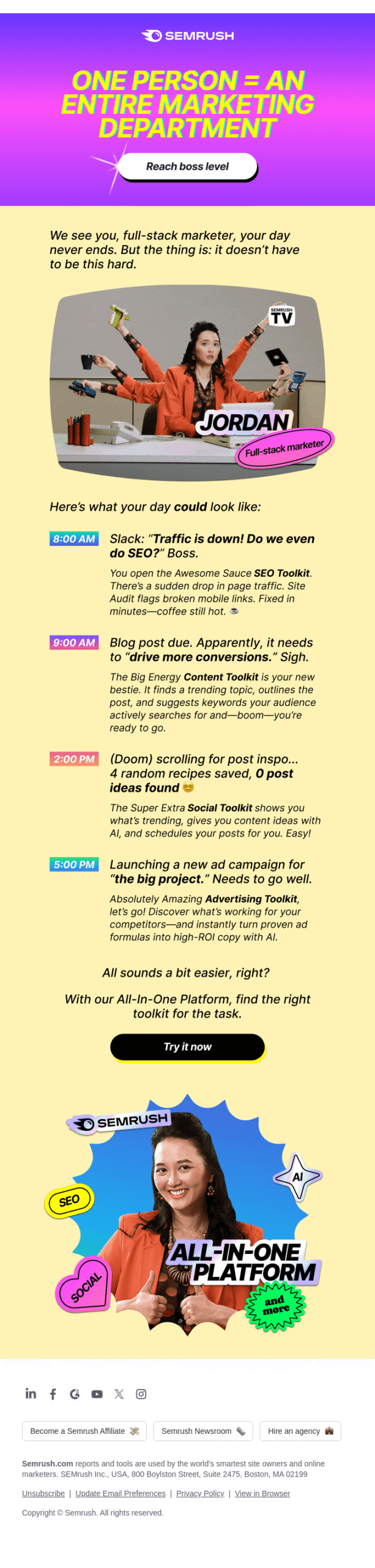
This is a fine example of how they highlight the customer’s pain point in a funny way, before offering their solution.
Subject line: A day in the life of a full-stack marketer
Why it works:
The meme perfectly captures the chaos of juggling multiple tasks that most startup founders and small-organization marketers experience.
Every chaotic moment is followed by a Semrush toolkit that addresses it, but the humor makes it feel helpful rather than salesy. The product becomes the answer to the chaos, not just another feature list.
Humor is Powerful, but Don’t Overuse It
Humor is like hot sauce. A little enhances the flavor, too much ruins the entire dish. If every line is a gag, your main message and CTA get lost. Humor should be the supporting cast, not the main character.
Remember, your end goal is to get people to sign up for your software, buy your products, or hire your professional services. If people remember your joke but forget what you’re asking them to do, the humor has failed.
The key is to understand your audience deeply, so you’ll know what kind of joke will land, when is the best time to incorporate humor, and how to package it.
Similar Posts

 Published by

Create, send and optimize your email marketing campaigns