













TikTok Marketing: A Marketer’s Roadmap
Published By Marilia Dimitriou
December 16, 2019

16/12/19
If you’ve ever opened TikTok “just for five minutes” and somehow woke up two hours later watching a cat learn how to dance salsa, you already know the power this platform has.
Since its release in 2016, TikTok has become the place where trends start, brands go viral overnight, and creators turn simple ideas into memorable moments. For businesses, especially small ones, this is gold as you don’t need a studio, a huge budget, or a celebrity shoutout to make it work.
In this guide, we’ll break down how TikTok marketing works. Learn how to create your business account and how you can use it to give your brand the visibility boost it deserves.
Build a strong multi-channel presence
Grow across platforms and use email to turn new followers into loyal customers.
Try MoosendWho Can Market on TikTok
TikTok has become one of the most active social media platforms, sitting among the top networks worldwide with close to two billion active users. With people of all ages scrolling, sharing, and creating short-form video content every day, the platform has become a key space for brands looking to reach a wider audience.
Its fast rise has changed how businesses spend on digital marketing. TikTok is expected to pull in over $33 billion in advertising revenue by the end of 2025, showing the demand from brands and advertisers.
On top of that, recent studies show that more than half of marketers plan to allocate a large share of their budgets to TikTok, making it one of the fastest-growing marketing channels today.
Influencer marketing is growing alongside it. With two-thirds of marketers choosing creators based on follower count, followed by engagement and brand alignment, TikTok has become a major player in helping brands stay visible and culturally relevant through creator partnerships.
With this momentum, it’s clear why TikTok is becoming a go-to option in many marketing strategies. So, let’s look at the industries that benefit most from TikTok, and a quick look at who the platform may not be ideal for.
Ecommerce brands
Product-focused businesses are perfect for TikTok, as the platform was built for visual discovery. Short-form video makes it easy to show what you sell in action through quick tutorials, unboxings, try-ons, or behind-the-scenes clips that show how a product is made.
Another plus is that the app encourages impulse purchases, while TikTok Shop lets viewers place orders without leaving the platform. Brands can tag products directly in their TikTok videos or live streams, making it easier to drive conversions and boost sales with minimal friction.
So if you’re selling anything that can be demonstrated, styled, or used on camera, TikTok gives you one of the most effective ways to reach new audiences and turn views into purchases.
Beauty, fashion, and lifestyle
TikTok is a natural home for beauty, fashion, and lifestyle brands. Trends spread quickly, and visual content appeals to a large audience. Instead of traditional product promos, audiences prefer seeing how something fits into real life.
For example, a quick swipe of a new lipstick, a before-and-after skincare clip, or a simple outfit change can pique curiosity instantly. Also, viewers love “Get Ready with Me” (GRWM) videos, event coverages, mini hauls, “day in my life” clips, and honest first impressions. And TikTok is just the place for such content.
Lastly, another advantage of TikTok is the strong influencer presence. Collaborating with them lets brands tap into communities that already trust their taste. Even small creators can drive real interest because their content usually feels more personal than polished studio shoots.
Food & beverages
Food content has a life of its own on TikTok. Short, satisfying clips of chopping, mixing, or plating grab attention fast, and viewers love quick recipes they can try at home. Taste tests and “first bite” reactions are also pretty popular because they feel honest and entertaining.
Restaurants and food brands can use TikTok to showcase their best dishes dynamically rather than rely on static photos. For example, a chef preparing a signature meal or a team showcasing behind-the-scenes prep gives viewers a reason to visit.
Mukbangs are another massive format on TikTok. People enjoy watching creators try large portions or sample a variety of foods. These videos often go viral because they’re fun, engaging, and easy to watch. Brands can work with TikTokers who do mukbangs to spotlight menu items or introduce new flavors in a more authentic way.
Coaches, consultants, and educators
Service-based professionals can also build an audience fast by sharing helpful advice. TikTok users respond well to content that solves everyday problems, so quick tips, mini-breakdowns, and short explanations work well here.
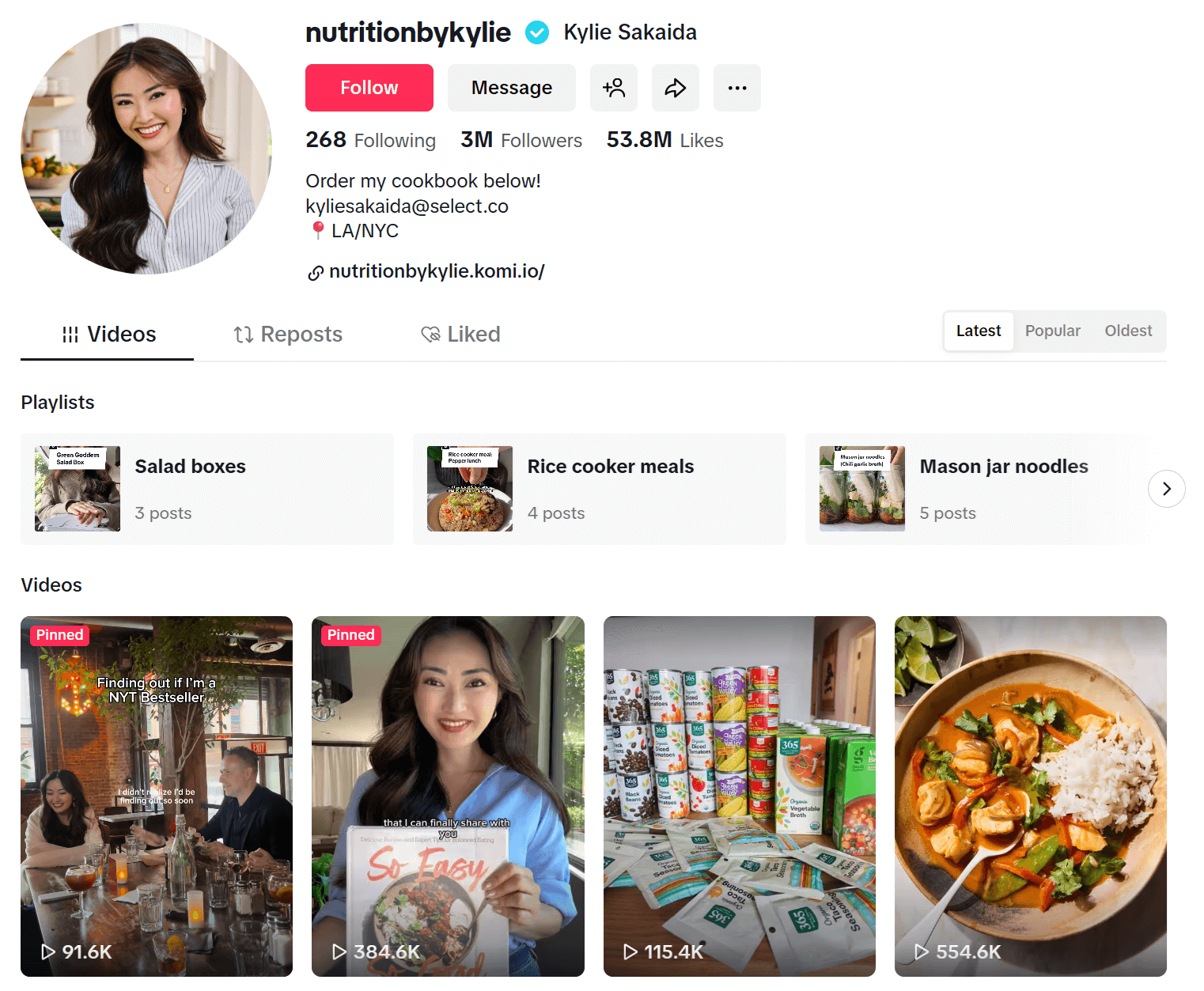
For example, a nutritionist offering recipes or a fitness coach showing simple exercises can attract the right viewers without complex production.
Plus, TikTok can help such professionals position themselves as experts while making their services feel more approachable. If you can explain what you do in a practical way, TikTok gives you a direct line to your ideal customers.
B2B and SaaS Companies
While B2B and SaaS content is less common on TikTok, it does have potential. Short videos can simplify complex tools or workflows, making them easier for prospects to understand. A quick feature demo or a “how this tool saves time” clip can help users see the value instantly.
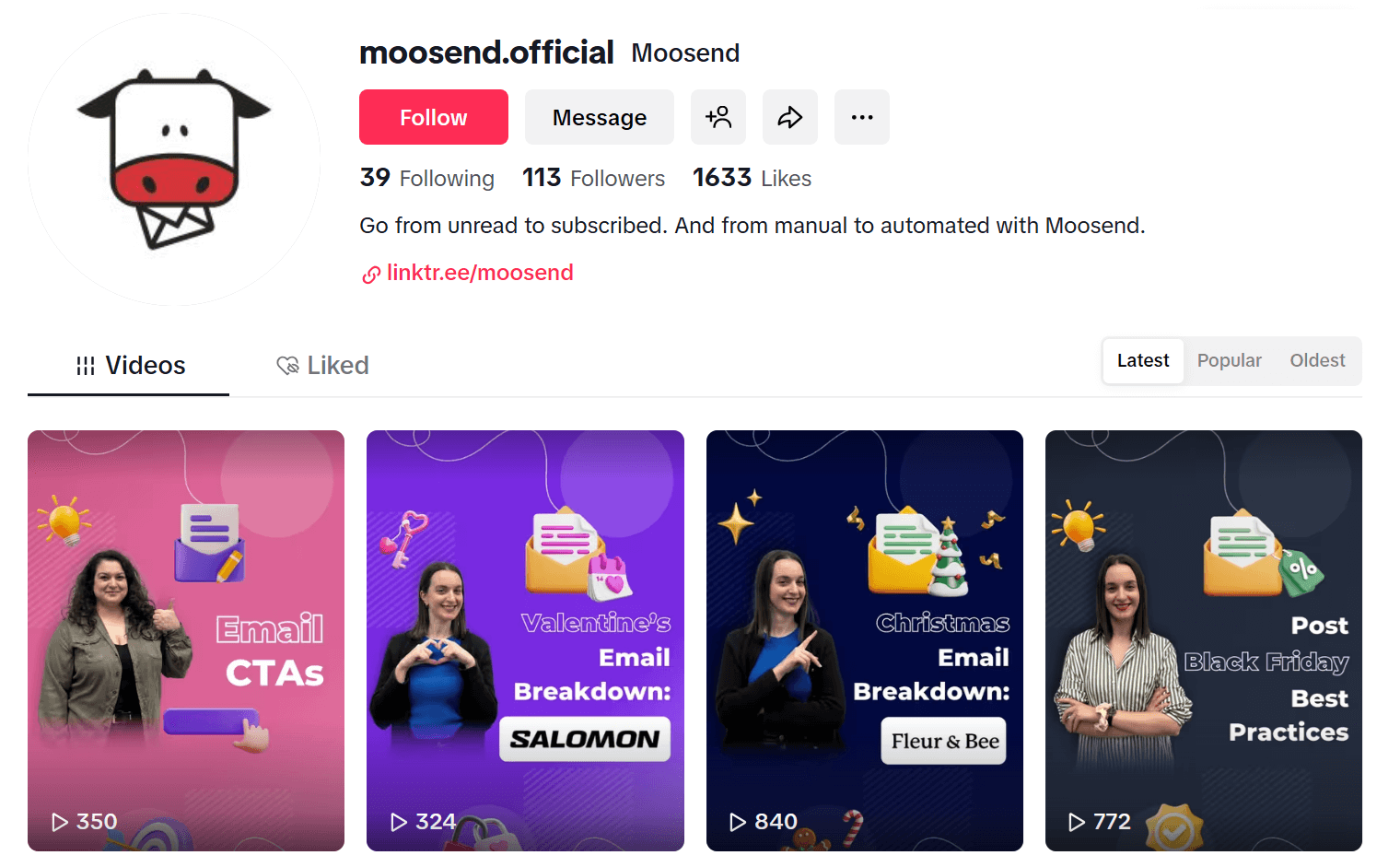
Apart from that, you can use TikTok to introduce your team, how you build features, or what goes into solving a customer problem. This way, you can build trust, especially in an industry where decisions rely heavily on credibility.
For companies willing to depart from the traditional corporate structure, TikTok offers a fresh way to educate, connect, and create awareness with a broader audience.
Real estate professionals
Realtors are an excellent fit for TikTok because the platform makes it easy to showcase properties in a fast, visual way.
Short walk-throughs, neighborhood tours, and “day in the life” clips help buyers get a feel for your style before they ever reach out. You can also use TikTok to answer common questions, share quick tips about financing or home staging, and highlight local hotspots around each listing.

Creators in real estate often see strong engagement because viewers love seeing unique homes, renovation ideas, and behind-the-scenes moments from showings.
Local businesses
Local retailers and small businesses can also benefit greatly from TikTok, as people enjoy seeing what’s happening in their own area.
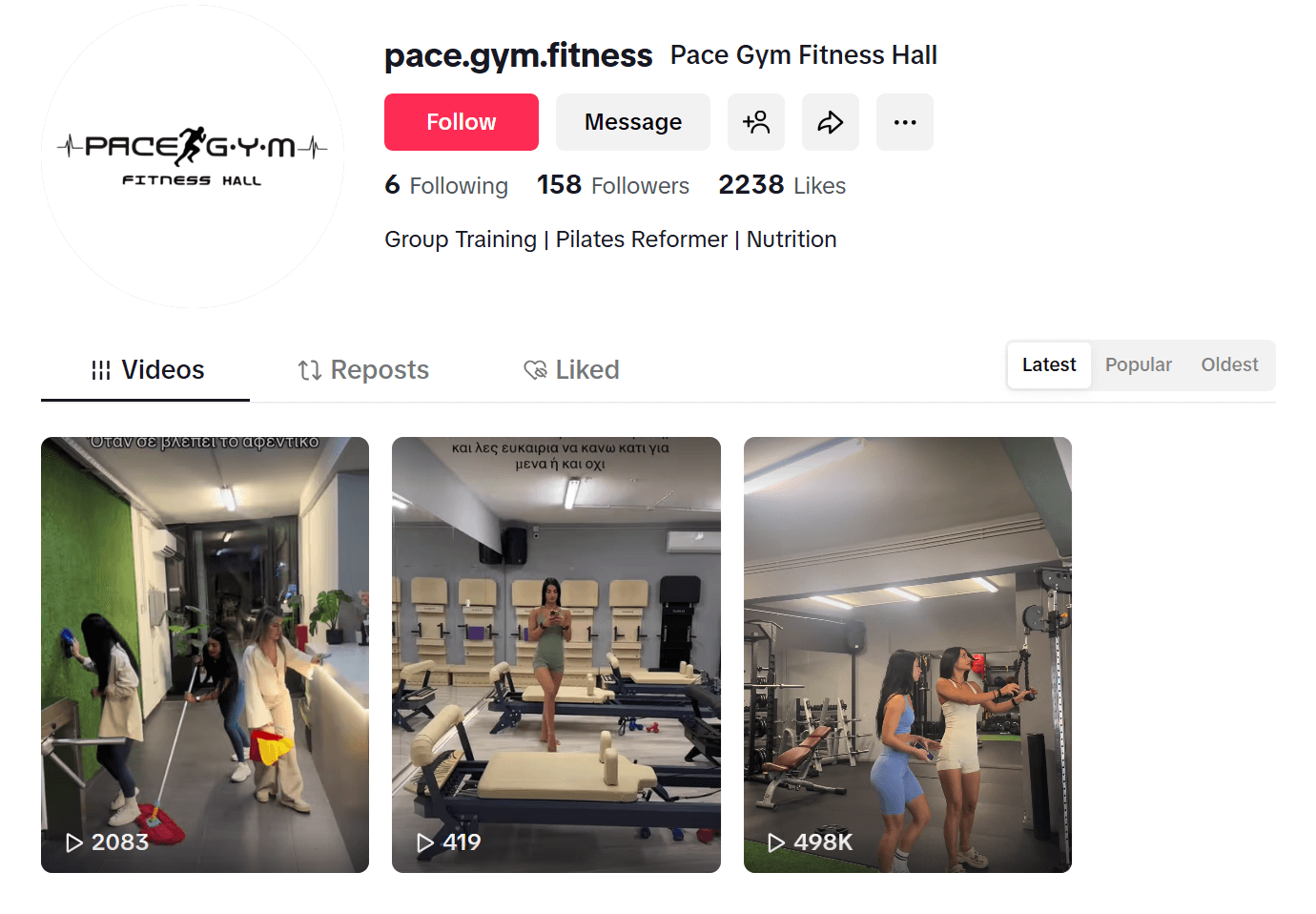
For example, gyms can share quick workout clips or trainer tips, salons can show transformations, and cafés can highlight popular menu items or daily specials.
What works best here is showing everyday moments to help local audiences connect with you and make your business easier to remember when they’re ready to visit.
Who TikTok may not be ideal for
While TikTok works for many businesses, it’s not perfect for everyone. Some brands may find it harder to stand out or create content that feels right for the platform.
- Businesses that can’t show their product or service on video: If what you offer isn’t visual at all, creating content becomes tricky. Think of companies selling backend software, server tools, or services that run entirely in the background. It’s hard to make engaging TikTok videos when there’s nothing to show on camera.
- Brands that rely on technical explanations: Some products need in-depth walkthroughs or detailed documentation. Industrial machines, scientific equipment, and niche engineering tools can be tough to break down into quick clips. The format simply doesn’t give enough time to explain everything clearly.
- Companies that must stay very formal: TikTok is fast, casual, and community-driven. If your brand needs polished messaging or has a strict tone, adapting can be difficult. Traditional law firms, large consulting companies, or brands with rigid style rules often struggle here.
- Industries with heavy regulations: Some fields require extreme caution in what they say. Medical, financial, insurance, and legal businesses face restrictions that make trend-based or spontaneous content harder to produce consistently.
Even so, these businesses can still find their place on TikTok with the right angle. Educational clips, team moments, or simple behind-the-scenes videos can help almost any brand show value in a way that feels natural to the viewers.
The Benefits of Marketing on TikTok
Thanks to its powerful algorithm and massive active user base, TikTok can be a powerful (and cost-effective) marketing tool. But what do brands earn at the end of the day from investing in this platform?
Strong organic reach
The For You Page allows even small accounts to gain visibility, making TikTok one of the few social media platforms where organic reach is still alive. A single short-form video can introduce your brand to thousands of users without a big budget.
For example, a small skincare brand can upload a “how to use” clip and, if the video resonates, it can spread far beyond their current followers.
Highly engaged community
The TikTok community interacts heavily with content. Users comment, remix, stitch, and share videos, which helps brands build awareness quickly.
A local bakery showing how it decorates a cake might receive reactions, remixes, or duets from food creators, extending its reach without paid promotion.
Trend-driven discovery
TikTok makes it easy to use trends, popular sounds, and cultural moments. When brands participate naturally, their content blends in and feels more relatable.
A fitness coach, for instance, can join a trending workout challenge and instantly reach new viewers who follow that specific trend.
Flexible marketing options
Whether you’re posting regular TikTok videos, partnering with creators, or experimenting with TikTok ads, the platform gives you multiple ways to reach your target audience.
A small fashion store might post daily outfit ideas, while an eCommerce brand can run in-feed ads to boost sales directly through TikTok Shop.
Clear data and insights
For businesses seeking data-driven growth, TikTok analytics provides detailed metrics on video performance, audience behavior, and content trends. These insights make it easier to optimize content and refine your TikTok marketing strategy over time.
For example, seeing which videos kept viewers watching the longest can guide how you structure future posts.
In a nutshell, TikTok combines reach, creativity, and community in a way few platforms can match. It’s a strong option for brands that want to grow fast, stay relevant, and connect with their audience more organically.
TikTok Marketing Vs. TikTok Influencer Marketing
While the two are closely related, TikTok marketing and TikTok influencer marketing serve distinct purposes and operate differently. Understanding this distinction helps businesses choose the right approach for their goals.
What TikTok marketing covers
TikTok marketing refers to everything a business does on the platform using its own channels. This includes creating TikTok videos, running ads, posting tutorials, jumping on trends, using TikTok analytics, and building a presence through regular content.
A great example comes from The Ordinary, which recently promoted its new Volufiline serum through TikTok.
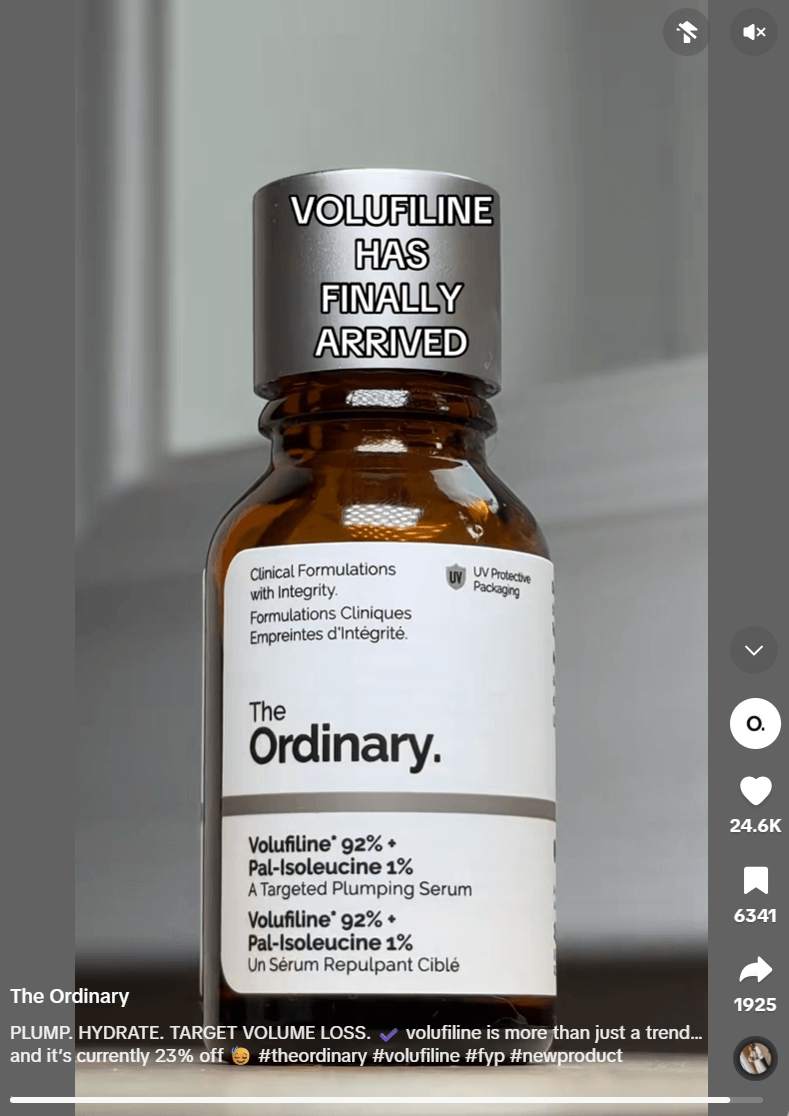
The brand posted a simple close-up product video with on-screen text announcing its arrival. The clip highlights the packaging, mentions the key benefit, and includes a short caption with a discount. This kind of direct, product-focused content is TikTok marketing at its finest.
What TikTok influencer marketing is
On the other hand, influencer marketing focuses on collaborations between brands and creators. Instead of posting from their own account, businesses partner with influencers who already have a strong TikTok community.
Here, the creator promotes the product in their own style, which feels more natural to their followers. For example, Devon Kelley, one of The Ordinary’s partners, shared her two-year journey with Volufiline.
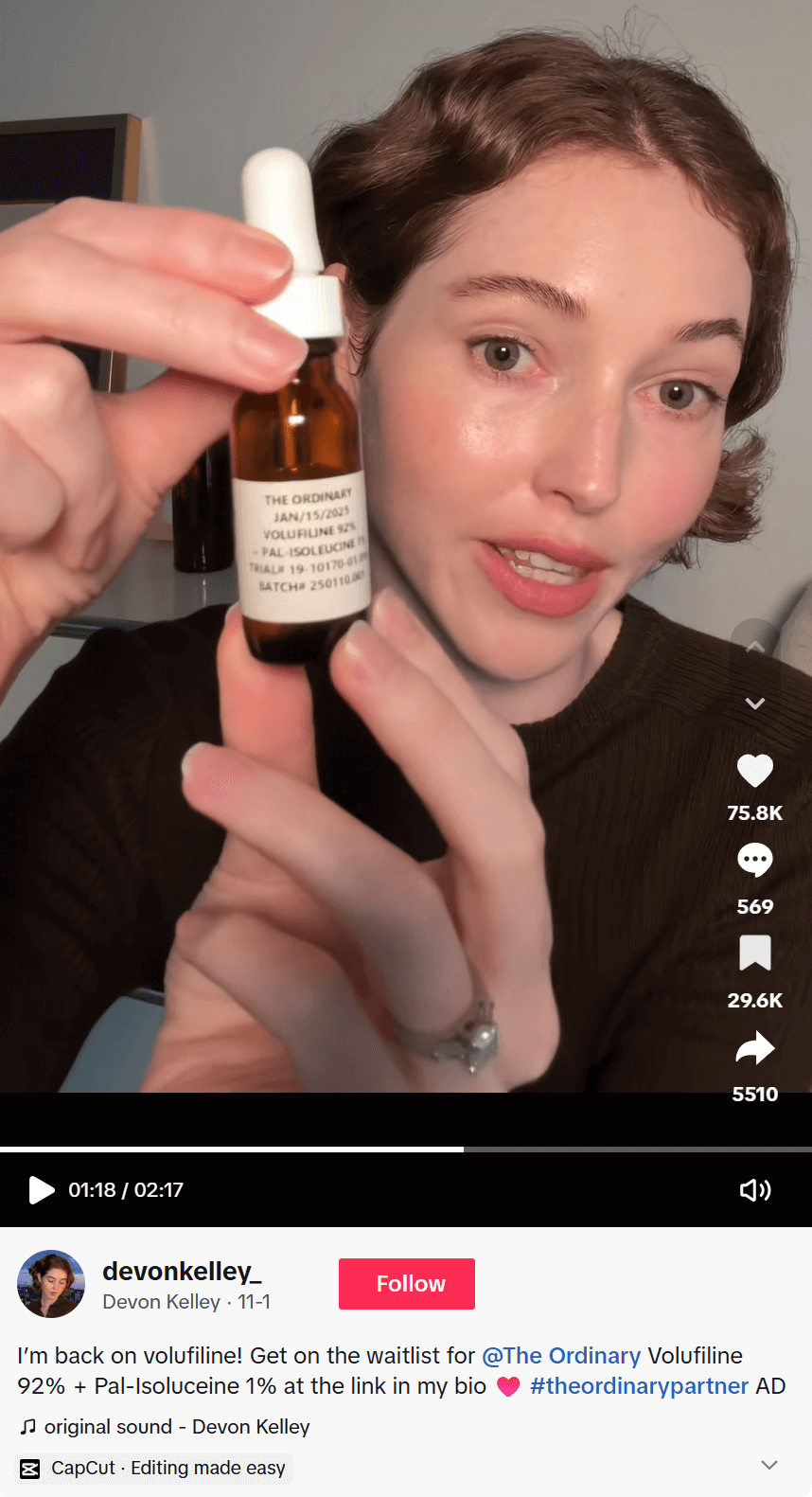
Devon Kelley held the product close to the camera, shared her experience, and showed the results with before-and-after photos. The review feels like a conversation rather than an ad, which is why influencer content often performs so well on TikTok.
When to use each
TikTok marketing is best for building a long-term presence and speaking directly to your audience. Your own videos, tutorials, and updates help people get familiar with your brand over time.
Influencer marketing works differently. It’s ideal when you need faster visibility, social proof, or access to a particular TikTok audience. These collaborations can happen organically when creators choose to talk about your products on their own, or through paid partnerships where you guide the message more clearly.
Most brands benefit from combining both approaches. Your own content builds trust and consistency, while creators help you reach new people and spark interest much faster.
How to Create and Use a TikTok Business Account
Setting up a TikTok Business account is quick and gives you access to additional tools, such as analytics, commercial sounds, and business features. Here’s how to get started.
Step#1: Download the app or use the desktop version
You can either create a brand-new Business account or turn an existing personal account into one. Both options take only a few minutes.
TikTok also lets you manage up to 3 accounts on a single device, which is helpful if you want to manage personal and business profiles.
Here’s what to do if you’re new to TikTok:
- Install the app from the App Store or Google Play, or go to the TikTok for Business page
- Sign up using your email, phone number, or an existing social login. Use your business email for easier management
- Add your birthday
- Create a branded handle for your business profile
Alternatively, if you already have a personal account:
- Go to your profile and tap the menu icon in the top-right corner
- Select “Settings”
- Find the Business account option
- Toggle the “Switch to Business Account” option on
Important: If you want to change your business account back to a personal one, TikTok warns you that you’ll lose access to Business Account features, including business insights and conversion tools.
Step#2: Select your business category
After signing up for or switching to a Business account, TikTok will ask you to choose the category that best describes your brand.
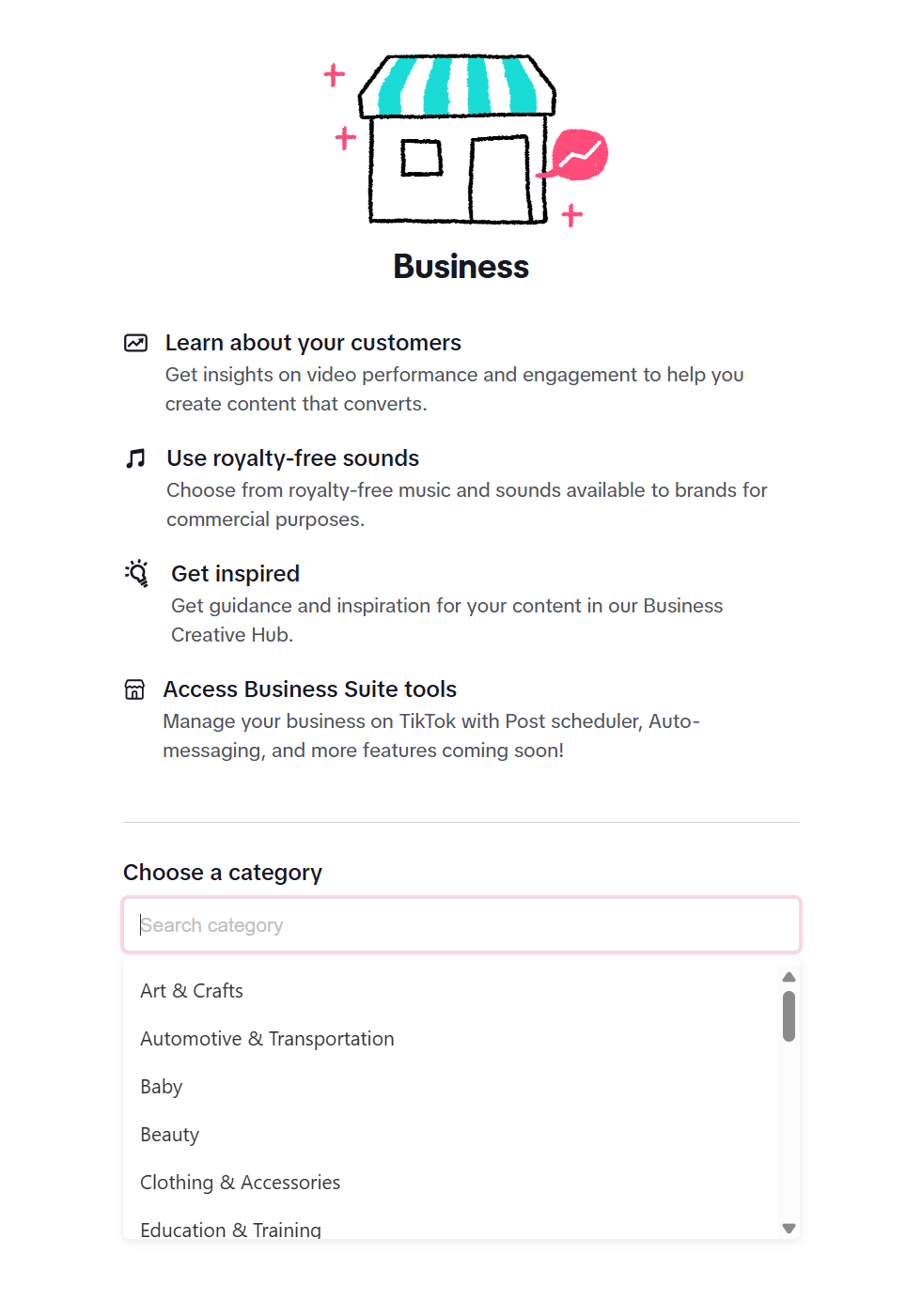
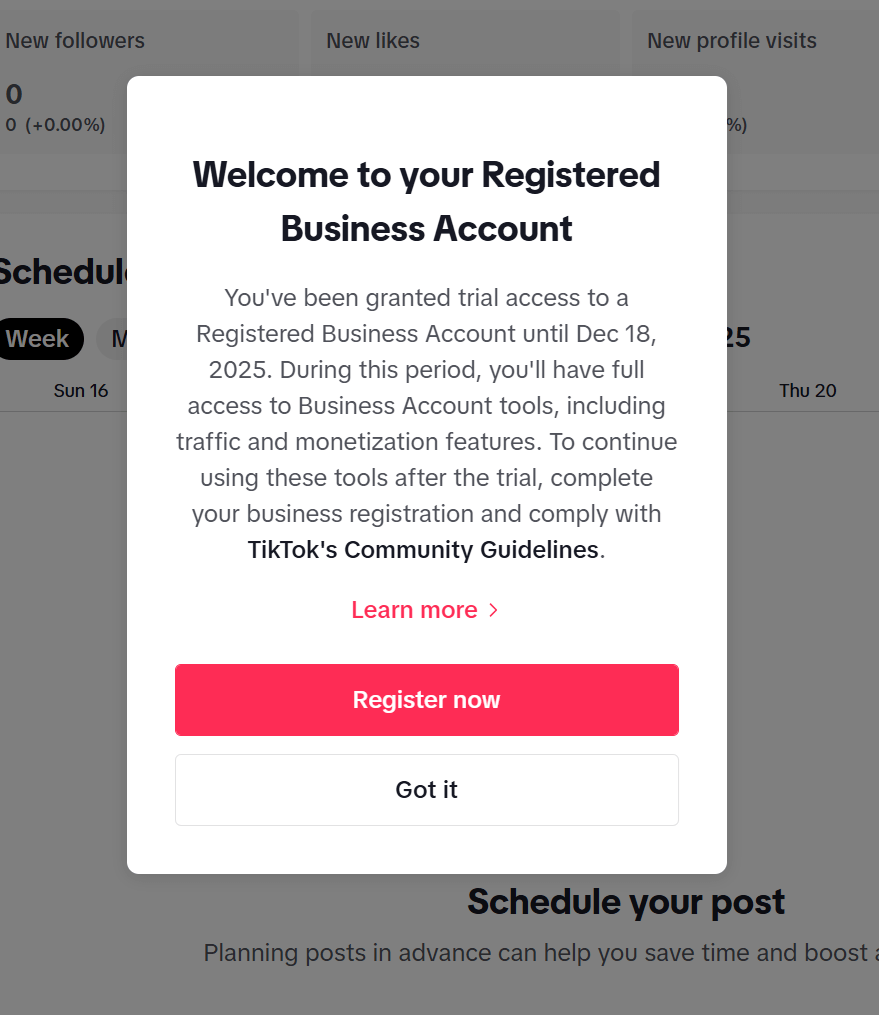
This helps the platform tailor recommendations, sounds, and features to your industry. Once you select your category, TikTok gives you a 30-day trial of a Registered Business Account.
During this period, you can explore business tools, analytics, and commercial features without limitations.
Step#3: Register your business
If you want to keep all Business Account features after the 30-day trial, you’ll need to complete your business registration.
TikTok will guide you through a short three-step process where you verify your information and confirm that you’re an official business.
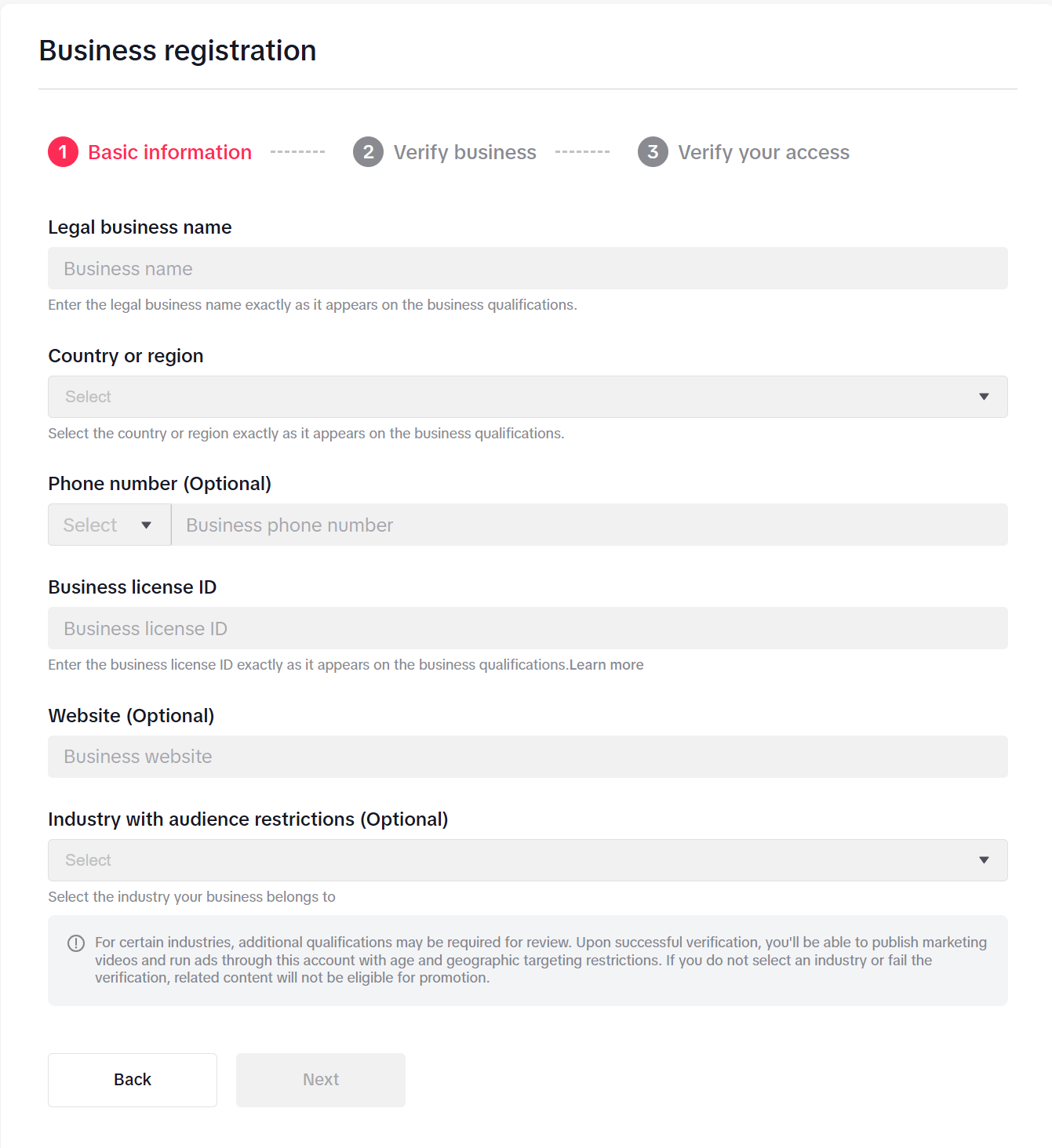
During registration, you’ll be asked to provide:
- Your legal business name (exactly as it appears on official documents)
- Country or region
- Business license ID
- Website URL (must be a real, functioning website)
- Optional: business phone number and industry category
Once you submit this information, TikTok will start reviewing your account.
Most reviews are completed in under 24 hours, and you’ll receive an email once your account is approved. You can also check the status at any time on the Account Setup page in TikTok Ads Manager.
If your account isn’t approved on the first try, it’s usually due to:
- An invalid or non-functional website link
- Missing or incorrect business/license details
- A landing page that doesn’t meet TikTok’s advertising policies
You can fix the issue, resubmit your information, and request a second review. If you believe your site or details were reviewed incorrectly, you can also submit an appeal through TikTok Business Support.
You can check TikTok’s Approval FAQs for more information.
Step#4: Complete your profile
As you wait for TikTok’s approval, you can start setting up your profile. This will help users understand who you are and why they should follow you.
Here’s what to update:
- Profile photo or logo: Choose a clear image that’s easy to recognize. For businesses, a clean version of your logo works best. For creators, use a bright, simple headshot.
- Username: Keep it short, easy to spell, and consistent with your name on other social media platforms. This helps with discoverability and brand recognition.
- Name field: Use your business name or the name your audience knows you by. This appears on your profile and in search results.
- Bio (up to 80 characters): Write a quick line that explains what you offer. Keep it simple and focused, like “Skincare tips & routines” or “Handcrafted jewelry made in X.” You can also use your bio to include key details like your address, email, or operating hours if they’re relevant to your business.
TikTok also lets you add a direct link to your website. You can also use a link-in-bio tool like Linktree to include multiple links in one place.
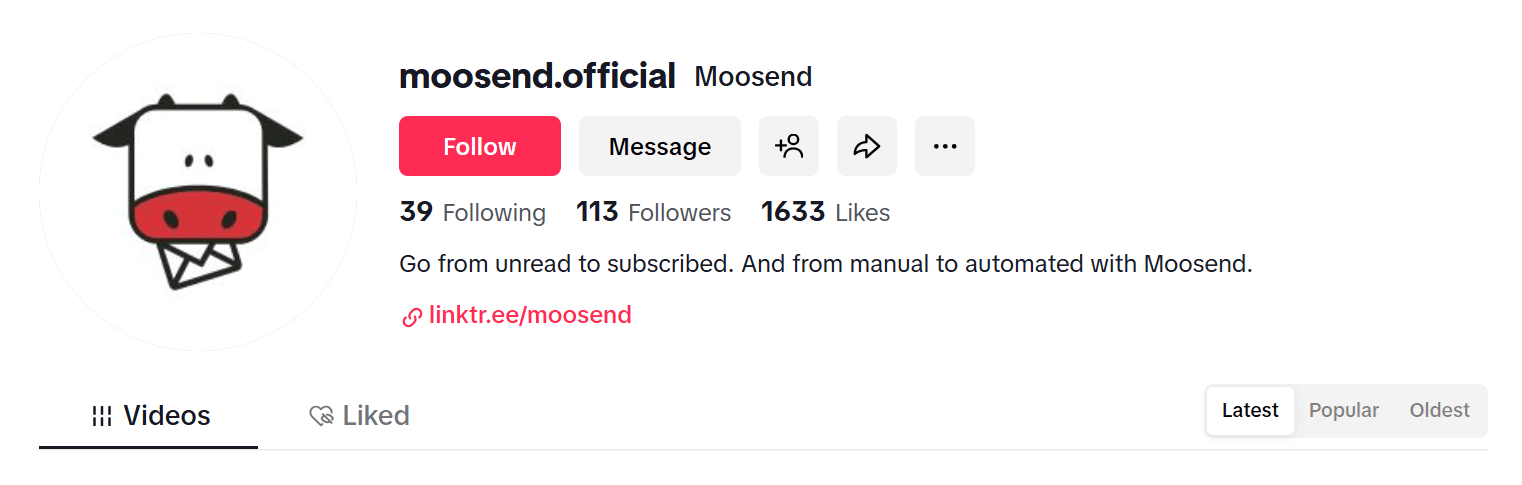
Many brands do this to give viewers quick access to products, contact pages, and social profiles, all from a single spot.
Step#5: Explore the Business Suite
Once your Business account is active, you’ll unlock TikTok’s Web Business Suite. This is your main dashboard where you can manage content, check analytics, and access all the tools that help your account grow. You can use it through the app or from a desktop browser for easier navigation.
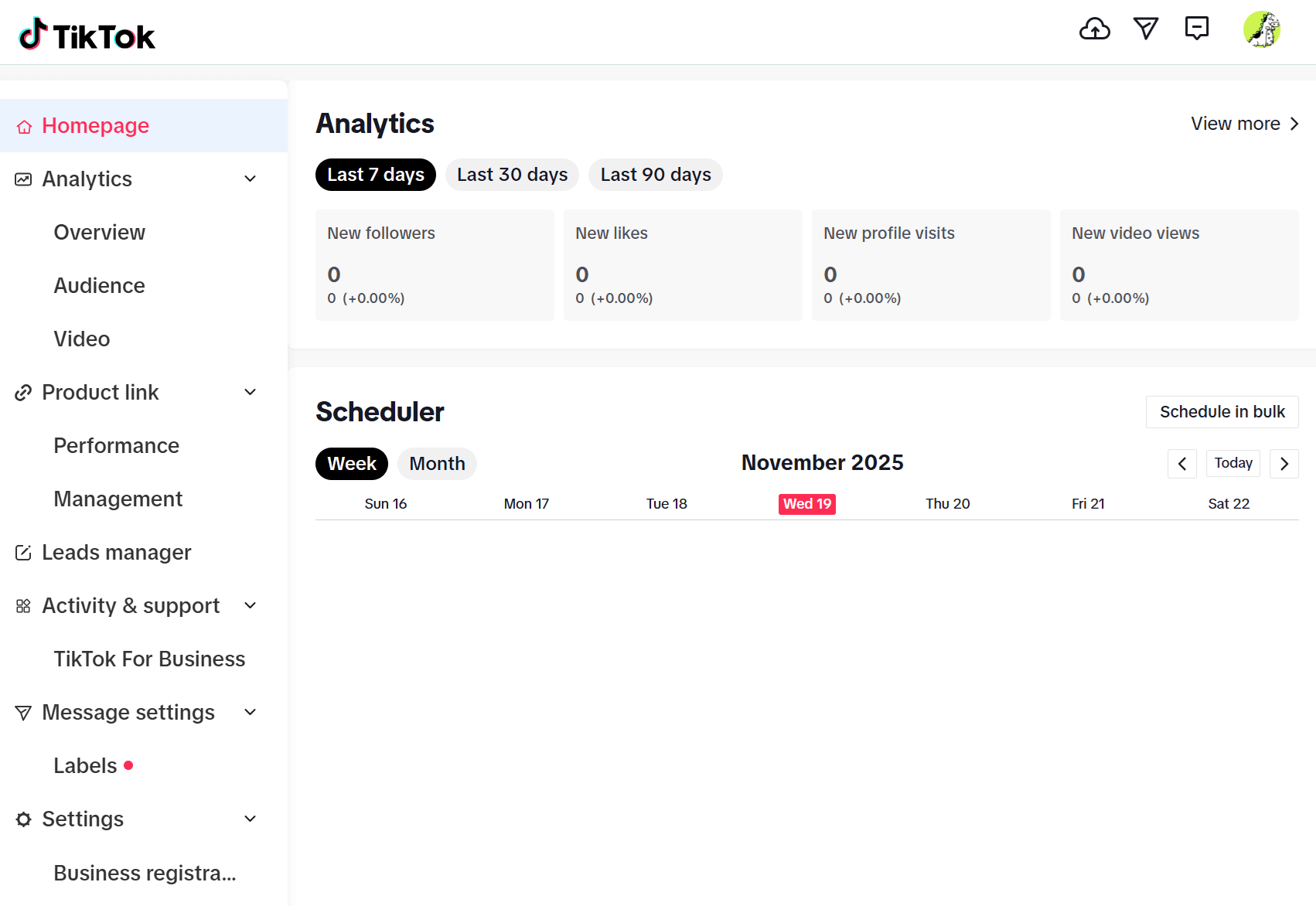
Here’s what you can do inside the Business Suite:
- Homepage: See quick performance stats, including new followers, likes, profile visits, and video views. You can also schedule posts through the built-in Scheduler to save time and stay consistent.
- Analytics: Track your reach, engagement, follower growth, and video performance across different date ranges. You can also check audience insights, such as demographics, top countries, and when your viewers are most active.
- Product Link: Add product links to your videos to bring viewers directly to your website for more details. This makes shopping easier by letting customers purchase your product right after watching your content, without having to search for it themselves.
Leads Manager: If you’re collecting leads through TikTok, you can view and download them here. This helps businesses manage inquiries and follow up more efficiently. - Activity & Support: Access TikTok Ads Manager, learn more through the Help Center, or explore TikTok Shop if you want to sell products directly on the platform.
- Settings: Update your business information, complete your registration, and manage profile details tied to your Business account.
These tools help you better understand your audience, track performance, and find new content ideas, all of which are essential for building a strong TikTok presence.
Step#6: Get familiar with the TikTok Ads Manager
Once your Business account is (finally) set up, the next step is to get comfortable with the TikTok Ads Manager. This is where you’ll create campaigns, set goals, choose audiences, and track results. Even if you’re not ready to run ads yet, it’s good to explore the dashboard so you understand what’s available.
You can access the Ads Manager dashboard through the Business Suite, under Activity & Support.
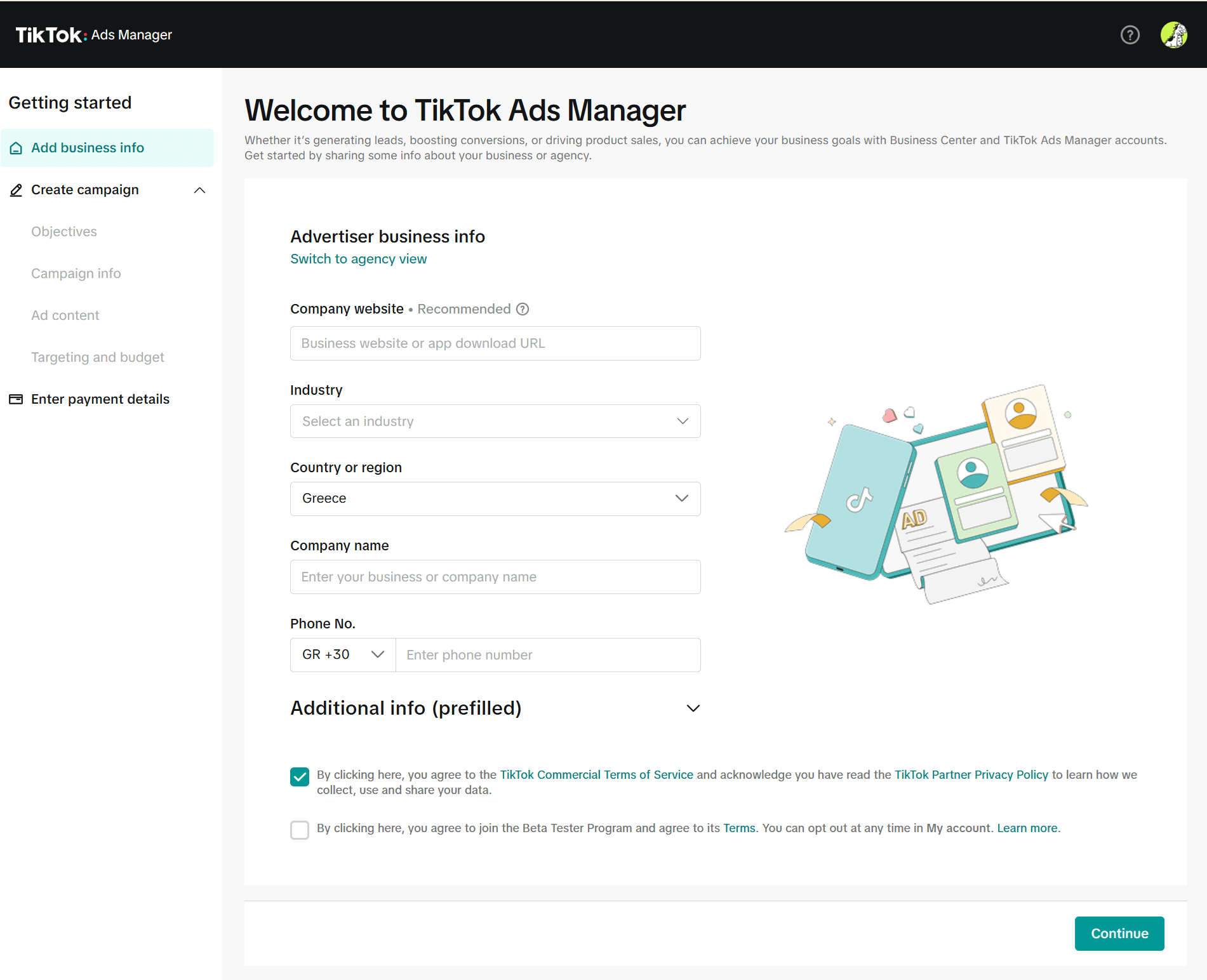
Inside, you can:
- Add your business info: Enter your company name, website, industry, and contact details so TikTok can verify your account and tailor your ad settings.
- Create your first campaign: TikTok lets you select objectives such as traffic, conversions, lead generation, or reach. You can test simple campaigns first and scale later.
- Set your targeting and budget: Choose your audience (age, location, interests) and define your budget and schedule. The interface is simple and guides you through each step.
- Upload your ad content: Add your video, select text overlays, adjust formats, and preview how your ad will appear on TikTok.
- Track performance: Once your ads are running, you can view metrics like views, clicks, conversions, and cost. These insights help you optimize future campaigns.
If you’re planning to experiment with TikTok ads later, spending a few minutes in Ads Manager now will make the process much smoother when you’re ready to launch.
Step#7: Create your first post
Now, it’s time to publish your first TikTok. This step doesn’t need to be complicated; your goal is to introduce your brand, set a tone, and give new viewers something to engage with.
Before you start filming, explore the tools available inside TikTok’s Creator Studio. Here, you’ll find the Creator Academy for quick tutorials, an Inspiration tab with posts from brands in your niche, and an Unlimited Sounds Library you can safely use in longer videos.
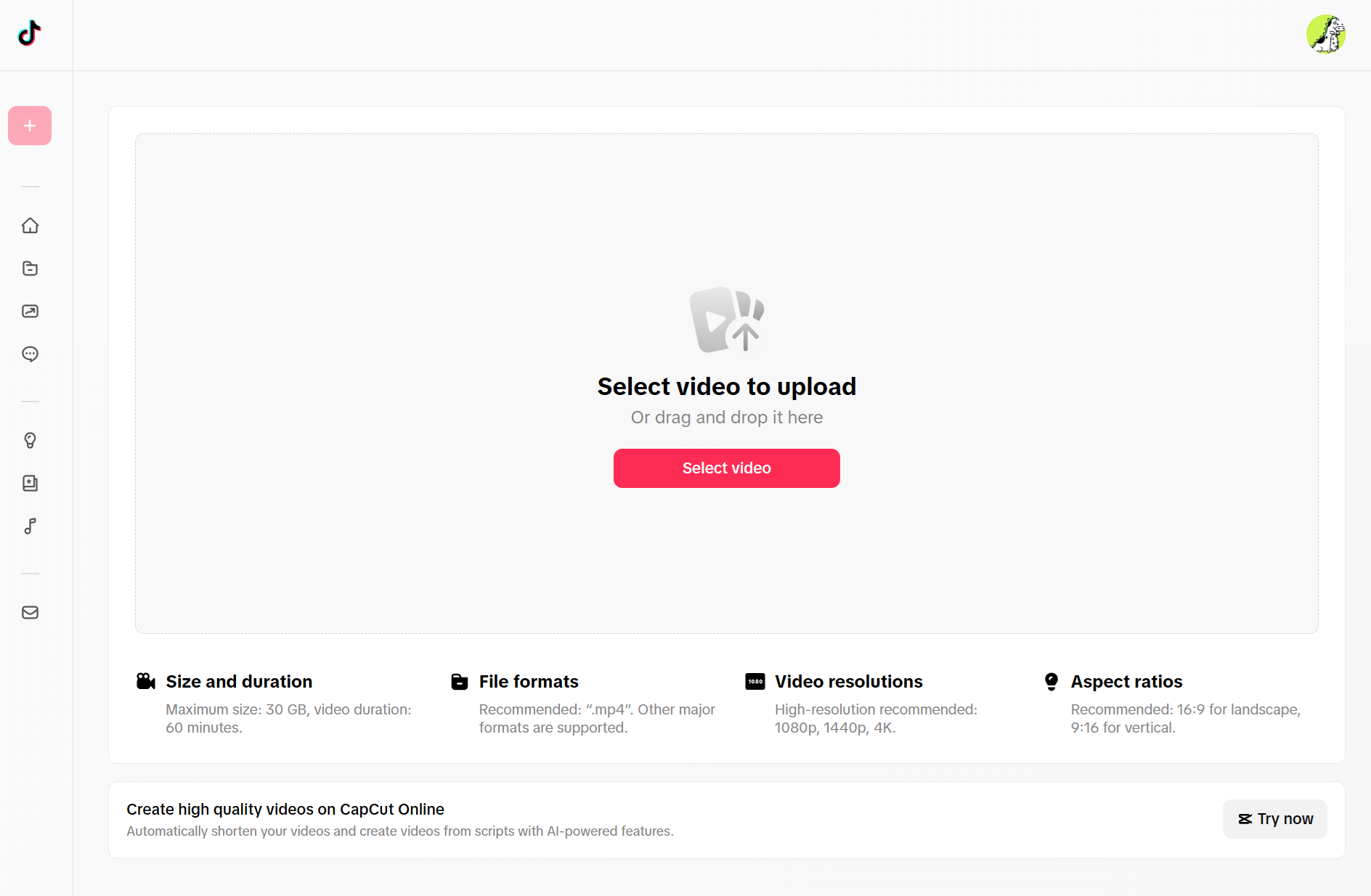
Tip: Unlimited sounds won’t get your 1-minute+ posts muted, which makes them ideal for tutorials, demos, or intro videos.
These resources give you ideas, examples, and audio options that make your first post easier to create and more likely to perform well from the start.
If you don’t know what to post, here are a few easy ideas:
- A simple brand intro: Show your product or workspace and say who you are in one sentence. Keep it short and friendly.
- A quick “What we do” demo: Show your product in action, your service setup, or a fast before-and-after. Visuals work better than long explanations.
- Meet the team: Feature one team member saying hello or sharing a fun fact. Human faces help new accounts feel more approachable.
- Founder message: If relevant, have the founder introduce their vision or share the story behind your top product.
- A trending sound adaptation: Pick a light trend or audio and give it a small twist to fit your niche. It helps your first video reach more people.
- Behind the scenes: Film packaging, unboxing, or just your workspace. Simple, raw clips perform well for new accounts.
TikTok Marketing Best Practices with Examples
TikTok rewards creativity, consistency, and content that feels natural on the feed. No matter your niche, these best practices will help you build a stronger presence and create videos people actually want to watch.
1. Create for the “first three seconds”
According to Gloria Mark, a psychologist who has been studying real-world computer use for two decades, the average time people spend focused on a single screen has dropped from about 2.5 minutes in 2004 to just 47 seconds in recent years.
This means your video needs to earn attention instantly. A strong way to do this is to open with a visual that immediately answers “Why should I care?”
Ariana Grande, for instance, starts this video for R.E.M Beauty (her brand) by holding the new eyeliner line directly up to the camera. The metallic textures attract attention, the close-up feels intimate, and viewers understand the video’s focus in the first second.
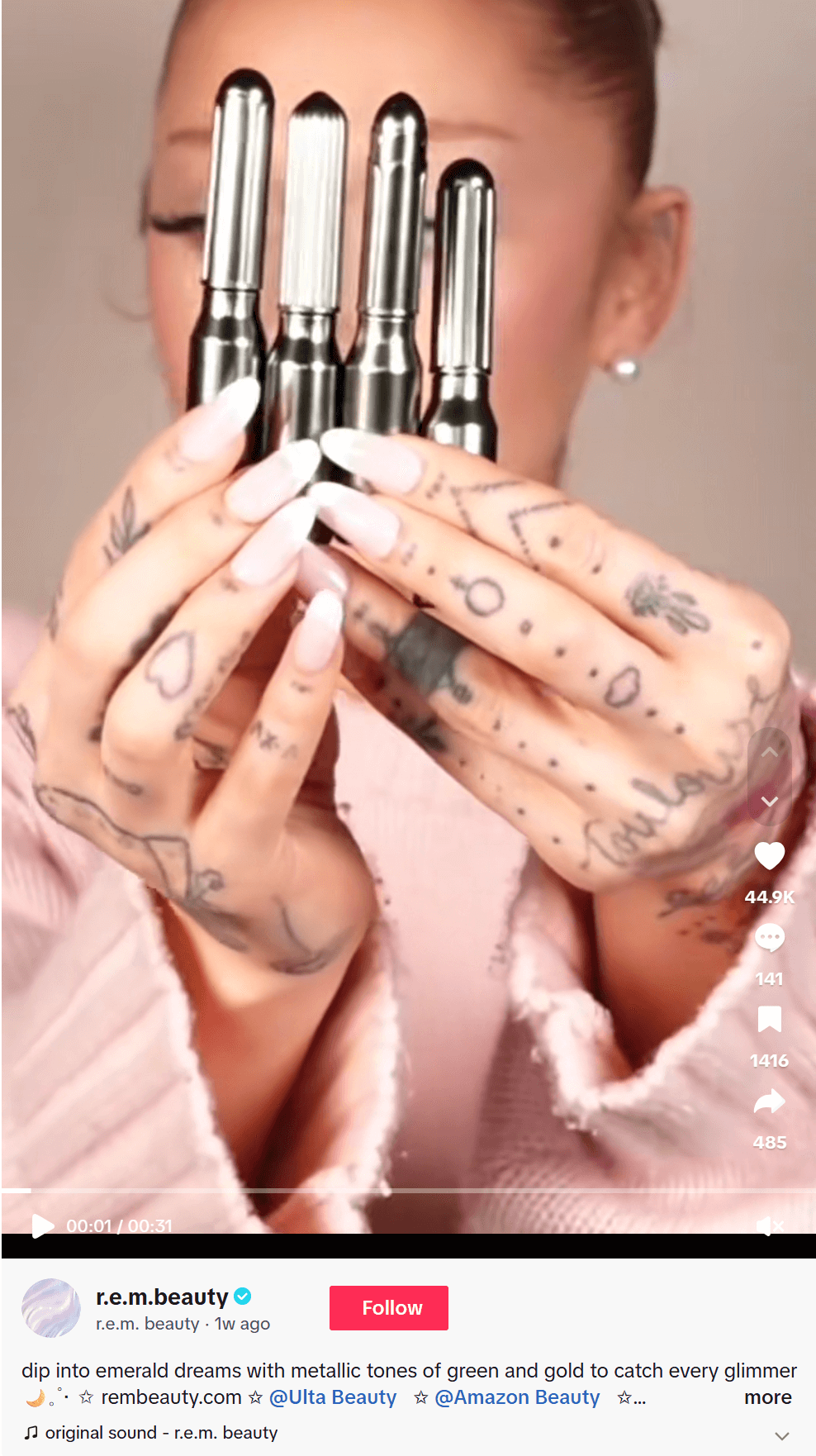
This kind of opener works because it gives viewers a reason to keep watching. They see the product, understand what the video is about, and get pulled in by the sensory appeal before Ariana even starts explaining.
The result is a quick, compelling hook that feels authentic and showcases the product’s strongest selling point (design, finish, and payoff) without needing extra buildup.
2. Use captions and on-screen text
Many users scroll with the sound off, so subtitles become essential. Clean, well-timed captions help viewers follow the video even in noisy environments or when they can’t turn up the volume. They also improve accessibility for viewers with hearing difficulties, ensuring your content is easy for everyone to engage with.
To ace them, keep your subtitles short, readable, and synced to your audio.

In the above example, TikToker Emily English uses concise subtitles that match the pace of the clip. Nothing feels cluttered or distracting, and the message remains clear at first glance, which is exactly what you want on TikTok.
3. Show the result first
People stay longer on a TikTok post when they can immediately see the outcome of a process. Starting with the finished product piques curiosity, as viewers naturally want to know how you got from A to B.
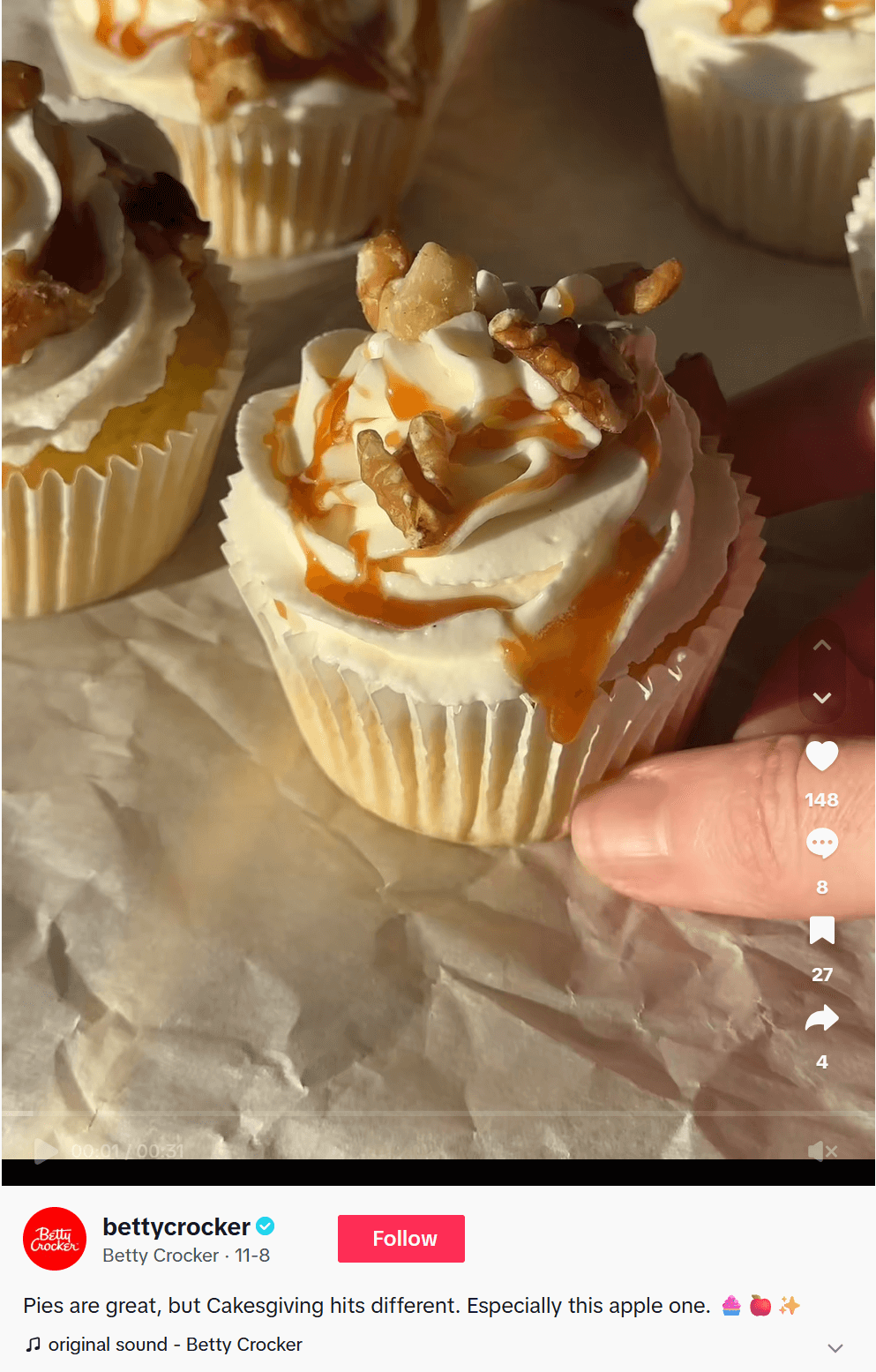
Here, Betty Crocker opens with a close-up of the finished apple cupcake. Everything is designed to make you pause. Only after showing the final dessert does the video move into the steps behind it. This approach works beautifully for food brands because the “reveal” pulls viewers in before the tutorial even begins.
4. Film in natural light
One of the benefits of TikTok is that you don’t need a studio setup to make your content look good. Natural light instantly boosts clarity, color, and overall quality, especially for close-up shots like unboxings, product demos, or packaging reveals.
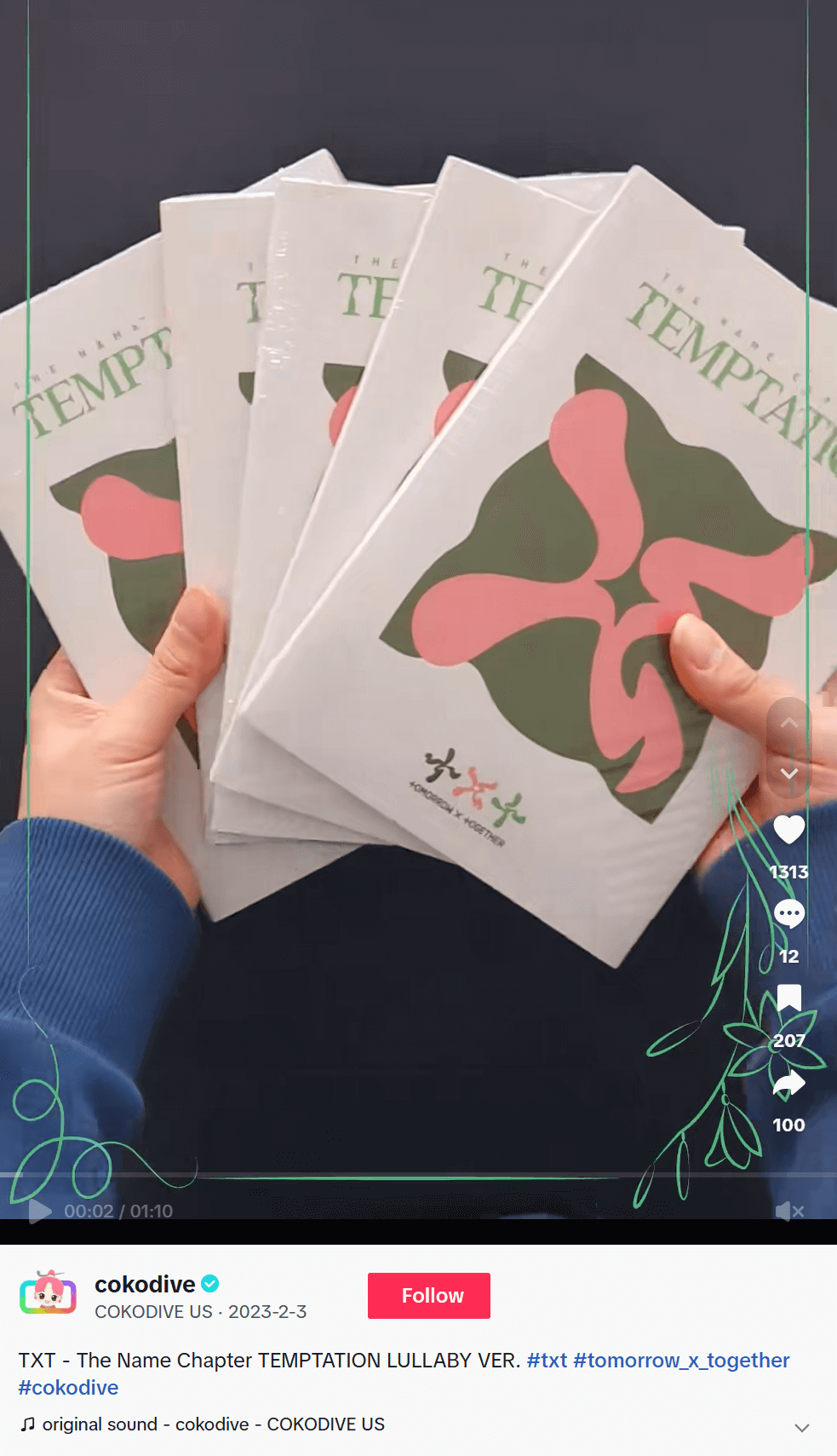
Cokodive, for instance, films their album unboxing right next to a bright light source, making the textures, colors, and details of the products stand out. The clean lighting also keeps the focus on the product, resulting in a video that feels more polished even though the setup is simple.
If you’re creating similar content, film near a window during the day and avoid overhead lighting that creates shadows. Good lighting makes even basic shots look crisp, helping viewers stay engaged from the first second.
5. Use fun content
Even SaaS companies can shine on TikTok when they show real people behind the product. And audiences connect more with a brand when they see the team’s personalities, humor, and everyday moments.
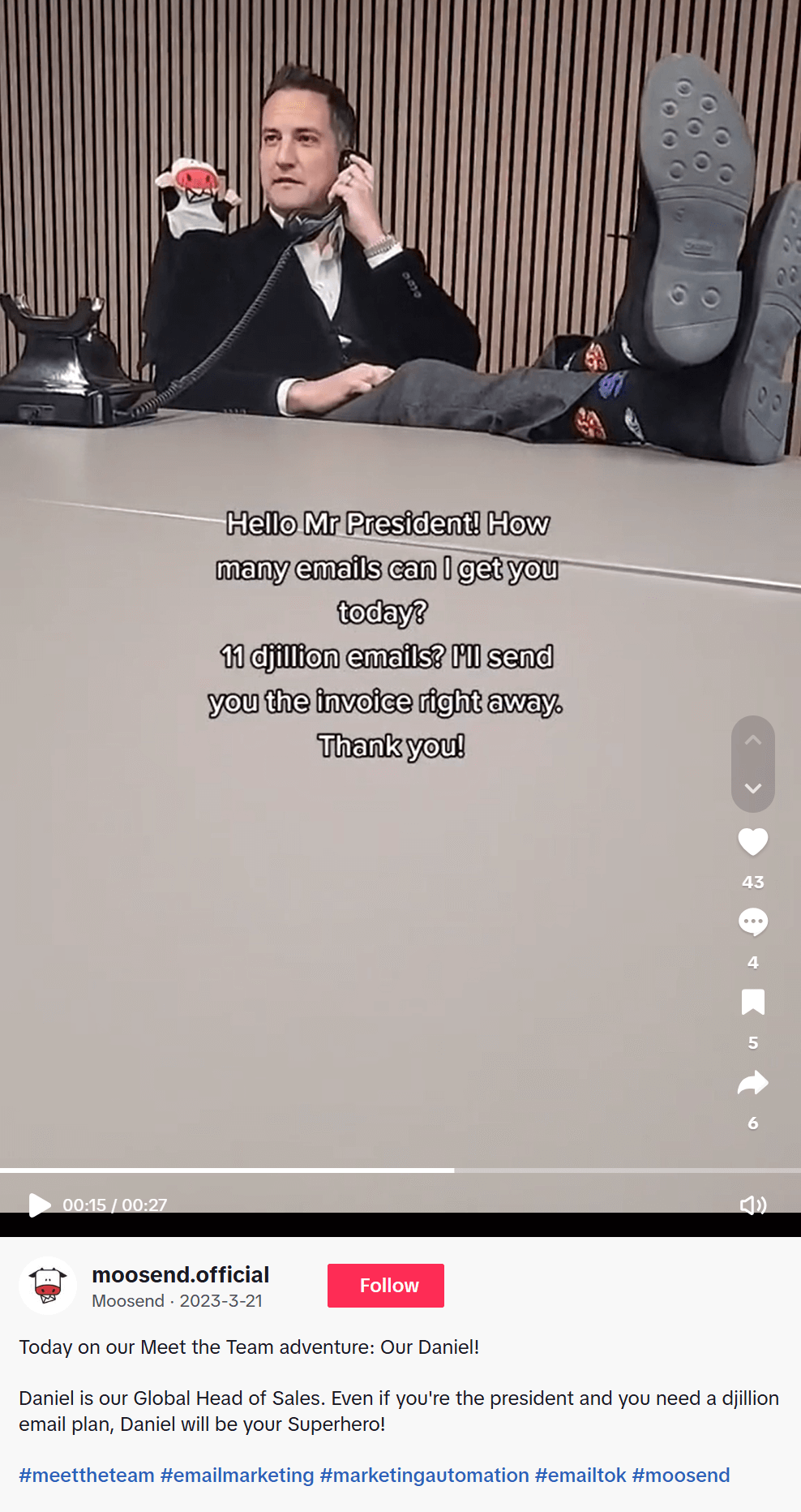
Moosend introduces Daniel from their sales team in a playful, low-key “Meet the Team” clip. It’s not a polished studio shoot but a funny moment in the office that humanizes the brand and shows team culture in a way that feels natural on TikTok.
For SaaS brands, this kind of content builds trust fast. Instead of relying solely on product explainers, mix in team intros, office humor, wins, fails, and behind-the-scenes moments. It makes your company more approachable and reminds viewers that real people power the software.
6. Involve your team
Speaking of your team, software companies aren’t the only ones that can benefit from a “human touch.” In product-focused industries, team-led videos can add warmth, personality, and trust, especially when the person speaking actually knows and uses the product.

Sylvia, a senior communications manager at The Ordinary, films a casual “team recommendations” video right from her car. She visits the store, picks up her favorite products, and then talks through her choices in a simple, natural setting. It feels authentic because it is a real employee sharing what she actually uses.
This kind of content works because viewers feel like they’re getting insider advice. Plus, filming from inside one’s car is a pretty popular TikTok trend that users love to engage with.
7. Adapt trending content to your brand
Jumping on trends works best when you make them your own. Instead of copying a popular format word-for-word, reshape it to fit your product, tone, and audience.

With that in mind, we couldn’t leave Duolingo out of the list. Here, they didn’t just follow the viral “Queen Never Cry” meme but reimagined it with their mascot, turning it into a playful, brand-relevant moment. It feels familiar enough to ride the trend, but unique enough to stand out.
For businesses, this approach keeps you current without losing your identity. Whether it’s a meme, audio, or viral format, ask: “How can we twist this so it feels like us?”
8. Make viewers feel involved
TikTok works best when your audience feels like they’re part of your brand. Instead of only talking to viewers, bring them into your content. Ask questions, feature real customers, or collect quick reactions at events, basically anything that makes people feel connected to your brand.

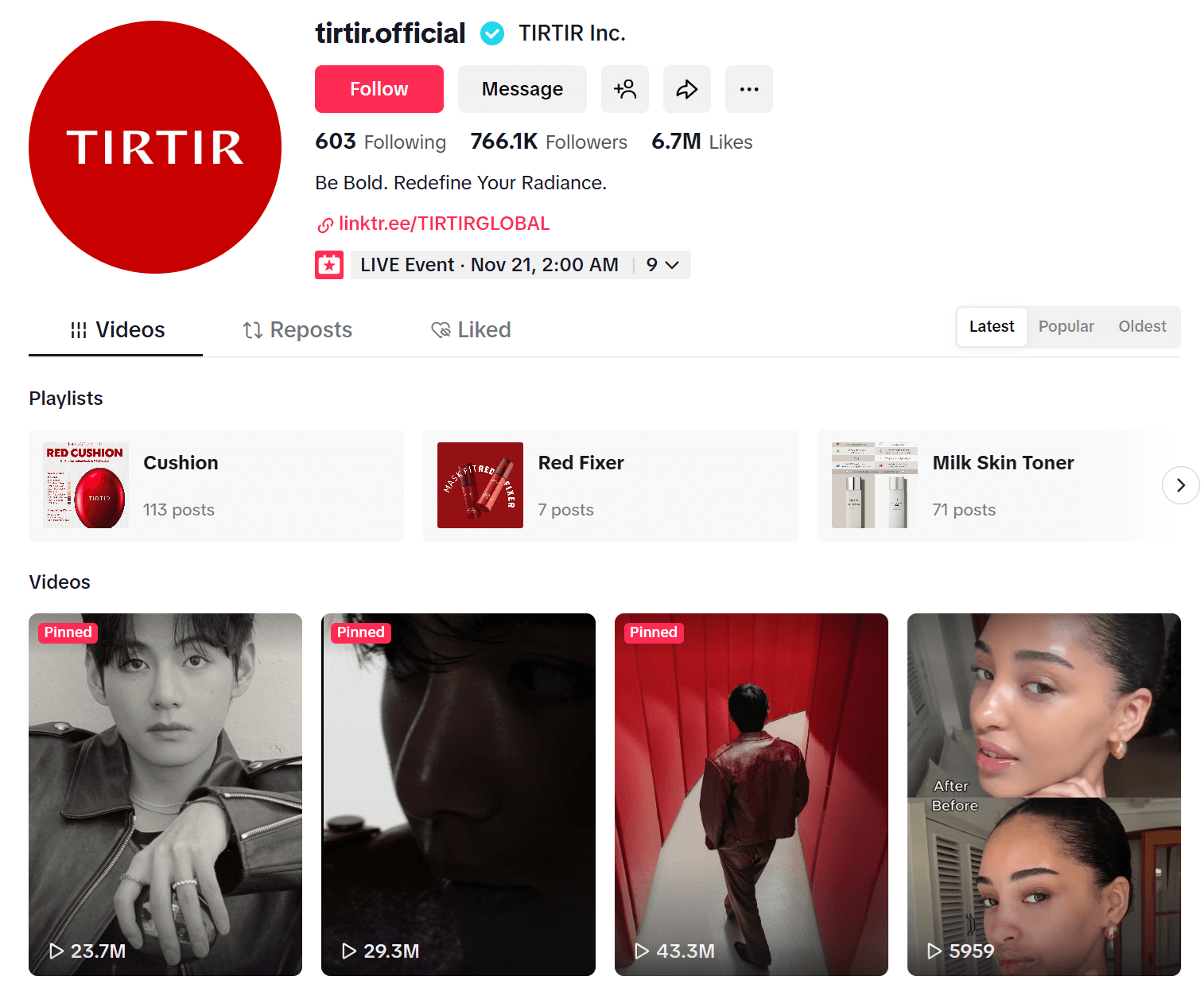
TIRTIR filmed visitors at their London pop-up while they shared their cushion shades on camera. It’s fun, personal, and instantly more trustworthy than a studio ad.
By including real people and real shade matches, viewers are more likely to comment, stitch, or share their own responses. It’s an easy way to build engagement while showcasing your product in the hands of real users.
9. Reply to comments with videos
Engaging directly with your audience is one of the easiest ways to boost visibility on TikTok, and video replies are one of the strongest tools you can use.
Instead of typing out an answer, create a short video that addresses the comment on-screen. This not only feels more personal but also gives you an unlimited stream of content ideas straight from your community.
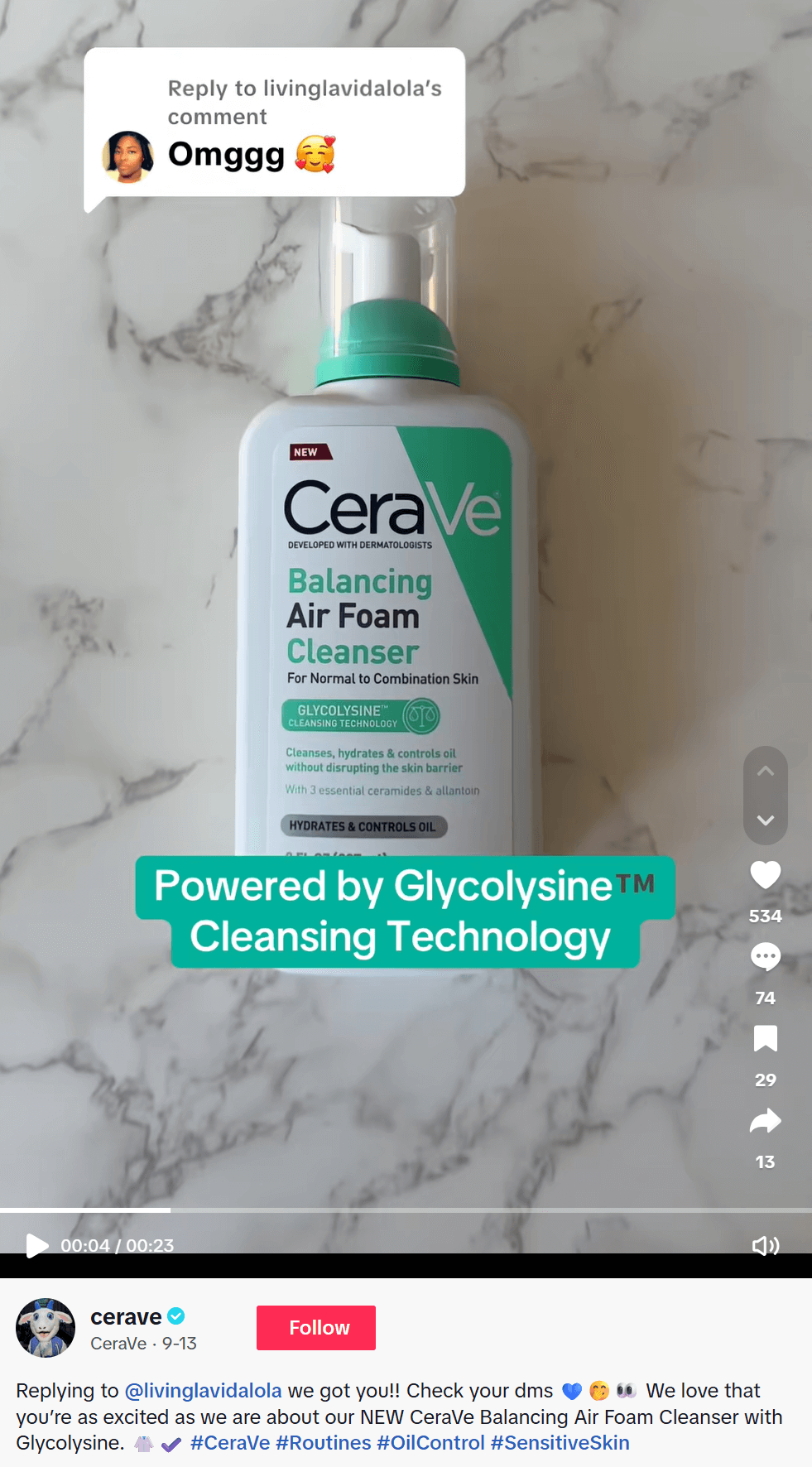
For instance, CeraVe turns a fan’s excited comment into a product spotlight, using the reply as the hook. It’s simple, effective, and keeps the focus on what the audience is already curious about.
You can respond with demos, quick explanations, behind-the-scenes clips, or clarifications. Each reply can become a micro-moment that strengthens trust and encourages more users to comment, because they know you’re listening.
Actionable Tips to Build a Solid TikTok Marketing Strategy
Once you’ve mastered the core best practices, the next step is building a long-term strategy that keeps your content fresh, discoverable, and aligned with what your audience actually wants to see.
The tips below will help you refine your approach, stay adaptable, and create videos that perform consistently over time.
- Study your niche: Watch how creators and brands in your category film, pace, and structure their videos. You’ll quickly spot patterns you can adapt to your own style.
- Post different formats: Rotate between short tutorials, mini vlogs, product demos, reactions, behind-the-scenes clips, and customer stories. This variety helps you see what your audience truly enjoys.
- Optimize for the For You Page (FYP): Use relevant keywords in your caption, on-screen text, and voiceovers. This helps TikTok understand what your video is about and recommend it to the right viewers.
- Use trending sounds strategically: Trends help boost visibility, but only when they fit naturally. If a sound distracts from your message or product, it’s better to skip it.
- Post consistently: Aim for 3–4 high-quality posts per week, rather than daily uploads with no clear direction. Consistency matters far more than volume.
- Use CTAs when needed: Keep your calls-to-action light and native to TikTok. Instead of hard-selling, use copy that flows naturally with the video and feels like part of the conversation. For instance, “Check the link in bio” or “Watch the full version on our site” encourage engagement without disrupting the viewer experience.
- Keep experimenting: TikTok evolves fast, so test new formats, hooks, and content ideas regularly. Even flopping videos teach you what to adjust next time.
Combining TikTok with Other Popular Channels
Once you’ve built your TikTok foundation, the next step is to amplify it by connecting it to the other platforms your audience uses every day. TikTok is powerful, but it isn’t a channel you can rely on alone.
As Andy King, Founder of Email Love, puts it: “[…] Social channels, like TikTok, can be incredibly powerful, but they’re also unpredictable—algorithm changes, platform restrictions, or even broader uncertainties can drastically impact your reach.”
This is exactly why pairing TikTok with channels like email, your website, and other social platforms creates a stronger, more stable marketing ecosystem.
Email marketing
While TikTok helps you capture attention fast, email marketing enables you to keep it, nurture it, and turn it into actual conversions. When both channels work together, you get a stronger system where TikTok brings people in, and email brings them back.
Brands can use email to:
- Introduce their new TikTok account and drive traffic to it
- Spotlight their top-performing videos
- Highlight TikTok-led product drops
- Re-engage viewers who stopped interacting on TikTok
Ghost Lifestyle does this perfectly in the following example:
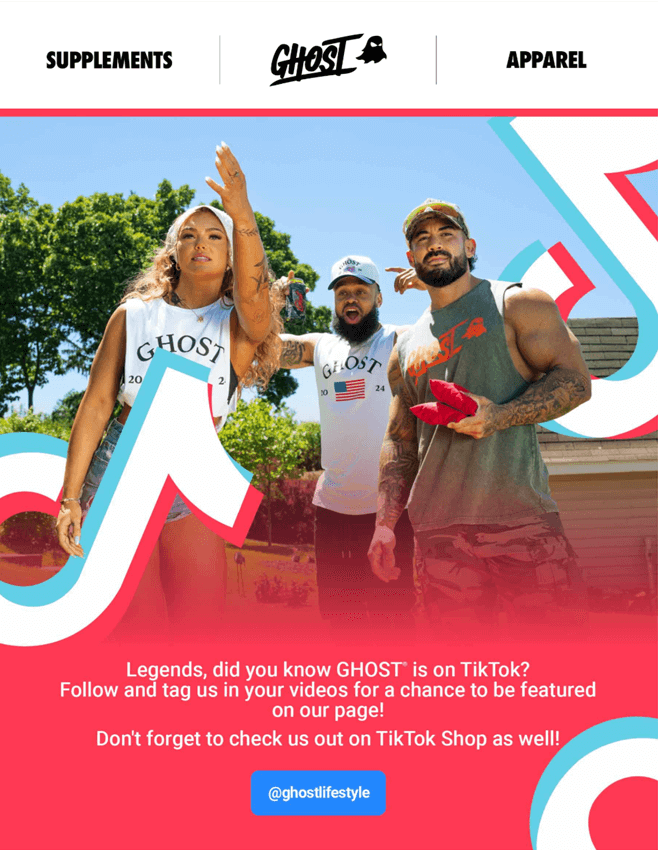
The brand invites subscribers to follow their new TikTok and tag them, instantly sending loyal, high-engagement subscribers to populate their TikTok presence.
Sigma Beauty, on the other hand, has already established its presence on TikTok and goes for something different.
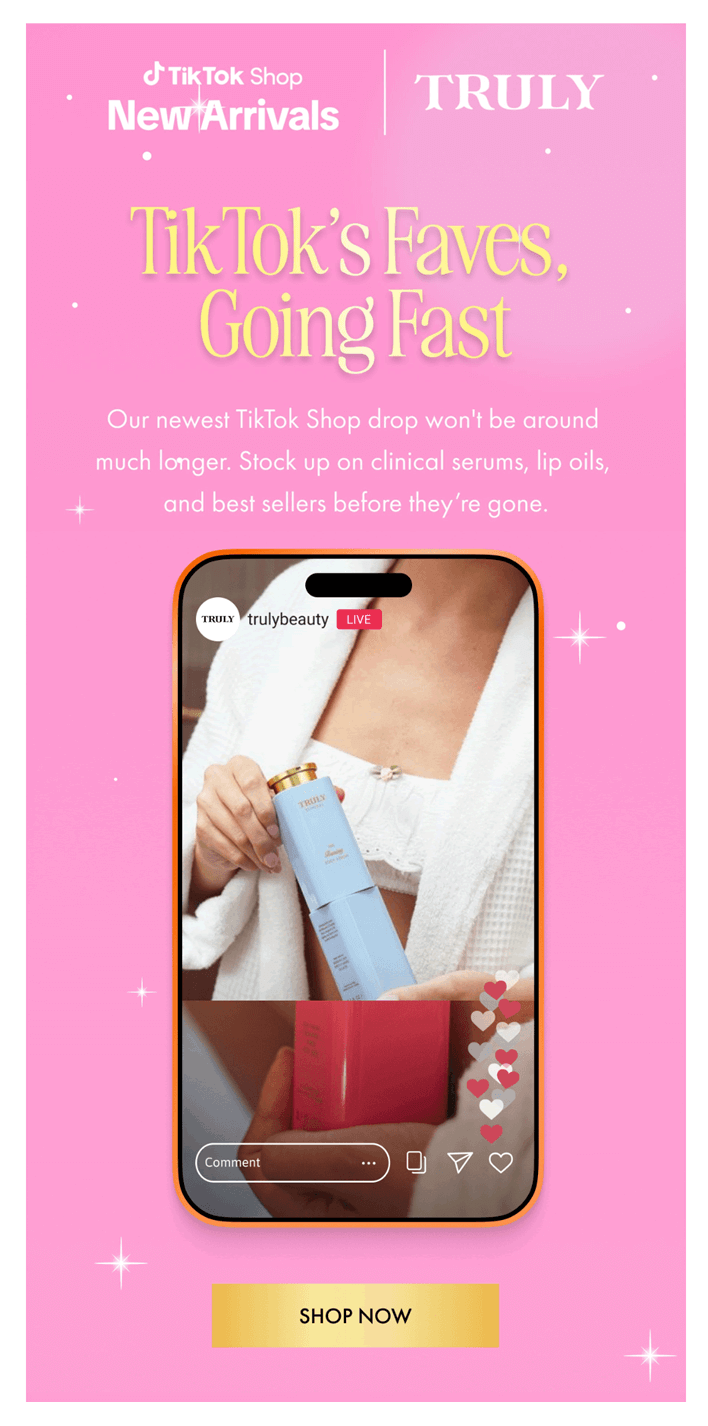
They spotlight TikTok-viral products in an email campaign, complete with a discount code. That’s clever cross-promotion that leverages TikTok trends to fuel email revenue.
Combining social media and email marketing is a powerful move to expand your reach, boost your engagement, and increase conversions across every channel.
To pull off these cross-channel wins, the right email platform makes all the difference. Tools like Moosend or Constant Contact let you segment TikTok-driven subscribers, personalize your messaging, and automate follow-ups that keep your new audience active.
With Moosend, for example, you can customize pre-made templates to craft branded campaigns and retarget TikTok viewers with offers, product highlights, or exclusive content, giving them a real reason to sign up and stay subscribed.
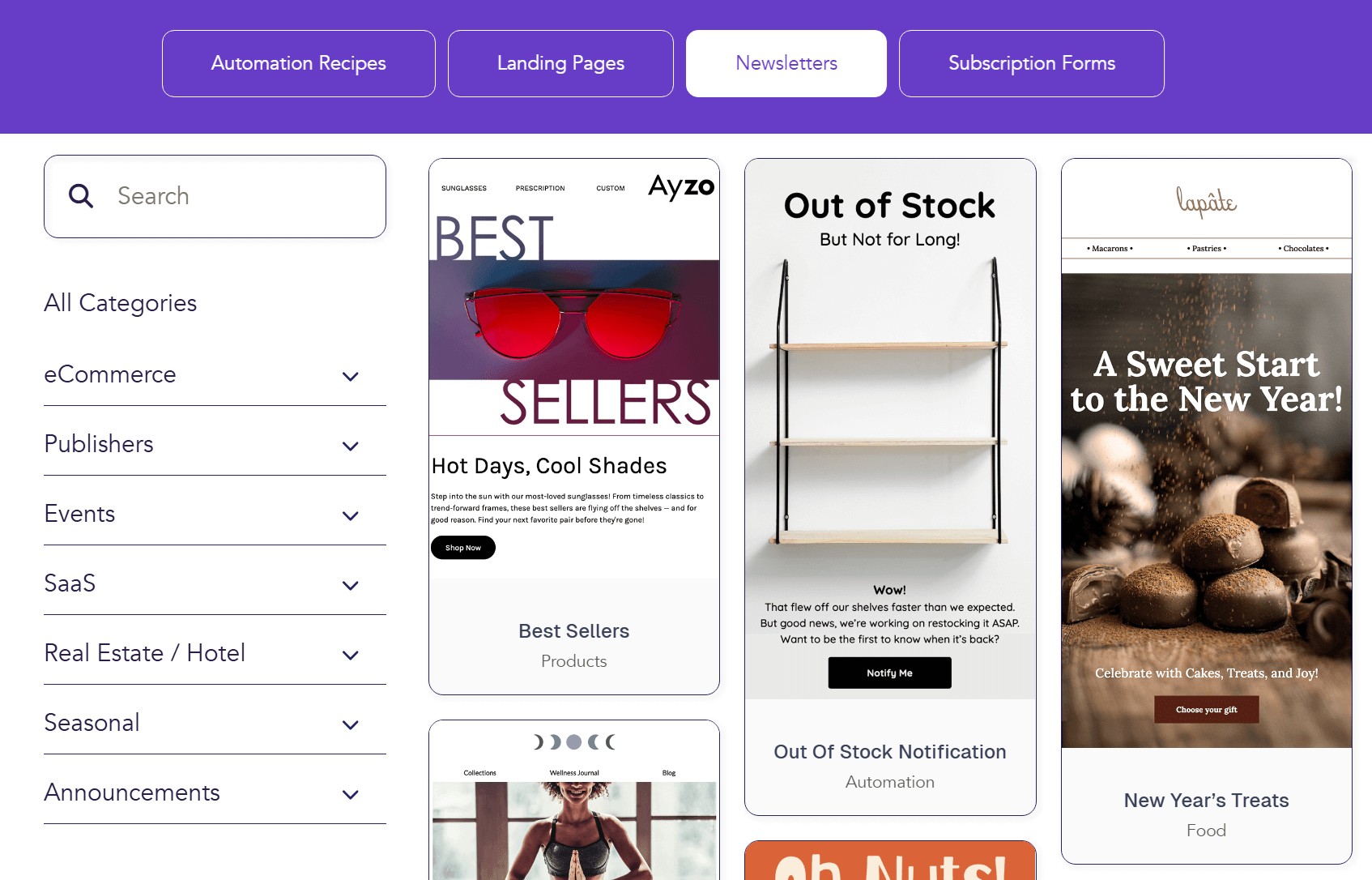
This way, every TikTok view becomes an opportunity to build a deeper relationship.
Other social media platforms
Cross-posting or repurposing your videos natively helps you reach audiences who don’t use TikTok daily and extends the lifespan of your best content.
Here are the most effective channels to pair with TikTok:
- Instagram: Great for short vertical videos and behind-the-scenes clips. Reels help you reach new people, while Stories help you speak to your warmest followers.
- YouTube: Perfect for repurposing TikToks with educational or entertaining hooks. Shorts also push long-form YouTube traffic your way.
- Pinterest: Ideal for tutorials, step-by-steps, and aesthetic visuals. Pinterest gives your content search longevity, helping your TikTok-style videos surface for months.
- Facebook & LinkedIn: Good for brands with an older or more professional audience. Share TikTok clips directly or turn them into short GIF-like posts for quick engagement.
- X (Twitter): Use snippets, screenshots, or key takeaways from your TikTok videos to keep the conversation going and drive people back to your profile.
To grow your TikTok account using these platforms, make sure each channel points people back to it.
For example, add your TikTok link to your Instagram bio, as Caudalie did, to create a seamless experience between your TikTok and Instagram marketing efforts.
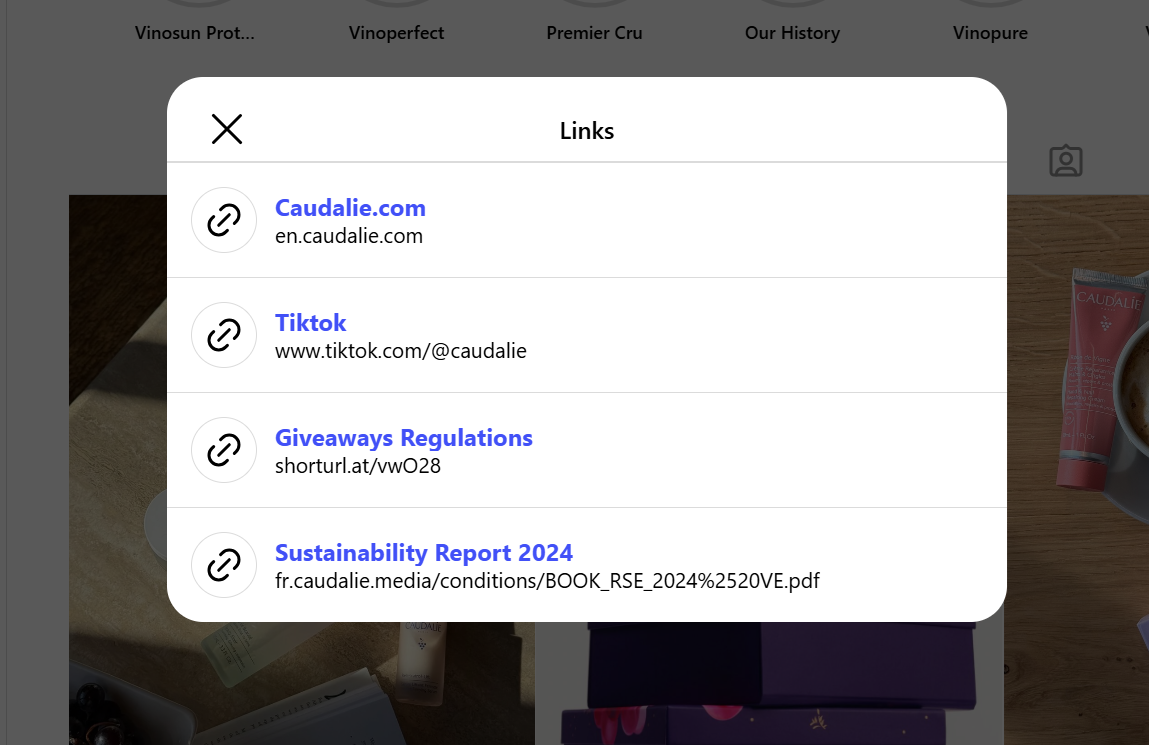
The goal is to create a loop. No matter where someone finds you, they can easily jump to your TikTok and keep following your content there.
Your website
Your brand website is one of the easiest places to grow your TikTok without relying on the algorithm. By placing your TikTok footprint where your customers already browse, you give them a direct path to your content when they’re most engaged with your brand.
To make it work, place your TikTok icon alongside your other social links, and you create a constant flow of visitors who can discover (and follow) you with a single click.
Here’s how Ulta Beauty did it:
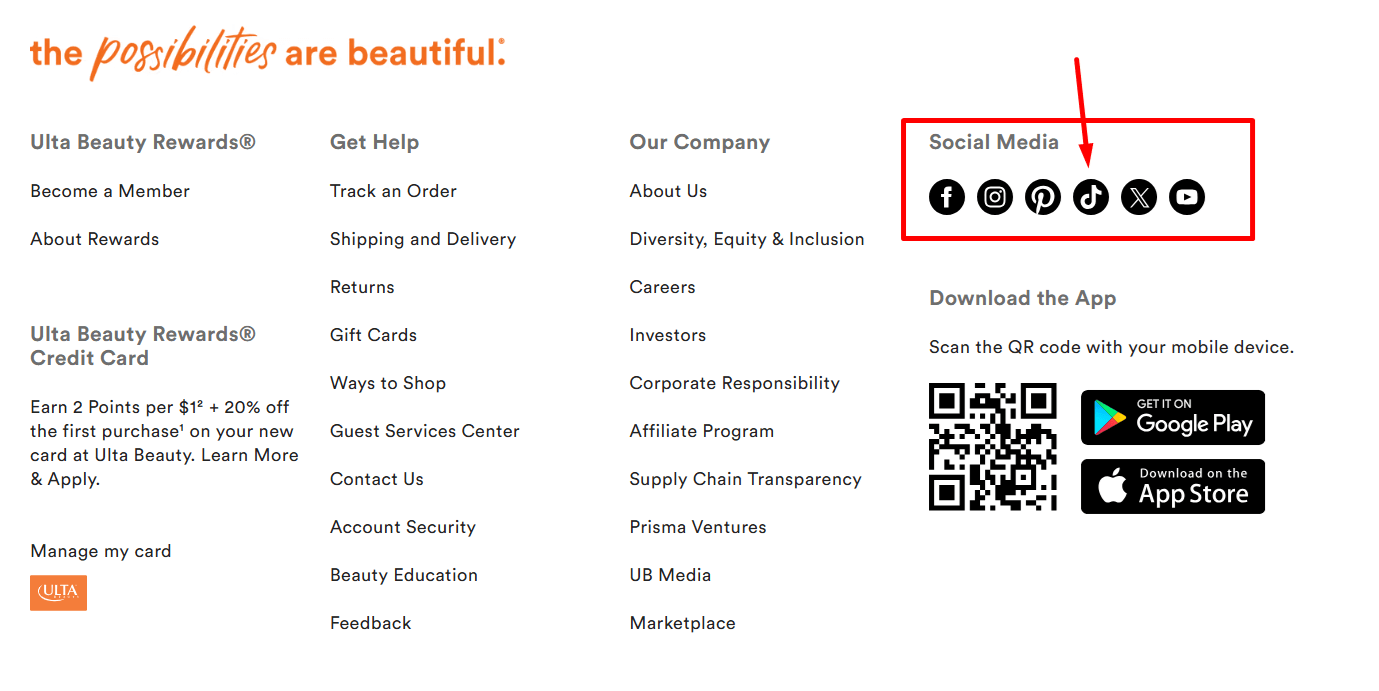
Why this works:
- People naturally scan the footer for social icons.
- Visitors who already trust your brand are more likely to follow you on TikTok.
- It builds long-term, passive traffic to your TikTok profile without relying on the algorithm.
- It makes TikTok part of your brand’s “official” presence across channels.
This tiny addition gives your TikTok account a steady stream of real users who are already interested in your brand, exactly the kind of audience that grows your profile organically.
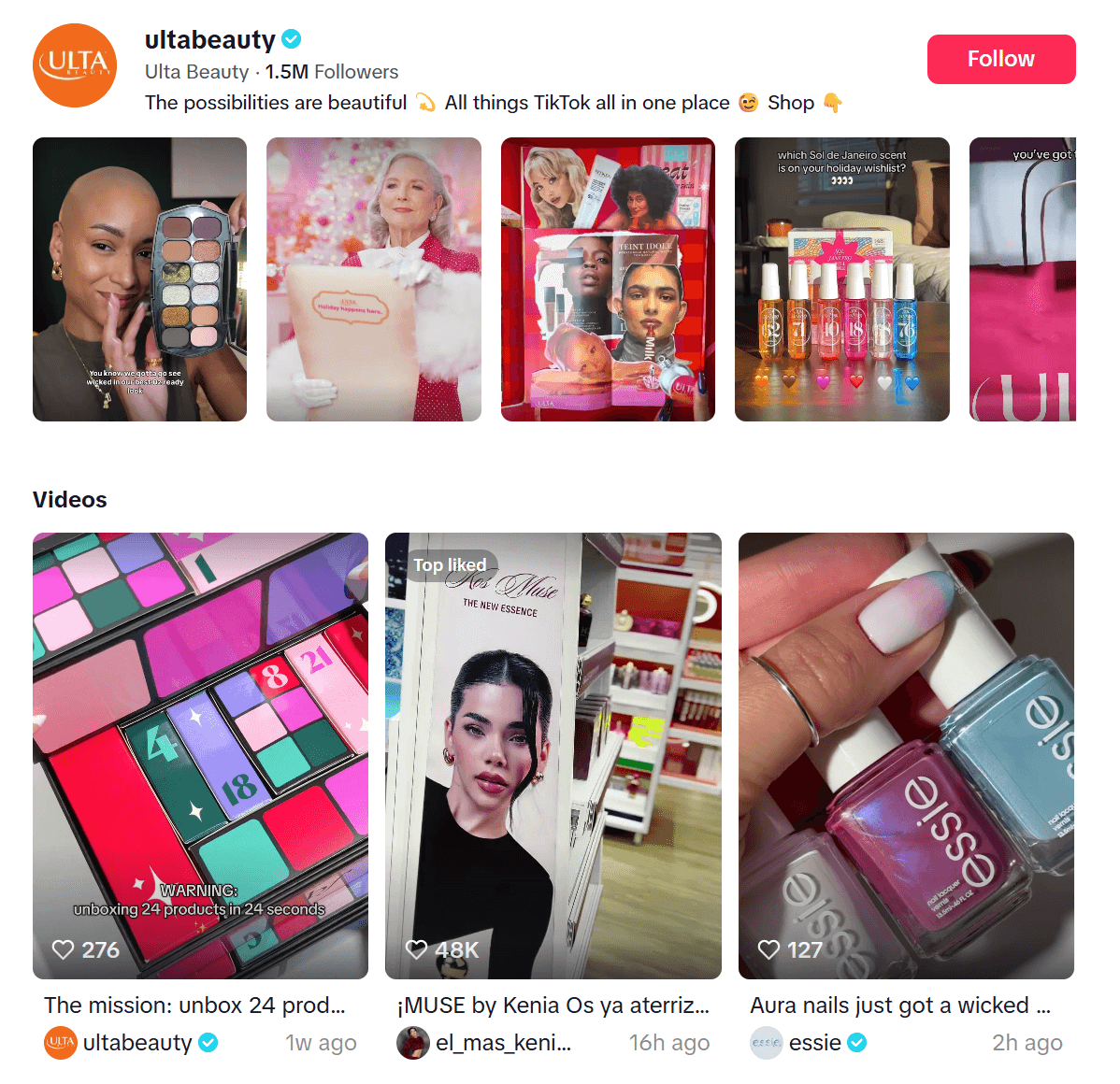
Apart from the footer icon, you can also add direct TikTok links on product pages (“Watch tutorials on TikTok”), place a small TikTok feed widget on your homepage, or use thank-you pages to invite buyers to follow you for updates or extra tips.
Tip: You can even add QR codes to packaging, inserts, or receipts so customers can jump straight from a purchase to your TikTok profile with one scan. The easier you make it to find you, the faster your audience grows everywhere.
Popular TikTok Trends to Use
Before creating your TikTok marketing calendar, it helps to know which trends perform well on the platform and which shift quickly but can give you a fast boost in visibility.
Classic trends
These formats stay relevant year-round and are easy to adapt to any niche.
- GRWM (Get Ready With Me): Casual, routine-style videos that feel personal and build trust. Perfect for the beauty and fashion industries.
- A Day in the Life: Mini vlogs showing your team, office, or store. They’re great for behind-the-scenes content.
- Before & after reveals: Hooks viewers with a strong payoff. Works for beauty, food, cleaning, DIY, fitness, and more.
- Product demos: Quick “here’s how it works” videos that get straight to the point.
- POV Moments: Relatable scenarios like “POV: You finally try our bestseller.”
- Taste tests & mukbangs: Perfect for food brands; always visually engaging and fun to watch.
- Things TikTok Made Me Buy: Ideal for showcasing viral products with social proof.
- Jump-cut humor: Fast, choppy edits to exaggerate comedic timing. Useful for personality-led brands or quick product skits.
Fast-changing viral trends
These trends come and go quickly, but hopping on them early can boost reach fast.
- AI brainrot trend: Funny AI-generated characters matched with chaotic AI audio. Used for funny reactions, dramatic product moments, or over-the-top storytelling.
- Movie makeup transformations (e.g., Coco, Wicked, Inside Out): Creators recreate iconic character looks. Ideal for beauty brands, costume shops, or anyone with strong visuals.
- Songs going viral (e.g., “Anxiety,” “Makeba,” etc.): Older or niche tracks suddenly trend again. These work well for fast transitions, product reveals, routines, or dramatic edits.
- Nostalgia remixes: Throwback audios from early 2000s shows, Vine classics, or childhood theme songs. Great for “Then vs Now” comparisons, emotional hooks, or fun storytelling.
- Filter or effect trends: Popular AR filters like Teenage Me, Old Money, Cartoon Eyes, or Color Switch. Perfect for reaction videos, glow-ups, or quick transformations.
- Mini-testimonials with trending audios: Creators lip-sync trending audio while pointing to text on screen. Ideal for quick “reasons to try this” or “what I wish I knew earlier” style content.
Marketing on TikTok Unlocked
Now that you know how the platform works, there’s only one thing left: actually putting your content out there.
If starting feels overwhelming, keep in mind that every major platform felt unfamiliar at first. Instagram, X, and even YouTube had that “early days” chaos, and brands still found their voice once they finally jumped in. TikTok is no different. It’s no longer a new platform, but a successful engagement channel, and your audience is already scrolling, waiting to discover something fresh.
And remember, TikTok rewards the brands that show up, not the ones that overthink, overpolish, or film a dramatic “Part 1” and never post Part 2 (the quickest way to make people absolutely feral). So start posting, stay human, and create the kind of content your audience will actually want to watch.
FAQs
Below, let’s see some common questions about TikTok marketing.
1. What is TikTok marketing?
TikTok marketing entails using the short-form video platform to promote your brand, products, or services. It includes organic content, paid ads, influencer partnerships, and community-driven videos that help you increase visibility, engagement, and conversions.
2. Where to find TikTok influencers?
You can find creators through TikTok’s Creator Marketplace, influencer discovery tools (like Aspire, CreatorIQ, or Modash), or by searching relevant hashtags directly on the app. Look for creators who genuinely align with your niche, rather than chasing those with the biggest following. Remember, micro-influencers with engaged audiences deliver better results.
3. How often should a brand post on TikTok?
Most brands see good results by posting 3–5 times per week. You don’t need daily content. Consistency matters more than volume, and posting fewer, but higher-quality videos usually performs better.
4. How can TikTok and email marketing work together?
TikTok helps you reach new people, and email enables you to keep them. Use TikTok to drive sign-ups (“Download this guide,” “Join the waitlist,” “Get early access”), then nurture subscribers via automated email sequences. Platforms like Moosend make this easy with landing pages, segmentation (e.g., “joined from TikTok”), and personalized follow-ups that convert viewers into repeat customers.
5. What’s the difference between TikTok ads and influencer marketing?
TikTok ads run through the Ads Manager and give you paid reach, targeting, and analytics. They’re ideal for conversions or scaling quickly. Influencer marketing uses creators’ audiences to build trust, social proof, and organic engagement. Most brands benefit from combining both.
Similar Posts

 Published by
 Published by

Create, send and optimize your email marketing campaigns